That solid teak console that looked perfect in the showroom can become a warped, sticky mess within a year in a Tampines ground-floor flat. Singapore’s permanent high humidity, often breaching 80%, isn't just uncomfortable—it actively dismantles poorly chosen furniture. Solid wood expands and contracts, while MDF panels swell and warp irreparably; it’s a material battle most buyers don’t see coming until the drawer fronts no longer close.
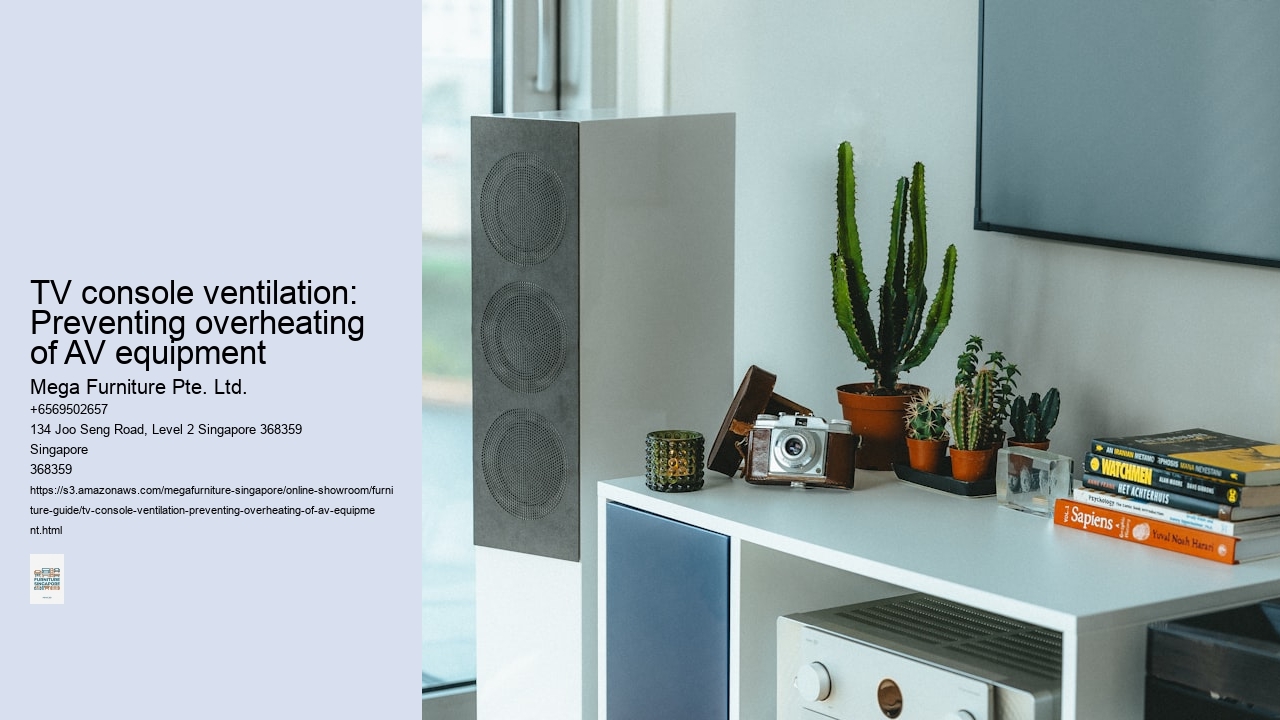
Start by getting the cabinet off the floor. Elevated legs, even a modest 5cm, create a critical air gap that prevents dampness from tile or engineered timber flooring from seeping directly into the carcass. This is non-negotiable for ground-floor units or homes near park connectors. Then, consider the heat your AV equipment generates. A closed-back cabinet with a PlayStation inside is an oven; perforated metal backs or, better yet, open-backed shelving are mandatory for any component that gets warm, which is all of them.
For pet owners, the calculus shifts again. A cat’s favourite scratching post is often that pristine console corner, and dog tails are relentless at shin height. Laminate or melamine finishes offer far more scratch resistance than real wood veneers or lacquered paint; they wipe clean from paw prints without leaving a dull patch. A textured grain can also help disguise the inevitable minor scuffs that come with domestic life.
Finally, scale matters in our typical 4-room BTO living room. A 240cm console might suit your new 75-inch TV, but it’ll dominate a narrow space, forcing a cramped walkway. The better approach is to measure your wall, subtract at least 60cm for circulation, and let that dictate your length—storage needs often have to bend to the reality of a 12 sqm floor plan. You can explore a range of sizes and ventilation-friendly designs to find a proportionate fit.
That engineered wood console in your Pasir Ris condo isn't a compromise—provided it's properly sealed. Singapore's humidity attacks furniture relentlessly, causing raw particle board to swell into a wavy mess behind your 65-inch TV. A high-pressure laminate or thermofoil seal, fully wrapped around every panel and edge, creates a moisture barrier that flat-pack furniture often skimps on. You'll want to check the finish isn't just a veneer on the front; run a hand along the unseen underside and the back panel. A complete seal here is what separates a console that lasts five years from one that warps after two monsoons.
Plastic runners are a false economy in a high-use family space. They grate, they stick, and they'll fail long before the console's frame does, especially under the weight of game consoles and media boxes. Metal runners—preferably steel with a full-extension or soft-close mechanism—operate silently and bear the load indefinitely. Test them in the showroom; a drawer should glide out with a consistent, heavy feel, not a hesitant scrape. It's a small component that signals a manufacturer's commitment to the parts you interact with daily, not just the visible surfaces.
Solid timber corner blocks and frame members are the skeleton of a durable piece. You can often spot them in an open-back design or by tapping—solid wood sounds dense and dull, while hollow construction echoes. In a 180cm console holding a heavy TV and equipment, these internal frames prevent sagging across that long span. They resist the racking forces that come from moving the unit during spring cleaning, too. It's an invisible investment, but one that defines whether a console remains square and true for a decade or starts leaning like a tired afterthought.
Never accept a flimsy cardboard or fibreboard back panel—it's the first thing to bow and detach in our climate. A non-negotiable quality signal is a rear panel made of the same engineered board as the sides, properly fixed with screws or robust clips. Mesh or slatted backs, often pitched for cable management, usually indicate a cost-cut compromise on structural rigidity. A solid back provides crucial sheer strength, keeping the entire carcase square and protecting the internals from dust and curious fingers. It’s the difference between a cabinet and a box.
Those shelves holding your amplifier and gaming gear need to be thick and non-warping—18mm is a good minimum, especially for spans over 60cm. Thin shelves will visibly deflect under weight, and in a humid environment, even engineered board can develop a permanent curve if it's underspec. Hefty shelves, properly supported at the centre or with reinforced edges, signal the console is built for actual use, not just display. In a compact 4-room BTO layout where this unit is a workhorse, that's where you'll notice quality every time you retrieve a charger from the back.
Walk into a typical 4-room BTO living room after a movie marathon, and you’ll often find the TV console cabinet itself is warm to the touch. That’s a clear sign of trapped heat, and it usually starts with a buyer prioritising a seamless look above all else. The most common error is sealing everything inside a unit without dedicated rear cable gaps, creating a perfect oven for your PlayStation 5 and AVR. In a 12 sqm living area, that heat doesn’t dissipate—it radiates back into your components, shortening their lifespan.
Choosing aesthetics over airflow is a particular trap with popular glass-fronted consoles. They look sleek in a showroom, but that glass panel acts like a greenhouse, trapping radiant heat from equipment and reflecting it back inside. It’s a trade-off many regret when their media player starts stuttering on a humid evening. The better approach is to look for designs with open shelving or mesh panels for your heaviest heat-generators, even if it means your console’s LEDs are visible.
Another critical, often overlooked, spec is depth. A shallow 35cm console might fit the narrow walkway in a condo media wall, but it won’t accommodate a PS5 with its required rear clearance for cabling and exhaust. You’ll need a minimum of 45cm to comfortably house modern game consoles and an audio-video receiver without their backs pressed against the wall. That extra 10cm is the difference between a console that breathes and one that chokes.
This extends to wall-mounted units, which are favoured for creating a floating look and easier floor cleaning. Buyers then make the mistake of treating the console’s top as a display shelf, blocking the vital ventilation grilles that are often built into the upper surface. A stack of coffee table books or a decorative tray might complete the vignette, but it also smothers the primary exit route for hot air rising from the components below.
Finally, there’s the temptation to use every cubic inch of a sealed cabinet, stuffing routers, NAS drives, and game libraries into one tight space. Organisation is key, but so is spacing—equipment needs room around it for air to circulate. In many homes, simply leaving the cabinet doors open during use can drop internal temperatures significantly, a crude but effective fix for a poorly planned purchase.
A TV console's spec sheet can't tell you whether its drawers will stick in Singapore's humidity or if its back panel will block your amplifier's airflow. That's why a trip to a showroom, like Megafurniture's outlets in Joo Seng or Tampines, often decides a purchase. You need to feel the material's heft, test the glide of a drawer, and hear the precise click of a door hinge—digital photos render everything equally frictionless, which it rarely is. Showroom layouts are typically mocked up to 4-room BTO living room dimensions, which lets you immediately judge proportion. A 220cm console might look balanced online but dominate your actual wall; you can stand back and see if its height works with your planned TV size, or if its bulk crowds a walkway. It’s the only way to verify practical details, like whether rear ventilation slots are genuinely sized for a media stack or are just decorative grilles that trap heat. Staff there can walk you through the material specifics that matter for our climate. They’ll detail which collections have humidity-resistant treatments on their engineered wood, or point out the powder-coated metal legs that won't show condensation marks. You can ask about the finish durability against accidental spills—answers that are far more concrete than a generic 'easy to clean' claim on a website. Ultimately, you're assessing how a piece will live in your home. Running a hand over a sintered stone top confirms its cool, wipeable surface; opening and closing every door reveals the quality of the hardware hidden behind the marketing copy. It turns an abstract decision into a tactile one. You can
browse the full range online, but committing to a centrepiece for your living room wall usually requires a final, in-person confirmation.
The 240cm solid wood console you’ve chosen for your 75-inch TV might not fit past the lift door on your HDB floor. It’s a common oversight — many older blocks have lift landing dimensions around 200cm in height, forcing a more strenuous and expensive staircase delivery. Measure that corridor before you commit; the extra $80 to $150 for a two-man carry up nine storeys can be a nasty surprise on delivery day. Once inside, assembly on Singapore’s classic mosaic tile floors presents its own challenge. These floors are rarely perfectly level, which can cause a long console to rock subtly, stressing joints over time. Professional assembly teams will use shims and a spirit level to stabilise the unit, a step worth paying for when you’re housing $3,000 worth of AV equipment. Don’t risk a wobbly DIY job with an Allen key and vague instructions. Your warranty needs to speak to local conditions. Look for explicit coverage against laminate peeling from prolonged humidity and hinge failure from daily use — these are the two most common points of wear in our climate. A one-year general warranty often misses these specifics; a retailer that offers two or three years on structural integrity and surface defects is accounting for the reality of a non-air-conditioned living room. Opting for a retailer with in-house delivery and assembly teams, like Megafurniture, sidesteps the coordination headaches of third-party contractors. You’ll get a single point of contact if a panel is scratched during the stair climb, and the assemblers are typically trained on that specific furniture range. It’s a smoother process for a bulky item, and you can
browse their console collectionwith those logistics already factored into the price. Ultimately, the most carefully selected material means little if the unit arrives damaged, is assembled poorly, or develops issues just after the warranty lapses. Factor these backend considerations into your budget from the start — they’re what turn a showroom piece into a permanent, functional part of your home.
A common anxiety among buyers in a Megafurniture showroom isn't about style—it's about whether that sleek, wall-mounted unit will actually hold their new 65-inch TV and a soundbar without pulling the plaster down. It typically will, provided you’re bolting into solid brick or a reinforced stud; for most BTO concrete walls, that’s a non-issue. The real constraint is weight distribution and the console’s rated load capacity, which you’ll find in the product specifications. A 180cm console in a solid wood or engineered wood construction can easily support that setup, leaving room for a media player or gaming console on the shelves below.
Cooling a cabinet in a west-facing window is a different beast, especially in a 4-room resale flat along Clementi Avenue. Direct afternoon sun turns any enclosed space into an oven. The fix isn't just about ventilation holes—it’s about active airflow. Install a couple of quiet, USB-powered exhaust fans at the rear of the cabinet, drawing hot air out from behind your AV receiver; pair that with a perforated metal or woven cane door panel instead of solid wood, which allows heat to dissipate while obscuring the gear inside. You might sacrifice some dust protection, but you’ll save your electronics from an early demise.
Is 30cm rear clearance enough for an AV receiver? For most mid-range units, just barely. It’s the minimum you’d want for cable management and basic airflow, but it’s a compromise. If your console is pushed flush against the wall in a narrow living room, that space gets choked quickly. Opt for a console with a fully open back panel, or one that includes a dedicated cable management channel that sits off the wall, giving you an extra few centimetres of breathing room—it makes all the difference during a three-hour movie marathon.
For the dual threats of a curious cat and Singapore’s humidity, material choice becomes critical. Laminates and vinyl wraps might resist scratches initially, but the seams can swell with moisture over time. A sintered stone top is virtually impervious to both claws and damp, though it commands a higher price. A more accessible option is a console finished in a textured, matte laminate with a moisture-resistant core; the texture helps hide minor scuffs, and the sealed edges prevent moisture ingress, making it a practical champion for a family room in a ground-floor unit near Bedok Reservoir.
The moment before you tap 'buy' is when most console installations fail. You've measured your 65-inch TV, but forget that a 180cm console looks stubby beneath it — add 20cm for visual balance, and you'll avoid that awkward, floating island effect in your 4-room BTO living room. Then, list every piece of gear going inside: AVR, media streamer, game console, maybe a NAS. Add their wattages; that 300W total isn't just about your electrical circuit, it's the heat you're trapping behind a glass door.
That heat dictates your next choice. Rear ventilation design trumps drawer count every time. A console with a solid back panel and a single cable grommet turns into a thermal oven, throttling your expensive components. Prioritise models with full-width mesh panels or elevated backs; it's a boring feature that saves you from constant fan noise and premature hardware failure.
Now, think about the journey home. Confirm the delivery route fits your HDB corridor's 90-degree turn at the rubbish chute — a 210cm solid wood unit won't pivot there. If you're in a walk-up apartment in Joo Seng, measure the stairwell width too. These logistical snags are why you should allocate a portion of your budget, perhaps $200 to $400, for professional installation.
Wall-mounting errors are costly, both for your plaster and your TV. A pro installer will locate the reinforced concrete beam, not just drill into the hollow brick, ensuring your floating console doesn't become a projectile. It's the final, critical step that moves the project from a Pinterest board to a finished, functional media wall.
In a four-room BTO flat, the living room wall often dictates the entire layout-you'll centre the sofa, then the console, and finally the TV. That console length is non-negotiable; a 180cm unit fits a 55-inch screen, while anything over 200cm starts to crowd the walkway to the kitchen. It's a precise calculation, one that gets abandoned in a landed property's media room, where a 240cm statement piece can still feel modest against a 75-inch display.
Space constraints define the console's role. For a 12 sqm HDB master bedroom doubling as an entertainment space, a shallow, wall-mounted design is essential-it keeps floor area clear and avoids a bulky silhouette. Contrast that with a condo's dedicated media wall, where depth allows for substantial closed storage to hide amplifier stacks and gaming consoles; the console becomes a functional plinth, not just a shelf.
Ventilation needs scale directly with both equipment volume and Singapore's ambient humidity. A simple soundbar and streaming stick in a BTO setup might only need an open-back design. But a full AV receiver, PlayStation, and set-top box in an enclosed landed home cabinet generates serious heat; that demands integrated rear vents, or better yet, a perforated metal or woven cane panel at the back. Passive airflow isn't a luxury here-it's what stops your equipment from cooking itself during a weekend movie marathon.
Material choices follow this environmental logic. A TV console anchors the wall opposite the sofa in the same way a tall bookshelf anchors a corner — long horizontal piece, mix of open and closed storage, defines the visual weight of one whole side of the room. Megafurniture's TV Console range covers floating wall-mounted designs, low-profile freestanding consoles, and modular feature-wall configurations. Most pieces sit at 40-50cm height, sized for screens up to 75 inches.. Laminate and rubberwood work in air-conditioned condo living rooms, but sintered stone or powder-coated metal offer better resilience against moisture in a ground-floor resale flat. The console's finish, whether a light oak veneer or a matte lacquer, often becomes the room's focal point, so its practicality needs to match its looks. You can explore various designs that balance these needs in Megafurniture's collection.
Ultimately, the right console negotiates between your screen size, your equipment list, and your home's specific air. Ignoring any one factor leaves you with either a mismatched piece or a costly repair bill.
A Bookshelf earns its place in Singapore homes through dual function — book and decor storage in the open shelves, soft visual division when placed mid-room in open-plan condominium layouts. Megafurniture's combined display unit and bookshelf hub covers tall book racks, cubby-hole designs, ladder shelves, modular cube systems, and glass-door pieces in oak, walnut, and MDF veneer finishes. Solid-wood pieces typically start around $425, with most heights spanning 120cm to 220cm to fit standard 2.6m HDB ceilings..In a four-room BTO flat, the living room wall often dictates the entire layout—you’ll centre the sofa, then the console, and finally the TV. That console length is non-negotiable; a 180cm unit fits a 55-inch screen, while anything over 200cm starts to crowd the walkway to the kitchen. It’s a precise calculation, one that gets abandoned in a landed property’s media room, where a 240cm statement piece can still feel modest against a 75-inch display.
Space constraints define the console’s role. For a 12 sqm HDB master bedroom doubling as an entertainment space, a shallow, wall-mounted design is essential—it keeps floor area clear and avoids a bulky silhouette. Contrast that with a condo’s dedicated media wall, where depth allows for substantial closed storage to hide amplifier stacks and gaming consoles; the console becomes a functional plinth, not just a shelf.
Ventilation needs scale directly with both equipment volume and Singapore’s ambient humidity. A simple soundbar and streaming stick in a BTO setup might only need an open-back design. But a full AV receiver, PlayStation, and set-top box in an enclosed landed home cabinet generates serious heat; that demands integrated rear vents, or better yet, a perforated metal or woven cane panel at the back. Passive airflow isn’t a luxury here—it’s what stops your equipment from cooking itself during a weekend movie marathon.
Material choices follow this environmental logic. Laminate and rubberwood work in air-conditioned condo living rooms, but sintered stone or powder-coated metal offer better resilience against moisture in a ground-floor resale flat. The console’s finish, whether a light oak veneer or a matte lacquer, often becomes the room’s focal point, so its practicality needs to match its looks. You can explore various designs that balance these needs in Megafurniture’s collection.
Ultimately, the right console negotiates between your screen size, your equipment list, and your home’s specific air. Ignoring any one factor leaves you with either a mismatched piece or a costly repair bill.