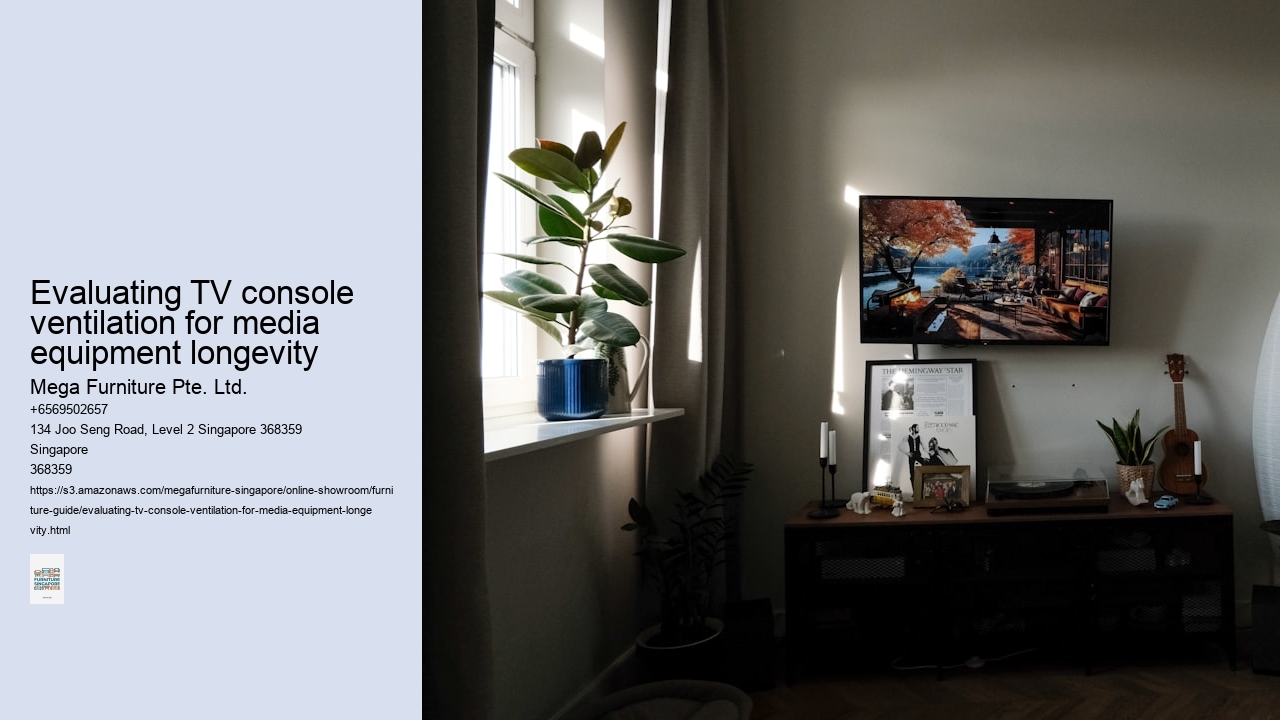
A console that looks perfect in a Tampines showroom can develop a subtle bow after one monsoon season in a non-aircon living room—that’s the reality of solid wood in our climate. While beautiful, solid teak or oak can warp when humidity consistently hovers around 80%, a figure many HDB flats hit from November to January. Engineered wood, with its cross-layered plywood core, typically fares better; the construction resists expansion and contraction, keeping drawers that slide and doors that close flush long after installation.
Laminate surfaces are a practical choice for households with pets, particularly for families in landed homes or condos where a dog might dash past during play. A cat’s claws or a scrambling puppy won’t leave deep gouges in a good quality laminate, and the non-porous surface won’t harbour mould or mildew from ambient moisture. It’s a workhorse finish for a piece of furniture that’s meant to be lived around, not tiptoed past.
You’ll want to avoid MDF-based consoles for that same 4-room BTO living room if the aircon is rarely on. MDF acts like a sponge, absorbing atmospheric moisture which leads to swelling, especially at the corners and along the base; that swelling then compromises the structural integrity of mounting points and shelf supports. For a floating console, which relies entirely on hidden brackets, this material failure isn’t just an eyesore—it’s a safety concern.
The critical check, regardless of material, is for fully sealed edges on every panel. Run a finger along the back edge of a display unit, the underside of a shelf, and the inside of a cabinet. Any raw, exposed particleboard or MDF is a direct conduit for humidity, and that’s where the bloating and peeling will start. A proper PVC or laminate edge banding forms a complete moisture barrier, which is why it’s a non-negotiable spec for any console destined for a humid neighbourhood like Bedok or Pasir Ris.
For long-term stability, the sealed box construction of many engineered wood consoles offers a distinct advantage; the internal framework stays protected, even if the external climate doesn’t. It’s a detail that often gets overlooked in favour of finish colour, but it’s what separates a piece that lasts five years from one that lasts fifteen.
Start with the console's midpoint, that spot directly beneath your 65-inch TV's weight. Apply firm side pressure there—a solid push with your palm, not a tentative nudge. You're simulating the accidental lean of a child or the sustained pressure from someone resting a hand while adjusting cables. A well-built unit should resist this force, its frame absorbing the energy without transferring it into a visible sway. In cheaper constructions, you'll feel the entire structure pivot on its legs or wall brackets, a telltale sign that centre support is lacking. That's the first wobble, and it's often the most revealing.
Observe the junctions where materials meet, particularly on floating or cantilevered designs popular in condo media walls. Focus on the connection between the horizontal top panel and the vertical side panels or supporting brackets. As you rock the unit, watch for any separation or independent movement at these joints; a slight gap appearing here under load suggests inadequate fastening or material weakness. In many HDB installations, this flex over time leads to audible creaks or, worse, a gradual sag that misaligns your carefully centred television. It's a failure point that's often hidden behind sleek finishes.
Test the storage under real-world conditions, not just by opening an empty drawer. Place a substantial object inside—a full cable management box, a dense gaming console, or a stack of hardback books—then operate the glide. Does it slide smoothly, or does the added weight cause it to catch, tilt, or strain the console's balance? This check reveals the quality of the drawer's suspension system and whether the console's internal frame is robust enough to handle asymmetric loading. A drawer that struggles here will only worsen after a year of use in a family flat.
For consoles intended to be fixed to the wall, stability is literally non-negotiable. Beyond checking the manufacturer's bracket, assess how the unit integrates with its mounting points during your test. Apply pressure and watch for any movement between the console's back panel and the wall itself—there shouldn't be any. A proper wall-mounted design transfers force directly into the wall studs, leaving the cabinet itself feeling inert. If the whole unit still rocks on its brackets, that's a fundamental design flaw, one that risks your television's safety in a 4-room BTO.
The chosen material dictates how the console handles stress. Solid rubberwood or engineered sintered stone will typically dampen movement, returning to true after pressure is released. Laminated particleboard or thin metal frames, however, might not recover fully, exhibiting a permanent slight tilt or a lingering vibration. Your wobble test isn't just about immediate movement; it's about observing the material's memory. Does the console settle back perfectly, or does it retain a hint of the deformation? That distinction separates a durable piece from one that'll look warped within months.
The most expensive TV console installation error in Singapore isn't about the price tag—it's about assuming your wall can hold it. A buyer in a Tampines four-room resale might spend $1,800 on a beautiful 180cm floating console, then discover their living room partition is a hollow HDB block wall. Standard anchors won't grip; you’ll need specific sleeve anchors rated for that material, or the entire unit could pull away after a few months. That’s a call to the contractor you didn’t budget for.
Ventilation depth gets overlooked too, especially with audio-visual receivers. A console with a 40cm internal shelf height might seem ample, but an AVR needs around 10cm of clear airspace above its chassis to prevent overheating. Squeezing it into a 45cm total cavity means the back panel acts like a heat trap—you’ll hear the fans whirring constantly during a movie marathon in your BTO living room.
Material choice interacts directly with local light. Selecting a dark walnut or charcoal finish for a north-facing room in a Bedok flat, where natural light is softer and greyer, can make a 12 sqm space feel noticeably smaller and heavier. The console becomes a shadow mass rather than a feature. Light oak or washed teak finishes reflect what light there is, keeping the area visually open; it’s a subtle effect, but in many homes, that’s the difference between a room that feels organised and one that feels cramped.
These aren’t abstract design points—they’re practical failures that happen during installation weekend. You’ve bought the unit, the delivery team is at your door in Aljunied, and then the real questions start about your walls and your gear. Checking these three details beforehand saves the frustration of a console that wobbles, overheats your equipment, or darkens your favourite room.
The online image of a rubberwood console in a warm oak finish can look entirely different under the harsh, flat LEDs of a 4-room BTO. That’s the first reason you’ll want to visit a showroom; the variance between screen and reality is more than just colour calibration. Finishes react to lighting—a laminate that seems matte online can show a distracting sheen under your own ceiling spotlights, while a hand-brushed texture might disappear. It’s about seeing the actual grain, the true depth of a stain, and how that dark walnut might shrink a narrow HDB living room wall instead of anchoring it. Stability is another thing you can’t gauge from a product page. A gentle, two-handed wobble test on the floor models at their Joo Seng or Tampines locations tells you everything. You’re checking for torsion across that critical 180cm to 240cm span, listening for creaks in the joinery, and feeling if the unit sits solidly on its legs. This is especially pertinent for families with young children or for anyone planning to place a heavy 75-inch panel on top; the console needs to be a steadfast platform, not a wobbly afterthought. For many Singapore homes, the real challenge isn’t the TV but the wall itself. Irregular alcoves, protruding structural beams, and awkwardly placed power points are the rule, not the exception. A showroom visit lets you discuss custom sizing options in person, using the physical samples to visualise how a slightly deeper cabinet or a non-standard length could solve your specific spatial puzzle. You can bring your floor plan and talk timelines—verifying delivery schedules for your estate, whether it’s a mature Tampines neighbourhood or a newly-occupied BTO in Tengah, is a practical step that avoids post-purchase frustration. Ultimately, committing to a large piece like a TV console is about confidence. Seeing the
collectionin person, testing its physicality, and confirming the logistical details transforms an online guess into an informed decision. You’re not just buying furniture; you’re solving for the particularities of your living room.
That 270cm solid wood console you've been eyeing won't make it past the lift landing in most HDB blocks—the standard width is around 200cm. It's a classic Singaporean furniture delivery headache, one that turns a straightforward purchase into a logistical puzzle requiring a stairwell ascent. For BTO flats with those notoriously narrow main doors, the situation is often the same; assembly on-site isn't just a convenience, it's frequently a necessity. Many suppliers now factor this into their service, sending two-person crews who can manoeuvre flat-packed components into a 4-room flat in Eunos or Bedok and construct the unit in your living room.
This assembly requirement ties directly to the warranty you should be seeking. A three-year minimum is the baseline for a piece that will see daily use, holding remotes, gaming consoles, and the occasional child using it as a climbing frame. But the terms matter more than the duration. In our humidity, a warranty that explicitly covers material swelling, warping, or laminate peeling due to moisture is non-negotiable. Look for clear language on structural integrity—the joints and supports that bear the weight of a 65-inch TV and its soundbar shouldn't be a point of uncertainty.
Beyond the fine print, consider the service reality. A warranty that requires you to ship a 200kg sintered stone console back to a warehouse in Tuas is effectively useless. Practical coverage means a technician will come to your Tampines condo or Aljunied resale flat to assess and repair issues like sticking drawers or a sagging shelf on-site. It’s the difference between a promise and actual protection for your investment. For a curated selection that addresses these practicalities, you can browse the options at Megafurniture’s collection.
The true test of a console often comes years after delivery, long after the assembly crew has left. That’s when a comprehensive warranty proves its worth, ensuring the centrepiece of your media wall doesn’t become a persistent source of annoyance. It’s boring paperwork, but it’s what lets you actually enjoy the view.
The most common buyer questions aren't about aesthetics — they're about whether a console will hold a 75-inch TV on a concrete wall, or how to hide cables in a BTO with no false ceiling. That's the real Singaporean calculus.
For a 75-inch TV, stability is everything. A typical console length needs to be at least 180cm to properly support the TV's footprint; a shorter console leaves the TV's weight cantilevered over the ends, inviting wobble. Concrete walls allow for secure wall-mounting of the TV itself, but the console must still be floor-standing or properly anchored if it's a floating design — buyer wants storage, not a physics experiment. In many landed homes with dogs, the material debate is laminate versus solid wood. Laminate resists scratches and spills from paws, but solid wood offers a heft and patina that laminate can't replicate; it's a trade-off between practical durability and long-term character.
East-west sun exposure turns colour choice into a maintenance schedule. A dark walnut or charcoal console will show heat stress less obviously than a light oak or white laminate, which can yellow or warp under sustained afternoon sun. The real trick is cable management in a standard BTO. Without a false wall, you'll need a console with a dedicated rear channel or a back panel that sits a few centimetres off the wall, creating a hidden raceway for power cords and HDMI cables. It's not glamorous, but it's what keeps the living room looking organised.
Some buyers insist on floating consoles for that clean, modern line. In a 4-room BTO living room, that often means sacrificing substantial storage — the cavity underneath is lost. A floor-standing console with a solid plinth gives you that concealed storage for media boxes and gaming consoles, which, in truth, most families need more than a floating aesthetic. The choice often comes down to whether you're building a feature wall or just solving for TV and clutter.
Browse the options for consoles that address these practicalities first.
The most common mistake isn't buying the wrong console, it's buying the right console for a room that only exists on a floor plan. Before you commit, re-measure your actual living room with painter’s tape on the floor — and this time, mark every power point and SCV socket with a cross. A 180cm console that fits the wall might block the only accessible plug point for your soundbar, forcing a messy tangle of extension cords across your feature wall. That clean, built-in look you’re paying for evaporates the moment you need to plug something in.
Confirm the console's height relative to your sofa, not just the wall. The ideal seated eye level for a 65-inch TV is around 90cm from the floor; many popular floating designs sit at 100cm or higher, which can strain necks over a three-hour movie marathon. If you’re mounting the TV, bring the proposed bracket height into your tape outline — you might find the console needs to be a few centimetres lower to create a visual bridge. It’s a small spatial calculation that pays off every evening.
For floating consoles, factor professional mounting into your initial budget, especially in older HDB blocks where plaster can be inconsistent. A proper installation for a 200cm solid wood unit into a concrete wall might cost $150 to $300, but it’s non-negotiable for safety and alignment. Trying to DIY it with a consumer drill often results in a slight, infuriating tilt that you’ll notice every time you walk into the room.
Finally, consider whether the console’s design will outlast your current TV. A style dominated by a specific cut-out for a 55-inch panel will look awkward when you eventually upgrade to a 75-inch screen. Opt for a simpler, proportional design — a clean-lined, wall-hung piece in oak or a matte laminate — that frames the technology without being dictated by it. The best media console acts as a steady anchor while the flashier components above it come and go.
The most common mistake in a BTO living room is ordering a 200cm console for a 190cm wall. It's a miscalculation made with a tape measure lying flat on the floor, forgetting the skirting board's quarter-inch bulge or the slight unevenness in a resale flat's plasterwork. That overhang isn't just an eyesore; it becomes a shin-bashing hazard in a tight walkway, especially when the corridor door swings inward. For a clean fit, you'll want to measure the clear wall width at cabinet height, not just the floor space.
Console length should be dictated by your TV size and the wall it sits against. A TV console anchors the wall opposite the sofa in the same way a tall bookshelf anchors a corner — long horizontal piece, mix of open and closed storage, defines the visual weight of one whole side of the room. Megafurniture's TV Console range covers floating wall-mounted designs, low-profile freestanding consoles, and modular feature-wall configurations. Most pieces sit at 40-50cm height, sized for screens up to 75 inches.. A 40 to 55-inch screen typically pairs with a 120 to 150cm unit, while 65-inch models need 160 to 180cm of support for visual balance. Going significantly shorter than the TV creates a top-heavy, precarious look; going much longer can swallow valuable floor area in a compact 4-room layout. The goal is a proportional silhouette where the console anchors the television without dominating the entire wall.
Floor-standing units demand particular attention to clear width. You must account for the full depth of end panels or cabinet doors, which often extend beyond the main carcass. In many HDB corridors, a fully opened main door can clip the corner of an ill-placed console. It's a practical nuisance that undermines an otherwise perfect media setup. The solution is to mock up the footprint with newspaper or cardboard before committing-a tedious step that prevents a costly delivery-day realisation.
For those working with limited space, a floating console or a wall-mounted design can sidestep these clearance issues entirely. They create a lighter visual mass and make floor cleaning simpler, though they often sacrifice some storage volume. Material choice here matters too; a sleek, laminated MDF unit in a light oak finish can make a narrow Tampines living room feel more open than a bulky, dark wood statement piece. Ultimately, the right proportions are less about trends and more about the precise dimensions of your own neighbourhood flat.
The most common mistake in a BTO living room is ordering a 200cm console for a 190cm wall. It’s a miscalculation made with a tape measure lying flat on the floor, forgetting the skirting board’s quarter-inch bulge or the slight unevenness in a resale flat’s plasterwork. That overhang isn’t just an eyesore; it becomes a shin-bashing hazard in a tight walkway, especially when the corridor door swings inward. For a clean fit, you’ll want to measure the clear wall width at cabinet height, not just the floor space.
Console length should be dictated by your TV size and the wall it sits against. A 40 to 55-inch screen typically pairs with a 120 to 150cm unit, while 65-inch models need 160 to 180cm of support for visual balance. Going significantly shorter than the TV creates a top-heavy, precarious look; going much longer can swallow valuable floor area in a compact 4-room layout. The goal is a proportional silhouette where the console anchors the television without dominating the entire wall.
Floor-standing units demand particular attention to clear width. You must account for the full depth of end panels or cabinet doors, which often extend beyond the main carcass. In many HDB corridors, a fully opened main door can clip the corner of an ill-placed console. It’s a practical nuisance that undermines an otherwise perfect media setup. The solution is to mock up the footprint with newspaper or cardboard before committing—a tedious step that prevents a costly delivery-day realisation.
For those working with limited space, a floating console or a wall-mounted design can sidestep these clearance issues entirely. They create a lighter visual mass and make floor cleaning simpler, though they often sacrifice some storage volume. Material choice here matters too; a sleek, laminated MDF unit in a light oak finish can make a narrow Tampines living room feel more open than a bulky, dark wood statement piece. Ultimately, the right proportions are less about trends and more about the precise dimensions of your own neighbourhood flat.