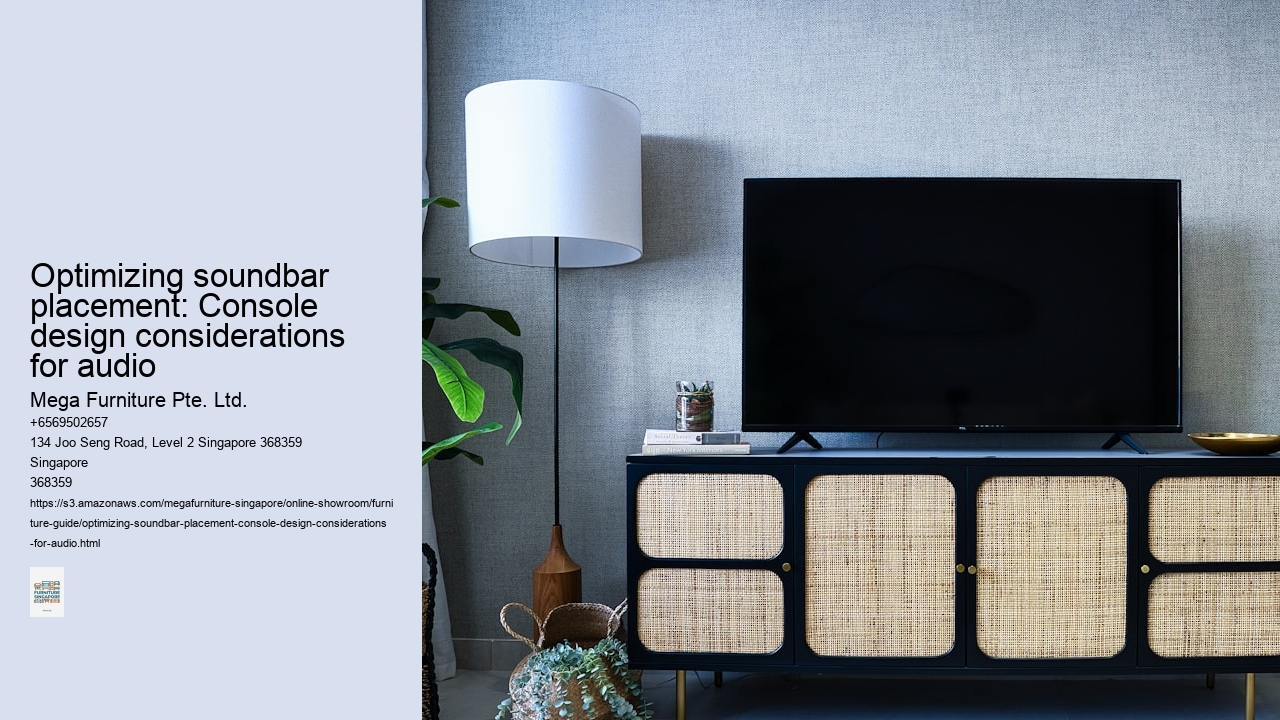
A rattan-fronted console might look lovely in a showroom, but place it in a humid HDB corridor facing the afternoon sun, and you’ll see the weave start to loosen within a year. Singapore’s climate is unforgiving, and the material you choose for your TV console isn’t just about aesthetics—it’s about survival against 80% humidity, daily wipe-downs, and the occasional splash from mopping. For most homes, engineered wood with a melamine laminate offers a pragmatic defence. It typically resists humidity far better than solid timber, which can warp or crack in our conditions. The crucial detail is in the edges; look for panels with fully sealed edges, especially on MDF components, to prevent moisture ingress and the dreaded panel swelling that ruins clean lines. A console with stainless steel legs or a powder-coated metal frame adds another layer of durability, shrugging off cleaning chemicals and the accidental scuffs from pets or children’s toys. Steer clear of porous natural materials like cane or untreated rattan if you’re near the coast in neighbourhoods like Bedok or Marine Parade, where salt air accelerates wear. That charming texture becomes a trap for moisture and grime. Instead, consider sintered stone tops or high-pressure laminates for a similar visual texture without the maintenance headache—they’ll handle a wet glass or a spilled drink without a second thought. It’s a balance between the look you want and the life you lead. A family with young kids needs a workhorse, while a condo owner might prioritise a sleek, floating design that’s easy to clean beneath. The right choice means your console stays looking pristine, not just for the first month, but for the long haul in your specific living conditions.
That grey utility box in your HDB service yard houses a condenser unit, and buyers consistently ignore it when measuring for a console. They push a long, floor-standing cabinet right against it, leaving mere centimetres of clearance for the door to swing open. This blocks essential maintenance access and, more critically, chokes the airflow the condenser needs to expel heat. The result is a system that strains, consumes more energy, and risks premature failure — a costly oversight for a $1,200 media unit that now needs to be shunted aside every time servicing is due. It’s a classic case of prioritising living room aesthetics over the practical engineering of the flat itself.
Mounting a floating console too high is a pervasive error, especially with the popularity of media wall features. The aim is to create a sleek, elevated look, but it often positions the TV centre above a comfortable viewing axis. From the typical 2.8-metre depth of a 3-seater sofa in a 4-room BTO, your neck ends up craned slightly upward for hours. This isn’t just uncomfortable; it defeats the purpose of a console designed to anchor the viewing experience. The ideal height positions the TV screen centre roughly at seated eye level, with the console acting as a visual platform, not a barrier.
Choosing a dark, monolithic console for a north-facing living room amplifies the gloom. These rooms, common in older resale flats in neighbourhoods like Bedok or Toa Payoh, already receive limited, cool natural light. A bulky, espresso-stained rubberwood unit becomes a shadowy mass that makes the entire 85 sqm space feel tighter and more cluttered. It’s a visual weight the room can’t support. Lighter finishes like oak or white sintered stone, or even a mid-tone walnut, help reflect what little light there is, making the area around your media wall feel more open and less like a cave.
There’s a persistent temptation to select a console that’s too short for the television above it, leaving the wall looking top-heavy and unstable. A 75-inch TV demands a console around 180 to 200 centimetres long to provide proper visual balance and adequate surface area for components like a centre channel speaker. Conversely, a petite 120cm unit under a massive screen looks comically inadequate, like a small plinth under a monument. The proportions need to work in tandem; the console should extend at least to, or slightly beyond, the edges of the TV frame to ground the entire installation.
Even with a sleek floating design, buyers often neglect the integrated cable management, leaving a tangled web of power strips, HDMI cords, and game console wires dangling in plain sight. That clean silhouette is instantly ruined by a messy nest of black cables snaking down the wall. Modern consoles address this with dedicated rear channels, grommets, and even built-in power sockets, but it requires conscious planning during installation. It’s the final, frustrating detail that can undermine an otherwise perfectly planned media centre, turning a feature wall into an exhibit of household clutter. You can browse solutions for a cleaner look in Megafurniture’s collection, where many models include these thoughtful routing features.
A soundbar placed flush against the front edge of a shelf doesn’t just look awkward — it muffles the entire audio experience. The physics are simple: sound waves need room to disperse, and that starts with a three to five centimetre buffer between the soundbar’s rear and the shelf’s leading lip. In a typical 4-room BTO living room, that means measuring your chosen soundbar’s depth, then selecting a console with an open shelf that’s at least 25 to 30cm deep. It’s a small dimensional tweak that prevents higher frequencies from reflecting straight off the timber and creates a cleaner, more expansive soundstage.
If you prefer the clean lines of a closed cabinet, the door material becomes critical. Solid wood or MDF panels, while popular for their finish, act as an acoustic dampener, absorbing crucial mid-range frequencies and leaving dialogue feeling hollow. The solution is perforated metal mesh or clear, solid acrylic panels; both allow sound to pass through with minimal interference while keeping dust and clutter out of sight. Just ensure any metal grille has holes large enough — typically 3mm or more — to avoid acting as a high-frequency filter.
Cable management isn’t just about tidiness; it’s about signal integrity. Tangled HDMI and power cords bunched behind a console can introduce audible interference, a faint buzz or hum that’s frustratingly difficult to trace later. Modern consoles designed for media integration will have dedicated rear cable ports that align directly with the soundbar’s own inputs, allowing you to route a single, short HDMI eARC cable and the power cord through separate, grommeted channels. This keeps the cables organised and prevents them from crossing, which is often the root cause of that low-level electronic noise.
For wall-mounted or floating consoles, this alignment is even more crucial, as the void behind the unit becomes a permanent tangle zone. It’s worth checking the console’s rear panel layout against your soundbar’s port location before committing — a mismatch here means you’ll be fishing for cables blindly every time you need to switch a connection. The goal is a setup where you never have to pull the console away from the wall again.
Some buyers prioritise a seamless, built-in look, opting to place the soundbar inside a dedicated, open niche within a larger media wall unit. That’s a valid aesthetic choice, but it demands even more clearance — not just at the front, but above and to the sides — to prevent the cavity from creating a boomy, resonant effect that muddies bass responses. In these custom installations, the surrounding materials matter too; padded fabric inserts within the niche can help absorb unwanted reflections that hard surfaces like sintered stone or lacquered wood might exacerbate.
A common frustration in Singapore’s living rooms isn't just the tangle of HDMI and power cables behind the TV console—it's the creeping bloom of white mould along the bottom edge after one too many humid monsoon seasons. Megafurniture’s showroom displays in Joo Seng are instructive here, because they don’t just stage perfect vignettes; they demonstrate units physically scaled to the exact niches found in local four-room BTO layouts or the media wall recesses of Tanah Merah condominiums. Their range spans from a compact 120cm to a substantial 240cm, which isn’t an arbitrary spread. It directly mirrors the progression of common TV sizes here, from a modest 40-inch screen for a bedroom to the 75-inch behemoths families are now mounting in resale flat living rooms. The proportions matter—a 180cm console under a 65-inch TV provides the visual anchor and surface space for a soundbar without overwhelming a typical 4-metre wall. It’s a practical calibration you can see for yourself in their showroom setups. Beyond dimensions, the design tackles specific, grating local pain points. Integrated cable management is a given, with rear channels and grommets that actually accommodate a multiplug’s bulk. More critically, the finishes are specified for humidity resistance; you’ll find laminates and treated wood veneers that can handle our 80% ambient moisture far better than untreated, imported solid wood might. For a piece that sits low to the floor and behind heavy equipment, that’s not a luxury—it’s a necessity. The storage logic is similarly local. Deep drawers accommodate not just media players but board games and Lego sets, while open shelving is often sized for router boxes and network-attached storage drives. It’s furniture that acknowledges you’re likely living with one storage room, if you’re lucky. This focus on foundational problems—size, climate, and clutter—makes their
console collectiona straightforward choice for anyone trying to organise a living space that’s already working overtime.
A TV console that can’t get up to your floor is just expensive wall art. For deliveries in Singapore, the 10th floor is the critical threshold — most condos and HDB blocks above that level incur lift landing charges, a fee for the final manual haul from lift lobby to your unit. That’s a conversation to have with your retailer before confirming an order, especially for a long, heavy piece in solid wood or sintered stone. It’s a line item that can surprise buyers in newer BTO projects, where floor counts often stretch well past that mark.
Assembly here is typically a two-person job, taking around 45 to 90 minutes for a floor-standing console. The real time-sink isn’t the main cabinet; it’s aligning the doors, installing soft-close drawer runners, and ensuring any wall-mounted or floating variant is perfectly level on your living room wall — a process that demands patience and a good spirit level. You’ll want the assembly team to do a full check of all panels and hardware on the spot, as reporting a missing screw or a scratched side panel weeks later is a bureaucratic headache.
Given Singapore’s climate, warranty specifics matter more than the warranty’s mere existence. Constant cycling between air-conditioned cool and humid warmth stresses materials, potentially causing subtle warping in solid wood or fatigue in hardware over time. Seek clear coverage for structural integrity and all mechanical parts — hinges, drawer glides, leg brackets — for a minimum of 12 months. This protects against the slow creep of material fatigue, not just sudden catastrophic failure.
A comprehensive warranty also simplifies the process if you need to make a claim. Keep your invoice and any assembly documentation; having a record of the initial condition helps expedite service. For a curated range of options with transparent logistics, you can browse the TV console collection at Megafurniture.
Ultimately, the logistics phase is where a well-chosen piece proves its value. A smooth delivery, a flush assembly, and the quiet confidence of a strong warranty mean your console fades into the background of your living room, exactly as it should.
For HDB flats, the main door clearance is typically 80cm wide—but that's the frame, not the usable gap. Delivery teams will measure the diagonal of the largest panel, because a 200cm-long console often arrives upright and angled. If it exceeds about 210cm diagonally, they'll likely unpack it in the corridor.
Can the router and StarHub box go inside? Only if the console has a ventilated back panel, or you're willing to drill one. Heat builds up fast in enclosed spaces; look for designs with mesh or perforated metal behind the lower compartments. That also keeps Wi-Fi signal from being completely choked by solid wood.
Best colour for resale value in a typical 4-room BTO? Neutral oak or matt white. They don't commit to a style, and they reflect light in living rooms that often only have one window. Dark walnut or navy blue can look intentional, but they also date a space faster.
Floor-standing versus floating for toddlers? Floor-standing offers stability against climbing. A floating console mounted on a feature wall might look cleaner, but it becomes a ladder if the TV is centred above it. For families, the grounded option is safer—and it hides scuff marks below the kickboard.
Browse the options at Megafurniture's collection.
Most buyers visit a showroom with a vague idea of size, then get seduced by a beautiful finish—only to discover their DB box is in the way, or their soundbar overhangs the console by three centimetres. That’s a design flaw you can’t unsee. Avoid it by treating your living room corner like a crime scene; document everything. Start with the wall itself. Measure its exact length, noting any irregularities like column protrusions or skirting board depth. Crucially, map your electrical outlets and that DB box position—in many HDB and condo layouts, it’s a bulky, non-negotiable protrusion right where you want your console centred. Then, get the precise dimensions of your actual TV model, not just its screen size; the stand or VESA mount points determine how much surface area you’ll need. Don’t forget soundbar depth, which is often the forgotten dimension that pushes a console too far into the room. Bring these measurements, along with a tape measure and photos of your space, when you visit the Tampines showroom. A photo captures the room’s colour tone and natural light in a way a measurement sketch can’t, helping you visualise how a walnut finish might work against your feature wall. This prep turns a browsing trip into a targeted inspection. Once there, the tactile tests begin. Open every drawer and door on your shortlisted units. A drawer glide should feel smooth and weighted, not gritty or loose; a door hinge must offer silent, sturdy resistance without wobble. These are the material quality signals that specs sheets omit—a plywood drawer box feels solid, while particleboard might sound hollow. You’re checking for the quiet competence that defines a piece meant to last a decade in a family living room. It’s the difference between buying furniture and commissioning a component for your home. You can
browse the Tampines showroom optionswith confidence, knowing the 210cm oak console will actually fit, and that its drawers won’t stick in Singapore’s humidity.
A 65-inch television can look comically oversized in a standard BTO living room, its screen dominating the narrow wall like a cinema poster in a lift lobby. A TV console anchors the wall opposite the sofa in the same way a tall bookshelf anchors a corner — long horizontal piece, mix of open and closed storage, defines the visual weight of one whole side of the room. Megafurniture's TV Console range covers floating wall-mounted designs, low-profile freestanding consoles, and modular feature-wall configurations. Most pieces sit at 40-50cm height, sized for screens up to 75 inches.. The spatial arithmetic is unforgiving: with HDB living rooms averaging 12 to 14 square metres, the primary feature wall often measures just three to three-and-a-half metres across. Condo units frequently offer even less linear space, pushing the media setup into a corner or against a truncated partition. That leaves little room for error when planning the console that grounds it all.
Console length isn't just about fitting your gear; it's a visual ballast. The rule of thumb is simple-your TV's width, plus about 20 centimetres of clearance on each side. For a typical 65-inch TV, that demands a console at least 180 centimetres long. Anything shorter creates a top-heavy silhouette, making the wall feel precarious and unfinished. It's a common misstep in newer estates like Tengah or Bidadari, where buyers prioritise screen size over furniture proportion.
Storage needs dictate the cabinet's depth. You'll want around 40 to 45 centimetres to comfortably house an AV receiver, game consoles, and cable management boxes without them protruding. Opt for a mix of concealed compartments and open shelving; the former hides router blinkenlights and tangled wires, while the latter breaks up the mass and allows for decorative touches. In many flats, a floating console design can enhance the sense of space, creating a cleaner line that makes a narrow room feel less cluttered.
Material choices here are practical, not just aesthetic. Sideboard . A sintered stone top resists water rings from humidifier mist or forgotten cups, while engineered wood veneers offer warmth without the cost and maintenance of solid timber. For a cohesive look, consider aligning the console's finish with other elements in the room-the trim on your storage system, or the legs of your adjacent sofa. The goal is a composed centrepiece, not a standalone appliance.
Budget realistically for this anchor piece. A well-proportioned console in durable materials typically starts around $800, with more substantial designs or premium finishes reaching $2,000 or more. It's an investment in proportion, one that finally makes that large-screen TV look intentionally chosen, not accidentally installed.
A 65-inch television can look comically oversized in a standard BTO living room, its screen dominating the narrow wall like a cinema poster in a lift lobby. The spatial arithmetic is unforgiving: with HDB living rooms averaging 12 to 14 square metres, the primary feature wall often measures just three to three-and-a-half metres across. Condo units frequently offer even less linear space, pushing the media setup into a corner or against a truncated partition. That leaves little room for error when planning the console that grounds it all.
Console length isn't just about fitting your gear; it’s a visual ballast. The rule of thumb is simple—your TV’s width, plus about 20 centimetres of clearance on each side. For a typical 65-inch TV, that demands a console at least 180 centimetres long. Anything shorter creates a top-heavy silhouette, making the wall feel precarious and unfinished. It’s a common misstep in newer estates like Tengah or Bidadari, where buyers prioritise screen size over furniture proportion.
Storage needs dictate the cabinet’s depth. You’ll want around 40 to 45 centimetres to comfortably house an AV receiver, game consoles, and cable management boxes without them protruding. Opt for a mix of concealed compartments and open shelving; the former hides router blinkenlights and tangled wires, while the latter breaks up the mass and allows for decorative touches. In many flats, a floating console design can enhance the sense of space, creating a cleaner line that makes a narrow room feel less cluttered.
Material choices here are practical, not just aesthetic. A sintered stone top resists water rings from humidifier mist or forgotten cups, while engineered wood veneers offer warmth without the cost and maintenance of solid timber. For a cohesive look, consider aligning the console’s finish with other elements in the room—the trim on your storage system, or the legs of your adjacent sofa. The goal is a composed centrepiece, not a standalone appliance.
Budget realistically for this anchor piece. A well-proportioned console in durable materials typically starts around $800, with more substantial designs or premium finishes reaching $2,000 or more. It’s an investment in proportion, one that finally makes that large-screen TV look intentionally chosen, not accidentally installed.