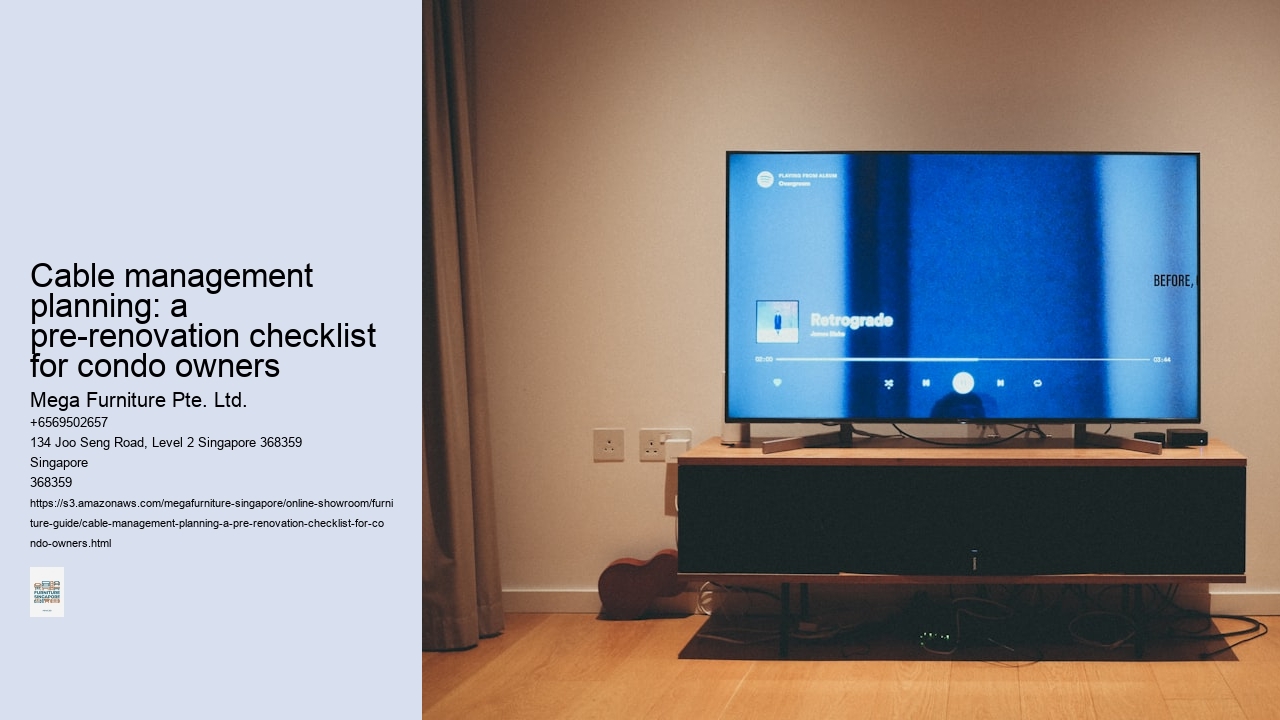
The AV receiver goes in, the doors close, and that’s when the real work begins for a TV console’s material — Singapore’s 80% humidity doesn’t announce itself, it just seeps in. You’ll see it first as a subtle warp on an unsealed edge, or a drawer that sticks every June. That’s why laminate often beats solid wood here; it’s a stability choice, not just a budget one. A good laminate finish on engineered wood or MDF can handle the seasonal swell far better than a solid teak or rubberwood panel that wasn’t acclimatised for our wet season.
Pay particular attention to the edges, especially on any MDF components. Look for a fully sealed, rounded edge — it’s not just a finish detail, it’s a moisture barrier. An unsealed cut edge acts like a sponge, letting humidity into the core where it can cause irreversible swelling. This is critical for floor-standing consoles in older resale flats or ground-floor units, where ambient moisture levels are often higher. A proper seal keeps the lines clean and the doors aligned.
For the structure itself, engineered wood with aluminium legs is a savvy pairing for many local homes. The wood composite offers dimensional stability, while aluminium legs lift the carcass off the floor, improving airflow and providing a solid barrier against termites — a genuine concern in many landed estates and older blocks. It’s a practical combination that sidesteps two common problems with one design decision.
Avoid thin particleboard for any shelf meant to hold substantial weight, like a centre bay for a heavy amplifier or gaming console. Over time, the constant load, coupled with humidity, can cause the board to sag or the fastener points to pull free. You want a thicker, denser board, or better yet, reinforced shelving with a metal brace or a centre support leg. It’s the difference between a console that lasts five years and one that lasts fifteen.
Finally, consider the daily wear. A matte or textured laminate will hide fingerprints and dust better than a high-gloss finish in a busy family living room. For a feature piece in a condo media wall, you might opt for a veneer with a more distinctive grain; just ensure it’s well-sealed. The goal is a console that manages your cables and your climate without becoming a maintenance project itself. You can explore a range of options built for these conditions in Megafurniture’s TV console collection, which includes several models with the sealed edges and reinforced shelving discussed here.
Integrated cable trays behind the console are essential, not optional. They're the primary channel for routing power cords, HDMI cables, and network leads from your devices to the wall sockets. In a typical setup with a router, Fibre TV box, and soundbar, these trays prevent a tangled mess that's impossible to service later. You'll want trays with enough depth to handle thicker power bricks, and a smooth finish so cables don't snag when you pull them out for upgrades. Leaving cables loose behind a console is a shortcut that always shows—either through visible clutter at the sides or through the strain it puts on connections.
Six access ports is the baseline for a modern media setup. That number covers the router, Fibre TV box, soundbar, and two game consoles, with one spare for a future upgrade like a streaming stick. Ports should be sized for mixed cables; a standard 50mm grommet accommodates most power cords, but you'll need at least one larger opening for a bulky multi-pin HDMI or an Ethernet cable with a stiff connector. Families often underestimate this—they buy a console with three ports and then have to run cables over the top, which ruins the clean look they paid for.
Floating consoles demand a dedicated path for cables to descend to the floor. Without a hollow core or a false wall conduit, wires will dangle visibly down the wall, defeating the entire floating aesthetic. The conduit should be planned during renovation, typically a PVC pipe chased into the wall or a pre-built channel within the console's structure that aligns with floor socket positions. This isn't just for power; it's also for any data cables you might want to run from a floor-level router cabinet up to the console. Getting this wrong means you're stuck with exposed drops that you can't easily fix post-installation.
Grommets aren't just holes—they're wear points that need durable material and a clean finish. Cheap plastic rings crack under repeated cable adjustments, and sharp edges can nick or cut cable insulation over time. Look for grommets made from a flexible rubber or silicone that seals the opening neatly, which also helps reduce dust ingress into the console's interior. They should be removable for cleaning or replacement without damaging the console's finish. In many homes, these small components fail first, turning a tidy system into a frayed, dusty problem.
Your cable management system must accommodate not just today's devices, but next year's additions. That means leaving spare capacity in the rear trays and ensuring conduit sizes aren't maximised by current cables alone. A common oversight is planning only for the console's immediate contents, forgetting that you might add a subwoofer, a second gaming console, or a network switch later. The system should allow you to reroute or add a cable without dismantling half the setup. It's a practical, almost pessimistic approach: assume you'll need more, and build the infrastructure to handle it silently.
The 4m-long living room in a typical 4-room BTO is a study in centimetre accounting. Buyers will measure for a 65-inch TV, then pick a console that’s 55cm deep because it looks substantial in the showroom — that extra 10cm beyond the recommended 45cm maximum is the difference between a clear walkway and constantly shimmying past the furniture. It’s a layout tax paid daily.
Another frequent misstep involves the audio setup. Envisioning a clean media wall, they’ll choose a console exactly the width of the TV, forgetting that floor-standing speakers need breathing room. A pair of bookshelf speakers requires at least 30cm of space on either side of the unit, which means a 180cm console for a 75-inch TV leaves no flanking space at all; the speakers end up crammed in front, defeating the purpose of a streamlined look.
Then there’s the door swing. In many flats, the storeroom or balcony access is right beside the TV wall. A console that runs too long will obstruct that door’s clearance — you’ll be moving a plant or a side table every time you need to get the vacuum cleaner. It’s a nuisance that becomes apparent only after the furniture is delivered and bolted to the wall.
Allocating space for cable management within the console itself is often the last thought, but it’s what makes or breaks the polished finish. A unit with just a small porthole at the back creates a tangled nest of power strips, HDMI and router cables that’s impossible to access or organise. Opt for one with a dedicated cable compartment or a removable back panel; it’s the feature you’ll thank yourself for every time you need to swap out a gaming console or add a new streaming device.
These aren’t just aesthetic choices, they’re functional calculations for how a family actually lives in a 12 sqm space. Getting them wrong means living with a series of small, persistent irritations — a room that feels tighter than it is, doors that don’t open fully, and a tangle of wires that belies the clean lines you paid for.
A showroom’s fluorescent wash can hide a lot, but your fingers won’t lie. At Megafurniture’s Tampines or Joo Seng locations, the first test is a simple, silent slide. Pull a drawer out fully — it should glide on metal runners without wobble, then dampen to a stop. That last inch of resistance matters more in a 4-room BTO living room, where a console packed with game consoles and media players gets opened daily.
Next, check the heft. A hollow door feels cheap; a solid one, even in laminate, has a satisfying weight. Open and close it repeatedly, listening for the hinge’s quiet click. You’re simulating years of use, perhaps by kids grabbing remotes. Then look at the back. Press a fingernail into the backing board; if it’s flimsy hardboard that gives easily, it won’t protect cables from dust or knocks when pushed against a condo wall.
Lighting is a trick. Condo downlights create sharp pools of reflection, so examine finishes under the showroom’s own spots. A high-gloss laminate might show every fingerprint and light streak, while a matte or textured finish absorbs the glow, hiding smudges better in a dimmed media room. This is where you’ll see if that oak veneer looks warm or plastic under your own ceiling’s 3000K LEDs.
Finally, think ahead. A good TV console is a modular system. Ask to see the add-ons — the side cabinets, the top units, the matching media towers. Verify the fixings align and the colours match across batches, because you might want to extend storage next year for a new soundbar or gaming rig. It’s a practical reason to visit in person; you can’t assess future-proof compatibility from a thumbnail image online. Browse the options at Megafurniture’s collection and physically test how those future pieces might lock together. A sales brochure can promise flexibility, but only your hands can confirm the seams will be flush and the colour consistent under your own lighting.
The delivery crew will arrive with your 240cm console in a crate that’s 220cm long and 80cm high — and then they’ll meet the HDB lift landing. In many older blocks, that clearance is exactly 220cm, a millimetre-perfect puzzle that demands precise angling and often the removal of protective packaging on the spot. For pre-renovation deliveries, you’ll need to coordinate on-site storage; a half-finished living room with wet paint and stacked tiles is no place for flat-pack cardboard. The best practice is to schedule delivery for after flooring and major wall work are complete, but if you must store it, confirm a dry, covered spot with your contractor well in advance.
Assembly itself is straightforward for floor-standing units, but wall-mounted or floating designs introduce complexity. You must confirm what ‘assembly includes’ means on your invoice: specifically, whether installers will drill into your actual wall. Many newer BTOs and condos use partition walls for feature sections, which can’t support the same weight as brick. A proper install for a heavy, loaded console requires locating studs or using specialised hollow-wall anchors; if the service only covers basic bracket attachment to the unit itself, you’re left hiring a separate handyman.
Warranties often focus on surface defects — scratches on laminate, a wobbly drawer runner. For a long TV console holding over 50kg of electronics, the structural frame is what matters. Scrutinise the terms to ensure the three-year coverage explicitly includes joints, load-bearing panels, and the integrity of the mounting system. It’s the slow sag of a central shelf after two years that you’re guarding against, not just a shipping ding.
Logistics here are a test of spatial patience. You can browse well-proportioned options at Megafurniture’s collection, but the real work is measuring your lift lobby, your doorway, and that awkward corner in the corridor. It’s a mundane chore that feels disproportionately stressful, yet getting it wrong means a very expensive crate stuck in a common corridor.
A common panic sets in after the 75-inch The Frame arrives and the One Connect box won’t fit in the console’s cable compartment. That sleek box is surprisingly deep, often around 12cm—most standard rear cable management chambers are only 8 to 10cm. You’ll need to specifically check for a console with a dedicated, ventilated compartment labelled for media boxes, or consider a model with open shelving at one end, which many buyers use exclusively for that purpose.
For a 55-inch TV paired with a soundbar, a 120cm console is the bare minimum. It’ll work, but the setup will look precariously balanced; the TV’s legs will sit right at the console’s edges, and the soundbar will likely overhang. The safer, more proportional choice is 140cm or 160cm, which gives you room for the soundbar and maybe a decorative object or two without the whole arrangement feeling like a tightrope act.
Cable management for a wall-mounted console with no false wall requires a bit of cleverness. The goal is to hide the droop of cables between the TV and the console’s top. A slim, paintable cable raceway channel fixed to the wall is the standard fix, but for a cleaner look, some buyers drill a single, large-gauge hole directly into the console’s top panel, right behind where the TV sits, and feed all cables down through it into the cabinet. Just ensure your drill bit matches a grommet size you can buy later.
Pet-proofing narrows your material choices quickly. Laminated engineered wood or melamine finishes in a matte or textured grain will resist casual scratches far better than a high-gloss lacquer, which shows every mark. For the most determined scratchers, sintered stone or ceramic-topped consoles are virtually impervious, though they command a premium. Avoid real wood veneers and soft woods like pine—they’re a favourite canvas for a cat’s claws.
Beyond material, consider the console’s leg design. A floor-standing model with sturdy, squared legs is less tempting for a dog to naw on than delicate, tapered wooden ones. You can always browse the TV console range for options that bundle durability with the storage solutions you need.
The tape measure is your most important tool now, not a glossy catalogue. Before you even consider showroom aesthetics, you’ve got to know your numbers: the exact width of your feature wall, the height from floor to your intended TV mount, and the footprint of every device that needs a home. That means physically listing your media player, soundbar, game consoles, and router — and confirming there’s a power point within reach. If there isn’t, you’re already looking at an extension cord snaking across your floor, which defeats the entire purpose. Your choice between a floating console and a floor-standing one often comes down to two Singaporean realities: cleaning and toddlers. Floating units create that coveted visual lightness and make mopping underneath a breeze — a genuine advantage in our humid, dust-prone flats. But a floor-standing cabinet is an immovable barrier against a toddler’s cruising path; it won’t wobble under a climbing child’s weight. That trade-off is personal, but it’s one you must settle before you shop. Prioritise the internal cable management system over the external finish. A beautiful sintered stone top means nothing if your console’s rear panel is a solid board, forcing all your cables out one side hole into a tangled mess. Look for models with built-in cable channels, rear cable access panels, and proper ventilation — features that keep your setup organised and functional for years, not just photogenic on day one. In many 4-room BTO layouts, the living room wall is a long, blank canvas. It’s tempting to fill it with a dramatic 240cm console. But if your actual gear is modest, you’ll just be paying for empty storage and creating a dust-catching surface. Proportion matters: a 55-inch TV often looks balanced on a 180cm console, leaving room for a floor plant or speaker at each end without crowding the space. Ultimately, the right console is the one that disappears in daily life, quietly containing the chaos. You can
browse optionswith those practical filters in mind — length, mounting type, cable management features — rather than getting distracted by a trendy finish you’ll regret in six months.
The console you choose for that new 65-inch TV probably won't fit your wall. It's a common mismatch - buyer gets the screen size right, then orders a 180cm console because it's the recommended pairing, only to find it dominates the entire living room wall. In a 3.5-metre wide BTO living room, that leaves just 85cm on each side; in a narrower resale HDB corridor flat, where walls can be 3m or less, the console becomes the wall. Proportion goes out the window. Console length has to negotiate two fixed measurements: your TV's width and your room's actual wall span. Older HDB blocks, especially those 3- and 4-room flats in neighbourhoods like Bedok or Toa Payoh, often have living room walls under 3.5 metres. Here, a 120cm to 160cm console keeps things balanced, even if it means your 65-inch TV will slightly overhang the sides - that's visually acceptable, whereas an overscaled piece of furniture isn't. The goal is a grounded centrepiece, not a monolithic barrier. A TV console anchors the wall opposite the sofa in the same way a tall bookshelf anchors a corner — long horizontal piece, mix of open and closed storage, defines the visual weight of one whole side of the room. Megafurniture's TV Console range covers floating wall-mounted designs, low-profile freestanding consoles, and modular feature-wall configurations. Most pieces sit at 40-50cm height, sized for screens up to 75 inches.. Display cabinets sit between bookshelf and storage cabinet in function — closed glass-front protection for the items you want visible but not collecting dust. Megafurniture's Display Cabinet range covers glass-front, curio, wall-mounted, and freestanding configurations in solid wood, MDF, and metal-framed constructions. Average pricing for glass-front variants sits around $271, with LED-lit and motorised-shelf models commanding the higher tier.. For landed property media rooms or expansive condo living areas, you've got the luxury of scale. A 240cm console in a room with a 4.5m wall allows for substantial flanking elements, like a floor lamp and a tall plant, framing the media wall properly. A Bookshelf earns its place in Singapore homes through dual function — book and decor storage in the open shelves, soft visual division when placed mid-room in open-plan condominium layouts. Megafurniture's combined display unit and bookshelf hub covers tall book racks, cubby-hole designs, ladder shelves, modular cube systems, and glass-door pieces in oak, walnut, and MDF veneer finishes. Solid-wood pieces typically start around $425, with most heights spanning 120cm to 220cm to fit standard 2.6m HDB ceilings.. That length also accommodates a 75-inch or larger screen with ample breathing room on either side. The calculus shifts from minimising intrusion to creating a deliberate, anchored installation. Material choice plays into this spatial negotiation, too. A bulky solid wood console in a dark finish will feel heavier and closer than a sleek, floating design in light oak or white sintered stone. In tighter spaces, a wall-mounted or leggy floor-standing variant can preserve a sense of floor space and light, which is half the battle in our humid climate. You're managing cables, sure, but you're also managing volume and visual weight. Ultimately, the tape measure is your first tool - not the TV's spec sheet. Start with the clear wall space between built-ins or doorways, subtract at least 60cm for circulation and side furniture, and let that remaining figure guide your console search. You can always
browse console optionsfiltered by precise dimensions, which is far smarter than falling for a showroom piece that only works in a landed house.
The console you choose for that new 65-inch TV probably won’t fit your wall. It’s a common mismatch — buyer gets the screen size right, then orders a 180cm console because it’s the recommended pairing, only to find it dominates the entire living room wall. In a 3.5-metre wide BTO living room, that leaves just 85cm on each side; in a narrower resale HDB corridor flat, where walls can be 3m or less, the console becomes the wall. Proportion goes out the window. Console length has to negotiate two fixed measurements: your TV’s width and your room’s actual wall span. Older HDB blocks, especially those 3- and 4-room flats in neighbourhoods like Bedok or Toa Payoh, often have living room walls under 3.5 metres. Here, a 120cm to 160cm console keeps things balanced, even if it means your 65-inch TV will slightly overhang the sides — that’s visually acceptable, whereas an overscaled piece of furniture isn’t. The goal is a grounded centrepiece, not a monolithic barrier. For landed property media rooms or expansive condo living areas, you’ve got the luxury of scale. A 240cm console in a room with a 4.5m wall allows for substantial flanking elements, like a floor lamp and a tall plant, framing the media wall properly. That length also accommodates a 75-inch or larger screen with ample breathing room on either side. The calculus shifts from minimising intrusion to creating a deliberate, anchored installation. Material choice plays into this spatial negotiation, too. A bulky solid wood console in a dark finish will feel heavier and closer than a sleek, floating design in light oak or white sintered stone. In tighter spaces, a wall-mounted or leggy floor-standing variant can preserve a sense of floor space and light, which is half the battle in our humid climate. You’re managing cables, sure, but you’re also managing volume and visual weight. Ultimately, the tape measure is your first tool — not the TV’s spec sheet. Start with the clear wall space between built-ins or doorways, subtract at least 60cm for circulation and side furniture, and let that remaining figure guide your console search. You can always
browse console optionsfiltered by precise dimensions, which is far smarter than falling for a showroom piece that only works in a landed house.