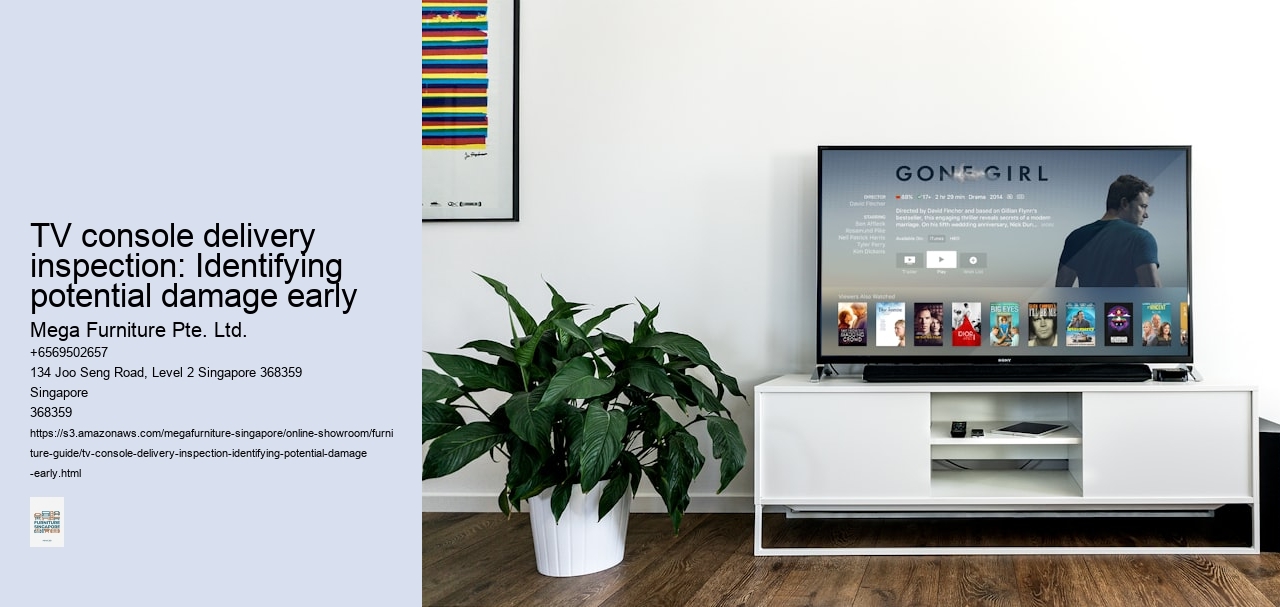
A buyer who’s spent weeks picking a TV console for their 4-room resale flat will often miss the grain match on the cabinet doors. It’s a small thing, but inconsistent veneer patterns — where one door has a dramatic oak swirl and its neighbour shows a bland, straight grain — can make an otherwise solid piece look cheap from day one. Quality signals are subtle; you’ll find them in the heft of a full-extension drawer glide, which reveals the entire interior without dumping cables on the floor, and in the quiet assurance of screw-fixed corner joints, not just staples hidden under veneer.
The more common blunders, however, are spatial. In many HDB corridors, especially those tight, L-shaped passages in older blocks around Bedok or Tampines, an oversized 240cm console simply won’t turn the final corner. You’re left with a scratched wall, a frustrated delivery crew, and a console that lives in the living room only after its packaging is shredded in the common corridor. Measure the narrowest access point, not just your living room wall — that’s the rule for any delivery, but it’s routinely forgotten in the excitement of a new media setup.
Another oversight is functional: ignoring cable management ports. Modern media walls are meant to consolidate your set-top box, soundbar, and gaming console into a clean block, but that only works if the console has dedicated, rubber-grommeted holes at the back. Without them, you get a nest of visible HDMI and power cables snaking out the sides, which defeats the entire purpose of a storage console and turns your feature wall into a display of clutter.
Look for those details before committing. A console with proper cable ports and robust, screw-fixed construction typically costs a bit more, but it’s the difference between a piece that feels integrated and one that just sits there. For a focused selection built around these practical considerations, you can browse Megafurniture’s collection.
Inspect the delivery box before it even enters your lift lobby. Look for dents, tears, or any water staining on the cardboard — that last one’s a major red flag for potential swelling in the engineered wood panels inside. Singapore’s humidity means damp cardboard can hide mould or warping, issues that might not show until weeks later. You’ll want to note any external damage on the delivery slip immediately; a driver’s signature on a clean slip can void your warranty claim before you’ve even opened the box. It’s a two-minute check that saves months of back-and-forth with customer service.
The corners of a TV console are its most vulnerable points during transit, especially on a 200cm unit navigating a tight BTO corridor. Run your hand along each corner, feeling for chips or cracks in the finish that aren't visible from a standing position. Laminate and veneer finishes on popular rubberwood or MDF consoles can splinter on impact, leaving a rough edge that catches on cables and cloths. A small chip might seem cosmetic, but it’s a stress point that can lead to further peeling, particularly in our humid climate where materials expand and contract.
Lay all large panels — side boards, shelves, the main top panel — flat on a clean surface under good light. Look for fine, hairline scratches that often come from panels rubbing together in the truck, or deeper gouges from improper handling. Glossy acrylic and lacquered finishes are notoriously prone to showing every mark, while textured woodgrain or sintered stone might hide minor flaws. This isn’t about perfection for a floor-standing piece, but a major scratch across the centre of a floating console’s top becomes the room’s focal point for all the wrong reasons.
Cross-reference every screw, cam lock, bracket, and wooden dowel against the packing list. Missing a single specialised bracket for a wall-mounted console means the entire installation gets delayed, leaving your new 75-inch TV propped against the sofa. It’s frustratingly common for small bags of hardware to be tucked inside drawers or taped to the back of a panel, so check every cavity. Count the shelf pins twice; having three when you need four renders a whole storage bay useless until a replacement arrives.
Take timestamped photos of any issue, from the water-damaged box to the chipped corner, before you start assembly. Use your phone’s flash to highlight scratches on dark walnut finishes, and include a ruler or coin in the shot for scale. Email these photos to yourself and the retailer on the same day — that digital paper trail is non-negotiable. Many buyers think a verbal note to the delivery crew is enough, but without photos, you’re just hoping the warehouse team believes your description weeks later when the replacement part is ordered.
A product photo can’t tell you if a drawer will stick in Singapore’s humidity, or if a door hinge feels flimsy after a month. That’s why a trip to Megafurniture’s showrooms in Joo Seng or Tampines isn’t just about browsing — it’s a tactile audit. You need to press down on the top panel to check for wobble, run a hand along the edge to feel for rough veneer, and test the weight of every sliding mechanism yourself. Online specifications list dimensions, but they can’t replicate proportion in a real space. Many showroom displays are arranged in realistic room sets scaled to local flat layouts; you can immediately see how a 180-centimetre console might dominate a 12 sqm condo living area, or if a floating design truly clears the floor for easier cleaning. It’s the difference between imagining a piece and knowing it will physically fit your life — and your corner where the floor isn’t perfectly level. For a TV console, this hands-on check is critical. The unit must support a 55-inch panel without bowing, and its shelves need to accommodate both a media player and a router without crowding. You’ll want to verify the cable management holes are actually large enough for a multi-plug head, and that the finish — whether it’s a matte laminate or oak veneer — doesn’t look cheap under the showroom’s bright lights, which are often kinder than harsh afternoon sun. Ultimately, you’re assessing build quality that specs omit. A smooth drawer action suggests decent runners; a door that closes with a solid *thunk* indicates better hinges. These are the details that determine if a console lasts five years or starts irritating you in five months. You can begin this inspection online by browsing
Megafurniture’s TV console collection, but the final decision should happen in person, with your own hands.
The most common mistake with wall-mounted TV consoles in HDB flats isn't the mounting itself — it's assuming the plasterboard can hold the weight. You must locate the concrete studs behind that drywall; a basic stud finder often fails, so many homeowners end up drilling exploratory holes where the console’s back panel will eventually conceal them. Once you’ve secured the mounting brackets into solid concrete, the real work begins: levelling the console body before you tighten every bolt. A unit that's even slightly off-kilter doesn't just look sloppy; it creates uneven weight distribution that can stress the frame over time, especially under the load of a 65-inch TV and all its accompanying hardware.
Cable management is a step you cannot postpone. Thread all your HDMI, power, and audio cables through the designated channels or rear grommets before you slide the console into its final position against the wall. If you don't, you'll be forced to tilt the assembled unit forward later, which almost always results in deep, unsightly scratches across your vinyl plank or engineered timber flooring. It’s a frustrating and entirely preventable bit of damage that buyers often only notice once their new living room centrepiece is supposedly complete.
After everything is secured and plugged in, conduct a simple stability check. Apply firm pressure to the top surface at various points, particularly on any open shelving or cantilevered ends. There should be no creaking, shifting, or flexing; what you're feeling for is a single, rigid structure. This is also the moment to open every drawer and door repeatedly, ensuring smooth operation and that nothing has been knocked out of alignment during the lift-and-shift from your corridor into the living room.
Finally, step back and view the console from multiple angles in the room's typical lighting. That floating design might look perfectly straight from your favourite armchair, but from the dining area, a shadow might reveal a gap at the top. Minor adjustments are still possible now, but they become a major headache a week later when you’ve already filled the shelves with books and gaming consoles. For a wide selection of wall-mounted and floating designs suited to local walls, you can browse the TV console options at Megafurniture.
A buyer in a Tampines five-room resale might find the BDB false wall a blessing for hiding cables, but it’s a specific beast. Can it support a floating console? Yes, but it’s not a given. You’ll need to locate the timber battens behind the plasterboard and secure the mounting bracket directly into them; hitting just the board or the hollow cavity behind is a recipe for disaster. Proper reinforcement with heavy-duty wall plugs and brackets rated for the console’s load is non-negotiable — that sleek, floating look depends entirely on what’s hidden behind the wall. Pet owners, particularly those with cats or an energetic terrier, face a different set of material realities. A console’s lower panels and corners become scratching posts and bumper cars. The choice here is straightforward: opt for scratch-resistant melamine or laminated finishes over soft, oiled woods like rubberwood or acacia. A melamine surface might show a faint grey line from a determined claw, but it won’t gouge; a soft wood finish will be shredded within a season, leaving you with a permanently distressed piece you didn’t choose. Warranties often get filed away and forgotten until something goes wrong. Megafurniture’s standard warranty covers manufacturing defects in materials and workmanship for a specified period, which is fairly typical. The critical fine print, however, revolves around assembly and movement. Damage incurred during self-assembly, or from self-arranged relocation where the console is disassembled and re-fixed, typically voids the coverage. They’ll honour a fault in the drawer glide from the factory, but not a split panel from an over-tightened screw or a drop during a move from Bedok to Clementi. For those weighing options, it’s worth browsing the full
TV console collectionto compare the mounting specifications and material finishes side-by-side. The peace of mind from a properly mounted, pet-resistant unit far outweighs the initial appeal of a more delicate design. Ultimately, your console’s longevity hinges on these three practicalities more than its aesthetic. Get the mounting wrong, and it’s a safety issue; choose the wrong material, and it’ll look battered before its time; misunderstand the warranty, and you’re on the hook for repairs you assumed were covered.
The box fits through the lift lobby, but the console itself gets stuck on the front gate — it's a story heard too often in HDB neighbourhoods like Bedok or Clementi. That final tape measure check isn't about the TV wall; it's about the journey from the lorry to your living room. Re-measure your main doorway width, lift interior depth, and any tight staircase corners, then cross-reference with the console’s assembled height and diagonal length. A 240cm console in a box is a rigid, unwieldy object, and delivery teams can’t perform miracles in a 90cm-wide corridor.
Confirm the lead time, too. If you’re coordinating with renovation contractors for built-in carpentry or fresh paint, a six-week wait for a floor-standing console needs to align with your electrician’s schedule for socket and conduit work. A mismatch means living with a TV propped on packing crates for a month, which tends to frustrate everyone in a 4-room BTO.
Then there’s the storage philosophy. This choice often splits along housing lines. For the HDB family, closed cabinets with solid doors or soft-close drawers are the pragmatic favourite; they hide the inevitable clutter of game controllers, charging bricks, and school worksheets, turning a 4-metre living room wall into a calm centre. The condo owner with a dedicated media room, however, might lean into open shelving or glass fronts — it’s a chance to display curated books, a single art object, or a collection, treating the console as a display plinth.
Decide your ratio before you commit. A unit that’s half open, half closed offers a compromise, but you’ll need to be honest about what will actually go on those open shelves. In many homes, they become a landing strip for keys and loose change, not the minimalist sculpture you envisioned.
Finally, just look at it. Live with the idea of that specific oak veneer or matte laminate finish against your feature wall for a week. The console is a long-term visual anchor; buyer’s remorse here is a bulky, expensive problem to solve.
A standard 3.5-metre living room wall in a 4-room BTO flat doesn't leave much wiggle room once you've accounted for a 65-inch TV and its floor-standing speakers. That's why the first measurement to take isn't for the screen, but for the alcove - the space between your feature wall's built-in carpentry or the gap beside your main door. Most buyers find their console length is dictated by this leftover span, typically landing between 180 and 220 centimetres. A TV console anchors the wall opposite the sofa in the same way a tall bookshelf anchors a corner — long horizontal piece, mix of open and closed storage, defines the visual weight of one whole side of the room. Megafurniture's TV Console range covers floating wall-mounted designs, low-profile freestanding consoles, and modular feature-wall configurations. Most pieces sit at 40-50cm height, sized for screens up to 75 inches.. Anything longer risks a cramped, corridor-like feel; anything shorter can look like an afterthought beneath a large television. Singapore's humidity is a silent design partner. A solid wood console, left untreated, will absorb moisture from the air for months before the warping becomes visible along a drawer front or door gap. That's why many local buyers opt for engineered solutions - moisture-resistant laminates, treated timber like kiln-dried rubberwood, or sealed MDF cores - which hold their shape far better in our consistent 80% RH. A Bookshelf earns its place in Singapore homes through dual function — book and decor storage in the open shelves, soft visual division when placed mid-room in open-plan condominium layouts. Megafurniture's combined display unit and bookshelf hub covers tall book racks, cubby-hole designs, ladder shelves, modular cube systems, and glass-door pieces in oak, walnut, and MDF veneer finishes. Solid-wood pieces typically start around $425, with most heights spanning 120cm to 220cm to fit standard 2.6m HDB ceilings.. The material choice isn't just about aesthetics; it's a practical defence against the climate. Floor clearance is another non-negotiable, often overlooked until the robot vacuum gets stuck on a Friday night. A console with a plinth base or legs under 12 centimetres high won't accommodate most automated cleaners or a sizeable air purifier. You'll want at least 15 centimetres of clearance, which means checking the specs of your Dyson or Xiaomi model before committing to a low-slung, floating design. It's a classic Singaporean trade-off: that sleek, minimalist look versus the weekly chore you're trying to automate. Factor in the ancillary gear, too. A media setup now includes a gaming console, soundbar, Wi-Fi mesh node, and perhaps a set-top box - all needing ventilation and cable management. An enclosed cabinet with a solid back panel turns into a heat trap; look for designs with cable grommets and slatted backs or open sections to let the warm air from your PlayStation drift out. Smart storage here isn't about hiding everything, but organising the inevitable tangle so it doesn't spill onto your new vinyl flooring. Finally, consider proportion. A 220-centimetre console can dominate a narrow room if it's also deep; keeping the depth around 40–45 centimetres maintains a walkway while still holding a soundbar. The goal is a piece that anchors the room without claiming it entirely. You can
browse options scaled for local floor plans, where the dimensions often reflect these common spatial constraints.
A standard 3.5-metre living room wall in a 4-room BTO flat doesn’t leave much wiggle room once you’ve accounted for a 65-inch TV and its floor-standing speakers. That’s why the first measurement to take isn’t for the screen, but for the alcove — the space between your feature wall’s built-in carpentry or the gap beside your main door. Most buyers find their console length is dictated by this leftover span, typically landing between 180 and 220 centimetres. Anything longer risks a cramped, corridor-like feel; anything shorter can look like an afterthought beneath a large television. Singapore’s humidity is a silent design partner. A solid wood console, left untreated, will absorb moisture from the air for months before the warping becomes visible along a drawer front or door gap. That’s why many local buyers opt for engineered solutions — moisture-resistant laminates, treated timber like kiln-dried rubberwood, or sealed MDF cores — which hold their shape far better in our consistent 80% RH. The material choice isn’t just about aesthetics; it’s a practical defence against the climate. Floor clearance is another non-negotiable, often overlooked until the robot vacuum gets stuck on a Friday night. A console with a plinth base or legs under 12 centimetres high won’t accommodate most automated cleaners or a sizeable air purifier. You’ll want at least 15 centimetres of clearance, which means checking the specs of your Dyson or Xiaomi model before committing to a low-slung, floating design. It’s a classic Singaporean trade-off: that sleek, minimalist look versus the weekly chore you’re trying to automate. Factor in the ancillary gear, too. A media setup now includes a gaming console, soundbar, Wi-Fi mesh node, and perhaps a set-top box — all needing ventilation and cable management. An enclosed cabinet with a solid back panel turns into a heat trap; look for designs with cable grommets and slatted backs or open sections to let the warm air from your PlayStation drift out. Smart storage here isn’t about hiding everything, but organising the inevitable tangle so it doesn’t spill onto your new vinyl flooring. Finally, consider proportion. A 220-centimetre console can dominate a narrow room if it’s also deep; keeping the depth around 40–45 centimetres maintains a walkway while still holding a soundbar. The goal is a piece that anchors the room without claiming it entirely. You can
browse options scaled for local floor plans, where the dimensions often reflect these common spatial constraints.