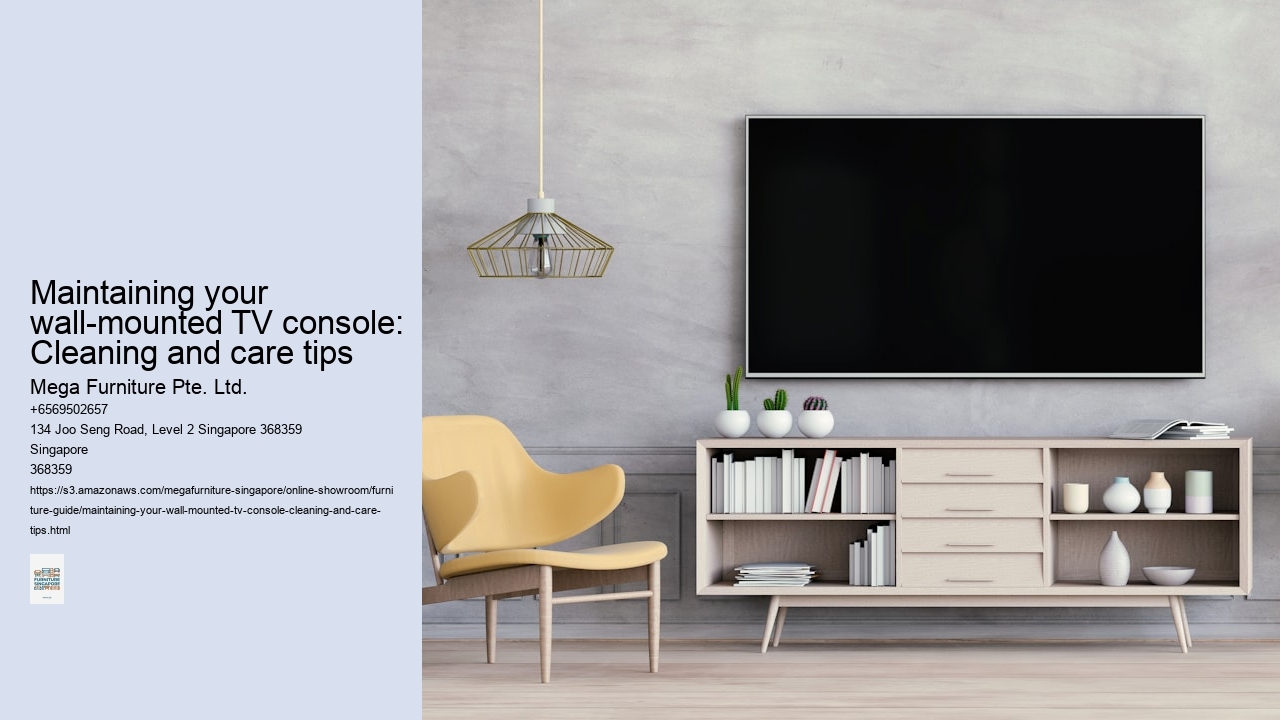
Singapore's climate is a material test. An untreated particleboard console in a non-air-conditioned living room near Eunos or Bedok—where humidity can linger around 80%—will swell and warp within a season. That’s why buyer priorities should skew toward moisture-resistant cores: look for laminates with sealed edges, properly treated rubberwood, or engineered wood with a waterproof coating. A matte laminate finish, for instance, resists the damp stickiness better than a porous oak veneer, and it’s easier to wipe down after the occasional spill.
Pets and young children add another layer of wear. Soft, thin veneers and high-gloss acrylic surfaces show every claw mark and toy-car scratch; they’re a poor choice for a family room where the console doubles as a de facto play boundary. Opt instead for textured laminates, sintered stone tops, or scratch-resistant melamine—finishes that can handle an errant paw or a bumped remote without telling the story afterwards. The console’s corners matter, too; a rounded bullnose profile is kinder on toddler foreheads than a sharp, mitred edge.
Size is a practical geometry. A common mistake is pairing a 55-inch screen with a 120cm console; the proportions look top-heavy and precarious. For a 55-inch TV, aim for a console around 180cm long—this provides visual balance and ample surface for speaker placement. In older resale flats, the real constraint isn’t your living room wall, but the front door. Measure your narrowest access point, often the main doorway or a tight service yard entrance in four-room layouts; a 220cm unit might fit in the room but won’t get through the hall without disassembly.
Finally, consider the wall you’re mounting to. Many BTO and resale flat partition walls are lightweight, and a fully loaded console needs solid backing. It’s worth checking for studs or using appropriate hollow-wall anchors—the last thing you want is a sagging centrepiece pulling away from the plaster. For a curated selection of wall-mounted options in various lengths and finishes suited to local conditions, you can browse the TV console range at Megafurniture.
A solid rubberwood frame in a 180cm console can carry 40kg of AV equipment without sagging over a decade; the same span in particleboard often bows within three years under a 65-inch TV. That structural integrity matters in a humid climate where moisture absorption weakens composite boards, leading to a wobble you can't fix with a wall bracket. Solid wood also accepts screw threads more reliably for mounting hardware, which is critical for a piece that's literally hanging over your media setup. You'll pay more upfront, but the cost per year of service is typically lower for a hardwood frame, especially in a family living room where it gets daily use. Check the product specifications for terms like "solid timber core" or "engineered wood," which often signal a plywood or laminated block that's still structurally sound.
Full-extension glides let you access the entire drawer depth, which is essential for retrieving that stray HDMI cable or game controller from the very back. Cheap, partial-extension runners feel flimsy and usually fail first, leaving drawers slumped at an angle that scrapes against the frame. Soft-close mechanisms aren't just a luxury; they prevent the constant jarring impact that loosens joints and rattles your soundbar every time someone slams a drawer shut. Look for branded runners, often stamped on the side of the metal, as a reliable signal of considered engineering beyond the bare minimum. In a 4-room BTO, where storage is always at a premium, you can't afford drawers that become frustrating to use.
Thicker laminates, around 0.7mm or more, resist the bubbling and edge peeling that plagues cheaper finishes exposed to Singapore's heat and occasional air-con condensation. A thin, paper-like laminate will show wear patterns quickly, especially on the high-touch area where you rest remotes or decorative items. The surface should feel consistently smooth to the touch, with no detectable ripples or soft spots that indicate poor adhesion to the substrate underneath. This isn't just about aesthetics; a compromised surface seal allows moisture ingress, which is the beginning of the end for any composite material. For a busy household, it's the difference between a console that looks new in five years and one that looks tired after two.
Visibly heavy-gauge metal brackets are non-negotiable for a secure wall mount, as they distribute the console's loaded weight across the studs in your feature wall. Light, stamped steel brackets can flex over time, creating a dangerous shear force on the mounting screws that you might not notice until it's too late. A proper bracket should feel substantial in your hand, with reinforced corners and multiple, clearly marked fixing points for lag bolts. Don't rely on the drywall anchors alone; the entire system's safety depends on hitting the structural timber or concrete behind your plaster. In many condos with false media walls, finding that solid backing is the first challenge—the right hardware is the second.
A certificate for formaldehyde-free or ultra-low emitting compliance isn't just a piece of paper; it's a direct signal about the adhesives and composite materials used in the cabinet's construction. Off-gassing from substandard boards is a real concern in an enclosed space, particularly in a newer BTO flat where ventilation might be limited during the rainy season. This specification often correlates with better overall material quality, as manufacturers investing in certified, low-emission core boards tend to apply the same rigour to other components. It's a detail that speaks to long-term indoor air quality, especially for families with young children spending hours in the living room. You can usually request this documentation directly from the retailer before committing to a purchase.
You’ll see the telltale sign in many living rooms: a pristine, floating TV console with a single, ugly cable snaking down the wall to a floor socket. That’s usually the result of a rushed installation, where the excitement of a new setup overrides practical planning. The most critical oversight is failing to locate the HDB concrete beam for secure mounting. Drilling into partition walls or plaster alone is a gamble; over time, the weight of a 200cm console and a 65-inch TV can cause fixings to pull loose, leaving you with a dangerous, costly repair. A proper stud finder is essential, but in many older flats, the beam’s location isn’t standard—it often requires careful tapping and sometimes a small exploratory drill hole to confirm.
Finish choice is another common misstep, particularly for families. A high-gloss lacquer or mirrored acrylic might look stunning in the showroom under perfect lighting, but in a typical household with kids or frequent gatherings, it becomes a fingerprint magnet. Every smudge from adjusting the soundbar or dusting shows up under the afternoon sun from a west-facing window in Tampines or Bedok. A satin or matte laminate, or even a textured wood veneer, will hide daily wear far better and keep the unit looking clean without constant wiping.
Then there’s the mess you don’t see from the front. A flush wall-mount design, where the console sits tight against the wall, creates a severe cable management challenge that’s easy to overlook. If you don’t plan for internal channels or a recessed back panel, all the power bricks, HDMI cables, and router wires get crammed into a tangled knot. From the side, especially in a narrow walkway in a 4-room BTO layout, that clutter is fully visible—it completely defeats the sleek, floating aesthetic you paid for. The solution isn’t complicated: it just requires buying a model with proper cable ports and organising the cords with velcro ties *before* you push the console flush to the wall.
It’s a classic Singaporean trade-off: prioritising immediate visual appeal over long-term liveability. You might get away with a less-than-perfect mount for a year or two, but when that console starts to sag, or you’re constantly cleaning glossy surfaces, the initial saving in effort feels shortsighted. A little extra time during installation, choosing a practical finish and managing cables properly, pays off every single day you live with it.
A product image can suggest solidity, but it can't convey the reassuring thud of a well-made cabinet door closing in your own hand. That's the kind of tangible assessment you can only get at a showroom, where you can physically gauge the heft of a wall-mounted unit and decide if its presence on your feature wall feels substantial or slight. You'll also want to test the drawer action—glides that feel buttery and silent under showroom lighting often become gratingly loud in the quiet of your own living room at night. Seeing laminate, wood veneer, or sintered stone finishes under the bright, consistent lights at Megafurniture's Joo Seng or Tampines showroom reveals subtleties in grain and colour that phone screens and monitors routinely flatten or distort.
Scale is another critical factor that's easy to misjudge online. Their collection spans sizes suitable for everything from a 12 sqm HDB bedroom setup to a statement piece for a condo's media wall. Standing beside a 240-centimetre console gives you a visceral sense of its dominance in a space; viewing a compact 120-centimetre model confirms whether it can truly anchor a 55-inch television without looking lost. This concrete assessment is the surest way to prevent the common online purchase regret of a unit that arrives feeling either overwhelmingly large or disappointingly insubstantial.
For families, especially those upgrading to larger televisions, the functionality needs to be just as robust as the form. You can organise the interior compartments, check if a gaming console fits with its cables, and confirm that the cable management holes align with your wall's power points. It's the difference between a console that merely holds your things and one that actively simplifies your daily media routine. A few minutes spent interacting with the piece on the showroom floor can save weeks of frustration after delivery.
Ultimately, visiting lets you confirm the details that make a piece work in a Singapore home. You'll see how a white oak finish plays against common laminate flooring, or how deep the shelves are for storing router boxes out of sight. It turns an abstract product listing into a definite furnishing decision. You can explore the full range of options at Megafurniture's showrooms to find the precise balance of style and utility your space requires.
A wall-mounted console arrives as a flat-pack in a box that’s often taller than the buyer; the delivery team then shoulders it up to your door. For walk-up apartments, that’s a crucial detail — confirm your retailer offers two-man service, because navigating a 180cm panel through a common corridor stairwell isn’t a solo job. Many BTO and resale flats lack lift access, and a single courier might simply refuse the climb, leaving you to haul it yourself from the void deck.
Assembly itself is typically DIY, but risks are specific. The main challenge is getting the wall bracket perfectly level before you lock the console onto it; a slight misalignment here means the entire unit hangs crooked, and adjusting it later usually requires dismounting everything. It’s a frustrating two-hour job that can undo itself in the first five minutes if the instructions aren’t clear. In a 4-room HDB living room, you’re often working against a feature wall with uneven texture, which complicates finding a true centre.
Given Singapore’s humidity, warranty coverage needs to address material failure, not just structural collapse. Laminate peeling at the edges is common, especially on units placed near windows that get afternoon sun. Hardware failure — those hidden screws and brackets that hold the weight — is another quiet point of stress. A robust warranty should explicitly cover these for at least 12 months; anything shorter assumes the console won’t face our climate’s real tests.
Look for terms that mention “material defects” and “component failure” in plain language. Some retailers bundle assembly service with delivery, which solves the alignment problem outright — it’s an option worth the extra cost if you’re mounting a 210cm console destined for a 75-inch TV. The installer will use their own professional tools and usually guarantee a level fit.
You’ll find that a good warranty becomes your backup plan for the living room’s focal point; it’s not about the console breaking, but about the laminated MDF surface bubbling quietly after six months of exposure. That’s when a clear, local service promise matters more than any upfront discount.
The most common search queries about TV consoles aren't about style—they're about the physics of a Singapore living room. Low-seating sectional sofas and daybeds create a particular problem: if your eye line is 90cm off the ground, a standard 45cm-high console means you’re craning your neck. The ergonomic fix is to drop the console height to around, say, 35cm; it feels awkwardly low in a showroom, but in a Tampines BTO with a deep, sunken sofa, it’s the only way to achieve a comfortable viewing centre. Heat management in an enclosed cabinet is a genuine concern, especially with a PS5, an AV receiver, and a router all crammed into a 180cm unit. Passive ventilation—a perforated metal back panel or strategic cut-outs—is better than nothing, but it’s often not enough for a 4-room flat’s media hub. The real solution is active: install a couple of quiet, USB-powered exhaust fans at the rear; they’ll move the stagnant hot air out and prevent your gear from cooking itself. Cleaning a matte laminate or painted finish without streaks is a ritual. That spray-and-wipe method you use on the glossy kitchen cabinets? It’ll ruin the look. The trick is a barely-damp microfibre cloth, wiped in one direction only—no circles. For tougher smudges, a drop of dish soap in a bowl of water works; just wring the cloth until it’s almost dry. The finish dries uniformly, leaving no haze behind. As for mounting a floating console with full storage on a BTO wall, the answer hinges entirely on what’s behind the plaster. Hitting the concrete structural wall with proper anchors means you can hang a 200kg unit safely; hitting only the hollow brick partition wall means you shouldn’t. A contractor’s stud finder and a test drill are your best friends here—if you’re loading it with books and gear, that certainty is worth more than any bracket. You can find floating designs built for this purpose in Megafurniture's
TV console collection, but the installation responsibility, crucially, remains yours.
The showroom’s bright lights and curated vignettes can easily sway a decision you thought was settled. Walk in with your homework done, or you’ll risk choosing a piece that’s beautiful but fundamentally wrong for your flat.
Start with the wall itself. Measure the exact width and height where the console will mount, accounting for skirting boards or uneven plasterwork. Have your TV’s model number and a list of every device you need to store — from the soundbar and PlayStation to the router and its tangle of cables. This isn’t just about length; it’s about ensuring the internal compartments and cable management ports can actually handle your specific tech stack. A 180cm console might fit the wall, but if all the sockets are on one side, you’ll have a mess.
Finish is where the console moves from functional to part of the room’s architecture. If you’ve got teak or grey oak flooring, you’re not just matching a colour — you’re deciding whether to complement or contrast. A warm oak console against cool grey oak flooring can feel intentional, while a near-match with existing teak might look like you tried and missed. Bring a sample or a clear photo; under showroom LEDs, a “warm walnut” can look entirely different than it will under your own downlights.
Crucially, verify the mounting system. Many newer BTO and condo walls are just plasterboard over a hollow block, which won’t hold a loaded console without proper anchors into the studs. Older resale flats might have solid concrete, requiring a different drill bit and mindset. The retailer should specify compatible wall types; if they don’t, ask. There’s little point falling for a floating design only to discover your HDB feature wall can’t support its weight.
With dimensions, model numbers, and a finish sample in hand, you can finally browse a collection like Megafurniture’s TV consoles with purpose. You’ll ignore the pieces that don’t fit your brief and focus on the few that do, turning a potentially overwhelming choice into a simple confirmation.
In a four-room BTO flat, the living room's main wall often measures exactly 3.2 metres from door frame to window sill - a dimension that dictates everything. That's why most console purchases there are a search for a 180cm or 200cm unit; a 240cm piece simply won't fit without blocking a doorway or cutting into precious walking space. The choice becomes a straightforward calculation, prioritising storage depth and cable management over any grand design statement.
Condo owners face a different puzzle, one centred on integration rather than mere fit. Many newer condominiums in districts like Tanah Merah or Bedok feature built-in media walls with pre-designed recesses for the TV and its cabinet. Here, the console must align perfectly with the cavity's width and depth, typically around 210cm, and its finish - often a laminate or sintered stone - needs to harmonise with the surrounding built-in carpentry. A TV console anchors the wall opposite the sofa in the same way a tall bookshelf anchors a corner — long horizontal piece, mix of open and closed storage, defines the visual weight of one whole side of the room. Megafurniture's TV Console range covers floating wall-mounted designs, low-profile freestanding consoles, and modular feature-wall configurations. Most pieces sit at 40-50cm height, sized for screens up to 75 inches.. A floating console can work if the recess is shallow, but a floor-standing model with a back panel might look awkwardly protruded.
Landed property layouts, with their open-plan living and dining areas, offer the spatial liberty that makes a 240cm console a viable focal point. In these homes, the console isn't just a functional base; it's a long, low anchor for the entire room, capable of balancing a 75-inch screen and displaying a curated collection of books or ceramics. The material palette expands accordingly - full-grain leather tops, solid teak frames, or bold lacquered colours become plausible choices for a piece that commands attention across a larger floor area.
Across all housing types, the primary constraint isn't budget or style, but the literal dimensions of the wall you're working with. It's a practical reality that renders online shopping for such a key item somewhat risky; you'll want to verify the manufacturer's stated length against your own measured space, accounting for power points and skirting boards. For those navigating these specific spatial challenges, reviewing the options in person at a showroom can provide the necessary confidence - you can browse the range of sizes and configurations at Megafurniture's Tampines or Joo Seng locations to see how a 180cm walnut console feels versus a 210cm white laminate one.
The result is a market segmented not by price, but by floor plan. A family in a 5-room resale flat might finally upgrade to a 220cm console after years with a 150cm one, simply because they've rearranged their sofa layout. That shift, from a piece that merely holds things to one that defines a space, is the quiet upgrade many Singapore homeowners make only once - when their living room finally allows it.
In a four-room BTO flat, the living room’s main wall often measures exactly 3.2 metres from door frame to window sill — a dimension that dictates everything. That’s why most console purchases there are a search for a 180cm or 200cm unit; a 240cm piece simply won’t fit without blocking a doorway or cutting into precious walking space. The choice becomes a straightforward calculation, prioritising storage depth and cable management over any grand design statement.
Condo owners face a different puzzle, one centred on integration rather than mere fit. Many newer condominiums in districts like Tanah Merah or Bedok feature built-in media walls with pre-designed recesses for the TV and its cabinet. Here, the console must align perfectly with the cavity’s width and depth, typically around 210cm, and its finish — often a laminate or sintered stone — needs to harmonise with the surrounding built-in carpentry. A floating console can work if the recess is shallow, but a floor-standing model with a back panel might look awkwardly protruded.
Landed property layouts, with their open-plan living and dining areas, offer the spatial liberty that makes a 240cm console a viable focal point. In these homes, the console isn’t just a functional base; it’s a long, low anchor for the entire room, capable of balancing a 75-inch screen and displaying a curated collection of books or ceramics. The material palette expands accordingly — full-grain leather tops, solid teak frames, or bold lacquered colours become plausible choices for a piece that commands attention across a larger floor area.
Across all housing types, the primary constraint isn’t budget or style, but the literal dimensions of the wall you’re working with. It’s a practical reality that renders online shopping for such a key item somewhat risky; you’ll want to verify the manufacturer’s stated length against your own measured space, accounting for power points and skirting boards. For those navigating these specific spatial challenges, reviewing the options in person at a showroom can provide the necessary confidence — you can browse the range of sizes and configurations at Megafurniture’s Tampines or Joo Seng locations to see how a 180cm walnut console feels versus a 210cm white laminate one.
The result is a market segmented not by price, but by floor plan. A family in a 5-room resale flat might finally upgrade to a 220cm console after years with a 150cm one, simply because they’ve rearranged their sofa layout. That shift, from a piece that merely holds things to one that defines a space, is the quiet upgrade many Singapore homeowners make only once — when their living room finally allows it.