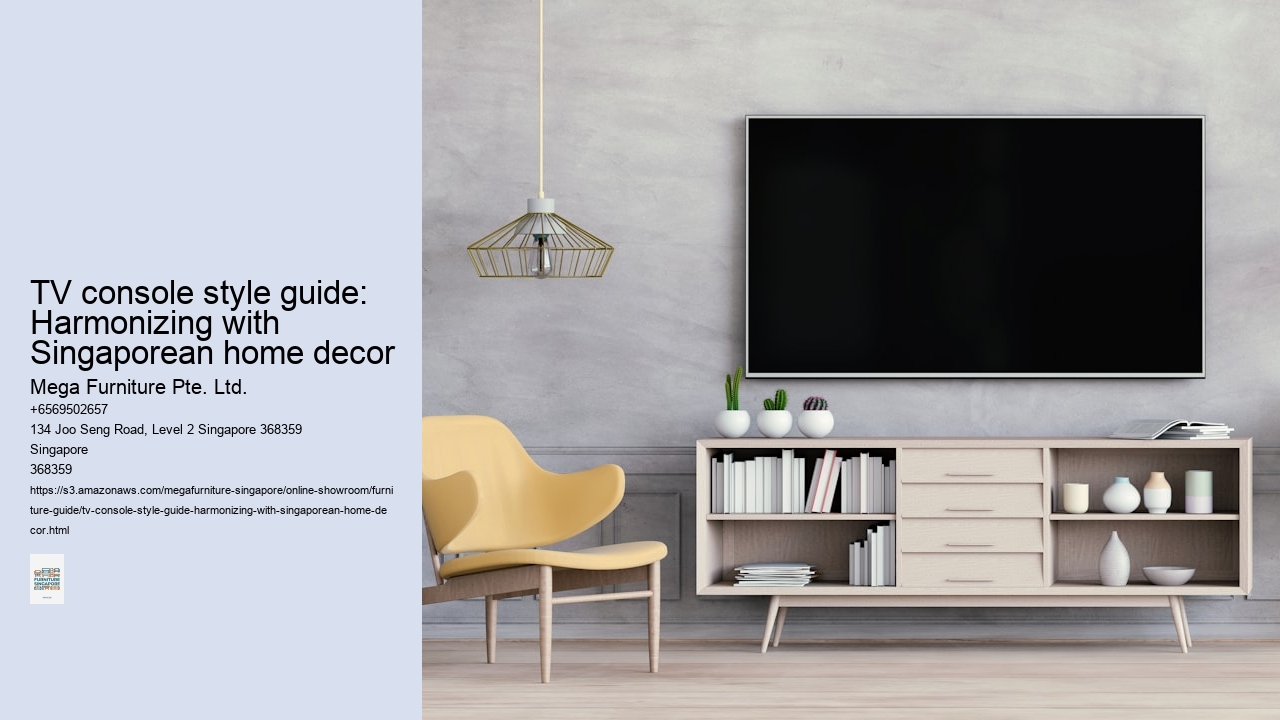
The most common mistake in a new BTO flat is ordering a console that’s too long for the media wall, leaving you with a cabinet that awkwardly overlaps your curtain track or blocks a light switch. Console length should be dictated by your TV width and your wall's actual clear span — not the living room's total width. For a standard 65-inch TV, which is around 145cm wide, you’ll want a console at least 180cm long to achieve a balanced, anchored look; that extra 30–40cm of buffer on each side prevents the TV from appearing top-heavy and visually floating.
In a typical 3.5m-wide HDB living room, the actual clear wall space between a door frame and a window might only be 2.8m. The golden rule here is to leave at least 30cm of breathing room on either side of the console. That means a 2.2m unit is often the practical maximum, which comfortably fits TVs up to 75 inches. For flats with sliding balcony doors, like many 4-room BTO layouts, you must account for the door’s full clearance path — a console end shouldn’t interfere with the door’s handle or track, a detail easily forgotten until installation day.
Navigating an 80 sqm condo or compact resale flat requires even more discipline. An oversized, 2.4m floor-standing console can overwhelm the space, making the room feel like a showroom corridor. Use local bed sizing as a spatial reference: a Queen-size bed frame is about 1.5m wide, so a console longer than that will dominate a modest living area. The priority shifts to vertical storage and slimmer profiles, perhaps opting for a floating design to maintain a sense of floor space.
Ultimately, the console’s job is to frame the TV and vanish into the architecture. In many homes, that means sacrificing some storage ambition for better proportions — a 1.8m unit with closed cabinets often looks more intentional than a 2.4m one that’s crammed with clutter. For those measuring up, it’s worth browsing the full span of sizes available, from compact 1.2m options to substantial 2.4m media walls, to find the precise fit for your floor plan.
That solid teak console in your air-conditioned showroom will behave differently in a Bedok flat with 80% humidity. Solid wood expands and contracts with ambient moisture, a process that can lead to visible gaps in panels or doors that refuse to close after a wet monsoon period. Engineered wood, with its cross-layered plywood core, resists this movement far better, which is why it's the default for most mass-produced furniture here. For a long floor-standing unit, a solid wood top can still work if it's properly sealed and acclimatised, but the risk of a subtle bow over 180cm is real. The choice often comes down to whether you're prioritising material authenticity or dimensional stability in a climate that relentlessly tests both.
In many BTO living rooms, laminated MDF is the workhorse — affordable, stable, and available in every finish from matte walnut to high-gloss lacquer. The laminate itself is a near-impermeable barrier against humidity, protecting the susceptible MDF core underneath. Where it falls short is at the vulnerable edges; any chip or exposed seam can let moisture in, causing the board to swell irreparably. For a TV console that'll see daily use, look for units with thick, well-sealed edge banding or wrapped profiles that leave no core exposed. It's a perfectly sensible choice, so long as you understand its limits.
Pet claws and children's toys are a tougher finish test than any factory QC. A high-pressure laminate or thermofoil surface will shrug off most incidental contact, while a soft oiled walnut will patina — which isn't necessarily a bad thing. The real test is the horizontal plane where remotes, drinks, and dog paws land; here, a textured grain or a busy pattern hides sins better than a perfect, glossy piano black. For active households, a satin or matte finish in a medium tone offers the best balance of sophistication and practicality, masking fine scratches that a dark, smooth surface would highlight.
Glass shelves and metal legs introduce their own complications. Tempered glass is safe and stable, but the black or bronze tinted film on the back can bubble at the edges in sustained heat. Metal, particularly slender hairpin legs or framed accents, can feel uncomfortably cold in an air-conditioned room and may condensate. More critically, the different thermal expansion rates of metal fixings set into wood can, over years, work fittings loose. The solution is in the details: look for powder-coated metals and glass that's fixed with generous rubber grommets, not just rigid clamps.
You can't judge material performance without considering how it's all held together. Dovetail or dowel joints in the drawer boxes indicate a cabinet that's built to handle weight and movement, not just stapled together. More telling are the drawer glides; full-extension, soft-close mechanisms rated for at least 30kg mean the console can handle a stack of gaming consoles and amplifiers without sagging. In a 240cm media wall unit, these small hardware choices are what prevent the entire structure from becoming a rattling, groaning mess after two years of daily use. It's the unsexy stuff that dictates longevity.
A buyer’s first instinct is to centre the TV console on the wall — then they discover it’s three centimetres too long for the space between the HDB column and the main door. That’s the most common, and most expensive, error: trusting a room’s visual proportions instead of a tape measure. In many four-room BTO layouts, the ideal wall is only 220cm wide, leaving no margin for a standard 240cm unit. Measure twice, buy once, and remember to account for power points and light switches that can’t be moved.
Similarly, it’s easy to prioritise a sleek, minimalist facade for your AV receiver shelf, but depth is non-negotiable. A typical receiver needs at least 40cm of clearance for ventilation and cabling; a shallow 35cm shelf might fit the box, but you’ll choke the airflow and end up with a tangle of HDMI cables spilling out the front. That clean look you wanted vanishes instantly. Choose a console with dedicated, deep compartments, even if it means the unit projects a bit further into the room — overheating equipment is a faster route to replacement than aesthetic regret.
Glossy white or piano-black finishes might look stunning in a showroom under perfect lighting, but in a typical Singaporean living room, they become dust and fingerprint canvases. Within a week, you’ll see every smudge from adjusting the soundbar and every particle that settles during the day. A matte laminate or textured wood veneer in oak or walnut will hide imperfections far better and maintain its composure between weekly cleans, which is a practical victory in our humid environment.
Finally, overlooking built-in cable management in a false wall setup is a missed opportunity for genuine neatness. Many modern consoles feature rear channels or grommets specifically for routing wires from wall-mounted TVs down into concealed storage. If you’re investing in a custom media wall, insist on integrating these pathways during the carpentry phase — fishing cables through afterwards is a frustrating exercise that usually ends with visible wires anyway. It’s a small detail that separates a polished installation from a makeshift one.
The online photo of a walnut veneer finish can’t tell you if it’s cool and silky or warm and slightly oily under your hand — that’s a tactile decision you’ll make every day. Visiting the showrooms in Joo Seng or Tampines lets you physically assess these details, running a palm over sintered stone tops to check for seams and opening every drawer to test the storage mechanism’s action. A smooth, quiet glide on full-extension runners suggests long-term reliability, while a drawer that wobbles or catches on its first pull in the showroom likely won’t improve in your 4-room BTO. You’ll also gauge structural stability in a way pixels can’t convey. Press down on a 220cm console’s centre; if there’s noticeable flex, it might not support a 75-inch TV and soundbar with confidence. This direct comparison is crucial, as a model that looks proportionate online can visually shrink or overwhelm a compact condo media wall once you see its true bulk. Standing beside a 180cm unit gives you an honest sense of scale against your own room’s proportions, helping you avoid a piece that either floats awkwardly on a long wall or cramps a tighter layout. Beyond finish and feel, the showroom visit clarifies practicalities that aren’t visible on a product page. You can confirm delivery timelines for bulky items, which often vary by postal district and building access. More importantly, you can discuss custom options — perhaps altering the interior shelving of a cabinet to accommodate a specific gaming console or opting for a different leg finish to match existing furniture. These are conversations best had in person, where staff can pull out sample materials and provide immediate answers. Ultimately, the trip is about confidence. It’s the difference between hoping a console’s colour matches your feature wall and knowing it, having seen the laminate sample under your own living room’s lighting conditions. For a centrepiece item that anchors your daily relaxation, that certainty is worth the trip to
browse the optionsin person.
The delivery crew will measure your lift before they even bring the console up. It’s a standard Singaporean prelude, especially in older HDB blocks where stairwells can be narrow and landings tight; they’ll confirm the longest piece, typically the 180cm to 240cm console carcass, can clear the turn. For a floor-standing unit, that’s the main logistical hurdle — getting a flat-packed box to your door without scuffing common corridor walls. Once inside, assembly is another matter. Many retailers now offer post-7pm slots, a quiet concession to the 9-to-6 workday that defines so much of island life. It’s worth scheduling, because wrestling with cam locks and drawer runners in a 4-room BTO living room after dark is nobody’s idea of a relaxing evening.
Warranties here follow a predictable, one-year pattern for most engineered wood and laminate pieces. The real distinction comes with solid wood — teak, oak, or rubberwood — where extended coverage of two to three years isn’t uncommon. That extra time acknowledges how tropical humidity can stress joints over longer periods, causing warping or cracking that might not show up in the first twelve months. Keep your invoice, and maybe even a photo of the assembled unit in situ; you’ll need it for any claim.
You might also need that documentation for your town council. If your installation involves mounting a heavy, wall-hugging console or modifying built-in media walls, some HDB estates require proof of a renovation permit. It’s rarely an issue for freestanding furniture, but it’s a checkbox worth mentally ticking, particularly in resale flats where previous owners might have made unauthorised alterations. The goal is seamless integration, not a surprise notice from the building office.
For a straightforward selection of sizes and styles that fit these local parameters, you can browse Megafurniture’s collection. Their delivery teams are accustomed to the island’s specific spatial puzzles, from Tampines condominium lobbies to walk-up apartments in Joo Seng. Just remember that the final step — a console properly positioned, cables hidden, and TV centred — often hinges on those first, practical conversations about lift dimensions and assembly timing.
You'll see the same few questions pop up in showroom conversations, usually after someone's measured their living room wall for the third time. The practicalities of installation and daily life here are non-negotiable.
Can a 200cm console fit in a BTO lift? Typically, yes—most newer BTO lift dimensions are around 200cm tall by 140cm wide, but the diagonal is what matters. You'll need to tilt the unit carefully; solid wood or sintered stone consoles are heavier and less forgiving than engineered wood during this manoeuvre. Always measure your lift's interior diagonal clearance before committing.
Mounting a 65-inch TV on a floating console requires a specific bracket. Use a full-motion or tilting mount that attaches directly to the concrete wall, not the console's backing board, ensuring the TV's weight is borne by the structure. Leave a recommended 10–15cm clearance between the console top and the bottom of the TV for soundbars and cable management, which also prevents the display from visually overwhelming the piece.
For homes with toddlers, material choice is everything. Engineered wood with a durable laminate or melamine finish resists sticky fingers and toy trucks far better than a soft oak veneer. Sintered stone tops are virtually indestructible but carry a premium; a high-pressure laminate over solid rubberwood frame offers a good compromise of warmth and resilience for a 4-room flat.
You'll want to anchor any floor-standing unit to the wall, a simple step that's often forgotten until a climber discovers it.
The most expensive mistake you can make with a floor-standing console is assuming it’ll just fit. In a 4-room BTO living room, where every centimetre between the media wall’s power points and the corner is accounted for, a 200cm unit that blocks a socket becomes a permanent, frustrating feature. Verify your wall’s exact width, then subtract 10cm for clearance on either side — that’s your true maximum length. And measure twice for depth, especially if you’re planning to centre it under a 65-inch TV; you’ll need at least 40cm of stable surface to prevent that top-heavy look.
Check the internal storage against your actual gear, not the brochure’s promises. A PlayStation 5 is about 39cm deep, and many sleek consoles with tambour doors have shallower cavities than you’d think. Your router and its tangle of cables need a dedicated, ventilated compartment, preferably with a rear cable grommet. It’s a mundane task, but pulling out a tape measure now beats the sinking feeling of realising your gear has to live on the floor.
Singapore’s humidity plays a long game with furniture. That solid rubberwood console you love will absorb moisture steadily across the year, expanding subtly at the joints and drawers. Plan for it by leaving a 1-2cm gap at the back for air circulation, and don’t jam it flush against the wall — seasonal contraction will follow, and you don’t want the sound of creaking timber every time the air-con kicks in.
Factor in professional mounting from the start if your design involves a floating TV or a heavy console that needs securing to a drywall. A handyman in Bedok or Tampines might charge $80 to $150 for a secure bracket installation, and that’s a wise line item if you’re not confident with a stud finder. Allocate a contingency of around 10% of your console budget for these finishing touches; it’s the difference between a setup that feels installed and one that feels settled. You can browse a range of proportionally sized options to match your TV at Megafurniture’s collection, where lengths are clearly specified for this kind of planning.
In a typical 4-room BTO living room, the floor space between sofa and TV wall often measures under three metres. That's where the console's role shifts from simple stand to spatial organiser. Its primary job is to swallow the visual clutter of a modern entertainment setup - think media players, gaming consoles, and the inevitable nest of HDMI and power cables - keeping the sightlines clear in a compact area. A console that's too short for a 65-inch TV looks like an afterthought; one that's too deep can make the room feel pinched.
For wall-mounted and floating types, the calculation is about perceived weight. A floating console, anchored securely to the HDB drywall, creates a clean shadow line that makes the floor area seem larger - a favourite trick in many condo showflats. It's ideal for homes where every centimetre of floor space is counted, but it demands good cable management within the unit itself. Display cabinets sit between bookshelf and storage cabinet in function — closed glass-front protection for the items you want visible but not collecting dust. A TV console anchors the wall opposite the sofa in the same way a tall bookshelf anchors a corner — long horizontal piece, mix of open and closed storage, defines the visual weight of one whole side of the room. Megafurniture's TV Console range covers floating wall-mounted designs, low-profile freestanding consoles, and modular feature-wall configurations. Most pieces sit at 40-50cm height, sized for screens up to 75 inches.. Megafurniture's Display Cabinet range covers glass-front, curio, wall-mounted, and freestanding configurations in solid wood, MDF, and metal-framed constructions. Average pricing for glass-front variants sits around $271, with LED-lit and motorised-shelf models commanding the higher tier.. Wall-mounted variants follow a similar principle, though they often offer more substantial concealed storage behind full-height doors, perfect for stashing board games or seldom-used items.
Floor-standing consoles, by contrast, bring a grounded, furniture-like presence. In a resale flat with an existing feature wall or built-in shelving, a solid rubberwood or sintered stone console can centre the entire layout. The key is proportional length: a 55-inch TV needs at least a 140cm console, while a 75-inch screen commands something around 200cm to avoid a top-heavy look. A Bookshelf earns its place in Singapore homes through dual function — book and decor storage in the open shelves, soft visual division when placed mid-room in open-plan condominium layouts. Megafurniture's combined display unit and bookshelf hub covers tall book racks, cubby-hole designs, ladder shelves, modular cube systems, and glass-door pieces in oak, walnut, and MDF veneer finishes. Solid-wood pieces typically start around $425, with most heights spanning 120cm to 220cm to fit standard 2.6m HDB ceilings.. Depth matters, too; a shallower 35cm model might suit a narrow walkway in a Joo Seng layout, while a deeper 45cm one provides more practical storage for a family's remotes and chargers.
Ultimately, the choice often comes down to what you need to hide. A floating console excels at making tech disappear, while a substantial floor-standing piece with drawers and cabinets can also absorb living room detritus, from spare pillows to toy collections. It's a trade-off between maximising floor space and maximising storage volume, a decision every homeowner makes when they measure that critical wall.
You can explore various solutions for these space constraints in Megafurniture's TV console collection, which includes options scaled for Singaporean room dimensions.
In a typical 4-room BTO living room, the floor space between sofa and TV wall often measures under three metres. That’s where the console’s role shifts from simple stand to spatial organiser. Its primary job is to swallow the visual clutter of a modern entertainment setup — think media players, gaming consoles, and the inevitable nest of HDMI and power cables — keeping the sightlines clear in a compact area. A console that’s too short for a 65-inch TV looks like an afterthought; one that’s too deep can make the room feel pinched.
For wall-mounted and floating types, the calculation is about perceived weight. A floating console, anchored securely to the HDB drywall, creates a clean shadow line that makes the floor area seem larger — a favourite trick in many condo showflats. It’s ideal for homes where every centimetre of floor space is counted, but it demands good cable management within the unit itself. Wall-mounted variants follow a similar principle, though they often offer more substantial concealed storage behind full-height doors, perfect for stashing board games or seldom-used items.
Floor-standing consoles, by contrast, bring a grounded, furniture-like presence. In a resale flat with an existing feature wall or built-in shelving, a solid rubberwood or sintered stone console can centre the entire layout. The key is proportional length: a 55-inch TV needs at least a 140cm console, while a 75-inch screen commands something around 200cm to avoid a top-heavy look. Depth matters, too; a shallower 35cm model might suit a narrow walkway in a Joo Seng layout, while a deeper 45cm one provides more practical storage for a family’s remotes and chargers.
Ultimately, the choice often comes down to what you need to hide. A floating console excels at making tech disappear, while a substantial floor-standing piece with drawers and cabinets can also absorb living room detritus, from spare pillows to toy collections. It’s a trade-off between maximising floor space and maximising storage volume, a decision every homeowner makes when they measure that critical wall.
You can explore various solutions for these space constraints in Megafurniture’s TV console collection, which includes options scaled for Singaporean room dimensions.