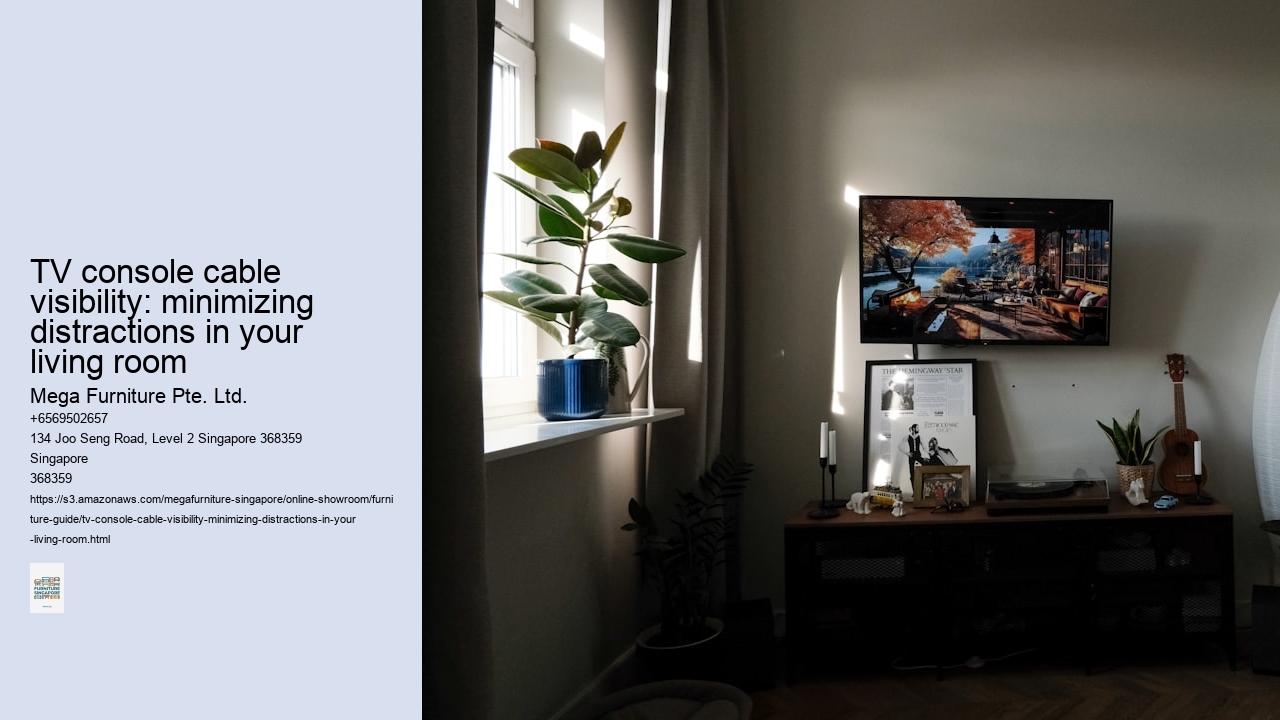
The telltale warp along the bottom edge of a TV console is a common sight in many HDB flats — it’s a slow surrender to Singapore’s relentless humidity. That’s almost always the work of laminated MDF or particleboard, materials that absorb ambient moisture like a sponge and never quite release it, leading to permanent swelling. For a piece intended to house expensive electronics, that structural compromise is a genuine risk; you’re better off prioritising solid wood frames or high-quality, marine-grade plywood for the cabinet carcass, as these materials expand and contract more uniformly without distorting. Sunlight streaming through balcony doors in a Tampines or Pasir Ris condo presents another quiet threat. Prolonged exposure bleaches finishes and degrades surfaces, so look for consoles with UV-coated laminates or properly cured lacquers that resist fading. This isn’t just about colour retention; it’s about preventing the material underneath from becoming brittle and chalky over years of exposure, which is a particular concern for east- or west-facing living rooms. For households with pets, the daily scuffle of claws across a console’s top is a major finish test. Soft, open-grain woods like pine or certain oiled teak finishes will show every scratch mark within weeks. A harder, closed-grain timber like rubberwood, or a console with a robust, factory-applied polyurethane or catalyzed lacquer topcoat, will fare much better — the surface simply deflects the abrasion instead of absorbing it. It’s a practical choice that keeps the piece looking sharp even with a cat’s favourite perch or a dog brushing past. Ultimately, the console’s material dictates its lifespan in your home more than its style does. While laminate options are widely available and cost-effective, investing in solid construction from the outset avoids the inevitable replacement cycle. You can explore a range of options built with these considerations in mind by browsing the
TV console collection at Megafurniture, where specifications for core materials and protective finishes are clearly listed. Pay close attention to those details; the right build will handle the climate and family life, letting the console fade into the background as a reliable piece of infrastructure rather than a recurring problem.
Those neat little holes at the back of your console are your first line of defence. Without them, you're left feeding every single cable through one opening, which just creates a dense, unmanageable knot at the rear. A console with multiple, well-spaced grommets lets you organise your HDMI, LAN, and power cords by device — it's a simple feature that makes weekly dusting far less of a chore. You'll want them positioned in the centre and at both ends to accommodate wall-mounted TVs with offset ports. In a 4-room BTO, where the console is often flush against the feature wall, this separation prevents a single, bulging cable mass.
That bulky fibre optic router from your provider and the oversized gaming power brick never fit standard compartments. Shelves you can reposition, even by a few centimetres, create vertical space for tall adaptors and horizontal space to lay a mesh Wi-Fi node flat. It stops you from having to cram everything into one cavity, which inevitably leads to cables being crushed and connectors strained. For families upgrading to a 75-inch TV, the accompanying soundbar amp or media streamer often has a larger footprint — adjustable shelving accommodates this new tech without a full console replacement.
A shallow back panel is worse than no panel at all, because it gives a false sense of security. You need a true cavity, at least 8 to 10 centimetres deep, to properly house a multi-plug power strip and the inevitable coiled excess of your cables. This depth allows you to use Velcro straps or hooks to secure the power brick nest, preventing it from sagging out of view. In many condo media walls, the console is the focal point; a deep back panel is what finally banishes that visual clutter of black transformers and white IEC cables against your carefully chosen laminate.
They're the hallmark of budget models, and they're a compromise that shouts its presence from across the room. An open-back design exposes every connection, every twist-tie, and every spare LAN cable you've tucked behind in a hurry. It turns the rear of your console into a chaotic diorama, especially problematic against a light-coloured feature wall in a resale flat. While they aid with ventilation, the visual trade-off is severe — your cable management efforts are essentially performative, as the entire tangled web remains fully visible from any angle beside the unit.
Internal cable channels, often simple plastic clips or fabric loops fixed to the sides of compartments, guide cords vertically from the grommet down to the shelf. Without them, cables spill out and drape across the back of your PlayStation or soundbar, trapping heat and looking messy. It's a low-cost addition that manufacturers often omit, but it's critical for actual organisation rather than just concealment. Proper channels keep the DC power cord for your LED TV backlighting separate from your audio cables, preventing interference and making it simple to trace and replace a single wire without dismantling the whole setup.
Walk into a showroom in Tampines or Joo Seng and you’ll see the same scene: a family admiring a sleek, wall-mounted console beneath a massive television. The problem is, they’re often looking at a 120cm unit paired with a 75-inch screen. That’s a visual mismatch waiting to happen. A console that’s too short for the TV creates a top-heavy, unbalanced look in a 4-room BTO living room; it’s like placing a dinner plate on a chopstick. For true proportion, a 75-inch TV needs a console at least 180cm long, anchoring the setup properly and providing the surface area for essential media components.
Another frequent oversight is forgetting the practicalities of daily use. Buyers get captivated by clean lines and minimalist design, then completely overlook whether the model includes built-in cable channels or grommets. The result is predictable. Exposed wires snake inelegantly from the back of the unit down to the floor socket, turning that sleek media wall into a tangled mess. It’s a detail easily missed on the showroom floor, where displays are often staged without real, permanent wiring.
Perhaps the most costly error is neglecting to measure the bulkhead height for a Build-to-Order Service Console. Many Singapore flats have these structural protrusions housing essential pipes and conduits. A buyer falls for a tall, wall-mounted unit only to discover, during delivery, that its back panel won’t sit flush against the wall because the bulkhead protrudes 15cm. The console ends up jutting awkwardly into the room, or worse, can’t be installed at all. Always bring your own tape measure to the showroom—don’t rely on the eye.
These mistakes are easily avoidable with a bit of forethought. Focus on the trio of proportion, cable management, and precise measurements. For a curated range that addresses these common pitfalls, from units with integrated wire management to various lengths for larger TVs, you can browse Megafurniture’s collection. Their showroom staff are typically well-versed in the spatial constraints of local flats and can steer you away from these classic errors. Just remember, the most beautiful console in the world is useless if it doesn’t fit your wall or your television.
A photograph on a product page can’t show you how the light from your 65-inch OLED will glance off a laminate finish at eight in the evening. That’s the kind of detail you need to see for yourself, and it’s precisely why a trip to a physical showroom still matters. At Megafurniture’s Joo Seng and Tampines locations, you can assess the true character of materials under consistent, bright showroom lighting — you’ll see if that “oak effect” laminate looks convincingly textured or cheaply flat, and whether a solid rubberwood grain has the depth you’re after for your media wall. Test the hardware, too. Run your hand along a drawer glide; open and close a cabinet door a dozen times. The difference between a smooth, damped closure and a clunky, jarring one is something you feel, not read about. For a TV console, which you’ll interact with daily to access routers or game consoles, that tactile experience is critical. A mechanism that feels robust in the showroom is likely to hold up better in a busy family living room in Punggol or Jurong West. It also lets you compare features side-by-side. Cable management might be a simple cut-out in a $399 console, but a $1,800 model could offer integrated plastic raceways, removable back panels, and dedicated compartments for power strips. Seeing these systems organised across different price points in one place clarifies what you’re actually paying for — you can judge if the premium is for smarter engineering or just more decorative trim. Ultimately, it’s about avoiding the disappointment of a unit that looks perfect online but feels all wrong in your space. You’re investing in a piece that will centre your living area for years, so it’s worth the trip to verify the details yourself. You can explore the full range and find showroom details at Megafurniture’s
TV console collection.
That 240-centimetre console you ordered online might not fit past your HDB lift landing. It’s a common snag, particularly for BTO layouts in Punggol or Tengah where lift lobbies can be tight; some units require final assembly in the stairwell, which retailers typically factor into their service. Expect assembly fees to range from $80 to $150, a worthwhile spend to avoid the hassle of manoeuvring a fully built cabinet down a narrow corridor.
Once it’s in your living room, the real test begins with our climate. Laminate peeling and drawer runner failure aren’t just annoyances—they’re the most frequent warranty claims for furniture here. Before you commit, scrutinise the warranty wording to confirm these specific issues are covered for at least a year; a generic promise against "manufacturing defects" often isn’t enough. Humidity spares no one, from Pasir Ris to Bukit Timah.
Smart buyers keep the original packaging for at least a week. That bulky cardboard is your ticket for the standard seven-day return policy, crucial if the finish colour looks different under your LED downlights or the cable management holes don’t align with your wall socket. It’s a nuisance to store in a service yard, but it beats being stuck with a console that doesn’t work.
For a comprehensive selection that accounts for local dimensions, you can browse Megafurniture's collection. Their delivery teams are familiar with the quirks of various HDB estates, which is half the battle won. Just remember to measure your doorway, lift, and that final corner into the living room—twice.
The last thing you want after setting up a new console is a spiderweb of adaptors trailing to a lone, overloaded socket. Plan for at least three power points behind the unit, plus a data point for your router—that’s your baseline for a clean media wall in a 4-room BTO. It covers the TV, a soundbar, and a gaming console without forcing you into a daisy-chain of power strips.
Soundbar dimensions trip up many buyers, especially with deeper consoles. A model like Sony’s HT-A5000 needs over 40cm of depth; plenty of sleek, modern units are shallower than that. Always check your console’s interior shelf depth, not just its overall footprint, to ensure the bar won’t protrude awkwardly or block the TV’s IR sensor.
Timing your installation during a renovation requires a bit of patience. Never mount the console or run trunking before finalising your wall colour. Painters need clear, unobstructed walls to cut in cleanly along skirting and cornices—trying to work around a fixed fixture always leaves a messy, visible line. Finalise your paint swatch first, then call the installer.
What if your new BTO’s flooring isn’t perfectly level? It’s a common issue, and fixed glides will just telegraph every dip and hump. The solution is to look for consoles with adjustable feet; a few turns with an Allen key can compensate for minor unevenness, keeping the unit stable and preventing wobbles.
For those still selecting a unit, focusing on these practicalities—ample rear clearance, verified dimensions, and adjustable hardware—narrows the field considerably. You can then explore options like wall-mounted or solid rubberwood designs that suit your space.
The final 48 hours before delivery are when most cable management failures happen. You’ve measured for the TV, but the console’s internal clearance is what actually matters. For an Xbox Series X, you’ll need a compartment with a minimum internal height of 31cm, plus an extra 5cm behind it for the chunky power cable to bend without strain; rear cut-outs should be at least 12cm wide to pass HDMI and ethernet cables through cleanly. Print the technical drawing from the product page and physically check these dimensions against your devices—it’s a five-minute task that saves a weekend of frustration.
Schedule the console delivery after your final professional cleaning, but before the TV mount goes on the wall. This sequence is critical. You want the installers working in a dust-free room, laying cables across a clear floor, with full access to the skirting board before the console is positioned. A common misstep is mounting the TV first, which then forces you to thread cables blindly through cramped gaps behind a heavy unit.
Even with perfect planning, you’ll likely discover an extra cable or two. A prudent fallback is to have your electrician install a slim, white PVC trunking along the skirting board during the final electrical works. This gives you a dedicated channel for any stray HDMI, LAN, or power cords the console can’t fully swallow; it’s a minor, inexpensive addition that preserves the clean look when your device collection inevitably expands. In many BTO living rooms, this trunking becomes the unsung hero, neatly containing the clutter that would otherwise spill across the floor.
Coordinate these final trades in reverse order: electrician for trunking, then console delivery and cable routing, followed finally by the AV team for TV mounting and connection. This ensures every cable has a managed path from source to screen, with no last-minute compromises. For a comprehensive range of consoles with detailed specifications to check against, you can browse Megafurniture’s collection. The goal is a setup where the technology disappears, leaving only the content on screen and the console’s form as a deliberate piece of your living room’s design.
A 65-inch TV demands a console at least 180cm long, but try squeezing that into a 3.5-metre-wide BTO living room and you'll quickly realise the maths only tells half the story. A TV console anchors the wall opposite the sofa in the same way a tall bookshelf anchors a corner — long horizontal piece, mix of open and closed storage, defines the visual weight of one whole side of the room. Megafurniture's TV Console range covers floating wall-mounted designs, low-profile freestanding consoles, and modular feature-wall configurations. Most pieces sit at 40-50cm height, sized for screens up to 75 inches.. That extra length must coexist with a clear walkway to the balcony or kitchen-a path that shouldn't feel like navigating a narrow corridor in an MRT station during peak hour. It's a common compromise; many homeowners end up with a console that's slightly too short for visual balance, simply to preserve that crucial 80cm of clearance for daily movement.
Condo layouts with dedicated media walls present a different challenge entirely. Here, the console often becomes a fixed, integrated component, built to handle not just a television but also a motorised projector screen and a soundbar without any visible support. The unit is typically wall-mounted and floating, a design choice that prioritises a seamless, architectural look over standalone furniture presence. Cable management in these setups is non-negotiable, routed invisibly within the wall or a chased-out channel long before the first coat of paint is applied.
Scale, therefore, is dictated first by your screen size-a 55-inch TV pairs with a 140cm console-and second by your room's practical geometry. In many four-room BTO flats, that 140cm unit might be the sensible maximum, allowing for a pair of compact side tables or a narrow plant stand on either end. Opting for a floating design can help maintain a sense of space, as the visible floor area beneath the console makes the room feel less cluttered, even when the furniture's footprint is substantial.
For those in older resale flats or larger condos with more generous proportions, the 180cm to 240cm range becomes a viable option, transforming the console into a significant feature piece. This is where material choices like American walnut veneers or sintered stone tops come into play, anchoring the living area's design theme. You'll still need to account for speaker placement and potential future upgrades, ensuring any built-in compartments are deep enough for an AV receiver or a next-generation gaming console. Browse the options for consoles scaled to these dimensions at Megafurniture's collection, where lengths and storage configurations are clearly specified.
Ultimately, the right console reconciles the screen's demands with the room's realities-it's a piece of furniture that has to perform a quiet, organisational role without ever drawing attention to itself.
A 65-inch TV demands a console at least 180cm long, but try squeezing that into a 3.5-metre-wide BTO living room and you’ll quickly realise the maths only tells half the story. That extra length must coexist with a clear walkway to the balcony or kitchen—a path that shouldn’t feel like navigating a narrow corridor in an MRT station during peak hour. It’s a common compromise; many homeowners end up with a console that’s slightly too short for visual balance, simply to preserve that crucial 80cm of clearance for daily movement.
Condo layouts with dedicated media walls present a different challenge entirely. Here, the console often becomes a fixed, integrated component, built to handle not just a television but also a motorised projector screen and a soundbar without any visible support. The unit is typically wall-mounted and floating, a design choice that prioritises a seamless, architectural look over standalone furniture presence. Cable management in these setups is non-negotiable, routed invisibly within the wall or a chased-out channel long before the first coat of paint is applied.
Scale, therefore, is dictated first by your screen size—a 55-inch TV pairs with a 140cm console—and second by your room’s practical geometry. In many four-room BTO flats, that 140cm unit might be the sensible maximum, allowing for a pair of compact side tables or a narrow plant stand on either end. Opting for a floating design can help maintain a sense of space, as the visible floor area beneath the console makes the room feel less cluttered, even when the furniture’s footprint is substantial.
For those in older resale flats or larger condos with more generous proportions, the 180cm to 240cm range becomes a viable option, transforming the console into a significant feature piece. This is where material choices like American walnut veneers or sintered stone tops come into play, anchoring the living area’s design theme. You’ll still need to account for speaker placement and potential future upgrades, ensuring any built-in compartments are deep enough for an AV receiver or a next-generation gaming console. Browse the options for consoles scaled to these dimensions at Megafurniture’s collection, where lengths and storage configurations are clearly specified.
Ultimately, the right console reconciles the screen’s demands with the room’s realities—it’s a piece of furniture that has to perform a quiet, organisational role without ever drawing attention to itself.