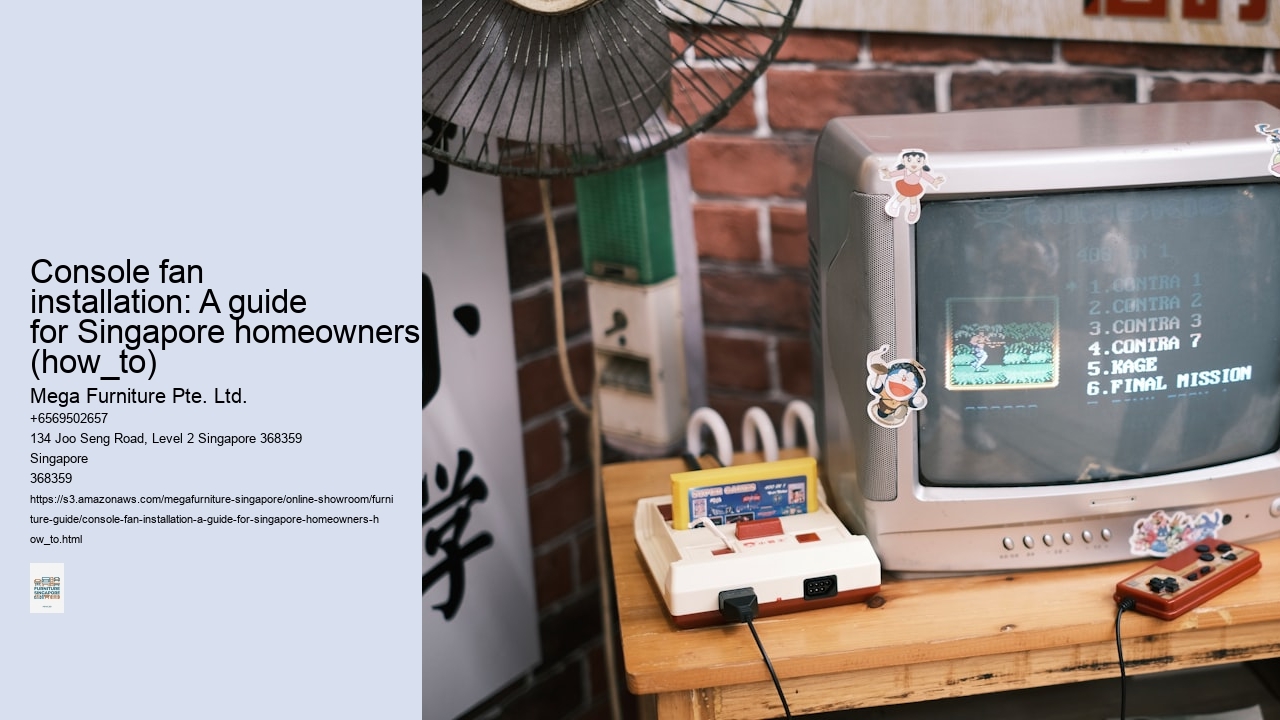
The 120cm console you buy for your 12 sqm BTO living room is often the exact width of the wall between two doorways. That leaves zero margin for error, and the first thing to get pinched is the ventilation space behind it. In many new BTOs, a false ceiling for recessed lighting will drop your ceiling height to around 2.4 metres, which makes a standard 45cm-tall console feel more imposing—you’ll need to account for that visual bulk before you commit to a floor-standing model.
Clearance is non-negotiable, especially for floating consoles mounted on brackets. That sleek, shadow-gap look traps heat relentlessly. You must leave a minimum of 15cm from the wall for cable management and airflow; otherwise, you’re baking your media player and router. It’s a common oversight—people mount the console flush for a clean profile, then wonder why their PlayStation sounds like a hairdryer.
Resale flats and older condos present a different puzzle. Their living rooms might be a more generous 16 or 18 sqm, but irregular walls and dated electrical points can force your console into a corner. That’s where side ventilation becomes critical. If the unit’s back is completely sealed, check for open sides or a raised plinth that lets air circulate underneath; solid wood cabinets are particularly prone to trapping moisture against the wall.
For a typical 4-room HDB layout, where the living area doubles as a walkway to the bedrooms, consider depth. A console that’s 40cm deep instead of 50cm can reclaim crucial walking space, making the room feel less cluttered. It’s a trade-off: you lose some storage, but you gain breathability around the furniture itself. Measure the room’s traffic flow first, then subtract your clearance requirements—that’s your real maximum dimension.
Material choice here is pragmatic, not just aesthetic. Engineered wood or metal-framed consoles are often lighter and easier to position with that vital gap behind them. A heavy solid wood piece becomes a permanent fixture the moment it’s filled with gear.
That USB-powered fan you got free with a power bank? It's decorative for this job. You need an AC-powered unit plugged directly into a wall socket for sustained cooling duty over eight-hour gaming sessions or weekend Netflix binges. USB ports on your TV or console simply can't deliver consistent current, and the fan will stutter when you need it most — right as the PlayStation 5's exhaust hits its peak. A proper mains plug ensures the fan runs at its specified RPM constantly, moving the volume of air necessary to prevent heat from banking up inside the cabinet. It’s a non-negotiable starting point; treat any USB option as a temporary fix, not a solution.
Listen for silence, because a living room fan shouldn't sound like a data centre. Target models rated under 25 decibels, a benchmark that blends into the ambient hum of a ceiling fan or air-con blower. In a typical 4-room BTO layout, a noisy fan becomes the dominant sound during quiet dialogue scenes, forcing you to constantly adjust the volume. Good bearings and larger, slower-spinning blades achieve this; the cheap, whiny alternatives are a false economy for any media space. You'll thank yourself during late-night viewing when the only sound should be the programme, not your furniture.
Measure your console's rear cut-out with a tape measure, don't eyeball it. A fan grill that's even a centimetre too large won't fit, while one that's too small leaves gaps that drastically reduce airflow efficiency and let in dust. Most media consoles have standardised ventilation slots, but that's not a guarantee — your specific unit from Megafurniture's collection might have a unique pattern. Take the exact width and height, then subtract a few millimetres for the fan's mounting flange. Getting this wrong is the most common installation error, rendering an otherwise perfect fan useless.
Magnetic mounts are a small luxury that pays off every few months. They let you detach the fan body in seconds for a thorough clean without unscrewing anything or disturbing the wiring tucked behind your console. In many Singapore homes, especially those with cats or shedding dogs, a layer of fur and dust can coat the blades within weeks, choking performance. A fixed screw mount turns this basic maintenance into a frustrating chore requiring you to pull the entire console out from the wall. The magnetic option is one of those clever details you'll appreciate far more in practice than on the spec sheet.
Passive vents are fur magnets in households with pets, silently clogging until equipment overheats. An active exhaust fan doesn't just cool; it creates positive outward pressure that helps blow loose hair away from the intake grills before it can settle. Position it as an exhaust, not an intake, to push the warm, fur-filled air out of the cabinet entirely rather than just circulating it around. For families in Tampines or Bedok estates where the windows are always open, this is critical — it's not just about heat, but about preventing a compacted mat of pet hair from becoming a fire hazard against hot components.
A common scene in a 4-room BTO living room: a brand new media console, precisely measured for the wall niche, fits with millimetre-perfect precision. That’s the first mistake. Buyers often prioritise filling the entire recess, opting for a 220cm unit that leaves no clearance at the sides or back — effectively blocking every passive vent designed to let heat escape from an AV receiver or game console. The result is a silent, slow bake.
The pursuit of a seamless look compounds the problem. Decorative perforated metal or laser-cut MDF panels on cabinet doors are frequently mistaken for functional ventilation. While they offer a pleasing geometric pattern, their tiny holes, often backed by acoustic fabric or solid wood, provide negligible airflow; they’re a design feature, not a cooling solution. Relying on them is like expecting a breeze through a keyhole.
Another frequent misjudgement involves the PlayStation 5. Its substantial, almost sculptural form leads many to tuck it into a fully enclosed shelf cubby, treating it like a DVD player from a decade ago. Modern consoles are high-performance computers, and the PS5 in particular expels a significant volume of warm air from its rear exhaust. Enclosing it interrupts this exhaust flow, forcing heat back into the components — a direct route to thermal throttling, fan noise like a hairdryer, and potentially shortened hardware life.
The instinct to hide all clutter is understandable in Singapore’s compact living rooms, but electronics need to breathe. It’s a compromise between aesthetics and function. Leaving a 10cm gap behind the console, using open shelving for the hottest devices, or investing in cabinets with dedicated, open-backed ventilation channels are more pragmatic strategies. You can still achieve a clean look; you just can’t seal it in a glass box.
Some retailers offer media consoles designed with this in mind, featuring raised backs or integrated wire management that maintains an air gap. It’s worth scrutinising product specifications for terms like ‘cable access’ or ‘rear ventilation’, rather than assuming any cabinet will do.
That faint, musty smell in your Tampines flat’s living room after a week of rain isn't just in the air—it’s often in the furniture. Laminated particle board, a staple of budget-friendly consoles, acts like a sponge in Singapore’s 80% humidity; the core swells, veneers bubble, and shelves warp under the weight of a soundbar. You’re not just buying storage; you’re buying a defence against the climate.
This makes core material non-negotiable. Solid wood, like rubberwood or acacia, moves with humidity but remains structurally sound if properly sealed. Marine-grade plywood, engineered with waterproof adhesives, is arguably the better choice for a ground-floor resale flat near Bedok, where dampness seeps in. It won’t delaminate. The finish matters just as much—look for multiple coats of lacquer or a polymer sealant on all surfaces, including the back panel and interior shelves that you never see.
Build quality translates directly to load capacity, a critical factor given how we use these units. That 180cm console in a BTO living room often ends up holding a 55-inch TV, a PlayStation, an AV receiver, and a router—that’s 60kg or more, static weight, before anyone leans on it. Check the hinge weight rating on any door and the stated load limit for shelves; stamped steel hinges and particleboard shelf pins will sag within a year. Robust construction uses thicker solid wood or plywood panels, reinforced corners with proper joinery or metal brackets, and shelves supported by continuous rails, not just plastic pegs.
It’s a common pitfall to prioritise aesthetics and assume the build will follow. A sleek, floating console with cantilevered shelves might look stunning in a Sengkang condo media wall, but if it’s built with thin MDF, it’ll become a safety concern. Inspect the heft of drawers, the smoothness of their glide under load, and the sturdiness of any legs. For a comprehensive range built with these local demands in mind, you can browse the options at Megafurniture’s collection.
Ultimately, the best console for a Singapore home quietly endures—it survives the annual monsoon, supports the inevitable upgrade to a larger TV, and doesn’t complain when you stash a heavy gaming PC on it. That resilience is built in from the start, long before you ever plug in a cable.
The most overlooked part of a TV console purchase isn't the finish or the price — it’s the 20cm of space behind it where you’ll need to run cables, manage heat, and maybe even install a cooling fan. That’s why a showroom visit is non-negotiable. At Megafurniture’s Joo Seng or Tampines showrooms, you can physically assess two critical specs you won’t get from a product photo: the true carcass depth and the accessibility of the rear panel. A console might look perfect for your 65-inch TV, but if its back is a solid, unmodifiable board, you’re stuck with whatever ventilation it came with. Many homeowners in 4-room BTO flats find their media cabinets become heat traps, especially after adding a PlayStation and an AV receiver. Several collections at Megafurniture address this directly with models featuring pre-cut ventilation slots or grommets. This isn’t just about aesthetics; it’s a functional pre-engineering that lets you integrate aftermarket cooling fans without resorting to DIY hacks that void warranties and damage laminate finishes. You’ll want to check the placement and size of these slots in person — some are positioned for vertical tower fans, others for low-profile horizontal units. The build quality of that rear panel matters, too. In cheaper flat-pack furniture, it’s often a flimsy fibreboard that’s impossible to modify cleanly. What you’re looking for in the showroom is a panel that’s either removable or sturdy enough to allow for careful, additional cutting if needed. Bring a tape measure and note the exact distance from the wall to the console’s back; in many HDB living rooms, you’ve only got about 30cm to play with before the unit feels obtrusive. For design-focused shoppers, the showroom also reveals how these practical elements are integrated. A console can be a feature piece for your living room wall, but it shouldn’t sacrifice function. The available options, from rubberwood to laminate finishes in charcoal or oak, show how ventilation can be discreetly designed into the overall look. Browsing the
TV console rangeonline gives you an idea, but the tactile assessment of cable management and rear-panel modifiability is what prevents a costly mistake. It’s a simple rule: if you’re planning to install active cooling, you need to see the exit routes for that air. A trip to Tampines or Joo Seng lets you confirm the internal layout, test the sturdiness of shelves meant to hold heavy components, and visualise the final setup in your own space. That fifteen-minute inspection can save you from a living room that slowly turns into a silent sauna every movie night.
The flat-pack box that won’t fit through the lift lobby door is a uniquely Singaporean problem. Many HDB lift lobbies measure under 90cm wide, so buyer must confirm the packaged console dimensions before delivery — that sleek 210cm media console can arrive in a surprisingly bulky crate. It’s a logistical hiccup that can leave you coordinating a costly and chaotic manual lift from the void deck.
Professional assembly isn’t a luxury here; it’s a structural necessity for wall-mounted or floating units. BTO and resale flats have BRC concrete walls, which require specific drill bits and techniques for a secure mount that won’t sag under the weight of a 75-inch TV and your AV equipment. A DIY job risks damaging the wall or, worse, having your entire entertainment setup come crashing down during the next neighbourhood MRT track works vibration.
When reviewing warranty terms, look beyond just structural defects. Singapore’s relentless humidity is a silent killer for laminated surfaces. Seek coverage that explicitly includes laminate blistering or peeling due to environmental factors; a warranty that only covers broken hinges or cracked panels is missing the point in our climate. That matte white or walnut finish you love will be the first to show signs of stress during the monsoon months.
For floor-standing consoles, assembly is often simpler, but you’ll still want to verify the delivery team can navigate your specific corridor turns and doorways. Some retailers, like Megafurniture with its Tampines and Joo Seng showrooms, offer in-house delivery and assembly teams familiar with local flat layouts — a service worth its weight in gold when you’re dealing with a 4-room BTO’s tight spaces.
Ultimately, the smoothest installation stories in Singapore hinge on these unglamorous details. They’re the difference between a console that becomes a seamless part of your living room and one that becomes a permanent source of minor regret.
The most honest questions about cooling a media console come from homeowners who’ve already made the purchase — they’re not asking about theory, but about the specific, sweaty reality of their living room. Here’s how to tackle four common, technical queries.
Can I install a fan in a IKEA Bestå unit? You can, but it’s a modification. The solid back panel means you’ll need to cut a vent opening, then mount a low-profile USB fan like an AC Infinity Airplate behind it; route the cable through a pre-existing cable management hole or drill a new one. The real issue is airflow — without a corresponding intake vent, you’re just recirculating hot air inside the cabinet.
How to cool a console in a no-window HDB utility cabinet? That enclosed space is a heat trap. The solution is a two-point system: install an intake fan low on one side panel of the console, and an exhaust fan high on the opposite side, creating a crossflow. Use sound-dampening fan mounts and run the cables along the skirting into a nearby power outlet — it’s a weekend project, but it’s the only way to prevent your AV equipment from cooking.
Best quiet fan for a condo bedroom TV? Condo bedrooms demand near-silence. Look for a 120mm or 140mm PC case fan with a PWM controller, which lets you dial down the RPMs at night; Noctua’s brown-and-beige models are an industry favourite for good reason. Mount it on a rubber gasket at the rear of the console, and the noise level will stay below 20 decibels — quieter than your air-con’s fan mode.
Does NEA’s energy rating apply to AV equipment cooling? No, it doesn’t. The NEA rating is for appliances like air-conditioners and refrigerators; small cooling fans for electronics fall outside that scheme. Your choice should hinge on cubic feet per minute (CFM) airflow and noise, not the energy label. That said, a typical 12V DC fan uses about as much power as a phone charger, so it’s negligible on your monthly bill.
The last step before you head to a showroom isn't about browsing photos; it's about turning your living room into a set of hard numbers. Grab a tape measure and document the exact width of your intended TV, not just its screen size—a 65-inch model can span nearly 145cm wide, and its console needs to be wider still. List every device that will live inside: the PlayStation, the AV receiver, that old but functional Blu-ray player, even the Wi-Fi router. This isn't just a checklist; it’s the blueprint for how many ventilation slots you'll actually need. Now, measure the room itself. In many east-west facing BTO flats, the ambient temperature by your media wall can climb a few degrees after the afternoon sun hits. That's critical data. A console in a cool, air-conditioned showroom behaves differently than one in your 28°C living room on a Sunday afternoon, when the AC is off and the gaming marathon begins. Bring these specs with you. Then, perform the real test. Don't just glide an empty drawer; place your actual router or that chunky Blu-ray player inside and test the movement. You're checking for smooth operation under load, yes, but also observing how much clearance remains above the equipment for air to circulate. A drawer that glides perfectly empty but scrapes under weight is a common letdown. This final audit prevents the classic mismatch: a beautiful console that fits the TV but cooks the electronics. It shifts your search from aesthetics alone to integrated functionality. With your numbers in hand, you can assess showroom pieces against your real-world conditions, asking specific questions about rear panel layouts and cable management. You can browse the
TV console optionswith a critical eye for which designs actually accommodate your stack of gear. Ultimately, you're not just buying furniture; you're engineering a microclimate.
The back panel of a solid wood console in a Bedok resale flat can feel warm to the touch after an hour of streaming - that's the heat trap in action. Singapore's perennial humidity, routinely over 80%, doesn't just make the air feel thick; it turns a sealed media cabinet into a miniature sauna for your AV equipment. A TV console anchors the wall opposite the sofa in the same way a tall bookshelf anchors a corner — long horizontal piece, mix of open and closed storage, defines the visual weight of one whole side of the room. Megafurniture's TV Console range covers floating wall-mounted designs, low-profile freestanding consoles, and modular feature-wall configurations. Most pieces sit at 40-50cm height, sized for screens up to 75 inches.. Without a dedicated escape route, that heat has nowhere to go.
Electronics degrade faster when they bake. A PlayStation or AV receiver running at 45°C instead of 35°C sees its internal components stressed, capacitors drying out sooner, and fans working overtime until they fail. In many homes, this isn't a gradual decline but a sudden, silent death during a weekend movie marathon. For setups in rooms with west-facing walls, where afternoon sun compounds the thermal load, or in landed property media rooms with more powerful gear, the risk isn't hypothetical - it's a predictable point of failure.
This makes ventilation a non-negotiable, not an accessory. It's the difference between a console that merely houses your gear and one that actively preserves your investment. Think of it as climate control for a $5,000 home theatre system; you wouldn't run that equipment in a closed cupboard, yet a poorly ventilated console creates the same stifling environment. The solution isn't just leaving the cabinet doors ajar, either - that's an inelegant fix that invites dust and defeats the purpose of a clean media wall design.
Effective installation typically involves integrating quiet, low-profile exhaust fans into the rear or side panels, often paired with strategic vent grilles to promote passive airflow across all shelves. It's a technical detail that separates a thoughtful installation from a merely aesthetic one. For the design-conscious buyer, this means planning cable routes and power sources early, ensuring the cooling system is as invisible as the equipment it protects.
You can explore console options designed with such considerations in mind at Megafurniture's collection, where integrating these functional elements from the start is part of the conversation.
The back panel of a solid wood console in a Bedok resale flat can feel warm to the touch after an hour of streaming — that’s the heat trap in action. Singapore’s perennial humidity, routinely over 80%, doesn’t just make the air feel thick; it turns a sealed media cabinet into a miniature sauna for your AV equipment. Without a dedicated escape route, that heat has nowhere to go.
Electronics degrade faster when they bake. A PlayStation or AV receiver running at 45°C instead of 35°C sees its internal components stressed, capacitors drying out sooner, and fans working overtime until they fail. In many homes, this isn’t a gradual decline but a sudden, silent death during a weekend movie marathon. For setups in rooms with west-facing walls, where afternoon sun compounds the thermal load, or in landed property media rooms with more powerful gear, the risk isn’t hypothetical — it’s a predictable point of failure.
This makes ventilation a non-negotiable, not an accessory. It’s the difference between a console that merely houses your gear and one that actively preserves your investment. Think of it as climate control for a $5,000 home theatre system; you wouldn’t run that equipment in a closed cupboard, yet a poorly ventilated console creates the same stifling environment. The solution isn’t just leaving the cabinet doors ajar, either — that’s an inelegant fix that invites dust and defeats the purpose of a clean media wall design.
Effective installation typically involves integrating quiet, low-profile exhaust fans into the rear or side panels, often paired with strategic vent grilles to promote passive airflow across all shelves. It’s a technical detail that separates a thoughtful installation from a merely aesthetic one. For the design-conscious buyer, this means planning cable routes and power sources early, ensuring the cooling system is as invisible as the equipment it protects.
You can explore console options designed with such considerations in mind at Megafurniture’s collection, where integrating these functional elements from the start is part of the conversation.