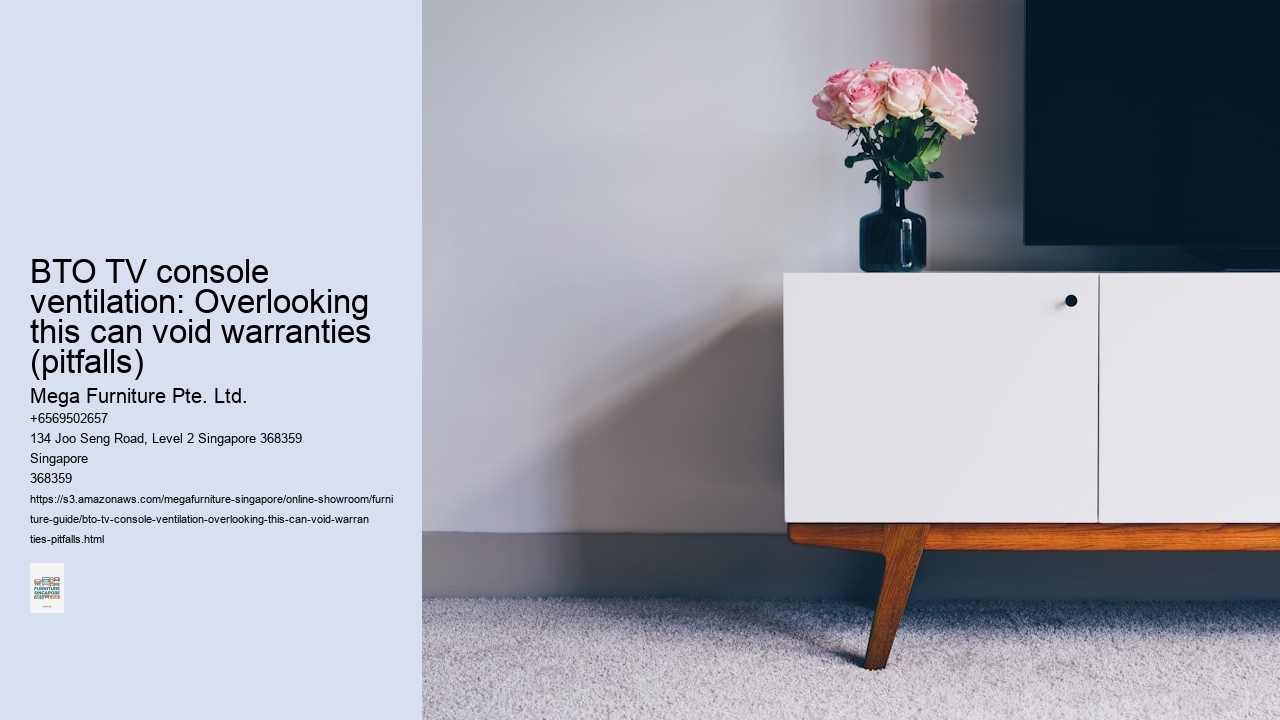
That HDB living room might look pristine on a Sunday afternoon, but the real test comes on a Tuesday during the monsoon surge, with the air-con off and a shedding corgi asleep on the floor. Humidity doesn't just warp cheap board; it invites mould into the dark recesses behind your media centre, while pet hair weaves itself into every fabric it touches.
Your first material decision is non-negotiable: avoid anything with a fabric backing or untreated MDF. These act like sponges in our climate, swelling at the edges and becoming a permanent home for odours and allergens. Instead, prioritise fully sealed surfaces. Thermally fused laminate over particle board is a reliable baseline—it’s a plastic-foil layer bonded under high heat, creating a near-impervious skin that wipes clean without absorbing moisture. For a step up, look for sintered stone or lacquered finishes on engineered wood; they offer the same easy-clean defence but with a more substantial feel.
Ventilation here isn't just about hidden holes in the back panel. Seek out designs that incorporate it as a feature—woven cane or rattan panels, louvered slats, or metal mesh inserts. These materials are inherently breathable, allowing the warm air from your AV receiver to dissipate naturally rather than getting trapped. A solid teak sheet might look handsome, but it effectively creates a sealed hotbox for your PlayStation and router, which is a recipe for premature failure and voided warranties.
The battle against dust and dander is won on flat, wipeable planes. A glossy laminate or a smooth vinyl wrap on the cabinet top allows you to sweep away the daily accumulation with a single damp cloth. Textured wood grains or matte paint, while stylish, require more diligent brushing to dislodge hair. It’s a practical trade-off many pet owners in Pasir Ris or Punggol condos make; the five-minute weekly wipe-down beats a monthly deep clean that disturbs all your carefully routed cables.
For families, this combination of resilience and airflow becomes critical. A console in a 4-room BTO isn’t just furniture; it’s a piece of infrastructure that has to withstand spilled drinks, humid nights, and the constant shedding cycle of a family pet. You’ll find options that balance these needs in dedicated collections, where the focus is on durable materials and considered design rather than temporary trends.
That 65-inch TV, its screen stretching nearly 145cm across, looks precarious on a console that's just a few centimetres wider. The recommended 20–30cm overhang on each side isn't mere decoration—it's a crucial counterweight. In a typical 4-room BTO living room, where the console anchors the entire media wall, this proportion prevents a top-heavy silhouette that feels perpetually ready to topple. A 180cm console for that 65-inch screen creates a solid, grounded foundation. It’s the difference between a considered installation and a temporary-looking setup. You’ll notice the stability immediately, even before you plug anything in.
An undersized console forces a brutal compromise: cram all your gear into a central, congested cavity. Your soundbar, media player, gaming console, and router fight for the same cramped real estate. This isn't just untidy; it directly causes heat buildup by blocking the passive ventilation vents built into the sides and back of most units. In Singapore's ambient warmth, that trapped heat is a warranty-voiding hazard for your electronics. A console exceeding your TV’s width provides dedicated zones for equipment, allowing air to circulate naturally around each hot component. That extra 30cm of length is essentially cheap insurance.
Scale matters intensely in our compact living rooms, where every centimetre of a 3.5-metre wall is accounted for. A console that’s too short for a large TV creates an awkward visual gap on either side, making the wall feel unbalanced and the TV seem like an afterthought. Conversely, a correctly proportioned console—one that extends beyond the screen—frames the television as an integrated element of the furniture piece. It gives the media wall a deliberate, designed presence rather than a makeshift one. This proportional harmony is what makes a feature wall actually work, transforming a collection of tech into a cohesive living room centrepiece.
Proper console length solves the hidden chaos behind your entertainment setup. With ample width, you can route power strips, HDMI cables, and network wires along the back panel without creating a single, dense knot directly behind the TV. This distributed layout prevents cables from piling up and blocking rear ventilation grilles, a common oversight in tight setups. It also means you can access ports on your devices without performing archaeological digs through a tangle of wires. Neat channels and clips become genuinely usable, not just decorative add-ons you abandon in frustration.
Buying a console that merely fits your current 55-inch TV is a short-term solution. Panel sizes keep creeping up, and your next upgrade will likely be larger. Investing in a longer console, say 200cm or more, accommodates that inevitable shift without requiring a new furniture purchase. It also provides flexibility for adding components like a larger centre-channel speaker or a second gaming console down the line. In many homes, the console becomes a decade-long fixture, while the TV above it gets replaced twice. Choosing for tomorrow’s tech, not just today’s, is the smarter play for both your layout and your budget.
A floating console’s main appeal in a BTO flat is the eight-centimetre gap beneath it—a vacuum nozzle’s dream for parents corralling biscuit crumbs and toy car wheels. That clean, minimalist line against a feature wall feels distinctly contemporary, a look many buyers want for their first home. It’s a practical choice for households with young kids, where easy floor cleaning isn’t just a preference; it’s a daily necessity.
Achieving that look isn’t always straightforward, however. Proper installation demands a solid masonry wall or reinforced drywall capable of bearing the load, especially for longer consoles spanning 180cm or more. Many BTO partition walls, particularly those separating the living room from a common bedroom, are simply insufficient—they’re lightweight constructs that won’t securely hold the brackets for a loaded unit. A contractor’s assessment is non-negotiable here; attempting a mount on an unsuitable wall risks a costly and dangerous collapse.
That’s where the inherent stability of a floor-standing console becomes its strongest argument, particularly in older resale flats. These units sit squarely on the floor, distributing weight directly downward, which makes them ideal for housing heavier AV equipment. Think of a vintage CRT projector inherited from a cinephile uncle, or a substantial subwoofer that needs a solid base to prevent resonant buzzing. There’s no mounting anxiety, just a straightforward placement that works with almost any wall type.
The choice often comes down to a trade-off between effortless maintenance and structural certainty. For a new BTO with confirmed load-bearing walls, the floating option delivers its promised ease. In a resale flat with unknown wall compositions or a need for serious weight capacity, the floor-standing model is the safer, more flexible bet. It’s less about trend and more about what your specific walls—and lifestyle—can actually support.
You’ll find a lot of TV consoles marketed as “solid wood,” but that label can be as misleading as a glossy laminate veneer — it tells you nothing about how the piece is actually put together. The real quality signals are hidden in the joints, the hardware, and the parts you don’t see at first glance.
Start with the drawer glides. A console with full-extension glides, especially from a brand like Blum, lets you access the entire drawer depth; that’s crucial for reaching rear ports on a PlayStation or router tucked at the back. Generic glides might only offer partial extension, which means you’re constantly wrestling with cables. Hinge adjustability is another quiet indicator — three-way adjustable hinges allow you to fine-tune door alignment after installation, compensating for the slight warping that can happen in our humid climate.
Then, check the back panel. Many budget consoles use a thin, raw MDF back that’s just stapled on; a thicker, finished panel, often around 5mm, suggests a more rigid structure. Look at the edges of shelves and interior panels, too. They should be PVC-wrapped, not left raw — that wrapping prevents moisture ingress and gives a cleaner finish. Even in solid wood construction, the type of joint matters. Finger joints, where interlocking fingers of wood are glued together, are stronger and more stable than simple butt joints, which are prone to coming apart.
It’s these details that determine whether a console will hold up in a 4-room BTO living room, supporting a 65-inch TV and a stack of game consoles, or if it’ll start sagging and sticking within a year. You’re not just buying storage; you’re buying the engineering that keeps it functional.
Online photos can make any TV console look sleek and solid, but they rarely show you the ventilation — and in Singapore, that’s what matters. A glossy laminate front might hide a sealed box behind it, turning your media cabinet into a heat trap for your PlayStation or AV receiver. That’s why a trip to a physical showroom, like Megafurniture’s outlets in Joo Seng or Tampines, isn’t just about checking colour swatches; it’s a necessary inspection for thermal management that product pages simply can’t convey. You need to get hands-on. Run your fingers along the back panel to feel for cable cut-outs — are they just two small circular holes, or a larger rectangular slot you can actually route a power strip through? Peer through any mesh grilles at the sides or top; the density of that weave dictates airflow more than its presence alone. A fine decorative mesh might block 70% of the airflow a coarse, functional one allows, a detail you’ll only gauge in person. Material choice here is critical: engineered wood panels can warp in our humidity if they lack proper sealing, while solid rubberwood or metal grilles tend to hold up better. Their range is proportioned for common local setups. You’ll find consoles around 180cm for 55-inch TVs, or stretching to 220cm for 75-inch models, dimensions that fit the media walls of many 4-room BTO flats. This proportionality is deliberate — a console that’s too short for a large TV looks unbalanced, while one that’s excessively long overwhelms a compact living room. Seeing these units in a showroom setting lets you judge that scale against a simulated wall, something a thumbnail image on a webpage can’t replicate. It’s about verifying the omissions. An online listing might state “ventilated back” but not mention the flimsy, removable hardboard that sags when you press on it. In the showroom, you can test the sturdiness of shelves meant to hold a centre channel speaker, or see if the internal depth truly accommodates a deep amplifier. For the cost involved, and the risk of voiding electronics warranties with poor cooling, this due diligence is just practical. You can assess the full
collection at Megafurnitureonline, but the rationale for visiting is to confirm what the pictures leave out — the tangible details that determine whether a console works in your home, or just looks good in theirs.
That sleek 240cm console you ordered online might fit perfectly in your Pasir Ris condo’s living room, but it’s useless if it can’t get past the lift. Delivery teams for high-rise estates often face a logistical puzzle before they even reach your door. They’ll measure lift dimensions and stairwell clearances on arrival; if the packaged unit exceeds those limits, you’re typically looking at a premium for a two-man team to carry it up multiple floors by hand. It’s a hidden cost that can add $100 or more to your bill, and it’s rarely mentioned in the online checkout cart.
The assembly complexities don’t end at the doorway. Many warranties, particularly for wall-mounted or floating TV consoles, are voided if the buyer self-assembles or modifies the unit. This isn’t just corporate legalese—it’s often about the integrity of the mounting system and the critical, unseen ventilation design. A professional installer does more than just screw parts together; they confirm the wall is load-bearing, use the correct heavy-duty anchors for concrete, and ensure the unit is perfectly level to prevent stress fractures.
Perhaps most crucial for ventilation is the rear clearance. Installers will position the console the specified distance from the wall, usually 5cm to 10cm, to create that essential airflow channel behind. Tampering with this by pushing the unit flush against the wall to “save space” or drilling extra holes in the back panel to route more cables can choke the airflow, leading to overheated electronics and a voided warranty. In a humid climate, trapped heat also warps wood and degrades finishes faster.
For condo dwellers, the path of least resistance is to factor professional installation into the initial budget. It transforms a bulky flat-pack into a secured, functional piece, optimised for both safety and cooling. You can explore options that include this service, like Megafurniture’s collection, where the final delivered price often reflects these condo realities. The alternative is a beautiful console that either doesn’t fit, isn’t safe, or quietly cooks your PlayStation—defeating its entire purpose.
The most practical advice on TV consoles doesn't come from showrooms—it’s buried in the comment threads of local homeowner forums, where buyers swap notes on warranty pitfalls and the gritty realities of daily use. These discussions reveal a clear gap between a console's advertised look and its actual performance in a Singapore flat.
Will drilling holes for cable management void my console’s warranty? It often can, especially if you’re modifying a veneered or laminated panel that wasn’t pre-drilled by the manufacturer. The risk isn't just about the hole itself, but hitting internal supports or causing the material to chip and delaminate in our humidity. For a cleaner look that protects your investment, you’re better off selecting a model with built-in cable ports or consulting the retailer’s installation team first.
Do I really need a cooling fan inside for my PS5, or is the rear mesh enough? That depends entirely on your console's depth and your entertainment stack. A PS5 needs about 28cm of depth just for the unit, but closer to 38cm for proper rear ventilation if you don’t want it jutting out. Pair that with a Sonos Arc soundbar on top—another 11cm deep—and you’ve got a serious heat trap in a standard 40cm-deep cabinet. In many BTO living rooms, that setup turns the interior into a small oven; a quiet USB-powered exhaust fan isn’t overkill, it’s preventative maintenance.
How do you clean behind a wall-mounted unit in a high-rise with all that dust? You don’t, not easily—and that’s the point most buyers miss during installation. Flats near construction in Punggol or Tengah, or older estates along East Coast Road, get a fine layer of grime that settles everywhere. Opting for a floating console with a significant gap, say 15cm or more, lets a robot vacuum slide underneath, or at least allows room for a mop head. The sleek, flush-to-the-wall mount might look perfect in the showroom, but it creates a permanent dust trap you can’t reach.
What about future-proofing for a bigger amplifier or AV receiver in five years? Think about internal cavity dimensions, not just the shelf height. A typical mid-range AV receiver is around 17cm tall but over 40cm deep, and it needs substantial clear space above for heat dissipation. Choosing a console with adjustable or removable shelves—and an open or heavily ventilated back panel—gives you the flexibility to reconfigure your setup without replacing the entire piece when you upgrade. It’s a small detail that pays off for a decade.
A common mistake is assuming your new console’s back panel has universal clearance — it often doesn’t, especially for the chunky AC adaptors that power modern AV gear. Before you commit, measure the depth of those transformer bricks; a typical gaming console power supply can be 8cm deep, and many sleek consoles only offer a 5cm rear gap. You’ll need that extra space not just for the plug, but for the cable bend, otherwise you’re forcing the console forward or straining the socket.
Heat management is the next silent calculation. A PlayStation 5 or a high-end AV receiver can output a surprising amount of warmth, and that heat needs somewhere to go. Simply having a back panel with some holes isn’t enough — map the total vent surface area against your expected device load. A unit with solid side panels and a single 20cm x 5cm rear slot might look cleaner, but it’s a thermal trap for a 4-room BTO living room with afternoon sun.
This is where warranty fine print becomes critical. Many warranties are voided by owner modifications, like drilling additional ventilation holes or removing internal dividers. Verify this clause explicitly; if you anticipate needing more airflow, prioritise a design that provides it from the factory. For flats, cable management isn't just about tidiness — it's a functional requirement to maintain essential airflow behind the unit. Tangled power strips and HDMI nests block vents and create dust magnets, undermining even the best console design.
The minimalist aesthetic prized in Singapore homes demands solutions that hide the mess without choking the hardware. Look for integrated cable channels, grommets aligned with shelf positions, and enough rear clearance to route cords cleanly down to floor-level outlets. It’s a balancing act, but getting it right means your console won’t become a noisy, overheated eyesore six months in. For designs that consider these details from the start, it’s worth browsing options like Megafurniture’s TV console collection, where many models address these practical needs.
A sealed TV console in a 4-room BTO flat isn't just furniture-it's a heat sink. Singapore's humidity and compact layouts, especially those 12 sqm living rooms, create microclimates where hot air simply doesn't escape. A TV console anchors the wall opposite the sofa in the same way a tall bookshelf anchors a corner — long horizontal piece, mix of open and closed storage, defines the visual weight of one whole side of the room. Megafurniture's TV Console range covers floating wall-mounted designs, low-profile freestanding consoles, and modular feature-wall configurations. Most pieces sit at 40-50cm height, sized for screens up to 75 inches.. That heat buildup from a PlayStation, an amplifier, and a 65-inch panel accelerates wear on every component inside; it's why AV equipment in a poorly ventilated cabinet often shuts down mid-session, leaving you with a silent screen and a warranty claim that'll likely be rejected.
Manufacturers for TVs, consoles, and sound systems typically void warranties for overheating, a clause buried in the fine print that many homeowners discover only after the damage is done. The problem compounds with console length: a 2.4m unit spanning your living room wall absorbs and traps more thermal energy than a shorter one, simply because there's more enclosed volume for hot air to stagnate. It's a common oversight-buyer wants a seamless media wall, but ends up building an insulated box that cooks his gear.
Ventilation, then, isn't an optional feature; it's an imperative for any setup costing over $2,000. You'll need rear cut-outs or a perforated back panel, ideally matched to the positions of your equipment's own exhaust vents. Some floor-standing consoles come with open shelving sections at the centre, which at least allows for some convective airflow around a centre channel speaker or media streamer. The worst offenders are the fully sealed, wall-mounted floating designs that look sleek but turn the cavity behind into a dead zone.
Material choice matters too. Engineered wood and laminates hold heat longer than, say, perforated metal mesh panels, though those are rarer in mainstream designs. It's worth checking if a console's advertised ‘ventilated design' actually means proper rear grilles or just a token gap at the bottom. For a thorough survey of options that address this, from wall-mounted to floor-standing, you can browse Megafurniture's collection.
In many homes, the console ends up positioned against the living room's single air-conditioner, which creates a false sense of security-the cool air never actually circulates inside the cabinet. That's why passive ventilation, through intentional gaps and internal spacing, remains the only reliable method.
A sealed TV console in a 4-room BTO flat isn’t just furniture—it’s a heat sink. Singapore’s humidity and compact layouts, especially those 12 sqm living rooms, create microclimates where hot air simply doesn’t escape. That heat buildup from a PlayStation, an amplifier, and a 65-inch panel accelerates wear on every component inside; it’s why AV equipment in a poorly ventilated cabinet often shuts down mid-session, leaving you with a silent screen and a warranty claim that’ll likely be rejected.
Manufacturers for TVs, consoles, and sound systems typically void warranties for overheating, a clause buried in the fine print that many homeowners discover only after the damage is done. The problem compounds with console length: a 2.4m unit spanning your living room wall absorbs and traps more thermal energy than a shorter one, simply because there’s more enclosed volume for hot air to stagnate. It’s a common oversight—buyer wants a seamless media wall, but ends up building an insulated box that cooks his gear.
Ventilation, then, isn’t an optional feature; it’s an imperative for any setup costing over $2,000. You’ll need rear cut-outs or a perforated back panel, ideally matched to the positions of your equipment’s own exhaust vents. Some floor-standing consoles come with open shelving sections at the centre, which at least allows for some convective airflow around a centre channel speaker or media streamer. The worst offenders are the fully sealed, wall-mounted floating designs that look sleek but turn the cavity behind into a dead zone.
Material choice matters too. Engineered wood and laminates hold heat longer than, say, perforated metal mesh panels, though those are rarer in mainstream designs. It’s worth checking if a console’s advertised ‘ventilated design’ actually means proper rear grilles or just a token gap at the bottom. For a thorough survey of options that address this, from wall-mounted to floor-standing, you can browse Megafurniture’s collection.
In many homes, the console ends up positioned against the living room’s single air-conditioner, which creates a false sense of security—the cool air never actually circulates inside the cabinet. That’s why passive ventilation, through intentional gaps and internal spacing, remains the only reliable method.