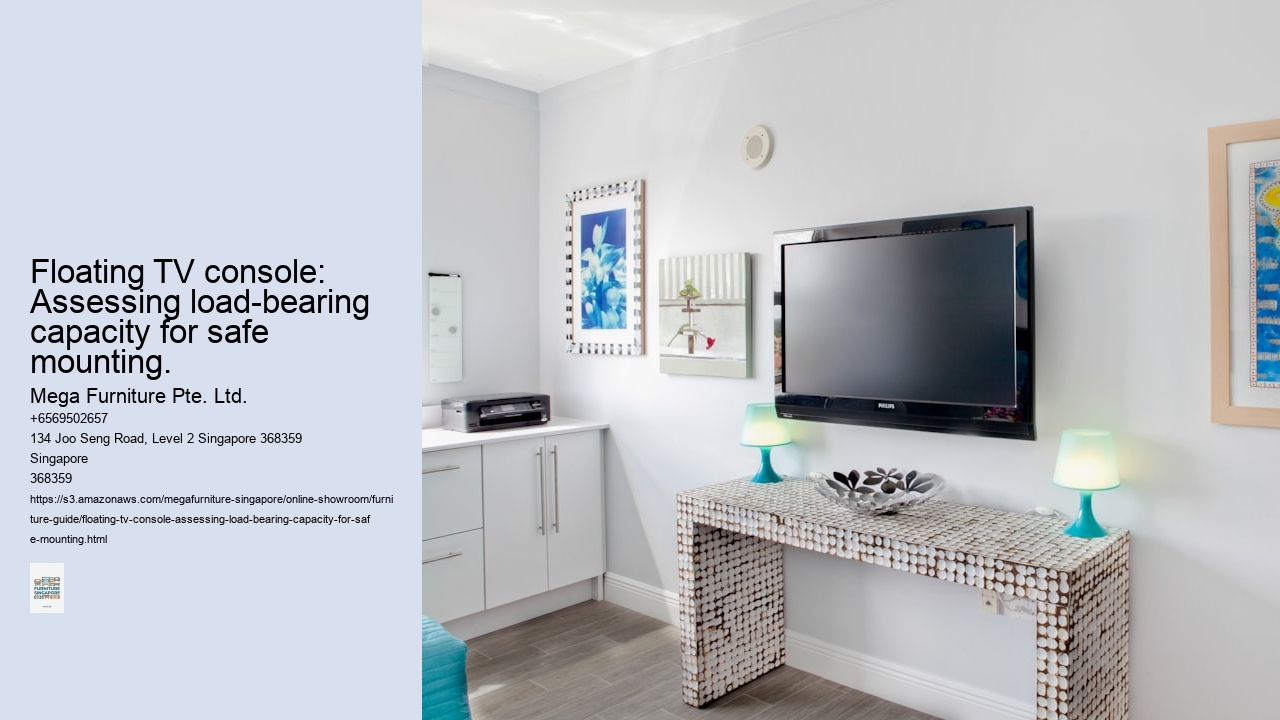
The floating console that looked fine in the showroom can start to sag in a Tampines flat after one monsoon season. Singapore’s ambient humidity, often around 80% RH, acts like a slow, persistent stress test for materials, and budget options often fail first.
Cheap particle board and thin laminates are particularly vulnerable; the core material absorbs moisture over time, causing irreversible warping and swelling at the joints. You’ll see it first as a subtle bow along the console’s length or a drawer front that no longer sits flush. For a piece that’s meant to be a clean, architectural line on your wall, that’s a fast track to looking shabby.
Material selection is therefore a defensive move. Moisture-resistant MDF, with its denser, more stable core, is a reliable workhorse for cabinet bodies in our climate. Solid wood frames, especially from species like kiln-dried rubberwood or oak, move with humidity but do so uniformly and predictably — they won’t crumble. For the structural brackets hidden inside a floating design, powder-coated metal is the safest bet; it simply won’t absorb water, full stop.
Finishes matter just as much as the core material. A melamine surface is generally resilient, but you must verify the edge banding is perfectly tight and sealed. Any tiny gap is an invitation for moisture to creep into the substrate, leading to that tell-tale bubbling and swelling along the edges. It’s a detail you need to inspect up close, running a finger along the seams to check for any raised or rough patches. A well-sealed console in a material suited for the tropics isn’t just about longevity; it’s about preserving that crisp, intended silhouette against your living room wall.
Selecting a console that's too long for a 3.5-metre HDB living room wall is a classic error. The unit visually overwhelms the space, making the entire area feel narrower and more cramped than it actually is. Conversely, a console that's too short beneath a 65-inch TV looks like an afterthought, throwing the whole media wall composition off balance. The goal is a balanced silhouette where the console extends slightly beyond the TV's edges, not the room's boundaries. That careful proportion creates a grounded, intentional look.
Modern media setups are surprisingly heavy. A soundbar, gaming consoles, an AV receiver, and even dense hardcover books add up quickly. Many buyers only consider the TV's weight, forgetting the substantial load inside the cabinet itself. This miscalculation leads to a gradual, worrying sag in floating consoles not rated for the burden. It's a silent stress on brackets and wall anchors that becomes apparent only after a few months.
The clean, floating illusion is instantly ruined by a nest of visible wires. Routers, game consoles, and set-top boxes each come with their own power bricks and HDMI cables, creating a dense tangle. Without a dedicated management plan, this mess hangs visibly below the unit or spills out the back in a cluttered heap. It defeats the purpose of a streamlined design and becomes a dust trap that's frustrating to access or clean.
Mounting a loaded console onto drywall or a hollow partition is asking for trouble. In many BTO flats, the intended media wall isn't solid concrete, requiring specific hollow-wall anchors or locating the wooden battens behind the plaster. Skipping this check risks the entire unit pulling away from the wall under its own weight. It's a fundamental installation step that amateurs often gloss over, prioritising looks over physics.
A floating console pressed flush against the wall looks sleek in a showroom, but it's impractical in a real home. You need space behind it to plug in cables, and enough clearance above the shelves to actually slide equipment in and out. A unit that's too shallow won't fit an AV receiver; one with no rear gap makes connecting new devices a nightmare. Good design accommodates the inevitable need for rear access and component swaps.
A week after installation, that floating console might look perfectly flush — but you’ll only know if it’s truly stable after you’ve loaded it with everything it’s meant to hold. The real test comes when you slide in that 50kg amplifier, stack three game consoles, and arrange a row of ceramic vases along the top. That’s the moment to watch for any subtle forward flex in the panel, or a slight pull of the mounting brackets away from the wall. It’s a common oversight; buyers often check the mount with an empty unit, then assume it’ll hold.
After that initial load test, leave everything in place and revisit the console after seven days. Take a spirit level and check along the entire length, from one end to the other, looking for any new dip or tilt that wasn’t there on day one. Singapore’s humidity can affect materials, and the sheer weight of a full media setup — often exceeding 80kg on a 180cm unit — can cause slow settling. If you see a gap opening up between the console’s back panel and the wall, or if the level shows a deviation, that’s your signal to re-tighten the fixings or reconsider the mounting method.
This is especially critical in many condos and newer BTOs, where false ceiling bulkheads or hollow-brick partition walls are common behind feature walls. A floating console mounted into these substrates might seem secure initially, but the hollow core simply doesn’t offer the same long-term grip as a solid concrete HDB wall. For these situations, engaging a professional installer from the start isn’t just a recommendation — it’s a necessary cost. They’ll locate the proper studs or install additional backing boards, which adds a few hundred dollars to the project but prevents a catastrophic pull-out later.
The appeal of a floating console is its clean, anchored look; that illusion is shattered if it starts to sag under a collection of books and ornaments. It’s worth treating the installation as a two-phase process: the physical mounting, then the load-building verification. You can find console options designed for heavier loads, like those with reinforced steel frames or additional centre supports, in Megafurniture’s collection. But even the sturdiest model relies entirely on what’s behind it — and in many Singapore homes, that’s the variable you can’t guess from a brochure.
A 240-centimetre floating console isn't just a piece of furniture; it’s a central architectural feature in a 4-room BTO living room, and committing to one based solely on online images is a gamble. The weight of a 75-inch television, combined with the constant opening of drawers for gaming consoles and media boxes, places immense stress on bracket systems and drawer slides — components that look identical in photos but perform vastly differently in reality. That’s why a trip to a showroom, like Megafurniture’s locations in Joo Seng or Tampines, becomes a critical step in the buying process. There, you can physically test the action of drawer slides; a good mechanism should glide silently and fully, even when loaded with several kilograms of equipment, without any wobble or hesitation. You’ll feel the resistance of door hinges, inspect the joinery at the corners, and assess the true colour and texture of finishes like oak veneer or sintered stone — which on-screen can appear either too flat or misleadingly vibrant. Surface durability, especially against potential scratches from frequent cable adjustments, is only evident on a real-world sample you can touch. For a floating unit, the bracket and mounting system is everything. In a showroom, you can see the actual hardware, gauge its thickness, and understand how it integrates with the console’s back panel — a detail that dictates long-term stability against the wall. It’s the difference between a piece that feels permanently anchored and one that develops a slight, unsettling flex over time. You’ll also get a proper sense of proportions; a console that seems perfect online can dominate a space or appear underwhelming when viewed in a room-like setting. Ultimately, this hands-on assessment protects your investment. It confirms that the storage capacity matches your needs, that the finish complements your existing decor, and that the build quality justifies the price point, which for a feature piece of this size typically ranges from $1,200 to $2,400. Before finalising a choice,
browse the options in person; it turns a speculative purchase into a measured decision.
That last 220cm console you saw online might not fit in your lift. HDB lift landings are typically 200cm in depth, and while some newer blocks or condos accommodate larger items, many older estates don’t. For anything over two metres, you’re likely looking at a staircase haul — which adds cost, risk of scuffing, and requires at least two strong helpers. It’s a sobering first step, and one best confirmed with a tape measure before you commit.
Self-assembly seems straightforward until you’re holding a drill, squinting at instructions, and realising your wall mount points are half a centimetre out. For a floating console, that misalignment isn't just cosmetic; it translates into a permanent, unsettling tilt or, worse, a catastrophic failure down the line. The weight of a 65-inch TV and media equipment is considerable. Opting for professional installation, while an added expense, buys you peace of mind and a guarantee that the load is properly distributed across studs or reinforced concrete.
This makes the warranty terms non-negotiable. A standard one-year warranty covering manufacturing defects on the cabinet carcass is practically useless here. You need explicit coverage for bracket failure and moisture damage — the two most common post-installation issues in our climate. Humidity can warp even laminated boards over time, and a poorly specified bracket is a ticking clock. Scrutinise the fine print; if it doesn’t mention structural components or environmental stress, it’s not fit for purpose.
A floating console is only as good as its attachment to the wall, and that’s a relationship defined by the quality of the hardware and the skill of the installer. It’s worth paying for both. You can browse a range of options designed for local spaces, including professional installation services, at Megafurniture’s TV console collection.
The most common query isn't about style or colour, but a flat-out measurement question: "Will this thing hold my new 75-inch?" The answer is yes, but only if the console's width meets or exceeds 200cm; anything less risks a precarious overhang that looks wrong and can destabilise the entire wall-mounted unit. This proportional rule is non-negotiable in a 4-room BTO living room where every centimetre counts.
Safe for kids? That depends entirely on whether you've used the anti-tip kit, which should be considered as essential as the mounting bracket itself. Installers will tell you it's a five-minute job that most buyers skip, opting instead for a naive faith in gravity that doesn't account for a toddler using an open drawer as a ladder.
HDB's famously uneven walls, a legacy of rapid construction, are the installer's daily headache. They don't level the wall—they level the console, using plastic or composite shims behind the mounting rail to bridge gaps that can be several millimetres deep. It's a standard practice, not a sign of poor craftsmanship, and it's why a professional install often looks seamless while a DIY attempt leaves visible, unsettling shadows.
Pets present a different challenge. A cat's favourite scratching post is often the corner of a soft wood veneer console, leaving permanent gouges. The solution is to avoid those veneers altogether and choose a harder-wearing, textured laminate or thermofoil finish—materials that resist claws and are easier to wipe down, which is a bonus for paw prints in a ground-floor condo.
Beyond these, the real stability check happens weeks after installation, when you notice if doors still align and drawers still glide smoothly. That's the true test of a floating console in Singapore's humidity, and it's where material choices and quality hardware prove their worth. For a range of sizes and finishes that address these specific concerns, you can browse the options at Megafurniture's collection.
The most common mistake isn't forgetting to measure the wall; it's measuring it only once. In a 4-room BTO living room, that 3.8-metre feature wall looks deceptively empty until you account for the skirting board, which can lop off 10cm from your usable height and ruin the proportions of a long, floating console. Measure twice, at both ends — older resale flats rarely have perfectly level floors or straight walls, so your final length might be dictated by the shortest span. Before you even think about models, get an electrician to pre-wire for concealed cables. It's a half-day job that solves the perennial clutter issue: you'll have a dedicated conduit behind the planned unit for power, HDMI, and internet cables, feeding cleanly from a wall socket to the TV. This upfront cost, typically around $150 to $300, dictates your final choice — it commits you to a wall-mounted or floating design and eliminates consoles with bulky back panels. Then, audit your actual clutter. That theoretical "media equipment" becomes a specific PlayStation 5, a Soundbar, three remotes, and a stack of board games. Open shelving looks pristine in showroom lighting, but in many homes it becomes a dust magnet for Lego sets and haphazard charging cables. Decide on a closed-to-open storage ratio based on what you need to hide, not what you hope to display. With your specific dimensions, load requirements, and storage plan in hand, a showroom visit becomes a final material and model check. Press on sintered stone tops to feel their heft; inspect the grain direction on a rubberwood veneer; test the glide of soft-close drawers weighted with a catalogue to simulate your AV receiver. This is where vague preferences crystallise — you'll know if that 200cm console in dark walnut feels imposing in your space, or if the white oak laminate you liked online looks too clinical under your corridor's LED downlights. Bring your floor plan and a tape measure to
browse the options, because a console that fits the wall is different from one that fits your life.
In many HDB and condo living rooms, the wall space between two doorways is precisely 180 centimetres - a measurement that dictates furniture choices with an almost bureaucratic finality. This isn't about grand design visions; it's about fitting a console into the leftover real estate after the floor plan's non-negotiables are accounted for. For BTO flats and compact condos, the typical console length falls between 120cm and 180cm, a range that prioritises fitting the piece over filling the wall.
Depth becomes the critical dimension in these constrained layouts. A console that protrudes beyond 40cm into a narrow 4-room BTO living room can make the entire space feel cluttered, forcing a perpetual sideways shuffle between the sofa and the coffee table. A TV console anchors the wall opposite the sofa in the same way a tall bookshelf anchors a corner — long horizontal piece, mix of open and closed storage, defines the visual weight of one whole side of the room. Megafurniture's TV Console range covers floating wall-mounted designs, low-profile freestanding consoles, and modular feature-wall configurations. Most pieces sit at 40-50cm height, sized for screens up to 75 inches.. The floating console's appeal here is its visual lightness, the clean line of shadow beneath it that tricks the eye into perceiving more floor space. That illusion shatters if the unit is too deep, becoming a bulky block that dominates the room.
Smart planning means considering what sits on and in the console from the outset. If you're mounting a 65-inch TV, the console's top surface needs to be deep enough to safely support its base, typically around 35cm. More importantly, you must decide early on a soundbar or a projector's placement; retrofitting cable channels for a projector after installation is messy, often requiring you to dismantle the carefully mounted unit to thread HDMI and power cords properly. It's a common rework that stems from treating the console and the AV gear as separate purchases.
For resale flats with slightly more generous, albeit irregular, layouts, you might gain an extra 20cm of wall. The temptation is to maximise storage with a longer, deeper unit. Resist it. A console longer than your TV's width can make the screen look diminutive, while one that's too shallow forces you to cram media players and game consoles tightly against the back wall, choking ventilation. The goal is a proportional balance where the furniture supports the technology without announcing itself.
Ultimately, the most successful installations treat the floating console as integrated AV infrastructure, not just a standalone furniture item. Its dimensions are a direct response to the room's architecture and the equipment it must hold - a negotiation between your flat's concrete limits and your wishlist. You can explore various profiles and finishes suited to these spatial demands within Megafurniture's collection.
In many HDB and condo living rooms, the wall space between two doorways is precisely 180 centimetres — a measurement that dictates furniture choices with an almost bureaucratic finality. This isn't about grand design visions; it’s about fitting a console into the leftover real estate after the floor plan’s non-negotiables are accounted for. For BTO flats and compact condos, the typical console length falls between 120cm and 180cm, a range that prioritises fitting the piece over filling the wall.
Depth becomes the critical dimension in these constrained layouts. A console that protrudes beyond 40cm into a narrow 4-room BTO living room can make the entire space feel cluttered, forcing a perpetual sideways shuffle between the sofa and the coffee table. The floating console’s appeal here is its visual lightness, the clean line of shadow beneath it that tricks the eye into perceiving more floor space. That illusion shatters if the unit is too deep, becoming a bulky block that dominates the room.
Smart planning means considering what sits on and in the console from the outset. If you’re mounting a 65-inch TV, the console’s top surface needs to be deep enough to safely support its base, typically around 35cm. More importantly, you must decide early on a soundbar or a projector’s placement; retrofitting cable channels for a projector after installation is messy, often requiring you to dismantle the carefully mounted unit to thread HDMI and power cords properly. It’s a common rework that stems from treating the console and the AV gear as separate purchases.
For resale flats with slightly more generous, albeit irregular, layouts, you might gain an extra 20cm of wall. The temptation is to maximise storage with a longer, deeper unit. Resist it. A console longer than your TV’s width can make the screen look diminutive, while one that’s too shallow forces you to cram media players and game consoles tightly against the back wall, choking ventilation. The goal is a proportional balance where the furniture supports the technology without announcing itself.
Ultimately, the most successful installations treat the floating console as integrated AV infrastructure, not just a standalone furniture item. Its dimensions are a direct response to the room’s architecture and the equipment it must hold — a negotiation between your flat’s concrete limits and your wishlist. You can explore various profiles and finishes suited to these spatial demands within Megafurniture’s collection.