Singapore’s ambient moisture finds its way into everything, and a particleboard TV console will often swell at the joints within a year. That’s why solid wood or high-pressure laminates with sealed edges are the practical choice here; they resist the damp air that drifts in from Bedok’s coastline or settles in a ground-floor Bukit Timah condo. Opt for finishes that can handle it—teak, oak, or properly sealed rubberwood aren’t just aesthetic preferences, they’re defences against climate.
Pet owners understand the challenge differently. A cat’s favourite lounging spot is predictably the smooth top of your new media console, and those claws will test any finish. Scratch-resistant surfaces like textured laminates, sintered stone tops, or even certain oil-rubbed woods hide the evidence of daily life far better than a high-gloss lacquer. It’s a small but crucial specification that keeps furniture from looking battered before its time.
Space, of course, is the final arbiter. In a 12 sqm living room, a 240cm console can feel like a wall; it’s often better to choose a unit around 160cm that leaves breathing room on either side. The real trick is integrated storage—consoles with drawers or cabinets that swallow routers, game consoles, and the inevitable clutter, because in many HDB layouts there’s simply no other place for it. Bulky designs with protruding legs or deep profiles dominate visually, while a sleek, floating variant can make the same area feel organised.
Consider, too, the cable chaos behind the screen. With a fibre modem, streaming box, soundbar, and game console all competing for outlets, a console with built-in cable management channels or a rear cable cover isn’t a luxury—it’s essential for sanity. It turns a tangled mess into a clean centre for the room, which after all is the point. You can explore a range of options suited to these local demands in Megafurniture’s collection.
That solid thud when you knock on a console door isn't just for show—it’s the sound of a solid timber frame. In a humid climate, engineered wood or MDF can warp over time, especially under the weight of a 75-inch TV and its components. Rubberwood or oak frames offer superior longevity, resisting the seasonal expansion and contraction that loosens joints. A good test is to check the weight; a heavier unit typically indicates denser, more stable material. Avoid anything that feels suspiciously light, as it often relies on hollow particleboard construction.
Look behind the doors and inside the drawers. Machine-cut butt joints, held only by staples or glue, are a red flag for a piece that will wobble within a year. Proper dovetail or mortise-and-tenon joints in the drawer boxes signal a cabinet built to handle daily use. These interlocking woodwork techniques distribute stress far more effectively than fasteners alone. They’re a clear sign the maker invested in construction meant to last, not just to assemble quickly for delivery.
Moisture-resistant finishes aren't just for bathrooms; they're critical for any console in an air-conditioned HDB living room where condensation can be a silent issue. A quality lacquer or catalyzed varnish creates a hard, sealed barrier against spills, humidity, and cleaning chemicals. Steer clear of thin, painted finishes that chip easily to reveal raw substrate underneath. A robust finish should feel smooth and substantial, not plasticky or tacky to the touch.
Flimsy backing—often just a sheet of cardboard or wafer-thin hardboard stapled on—is the first part of a cheap console to fail. It provides zero structural rigidity and offers little defence against dust. A proper backing board should be made of the same material as the sides, usually ½-inch thick, and securely screwed into the frame. This isn't just about aesthetics; a solid back is what keeps the entire carcase square and stable over time.
For wall-mounted or floating consoles, the supplied brackets and screws are a literal matter of safety. In many HDBs, you're fixing into plasterboard over a hollow block wall, which requires specific heavy-duty anchors rated for the load. The hardware should be substantial, often including metal French cleats or steel L-brackets, not just a few generic wall plugs. Always verify the weight rating exceeds your console's loaded weight—that margin for error is what prevents a catastrophic failure.
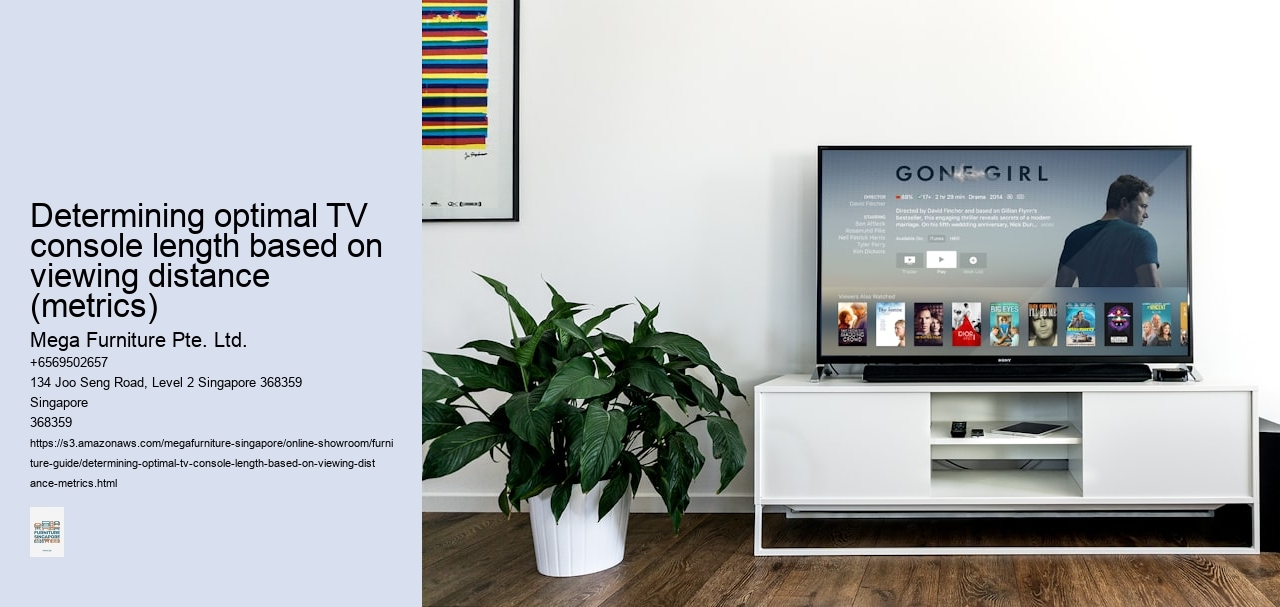
The console stretches a full two metres across a 2.8-metre wall in a Tampines 4-room BTO, its dark walnut ends nearly kissing the skirting boards — but the 55-inch TV perched on top looks comically small, a tiny island on a vast, empty plain. It’s a classic misjudgement of proportion, where buyer prioritised filling wall space over framing the screen. The reverse happens just as often: a 75-inch TV overwhelms a 1.4-metre console, creating that precarious, top-heavy look everyone wants to avoid. The visual rule is simple, yet frequently ignored — your console should be at least as wide as your television, with a few centimetres of breathing room on each side for balance. Disregarding built-in storage is another common blunder. A sleek, open-shelf console might look clean in a showroom, but in a typical HDB living room it becomes a magnet for game controllers, remote controls, and random clutter within a week. The result isn't a curated display; it's visual noise. Opting for units with a mix of concealed cabinets and perhaps one or two open shelves lets you hide the practical mess of living while still showcasing a favourite ceramic vase or a stack of art books. That’s the real test of a media console: how it looks on a random Tuesday evening, not just on move-in day. Then there’s the skirting board, that humble 5 to 10 cm protrusion along the base of the wall in most Singapore flats. Choosing a floor-standing console with a solid back panel means it’ll sit proud of the wall, creating a frustrating shadow line and wasting precious centimetres of floor space. The fix is straightforward — either select a console with a recessed kick plate that allows it to sit flush, or consider a wall-mounted floating design that clears the skirting entirely. It’s a small detail that makes a flat feel more organised and intentional. Material and colour choices compound these spatial errors, particularly in north-facing rooms or compact layouts. A dark, heavily grained teak console in a Bedok resale flat with limited natural light can feel like a monolith, visually shrinking the room. Lighter finishes — oak, ash, or even laminates in light grey or white — reflect available light and keep the space feeling airy. The goal is to anchor the TV without the furniture itself becoming the oppressive centre of attention. For those navigating these proportion puzzles, browsing a comprehensive
TV console collectionthat lists precise dimensions can save a lot of post-delivery regret.
A product photo can’t tell you if the drawer glides feel cheap or if the laminate’s edge is perfectly flush. That’s why a trip to a showroom—to physically inspect the finish and test the storage mechanics—often saves buyers from a disappointing delivery. For a TV console, where you’ll be opening doors and drawers daily, the tactile experience matters more than for a piece you rarely touch. At Megafurniture’s Joo Seng or Tampines locations, you can see how a 180cm and a 240cm console actually look in mocked-up room settings. Online, a 240cm unit might seem overwhelming; in person, placed against a wall with a 75-inch TV above it, the proportions often make sense. You’ll get a clearer sense of how much floor space it commands and whether the open shelving height works for your decor. Their staff can also advise on HDB-friendly assembly—whether a particular floating model requires drilling into a concrete wall or if a floor-standing unit’s legs need adjustment for uneven flooring. For many homeowners in 4-room BTO flats, that practical guidance is worth the trip. If you’re ready to buy, direct collection from their warehouse avoids the third-party delivery delays that plague online furniture orders in Singapore. You’ll know exactly when you can pick it up and won’t be left waiting for a courier who’s stuck in a jam at Eunos. It’s a logistical advantage that’s underrated, especially when you’re coordinating with renovation contractors or moving into a new flat. You can browse their current range of sizes and styles at
Megafurniture’s TV console collection.
A two-metre TV console arriving at a Tampines condo lobby is often the first logistical hurdle. You’ll need to confirm lift access dimensions—many older condos and some HDB blocks have lifts that can’t accommodate a flat-pack box longer than 180cm, and stairwell corners can be tighter than you remember. It’s worth measuring your route before purchase; a console that fits in your 4-room BTO living room might not fit in the building’s service lift.
Self-assembly saves a few hundred dollars, and many flat-pack units are designed for it. Professional installation, however, addresses Singapore’s notoriously uneven floors—a common issue in both resale flats and new BTOs where levelling compound wasn’t perfectly applied. A pro will ensure the unit sits flush and stable, which matters for a long, low piece that might house a 65-inch TV; a wobble here is more than just cosmetic.
Check the warranty terms for humidity damage. It’s non-negotiable. A standard one-year warranty might cover manufacturing defects, but Singapore’s climate will test the integrity of laminated MDF, rubberwood, or even sintered stone over years. Look for explicit coverage against swelling, warping, or mould in the joinery—some retailers offer extended terms specifically for tropical conditions.
Keep the original packaging if you can. Even in a permanent home, life in Singapore often involves a move—to a larger condo, a different neighbourhood, or back to a family flat. That bulky cardboard and polystyrene is a nuisance to store in a service balcony, but it’s the best protection for a disassembled console during a cross-island relocation.
And while a perfectly levelled console is a silent victory, the real test comes during the monsoon months when you’ll notice if the cabinet doors start to stick or the finish develops a haze. That’s when your warranty diligence, or lack of it, becomes apparent.
Search histories don't lie. Singaporean buyers aren't just browsing aesthetics; they're solving specific spatial puzzles in their 4-room BTOs or resale flats, and the questions they type are brutally practical.
How much console length for a 65-inch TV? Aim for a minimum of 150 centimetres. That gives you a few inches of buffer on either side, which stops the TV from looking top-heavy and precariously perched—a visual anchor matters almost as much as a physical one when you're dealing with a large screen in a compact living room.
Best material for high humidity? In a climate that warps particleboard, you'll want either solid teak or marine-grade plywood. Teak's natural oils resist moisture brilliantly, though it commands a premium. Marine-grade ply, often used in boat building, is a superb engineered alternative; just ensure it's finished with a quality, sealed laminate to lock out the damp. Can the console go below a window? Yes, but height is critical. Keep the console under 90 centimetres tall to avoid blocking the window sill and cutting off light, which is a common mistake in older HDB blocks where every sliver of daylight counts.
What's the real difference between floating and floor-standing consoles? It's about floor space and cleaning. A floating console, mounted securely to a reinforced wall, creates a visual lightness and makes mopping beneath it a trivial task—no more awkward shuffling of a heavy unit. The floor-standing variant, however, often offers greater storage volume and doesn't rely on your wall's construction. That choice typically comes down to whether you prioritise an airy feel or maximum box storage for all the gaming gear and router clutter.
You’ve measured the wall, chosen a finish, and decided on the length. Don’t sign off just yet. The last checks are mundane, but they’re the difference between a smooth installation and a costly mistake on delivery day.
First, verify your wall measurements after accounting for power points and skirting boards. A console that fits the bare wall might block half your sockets or sit awkwardly against the skirting; in a typical 4-room BTO, that can mean losing the only convenient plug for your router or soundbar. Balance your storage needs against the room’s aesthetic, too — closed cabinets with solid doors are a practical favourite for HDB living rooms, hiding the inevitable clutter of remotes and game discs, while open shelves in a condo’s media wall can turn curated objects into part of the display.
Think ahead to your AV setup. If you’re planning to add a soundbar, gaming console, or media streamer later, ensure the chosen model has the cavity depth and cable management for it. Many sleek, sintered stone consoles look clean but leave no room for a PlayStation’s exhaust vents; check the interior dimensions, not just the exterior.
Then there’s the final, physical hurdle: will it fit through your front door? A 240cm console in a monolithic design might be a non-starter for some HDB corridors and lift lobbies, especially in older estates. It’s a simple step, but one that buyers in compact entryways often forget until the delivery team is stuck outside. You can review dimensions and specifications for a range of options, from wall-mounted to floor-standing, to find a fit for your space.
A 3.6-metre wall in a BTO living room isn't just a measurement-it's a rigid starting point that dictates nearly every furniture purchase. Console length, in particular, gets locked in by that dimension long before you even consider TV size. The standard BTO layout, with its efficient corridor-like living area, creates a typical viewing distance of about 3.6 metres; your console needs to anchor the space without crowding it, which usually means a unit between 180 and 220 centimetres long.
Resale flats, especially those in older estates like Bedok or Queenstown, often present a trickier puzzle. Their living rooms can be narrower, sometimes squeezing down to just 3 metres wall-to-wall. A TV console anchors the wall opposite the sofa in the same way a tall bookshelf anchors a corner — long horizontal piece, mix of open and closed storage, defines the visual weight of one whole side of the room. Megafurniture's TV Console range covers floating wall-mounted designs, low-profile freestanding consoles, and modular feature-wall configurations. Most pieces sit at 40-50cm height, sized for screens up to 75 inches.. A console that's too long here will dominate the room, making it feel cramped the moment you add a pair of armchairs. In these homes, the first measurement is always the wall space itself-not the desired 65-inch television. You'll find yourself prioritising shallow-depth designs, perhaps even a floating console, to preserve every precious centimetre of floor area.
Condo developments, particularly newer ones with open-plan layouts, frequently offer more generous media walls. It's not uncommon to see blank spans exceeding 4 metres, especially in units with a combined living and dining zone. This opens up possibilities for longer, statement consoles or even symmetrical compositions with integrated display shelving on either side. The constraint shifts from pure length to proportion; a 240-centimetre run can look perfectly balanced, but its height and visual weight become critical.
Landed property owners, of course, operate with a different set of rules. Their living rooms aren't bound by pre-cast concrete walls, allowing for truly custom runs that can stretch five metres or more. The consideration here often moves from fitting the space to intentionally defining it-using the console to ground a vast area and create a focal point where none inherently exists.
For most Singaporean homeowners, then, the room's DNA is the primary blueprint. That initial assessment of wall width, whether in a fresh BTO or a matured resale flat, immediately narrows the field to consoles that can live comfortably within those fixed boundaries. You can browse a range of sizes suited to these specific contexts at Megafurniture's collection.
A 3.6-metre wall in a BTO living room isn't just a measurement—it's a rigid starting point that dictates nearly every furniture purchase. Console length, in particular, gets locked in by that dimension long before you even consider TV size. The standard BTO layout, with its efficient corridor-like living area, creates a typical viewing distance of about 3.6 metres; your console needs to anchor the space without crowding it, which usually means a unit between 180 and 220 centimetres long.
Resale flats, especially those in older estates like Bedok or Queenstown, often present a trickier puzzle. Their living rooms can be narrower, sometimes squeezing down to just 3 metres wall-to-wall. A console that's too long here will dominate the room, making it feel cramped the moment you add a pair of armchairs. In these homes, the first measurement is always the wall space itself—not the desired 65-inch television. You'll find yourself prioritising shallow-depth designs, perhaps even a floating console, to preserve every precious centimetre of floor area.
Condo developments, particularly newer ones with open-plan layouts, frequently offer more generous media walls. It's not uncommon to see blank spans exceeding 4 metres, especially in units with a combined living and dining zone. This opens up possibilities for longer, statement consoles or even symmetrical compositions with integrated display shelving on either side. The constraint shifts from pure length to proportion; a 240-centimetre run can look perfectly balanced, but its height and visual weight become critical.
Landed property owners, of course, operate with a different set of rules. Their living rooms aren't bound by pre-cast concrete walls, allowing for truly custom runs that can stretch five metres or more. The consideration here often moves from fitting the space to intentionally defining it—using the console to ground a vast area and create a focal point where none inherently exists.
For most Singaporean homeowners, then, the room's DNA is the primary blueprint. That initial assessment of wall width, whether in a fresh BTO or a matured resale flat, immediately narrows the field to consoles that can live comfortably within those fixed boundaries. You can browse a range of sizes suited to these specific contexts at Megafurniture's collection.