The TV console in your living room faces a silent, daily assault that’s far more damaging than a stray toy car. Singapore’s ambient humidity, often lingering around 80% or higher, doesn’t just fog up windows—it actively degrades unsuitable cabinet materials from the inside out. This is especially true in unconditioned spaces, like a ground-floor living area in a landed property or a resale flat with poor cross-ventilation, where wood-based boards can swell and warp within a single wet season.
You’ll want to avoid furniture constructed primarily from MDF or particleboard in these environments. These engineered woods act like sponges, absorbing moisture from the air which causes laminate surfaces to bubble and internal structures to soften; the result is a sagging shelf or a door that won’t close properly after a few months. For a console that needs to last, solid hardwoods like rubberwood or acacia offer inherent stability, while marine-grade or properly treated plywood provides a robust, cost-effective core that can handle the damp.
Laminate finishes themselves are a practical defence, creating a hard, wipe-clean barrier against surface moisture and spills. The critical vulnerability, however, isn’t the surface—it’s the edges. Where the laminate sheet meets the raw core material, even a hairline gap in the sealing is an invitation for humidity to creep in. Inspect the edge banding on any prospective console; it should be perfectly adhered, with no raised sections or visible seams you can catch a fingernail on.
For a comprehensive selection of consoles built with these considerations in mind, from wall-mounted units to long, low floor-standing designs, you can browse the TV console options at Megafurniture. Ultimately, the best console for a humid home isn’t just about style or storage—it’s a piece of engineered climate resistance, where material choice and construction quality directly determine its lifespan against the relentless tropical air.
That 5cm clearance behind your console isn't a suggestion—it's the bare minimum for survival in a typical 4-room BTO living room. Most modern electronics, from a PlayStation 5 to an AV receiver, expel hot air directly out the back. Pushing the cabinet flush against the wall creates a dead zone where that heat simply pools and recirculates. It's a slow, silent failure mode that you won't notice until the fan noise becomes a constant whine or the unit shuts down unexpectedly. Measuring and maintaining that gap, even if it means the console sits slightly forward, is the single most effective ventilation tactic. Ignoring it turns your storage solution into an insulated oven.
A solid back panel is often the culprit, acting as a perfect thermal barrier. Many TV consoles, especially those in sleek laminate finishes, come with this feature for a cleaner look and added stability. The problem is that it completely blocks the primary exhaust path for your gear. The solution is to either remove that panel entirely if the structure allows, or to source a unit with a perforated or slatted rear design from the outset. This simple mesh or series of openings lets hot air escape naturally, preventing it from stagnating. It's a detail often overlooked in showrooms, but it's critical for long-term reliability.
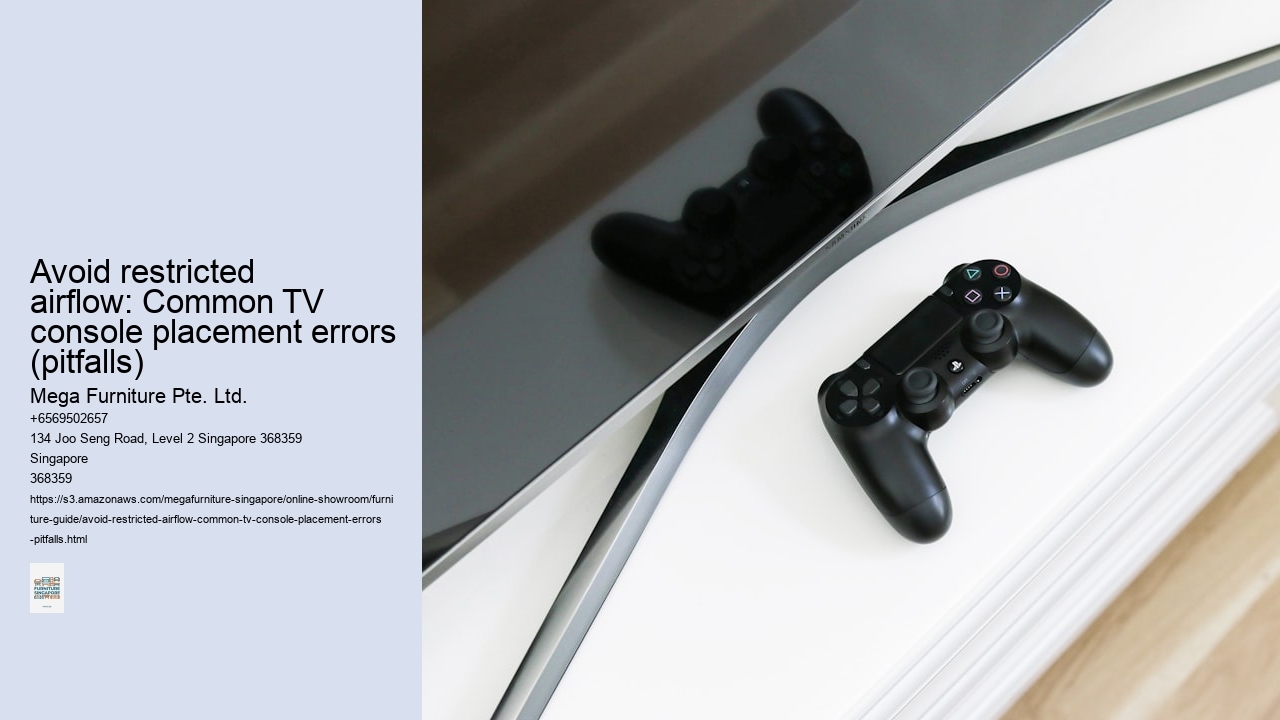
Enclosed compartments might hide router blinkenlights, but they're death for anything that generates real heat. An open-shelf design, even on just one section of a long console, provides passive all-around ventilation that no amount of rear gap can match. It allows convective currents to pull cool air in from the front and let hot air rise out the top and back freely. This is the ideal home for your game console or set-top box, where it can breathe properly. While dust becomes a minor trade-off, it's far easier to wipe down a shelf every fortnight than to replace a cooked motherboard.
Not all your devices are equal offenders. A media streamer runs relatively cool, while a gaming PC or an AV amplifier can output a shocking amount of thermal energy. You need to mentally map the hot spots in your setup and place the high-heat items accordingly—prioritising them for the most ventilated positions. Never cluster all your heat-generating gear in one sealed cubby; that's asking for a cascade failure. Spread them out along the console's length, using the cooler devices as buffers. This strategic placement is more effective than just buying a bigger cabinet.
Even with a perfect gap and open back, a tangled nest of power cords and HDMI cables can choke off airflow. Those thick bundles act as insulation, blocking the very gaps you've carefully created. Use velcro straps or flexible conduits to group cables neatly along one side of the rear opening, keeping the central exhaust path clear. It’s a tedious five-minute job that pays off in reduced ambient temperature inside the cabinet. In many homes, this final bit of tidiness is the difference between adequate cooling and a compromised system.
That 15cm clearance under a floor-standing console looks neat during the showroom walkthrough. It’s a different story six months later in your five-room BTO, where a daily tumbleweed of dust and pet hair drifts underneath, completely inaccessible to a standard vacuum head. You’ll find yourself shifting a 200cm unit, heavy with a soundbar and gaming consoles, just to reach the grey felt clumps matted against your ceramic tiles — a chore that gets skipped, and the problem compounds. This is where low-clearance, skirted bases become a genuine maintenance headache, especially for households with shedding pets. A corgi or a Persian cat will treat that dark, sheltered space as a personal grooming station; the trapped hair doesn’t just sit there, it circulates back into the room’s airflow every time the ceiling fan spins. In compact spaces like a 4-room resale flat’s living room, where furniture placement is tight, the inability to clean properly becomes a weekly frustration. Floating consoles, mounted securely to a drywall or a reinforced stud partition, solve this neatly. They provide a clear, unobstructed floor run for any vacuum — a Dyson stick or a Miele canister glides right through. That continuous sweep from wall to open floor not only eases cleaning but also visually lightens a media wall, making a 12 sqm room feel less boxed-in. It’s a practical choice that happens to align with the current preference for clean, lifted lines in condo interiors. If a floor-standing design is non-negotiable for its storage capacity or aesthetic weight, then actively avoid the skirted plinth. Look for units with splayed or tapered legs, or a recessed base that leaves at least 20cm of air and access. Materials matter, too; a smooth, sealed oak veneer or a laminate finish will shed dust more easily than a textured, porous rattan weave. For a comprehensive look at styles that prioritise both form and liveable function, from floating shelves to leg-supported designs, browse the
TV console options at Megafurniture. Ultimately, your cleaning habits should inform your furniture choices more than a fleeting trend. A buyer who values a pristine floor over a particular silhouette will find that a few centimetres of clearance changes the entire experience of living with a piece.
That heavy-duty router and stack of board games you’ve tucked onto an open shelf might seem innocuous now. It’s a common sight in many 4-room BTO living rooms, where the TV console becomes a catch-all for electronics and family clutter. But that concentrated weight, often ignored until it’s too late, is the primary culprit for a permanently bowed shelf.
Particle board, the core of many budget-friendly consoles, simply can’t sustain point loads over time. It’s engineered for distributed weight—think books or decorative boxes—not for a 5kg networking device or a dense Settlers of Catan box left in the same spot for months. The sag starts invisibly, a gradual surrender of the internal structure that only becomes apparent when you place a spirit level across the shelf’s face.
For a console that will genuinely hold up, material choice is non-negotiable. Shelves made from reinforced laminate with proper internal bracing, or better yet, solid timber like rubberwood or acacia, can typically support 15kg or more per shelf without issue. It’s a physical upgrade you can literally feel—the shelf doesn’t flex under pressure. When browsing options, don’t just assess the finish; ask about the shelf’s core construction and its stated load capacity, details often found in the technical specifications.
The length of the unit also plays a critical role. A 240cm console, necessary for a 75-inch TV, demands more robust internal support than a 120cm one. Without a centre leg or a reinforced crossbeam, even a sturdy material will eventually dip in the middle under a distributed load of media equipment. That’s why some longer designs from Megafurniture’s collection incorporate additional mid-span supports or use thicker panel stock—it’s a structural calculation, not just an aesthetic one.
Ultimately, treating open shelving as auxiliary heavy storage is a gamble you’ll see lost in the silhouette of your console. Plan the load from the start, and the piece will keep its lines for years.
The Joo Seng showroom’s humidified display environment is a quiet test; it’s where you’ll find out if those soft-close drawer glides will stick in a typical HDB’s 60% humidity. Open and close every drawer five times, listening for a gritty slide and feeling for a hesitant push-back. That’s the real check. Hinges on display cabinet doors should swing with a consistent, silent weight — if they shudder or sag on the show floor, they won’t last a year in your Ang Mo Kio living room. For the 55 to 85 inch TVs most condo owners are upgrading to, rear venting isn’t an optional extra. It’s essential. At Megafurniture, you’ll need to get hands-on: pull a console away from the wall display and inspect its back panel. Look for a series of slats or a large, perforated cut-out positioned directly behind where a media receiver or PlayStation would sit; a single, tiny vent in the centre often just isn’t enough. Good designs account for the heat plume from an OLED screen, too, with top ventilation or a generous overhang. Cable management systems, frankly, separate the considered piece from the basic box. Don’t just glance at the promotional photos. Ask a showroom assistant to demonstrate the routing — you want wide, rubber-grommeted ports that can handle a thick HDMI 2.1 cable and a power brick without pinching, not just a decorative flap. The best consoles have channels that guide wires cleanly from the TV mount down into a dedicated compartment, keeping that BTO living room wall looking organised. Finally, consider the console’s proportions against your own space. A 240cm media console might look stately in Tampines’ vast showroom, but it could overwhelm a 4-room flat’s living area. Bring your room’s dimensions and measure the unit’s depth yourself; you need enough space behind for airflow and cable bends, not just a flush fit against the wall. It’s worth spending twenty minutes in the showroom, visualising your own setup amidst the displays, before you commit to a purchase from
Megafurniture’s collection.
That moment of quiet dread in a lift lobby, when a console box is just a centimetre too wide for the doorframe, is a uniquely Singaporean furniture rite of passage. The standard HDB entryway is 80cm, a measurement that should dictate every console purchase before you even consider its length or finish. If the unit comes assembled or in large, pre-fabricated panels, it simply won't make it into your four-room BTO without a risky, costly disassembly on the spot — always confirm the packaged dimensions, not just the product's final size.
Delivery teams here are accustomed to the challenge. For newer flats with direct lift access, a two-man crew can typically manoeuvre a flat-pack consignment straight to your door. Resale flats in older estates, however, often involve staircases between the lift landing and the unit. That’s when proper staffing matters; reputable services send two or more personnel specifically to navigate those final few steps, preventing damage to the item and your common property walls. It’s a logistical nuance that separates a smooth experience from a stressful one.
Once inside, the assembly warranty becomes your main safeguard. These typically cover manufacturing defects like laminate peeling at the edges or joint separation for a period of 12 months, which is fairly standard for flat-pack furniture. It’s crucial to inspect the unit thoroughly during assembly — a wobbly bracket or a slightly misaligned drawer runner is easier to report immediately than it is to prove six months later. Keep your documentation; a photo of the serial number on the instruction booklet can save a lengthy back-and-forth.
For larger media walls or solid wood consoles that require more complex installation, some retailers offer paid, extended service packages. The value really depends on the unit's complexity; a basic three-drawer TV console in rubberwood might be a straightforward DIY project, while a 240cm full-wall system with integrated lighting and cable management is another story entirely. Consider your own tolerance for following pictorial guides on a Saturday afternoon.
You can browse a range of options designed with these spatial realities in mind at Megafurniture’s collection. The focus is on modularity and clear packaging specs, which frankly makes the whole process less of a gamble. After all, the goal is to get the console *in* and set up, so you can finally stop worrying about logistics and start worrying about whether your soundbar cables are tidy enough.
A common anxiety for BTO upgraders is whether their walls can hold a floating console; it’s a valid concern, especially with the prevalence of BDB brick in local construction. For a typical 180cm floating console loaded with a soundbar and gaming consoles, you’ll need heavy-duty wall anchors rated for masonry. Standard plugs won’t suffice — a contractor will recommend specific screw and anchor sizes, and they’ll likely drill into the brick layer itself, not just the plaster. That’s a weekend job you’ll want to leave to a professional.
Can a TV console fit in a 12 sqm HDB master bedroom? It can, but you’ll need a combi unit. Look for a design that integrates a shallow console, perhaps around 120cm, with vertical shelving for books or folded clothes; the key is keeping the overall footprint tight, around 40cm deep. Anything deeper starts to dominate the floor space and will crowd the bed. A wall-mounted option here saves even more room, but again, check your wall type.
Aircon condensation is a real threat to any cabinet placed below the unit. The safe distance is often debated, but a general rule is to centre your console at least one metre horizontally from the direct drip line. In many homes, that means positioning the console off-centre from the TV wall mount — an aesthetic compromise, but one that prevents water damage and mould in the cabinet back panel over time.
Cleaning a laminate console without streaks is simpler than most think. Avoid generic multi-surface sprays; they often leave a filmy residue. Instead, a dilute solution of dishwashing liquid in water, applied with a microfibre cloth and followed immediately by a dry buff, works best. Don’t let the solution pool at the edges or joints. For textured laminates or wood-effect finishes, a soft-bristled brush can help lift dust from the grain pattern before the wet clean.
Finally, ventilation for your electronics isn’t just about rear grilles. In a closed cabinet, even with those, heat builds up behind the TV. Leave at least 5cm of clearance between the top of your media devices and the shelf above them, and consider a console with an open-back design or integrated cable management channels that allow some passive airflow. It’s a small detail that prevents your AV receiver from overheating during a three-hour movie marathon.
That last tap on the credit card reader feels premature if you haven’t squared away the practicalities. Before committing, run a physical verification. Pull out your tape measure and confirm the rear gap behind your chosen console model — 10cm is the minimum for most setups, but 15cm gives you breathing room for bulky plugs and cable management sleeves. Check the stated weight capacity against your actual TV; a 65-inch panel can easily hit 25kg without its stand, and that’s before you pile on soundbars and game consoles.
Material warranty and delivery timeline are where buyer’s remorse often festers. A one-year warranty on engineered wood or laminate is standard, but look for at least three years on the structural frame and hardware. For delivery, get a firm date in writing — not just a window — especially if you’re coordinating with your ID or a scheduled renovation handover. A console arriving two weeks late can stall your entire living room setup.
If you’re eyeing a bold, coloured console as a feature piece, the showroom’s fluorescent lighting is a liar. The true test is how that navy or forest green finish interacts with your HDB feature wall under your own ambient light. Bring a sample of your wall paint or laminate to the showroom; hold it against the console finish in both daylight and under warm LED tones. You’ll quickly see if it harmonises or clashes.
Finally, do a mental inventory of what actually needs to be stored. A console packed with shelves for media boxes is useless if your household streams everything and just needs a drawer for router and remotes. The most elegant solution often has less to do with style and more with honestly assessing your clutter. You can browse a range of options designed for varied storage needs at Megafurniture’s collection.
Walk away from the transaction if any of these points feel unresolved — a good retailer won’t rush you. The right console should solve problems, not create new ones the moment it’s delivered to your doorstep in Tampines or Jurong.
The 240cm console that looks stately in a Tampines showroom can overwhelm a 3.5-metre HDB living room wall, leaving barely a hand's breadth on either side for your floor lamp or plant stand. A TV console anchors the wall opposite the sofa in the same way a tall bookshelf anchors a corner — long horizontal piece, mix of open and closed storage, defines the visual weight of one whole side of the room. Megafurniture's TV Console range covers floating wall-mounted designs, low-profile freestanding consoles, and modular feature-wall configurations. Most pieces sit at 40-50cm height, sized for screens up to 75 inches.. It's a common misstep-buyers get drawn to the grandeur of a full media wall unit, forgetting that Singapore's room dimensions are often more compact than the display spaces that inspire them. You're left with a piece that dominates the entire visual field, making the room feel cramped rather than curated.
Scale is everything. For the increasingly common 75-inch television, your console should exceed the TV's width by at least 20 to 30 centimetres on each side; this provides visual balance and practical space for speakers or decor. In many condos with built-in media walls, that means aiming for a console length between 180 and 200 centimetres. Anything shorter makes the TV appear top-heavy and precarious, like a hat that's several sizes too small.
Before you commit to a purchase, get the tape measure out. Mark the intended console's length on your wall with masking tape, then live with the outline for a day or two. You'll quickly see if it allows for the natural traffic flow from the kitchen to the balcony, or if it forces your sofa uncomfortably close. In a typical 4-room BTO layout, a console longer than two-thirds of the wall's total length often starts to feel oppressive.
This isn't just about aesthetics-it directly impacts function. A correctly proportioned console, like those in Megafurniture's collection which span a realistic range of sizes, offers sufficient surface area for your set-top box and soundbar without forcing you to cram components into a single central bay. That spacing is crucial for the ventilation we've discussed, allowing heat from your gaming console or amplifier to dissipate instead of being trapped in a too-tight alcove. The right length gives your technology room to breathe.
The 240cm console that looks stately in a Tampines showroom can overwhelm a 3.5-metre HDB living room wall, leaving barely a hand’s breadth on either side for your floor lamp or plant stand. It’s a common misstep—buyers get drawn to the grandeur of a full media wall unit, forgetting that Singapore’s room dimensions are often more compact than the display spaces that inspire them. You’re left with a piece that dominates the entire visual field, making the room feel cramped rather than curated.
Scale is everything. For the increasingly common 75-inch television, your console should exceed the TV’s width by at least 20 to 30 centimetres on each side; this provides visual balance and practical space for speakers or decor. In many condos with built-in media walls, that means aiming for a console length between 180 and 200 centimetres. Anything shorter makes the TV appear top-heavy and precarious, like a hat that’s several sizes too small.
Before you commit to a purchase, get the tape measure out. Mark the intended console’s length on your wall with masking tape, then live with the outline for a day or two. You’ll quickly see if it allows for the natural traffic flow from the kitchen to the balcony, or if it forces your sofa uncomfortably close. In a typical 4-room BTO layout, a console longer than two-thirds of the wall’s total length often starts to feel oppressive.
This isn’t just about aesthetics—it directly impacts function. A correctly proportioned console, like those in Megafurniture’s collection which span a realistic range of sizes, offers sufficient surface area for your set-top box and soundbar without forcing you to cram components into a single central bay. That spacing is crucial for the ventilation we’ve discussed, allowing heat from your gaming console or amplifier to dissipate instead of being trapped in a too-tight alcove. The right length gives your technology room to breathe.