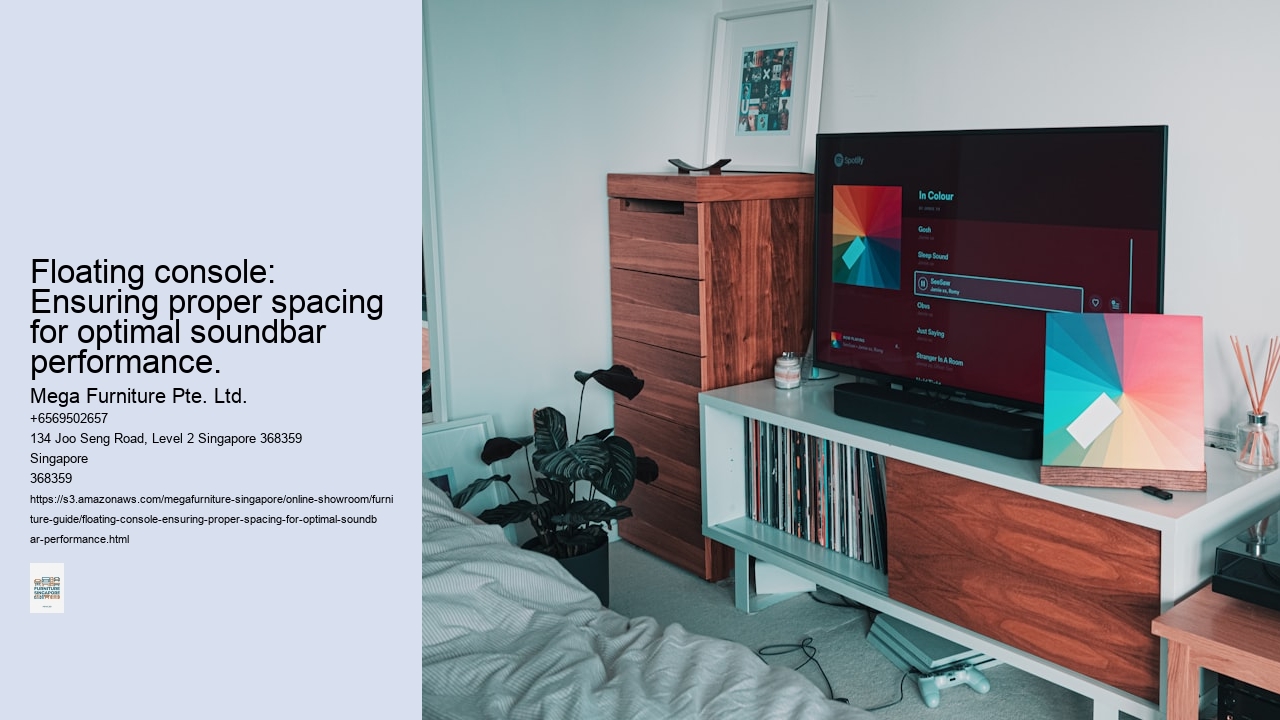
In a typical HDB corridor block, the ambient humidity can hover around 80% for weeks during the monsoon season—that’s enough to make an engineered wood console swell at the joints. For long-term stability, your material choice narrows quickly to solid wood or sealed MDF, which resist moisture far better than laminated particleboard. It’s a hidden cost of Singapore’s climate, and one that makes a sealed finish non-negotiable.
Space is the next constraint, particularly in the 4-room BTO living room where every centimetre counts. A low-profile, floating design does two things: it creates a visual line that makes the ceiling feel higher, and it leaves a clear expanse of floor that tricks the eye into seeing more square footage. Anything taller than 45cm starts to dominate the wall; anything deeper than 40cm can make a narrow room feel like a corridor.
Then there’s the reality of living with pets and the inevitable clutter of daily life. A smooth, lacquered finish on your console will repel scratches from a cat’s leap far more effectively than a textured wood grain. More critically, enclosed storage is essential—not just for the router and game discs, but to hide the bulky PS5 box and its tangle of cables that no amount of cable management ever fully tames. An open shelf becomes a magnet for dust and visual noise.
Consider the overall footprint, too. A 180cm console might fit perfectly under a 55-inch TV, but if it juts out into the walkway to the kitchen, you’ll be nursing bruised hips for months. The goal is a piece that contains the chaos of modern media gear without adding its own bulk to the room. For a curated selection that addresses these local needs, you can browse the floating console options at Megafurniture.
That faint damp smell in a Tampines flat’s living room after a monsoon month often points to a swollen cabinet edge. Laminated particle board, common in budget consoles, absorbs humidity relentlessly; its core expands, warping doors and straining joints. Singapore’s average relative humidity sits around 80%, a constant test for materials. Specify P2-grade moisture-resistant board—it’s treated to withstand this environment, preventing that unsightly bulge along the bottom rail. Ignoring this grade means a console might last only a few seasons before the laminate peels. It’s a straightforward specification that separates temporary furniture from a lasting investment.
Oak veneer over a stable plywood substrate brings a tactile, organic quality to a media wall, countering the sterile feel of many modern flats. Its light grain pattern adds visual texture without overwhelming a space, ideal for a 4-room BTO’s neutral palette. This isn’t solid oak, which would be prohibitively expensive; a quality veneer, however, delivers the same aesthetic warmth at a practical price. It ages gracefully, developing a subtle patina, whereas painted finishes can look dated quickly. For buyers seeking a natural anchor in a room full of black electronics, oak veneer is a reliable choice.
A matte black lacquered finish isn’t just for style—it’s a functional shield against the constant fingerprinting from children and frequent adjustments. High-traffic living rooms in condo units demand surfaces that wipe clean with a dry cloth, without leaving smears or polish residue. Lacquer forms a hard, non-porous layer over the wood or board, sealing it from minor spills and dust accumulation. Compared to oiled or waxed finishes, which require periodic maintenance, a good lacquer is virtually maintenance-free for years. That’s crucial for a piece that sits at the centre of daily family life.
Metal wall brackets are the unseen engine of a floating console, and their rated capacity is the most critical number on the spec sheet. A typical setup—a 65-inch TV, a soundbar, several game consoles, and a stack of media—can easily approach 70kg. Look for brackets explicitly rated for 80kg minimum; this headroom accounts for dynamic load when items are moved or added. Inferior brackets will sag over time, causing the console to tilt forward, which is both unsafe and visually jarring. Installation in a HDB concrete wall requires proper anchors, but the bracket’s inherent strength is the first, non-negotiable line of defence.
Don’t just tally the obvious AV equipment; include the books, decorative stone objects, and that heavy ceramic vase your spouse might eventually display. The console’s own construction material adds significant weight—a 200cm solid-core unit can weigh 40kg alone before anything is placed on it. This total static load must sit comfortably under the bracket’s limit, with a margin for error. It’s a simple calculation buyers often skip, leading to overconfidence in a bracket’s capability. A console laden beyond its support isn’t just a risk; it’s a guarantee of eventual failure.
The TV's up, the console's mounted, and now you're getting physio for a crick in your neck. It’s a classic HDB blunder—mounting that floating console too high in a rush to centre it with the television, forgetting that you actually have to look down at your soundbar and media gear. The standard ergonomic sweet spot sits around 40 to 50 centimetres from the floor to the console’s top surface; any higher, and you’ll be tilting your chin up all night, turning movie time into a literal pain in the neck. Another frequent oversight involves the skirting board. That sleek, wall-hugging design looks perfect in the showroom, but back in your four-room BTO, a 2cm-thick skirting can force the entire unit to stand off the wall by that same gap. It’s a shadow line that screams "rushed job," breaking the clean, floating illusion and collecting dust in a hard-to-reach crevice. Always measure your skirting’s depth and either choose a console with a recessed back panel or plan for a small, intentional setback—it’s a detail that separates a pro install from a DIY disappointment. Then there’s the acoustic sabotage. Homeowners get the dimensions right for the TV and cabinet, but completely ignore the space needed for proper sound. A rear-ported subwoofer shoved flush against a wall or into a cramped media niche turns bass notes into a muddy rumble, while floor-standing speakers meant for a soundbar setup have nowhere to go. You need to allocate clear air space behind and beside your audio components; in many HDB living rooms, that means planning an extra 20 to 30cm of breathing room behind the console, or opting for a longer unit that lets you place speakers well outside the TV’s footprint. These aren’t just aesthetic nitpicks—they’re functional compromises that you’ll live with for years. A well-planned installation considers sight lines, wall details, and sound waves as a single puzzle. Getting it wrong means living with the minor annoyances every day; getting it right means the setup disappears, leaving you with just the film or the game. For those measuring up, browsing the
floating console optionsis the easy part; remembering to account for your neck, your skirting, and your subwoofer is what makes it work.
A floating TV console’s promise of effortless stability can dissolve the moment you load it with a centre channel speaker and a stack of game consoles. Online specs rarely detail the exact load rating per mounting bracket or the quality of the wall anchors included; at Megafurniture's Joo Seng showroom, you can test that promise yourself. Lean your weight onto a display unit, open and close drawers packed with sample weights, and feel for any give in the floating frame—it’s the kind of physical due diligence that prevents a costly, noisy collapse six months post-installation. That tactile verification extends to the finer details, like the cable management grommets. Photos online show neat holes, but in person you can judge whether a plastic grommet feels flimsy or if the cut-out is large enough to thread a thick HDMI 2.1 cable and a power brick through without a fight. You’ll also see how the rear panel is organised—or isn’t—for routing multiple cords from a soundbar, PlayStation, and media streamer back to the wall socket, a practical headache that’s best solved before delivery. Perhaps the most compelling reason for a visit is the lighting. Showroom conditions, which mimic the cool, bright LEDs of many newer BTOs, reveal how finishes truly behave. That warm oak laminate you loved online might skew greyish under your block’s lighting, while a matt white might glow perfectly against a dark feature wall. With around 12 finish options typically on display, you can hold samples against your phone photos of the living room to see how they pair with common HDB wall colours like feature wall greys or accent blues. The staff there routinely advise on layout constraints specific to various estates, having configured units for countless Seng Kang and Tampines BTOs. They know, for instance, which common wall configurations in those blocks might limit ideal floating console placement or how to work around a living room column that eats into your 240cm media wall. It’s this hyper-local, practical guidance—paired with the ability to
assess the collectionin three dimensions—that turns a catalogue image into a confident purchase.
The delivery team for a 240cm console will likely need to assemble it on-site in your HDB lift lobby—those long panels rarely fit through the narrow doorways of older blocks. For walk-up apartments, confirm staircase charges upfront; some retailers add a surcharge for each floor beyond the ground level, and that extra $50 per flight can surprise you at the final invoice. Keep the original packaging for at least seven days, as transit damage on long, flat-packed panels isn't uncommon—a dent along the edge might only become obvious once you've unpacked everything and laid it out in your 4-room BTO living room.
Warranty terms typically split coverage between the structure and the moving parts. You'll get three years on the structural frame itself, which covers issues like warping in our humid climate or joinery failures; the mechanisms for any drawers or sliding doors are covered for just one year. That shorter period reflects the higher wear on moving components, especially if kids are constantly accessing game consoles and remote controls from the lower shelves.
Checking for damage upon delivery is a practical ritual. Look for scuffs on laminate finishes or cracks in the edges of MDF panels—these often happen when long boxes are stacked vertically in a truck. If you spot something, photograph it immediately against the packing slip; that timestamped evidence streamlines the claims process. Don't assume a small flaw is just cosmetic; a compromised edge on a floating console can affect its load-bearing capacity over time.
On assembly, the floating variant requires precise wall mounting. It's not just about aesthetics; an improperly secured console holding a 65-inch TV and soundbar is a genuine safety concern in a family living room. Many buyers find that paying for professional installation, while an added cost, avoids the headache of aligning heavy brackets on a feature wall alone. The warranty won't cover failures from incorrect mounting, so getting it right from day one matters.
For those considering options, the focus should be on retailers that manage this entire logistics chain transparently. You want clear communication on delivery windows—say, a Tuesday morning slot rather than a vague "within three days"—and a straightforward process for reporting any issues. It's the unglamorous backend of buying furniture, but it's where many frustrations actually surface.
The most common soundbar mistake is mounting it flush against the wall — that kills the Dolby Atmos effect stone dead. You need a solid five centimetres of rear clearance for the upward-firing speakers to bounce sound off your ceiling properly; a floating console makes that easy to achieve, but only if you measure the gap before drilling the brackets.
Are BTO drywalls strong enough to hold it all up? For most floating consoles, yes, but you’ll need the right hardware. Standard plastic plugs will pull straight out of the plasterboard over time. Use heavy-duty hollow wall anchors, the metal kind that expand behind the board, for a secure fix. If you’re planning to load the console with a stack of AV equipment and hardcover books, it’s worth hunting for a stud or, better yet, anchoring directly into the brick behind the plaster — that’s your true load-bearing point.
Sourcing a console long enough for today’s 75-inch TVs is its own challenge. The standard 180cm unit leaves awkward overhang, and anything over 240cm feels like a custom-order quest. One practical source for these longer sizes is Megafurniture, which stocks consoles up to 240cm — a proportion that suits the generous entertainment rooms of landed property, but also works in a spacious condo media wall.
For installation, don’t guess the height. The ideal centre of your TV should be at seated eye level, roughly 105cm from the floor in a typical living room. A floating console lets you fine-tune that, creating a clean, anchored look without the visual bulk of a floor-standing piece. Just ensure your cable management is sorted beforehand; that sleek floating effect is ruined by a tangled nest of HDMI and power cords dangling in the void beneath.
Measure your wall twice — once for the console, once for the remaining space for floor lamps or plant stands. In a 4-room BTO layout, that 180cm stretch between the service yard door and the air-con ledge is your real constraint, not the console’s advertised length. Account for existing power points, too; a floating unit that lands directly over a socket forces you into a tangle of extension cords or an expensive electrician’s visit.
Decide now on your storage personality. Open shelving works for curated décor — a few art books, a ceramic vase — but becomes a dust trap for toy clutter in a family-centric living room. Closed panels, especially with soft-close hinges, hide gaming consoles and board games, which is why they’re the default for most resale flat renovations. It’s a choice between display and denial.
Bring photos of your room layout to the showroom, taken from each corner. Lighting in a warehouse is deceptive; a walnut finish that looks rich under fluorescent tubes can read as flat and orange against your existing teak flooring. That’s the kind of mismatch you only catch with a reference shot on your phone. Confirm the console’s construction, as well; a floating design needs a solid backing panel, not just a veneered chipboard, to handle the weight of a 65-inch TV and its soundbar.
Your final check is practical. Can the unit’s cable management system actually route a thick HDMI 2.1 cable from a PlayStation 5? Does the floating height leave enough clearance for a robot vacuum to pass underneath, or will it become a fur-collecting ledge? These aren’t aesthetic questions — they’re about how the piece functions in your specific home. Settle them before you visit a showroom like Megafurniture’s in Tampines, where you can assess the finish and sturdiness in person.
The living room wall in a BTO flat is often a specific, unyielding length - typically between three and four metres. That's your canvas, and a console that falls short leaves awkward, unusable gaps on either side; one that's too long simply won't fit. In many 4-room BTO layouts, where the living area averages 14 to 18 square metres, a console isn't just furniture - it's a spatial anchor that defines the room's proportions.
Scale, therefore, is dictated by your housing typology. Resale 3-room flats, with their often irregular layouts and tighter corridors, can severely constrain where a console can even go, pushing buyers toward slimmer, more modular pieces. Condo owners, meanwhile, frequently use a long, low console to create the coveted floating media wall effect, a clean plane that unifies the entertainment zone. A TV console anchors the wall opposite the sofa in the same way a tall bookshelf anchors a corner — long horizontal piece, mix of open and closed storage, defines the visual weight of one whole side of the room. Megafurniture's TV Console range covers floating wall-mounted designs, low-profile freestanding consoles, and modular feature-wall configurations. Most pieces sit at 40-50cm height, sized for screens up to 75 inches.. The console's length must match the available wall, not just the television sitting on it.
A good rule of thumb is to start with the TV size and work backwards. For a 65-inch screen, you'll want a console at least 180 centimetres long to maintain visual balance and provide adequate surface for speakers or decor. Upgrading to a 75-inch model? A 220-centimetre console is a more comfortable fit, offering ample storage below while ensuring the TV doesn't look precariously perched. This proportional approach prevents the common pitfall of a giant screen dwarfing a tiny slab of furniture beneath it.
Ultimately, the right console acts as a foundational plinth. It grounds the technology, conceals the inevitable tangle of cables and game consoles, and provides a stage for personal touches - a ceramic vase from a neighbourhood potter, a stack of art books. In a space as multi-functional as the Singaporean living room, where every square metre is accounted for, its scale is a primary design decision. You can browse a range of sizes and configurations to suit your wall at Megafurniture's collection.
The living room wall in a BTO flat is often a specific, unyielding length — typically between three and four metres. That’s your canvas, and a console that falls short leaves awkward, unusable gaps on either side; one that’s too long simply won’t fit. In many 4-room BTO layouts, where the living area averages 14 to 18 square metres, a console isn’t just furniture — it’s a spatial anchor that defines the room’s proportions.
Scale, therefore, is dictated by your housing typology. Resale 3-room flats, with their often irregular layouts and tighter corridors, can severely constrain where a console can even go, pushing buyers toward slimmer, more modular pieces. Condo owners, meanwhile, frequently use a long, low console to create the coveted floating media wall effect, a clean plane that unifies the entertainment zone. The console’s length must match the available wall, not just the television sitting on it.
A good rule of thumb is to start with the TV size and work backwards. For a 65-inch screen, you’ll want a console at least 180 centimetres long to maintain visual balance and provide adequate surface for speakers or decor. Upgrading to a 75-inch model? A 220-centimetre console is a more comfortable fit, offering ample storage below while ensuring the TV doesn’t look precariously perched. This proportional approach prevents the common pitfall of a giant screen dwarfing a tiny slab of furniture beneath it.
Ultimately, the right console acts as a foundational plinth. It grounds the technology, conceals the inevitable tangle of cables and game consoles, and provides a stage for personal touches — a ceramic vase from a neighbourhood potter, a stack of art books. In a space as multi-functional as the Singaporean living room, where every square metre is accounted for, its scale is a primary design decision. You can browse a range of sizes and configurations to suit your wall at Megafurniture’s collection.