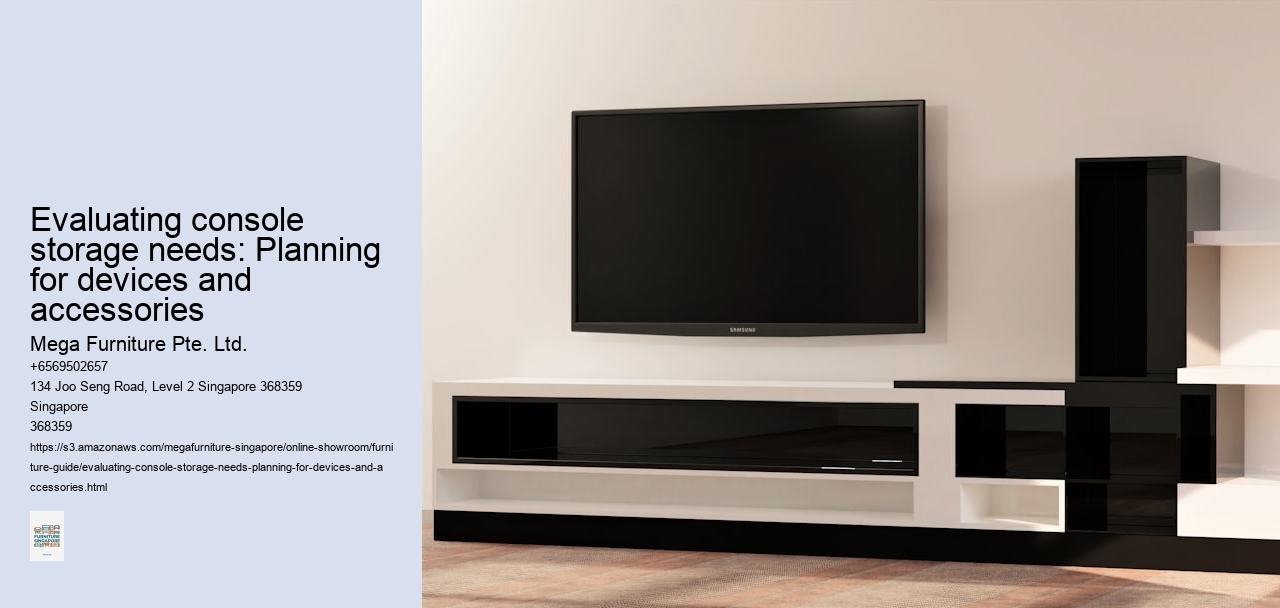
A 180cm TV console can look like a child’s toy under a 75-inch screen, or utterly dominate a 4-room BTO’s narrow living wall. The proportions matter because you’re not just fitting a piece of furniture—you’re framing the room’s focal point. For a typical 65-inch TV in a 4-room HDB living area, which often spans around 3.5 to 4 metres wide, a console length between 180 and 200 centimetres strikes the right balance; it grounds the television without crowding the space for side tables or planters. Go too short, and the setup feels top-heavy and precarious; too long, and you’ll sacrifice precious walkway space in a layout that can’t afford it.
Placement follows proportion. In many resale flats with long, corridor-like living rooms, a floating console mounted a hand’s width off the floor creates a crucial sense of visual lightness and makes mopping easier. That’s a practical win in a humid climate. For landed property entertainment walls or condos with generous media niches, a substantial floor-standing unit in solid rubberwood or oak veneer makes a deliberate design statement—it’s a piece of furniture meant to be seen, not just a support.
Consider the wall itself. A console should ideally span at least two-thirds of the wall it’s on, leaving breathing room on either side for speakers or a tall lamp. If your main wall is broken by a doorway to the kitchen or a bomb shelter, you’ll need to measure the clear span between those interruptions. That’s the real maximum length, not the wall’s total dimension. It’s a common oversight that leads to last-minute returns or a console awkwardly crammed against a door frame.
Material choice subtly reinforces this scale game. Light-coloured laminates or consoles with slender, tapered legs tend to recede, suiting tighter spaces. Darker finishes and full-bodied designs with chunky bases have more visual weight, anchoring a larger room. Ultimately, the right console doesn’t just hold your gear—it quietly defines the room’s sense of order and calm. You can explore a range of lengths and mounting styles to find that fit in Megafurniture’s collection.
Engineered wood with a moisture-resistant laminate is the pragmatic choice for most HDB corridors and living rooms. Singapore's humidity constantly tests materials, and this composite construction resists the warping that plagues solid timber in un-air-conditioned spaces. Its sealed surface won't absorb ambient moisture, which is crucial for a floor-standing console in a ground-floor resale flat. You'll find this build in many consoles around the 180cm length, designed to hold a 65-inch TV without developing a sag or swell over time. That stability is a quiet signal of quality, often more telling than a higher price tag on a less suitable material.
Solid teak or oak commands a premium, but it demands a stable, cooled environment to justify its cost. In a condo media wall with consistent air-conditioning, solid timber develops a rich patina and feels substantial. Without that climate control, however, the wood expands and contracts with seasonal humidity shifts, potentially causing joints to creak or doors to stick. It’s a material that announces its presence, yet in many local homes, it becomes a high-maintenance centrepiece that buyers later regret. The choice ultimately hinges on whether your living room is perpetually cooled or subject to the island's natural atmosphere.
Raising the console body on slender metal legs isn't just a stylistic nod to mid-century modern design. It's a direct defence against ground dampness, particularly in older flats where moisture might seep across polished concrete or marble floors. This elevation improves airflow underneath, preventing the cabinet's base from becoming a condensation trap. For families that mop floors frequently, those extra 15 centimetres of clearance keep the main structure dry and secure. It’s a simple, effective engineering decision that dramatically extends furniture life in our climate.
Any console surface in a family home will face a barrage of pet claws, remote controls, and accidental scuffs. A high-pressure laminate or a lacquered finish resists these daily abrasions far better than an oiled or waxed natural wood top. This matters when the console also serves as a landing zone for keys or a scratching post for an inquisitive cat. The best finishes won't show every faint mark, meaning the piece maintains its look without needing constant babying. In practical terms, a tough surface means you can dust vigorously without worrying about wearing through a delicate veneer.
Frequent dusting is a non-negotiable reality in Singapore, and material choice either eases or complicates this chore. Smooth, non-porous laminates allow a quick wipe with a microfibre cloth, while open-grain woods or textured finishes trap fine particulate matter. A console with fewer ornate details and clean lines simply collects less dust, which is a minor but daily quality-of-life consideration. For a long, low unit spanning 240cm, that’s a lot of surface area to maintain. The easier it is to clean, the more likely it is the console will actually be kept tidy, preserving its appearance for years.
The most expensive line item in a console purchase often isn't the cabinet itself—it’s the delivery driver’s polite question about lift access at your HDB block. That additional $80 to $150 for manual staircase carry, especially for a 200cm solid wood unit, surprises more buyers than it should. It’s a classic Singaporean oversight, where the focus stays on the showroom price in Tampines or Joo Seng, not the final journey to a fifth-floor walk-up in Bedok.
Underestimating cable management is another quiet failure. A new StarHub TV+ box, a Nintendo Switch dock, a soundbar, and perhaps a gaming PC don’t just need power; they need a routed system for a dozen cables that won’t resemble a nest behind your sleek console. Many modern designs prioritise a clean floating look but offer only a single, cramped grommet hole, forcing a messy compromise that’s visible from the sofa.
Then there’s the finish. That high-gloss lacquer looks stunning under showroom lights, but in a typical 4-room BTO living room with open windows, it becomes a daily dust magnet and a canvas for every fingerprint from children and helpers alike. A matte laminate or textured wood veneer hides the inevitable grime of a lived-in home far better, a practical choice that’s often sacrificed for initial shine.
Finally, proportion is routinely miscalculated. Buying a console that’s significantly shorter than your 75-inch television throws the entire media wall off balance, making the setup look top-heavy and unstable. The guideline is simple: your console should be at least as wide as the TV, with many preferring an extra 15 to 30 centimetres of overhang on each side for speakers and decor. A 180cm unit is a safer starting point for larger screens, offering both visual harmony and the actual surface space needed for centre-channel speakers and set-top boxes that otherwise clutter the open shelving.
For those navigating these specifics, reviewing the full range of dimensions and build details is essential—Megafurniture’s collection allows you to filter by length and style, which helps avoid the most common sizing pitfalls.
The difference between a good TV console and a disappointing one often rests in the details a product photo won't show you: the subtle grain of a laminate, the precise gap between a drawer front and its frame, the exact warmth of an oak veneer under your own ceiling lights. Online listings, no matter how detailed, are fundamentally limited by screen calibration and strategic photography—they can't replicate the tactile verification a showroom visit allows. That's why assessing finish quality in person is non-negotiable. A console that looks like a cool grey online might pull unexpectedly beige under the warm LED downlights common in many HDB living rooms; you need to see it beside your actual wall paint. At Megafurniture's Joo Seng or Tampines showroom, you can place a sample of your Nippon Paint or Dulux swatch directly against the unit, checking for clashes that would only become apparent upon delivery day. It's the only way to be certain the piece will centre your media wall as intended, rather than fighting it. Testing the hardware is equally critical. Smooth drawer glides and perfect door alignment aren't just about luxury—they're about longevity in a household where those components will be opened hundreds of times a year. Run your hand along the interior edges, feel the weight of a door as it closes, and pull out a drawer to its full extension. Does it wobble? Is the action silent? These are the functional nuances that separate a piece that will irritate you daily from one that simply disappears into reliable service. You’ll also get a true sense of scale and storage mechanics. A 180cm console can feel imposing in a narrow 4-room BTO layout, or surprisingly modest beneath a 65-inch TV. Open the cabinets to judge if your PlayStation 5 will actually fit with its vents clear, or if your router's blinking lights will be adequately concealed. It’s about moving from speculative measurement to practical confirmation, ensuring the storage solves your specific clutter problems. Consider it a final engineering inspection before commitment. While you're there, browse the full
TV console collectionto compare the heft of a solid rubberwood frame against a lighter engineered wood variant, or to see if the soft-close mechanism on the premium model justifies the extra cost. For a piece that anchors your primary leisure space, this hour-long trip can prevent years of minor regret.
The delivery team will confirm a two-man service for your walk-up apartment, but it’s worth double-checking the fine print if you’re on the fourth floor of a Tampines HDB block without a lift lobby. They’ll manage the haul up, but you’ll want a clear path from the corridor into your 4-room flat — that final metre through the doorway is often the trickiest part with a 180cm console. Once inside, assembly typically runs 45 to 90 minutes; a straightforward floor-standing unit with four drawers might take less, while a wall-mounted system with integrated LED lighting and cable management will push towards the longer end. Keep the original packaging for at least a week, ideally in a service yard or under a bed. It’s a hassle, but it’s the only guaranteed way to facilitate a return if a colour mismatch or a manufacturing flaw becomes apparent once the piece is in your space. This is especially true for items bought online, where the finish you saw on screen can look different under the warm-white downlights of a BTO living room. Warranty coverage splits neatly along two lines. Structural frame defects on a solid wood or engineered wood console are usually covered for five years or more, a critical point for a piece holding thousands of dollars in electronics. Surface issues like laminate peeling, however, often have shorter terms and can be contentious — high humidity in neighbourhoods like Bedok or Pasir Ris, exacerbated by constant air-con cycling, is frequently cited as ‘environmental damage’ rather than a material defect. For peace of mind, look for clear warranty documentation that distinguishes between these two failure types. A good local retailer will outline this upfront, and you can
review their specific termsbefore committing. It’s a dry bit of admin, but it’s what separates a smooth, long-term purchase from a frustrating dispute over a bubbling edge banding six months in. Expect the assembly team to tidy their own packing materials, but they won’t take the flat cardboard with them unless you’ve arranged it beforehand.
The best questions about TV consoles come from buyers who’ve already measured their space and counted their devices — they’re past the catalogues and into the practicalities of making it work in a 4-room BTO.
TV console depth for PS5 and soundbar? You’ll need at least 40cm, measured from the wall to the front edge of the cabinet. The PS5 is about 39cm deep on its own, and a typical soundbar adds another 10cm or so; that 40cm minimum allows you to centre both without overhang, keeping cables tidy and the front profile clean. Some buyers opt for a 45cm depth, which gives a more generous buffer for a router or a Nintendo Switch dock behind the main console — it’s a small difference that makes daily access much easier.
Best colour for a north-facing HDB living room? North-facing rooms get consistent, cool light without harsh afternoon sun, which can make some colours feel stark. Warm neutrals like off-white, light oak, or a greige finish help bounce that soft light around, avoiding the grey, clinical look that pure whites can sometimes give. If you’re after a feature piece, deeper tones like a charcoal or walnut work too; they’ll read as a rich, intentional contrast against the wall rather than a dark hole in a dim corner.
How to childproof a floating console? The main risk isn’t the console falling — it’s the sharp corners at toddler height and the drawers becoming climbing handles. Corner guards are a simple fix, but for a cleaner look, consider a console with rounded, bullnose edges. For drawers, you can fit internal child locks, but a more permanent solution is to specify a push-to-open mechanism during purchase, which eliminates handles altogether. Just ensure any wall-mounted unit is fixed into solid brick or concrete with proper anchors, not just plasterboard.
Difference between Malaysian and Indonesian rubberwood for humidity resistance? Both are acclimatised rubberwood, which is inherently stable, but origin can influence initial moisture content. Malaysian rubberwood is often kiln-dried to a slightly lower moisture percentage suited to our local humidity, meaning it’s less likely to shift after delivery. Indonesian rubberwood is perfectly suitable, but it might take a week or two to fully settle in an air-conditioned living room. The finish matters more than the origin, honestly — a good sealed lacquer will do the heavy lifting against Singapore’s dampness.
That last tape measure reading often reveals the real problem—a console that fits the wall but not the life around it. You’ve found a 180cm piece you love, but did you measure the wall space with the door swing from your BTO’s main bedroom in mind? A console that perfectly spans the media wall is useless if it blocks the balcony access or forces you to sidle past it every day. Measure twice, once for the ideal centre point under the TV and once for the practical flow of the room.
Confirming power and LAN access is a mundane but critical step. Many resale flat layouts position the TV point awkwardly low or off-centre, requiring careful planning for cable management sleeves or trunking to maintain a clean look. If you’re opting for a floating console, remember there’s no back panel to hide a tangle of wires; you’ll need to ensure your electrician has installed sufficient, correctly placed outlets behind where the unit will sit.
Allocate a separate budget for professional mounting, especially for heavier floating designs or installations on partition walls. A 200cm solid wood console loaded with an AV receiver, game consoles, and books is a serious load—DIY mounting into unknown HDB wall material is a risk few should take. Factor in around $150 to $400 for a qualified installer; it’s cheaper than repairing a cracked sintered stone top or a torn drywall.
Finally, verify the stated load capacity against your actual TV. A console rated for 50kg might hold your 55-inch OLED, but will it handle that plus the centre speaker and the toddler who uses the open shelf as a step? Check the manufacturer’s specs against your TV’s exact weight, then add a buffer for everything else you’ll inevitably place on top. It’s the unglamorous homework that separates a lasting installation from a costly regret, and it’s worth the extra hour before you commit.
The difference between a 40 sqm condo media wall and a 90 sqm 5-room BTO isn't just floor space-it's a completely different storage equation. In the condo, every cubic centimetre behind that sleek, floor-to-ceiling carpentry is precious, while the BTO's longer living room wall offers a wider canvas but also invites more clutter. A TV console anchors the wall opposite the sofa in the same way a tall bookshelf anchors a corner — long horizontal piece, mix of open and closed storage, defines the visual weight of one whole side of the room. Megafurniture's TV Console range covers floating wall-mounted designs, low-profile freestanding consoles, and modular feature-wall configurations. Most pieces sit at 40-50cm height, sized for screens up to 75 inches.. You'll need to plan not for generic 'media equipment', but for the specific stack of boxes Singaporeans actually own.
Start by calculating real capacity. A typical setup might include a fibre TV box, an Apple TV or Android streaming device, a soundbar with its separate subwoofer, and at least one game console-often a PlayStation 5 or an Xbox Series X, each roughly the size of a small briefcase. That's before accounting for associated power bricks, HDMI switchers, and the inevitable tangle of cables. A 180cm console can handle this with room to spare; a 120cm unit demands more vertical organisation, pushing you towards models with adjustable shelves or dedicated vertical compartments.
Singapore's climate adds another layer. The constant 80% humidity is a silent threat to electronics left in enclosed spaces. It promotes mould on forgotten cables and can corrode internal components over time. Ventilation isn't just a nice-to-have-it's essential. Look for consoles with slatted backs, open shelving sections, or integrated cable management channels that allow for air circulation. Avoid sealing everything behind solid, unvented doors, especially if you're tucking the unit into a built-in media wall niche.
For families, the storage brief expands beyond tech. That 5-room BTO console will also become a depot for board games, charging cables, and the toddler's toy cars. The depth of the cabinet matters here; a shallow 35cm depth only holds the electronics, while a deeper 45cm or more provides a hiding place for bulkier household items. It's a practical trade-off: a deeper unit offers more utility but can protrude further into a narrow living room, a common issue in older resale flats along the East-West line.
Ultimately, your storage needs dictate the console's form. A Bookshelf earns its place in Singapore homes through dual function — book and decor storage in the open shelves, soft visual division when placed mid-room in open-plan condominium layouts. Megafurniture's combined display unit and bookshelf hub covers tall book racks, cubby-hole designs, ladder shelves, modular cube systems, and glass-door pieces in oak, walnut, and MDF veneer finishes. Solid-wood pieces typically start around $425, with most heights spanning 120cm to 220cm to fit standard 2.6m HDB ceilings.. A floating design above a built-in drawer bank can visually lighten a room in a compact condo, while a substantial floor-standing piece in solid rubberwood can anchor a larger BTO space and swallow a family's worth of gear. The goal is to match the cabinet's interior volume to your actual inventory, not the showroom's minimalist display.
The difference between a 40 sqm condo media wall and a 90 sqm 5-room BTO isn't just floor space—it's a completely different storage equation. In the condo, every cubic centimetre behind that sleek, floor-to-ceiling carpentry is precious, while the BTO's longer living room wall offers a wider canvas but also invites more clutter. You'll need to plan not for generic 'media equipment', but for the specific stack of boxes Singaporeans actually own.
Start by calculating real capacity. A typical setup might include a fibre TV box, an Apple TV or Android streaming device, a soundbar with its separate subwoofer, and at least one game console—often a PlayStation 5 or an Xbox Series X, each roughly the size of a small briefcase. That's before accounting for associated power bricks, HDMI switchers, and the inevitable tangle of cables. A 180cm console can handle this with room to spare; a 120cm unit demands more vertical organisation, pushing you towards models with adjustable shelves or dedicated vertical compartments.
Singapore's climate adds another layer. The constant 80% humidity is a silent threat to electronics left in enclosed spaces. It promotes mould on forgotten cables and can corrode internal components over time. Ventilation isn't just a nice-to-have—it's essential. Look for consoles with slatted backs, open shelving sections, or integrated cable management channels that allow for air circulation. Avoid sealing everything behind solid, unvented doors, especially if you're tucking the unit into a built-in media wall niche.
For families, the storage brief expands beyond tech. That 5-room BTO console will also become a depot for board games, charging cables, and the toddler's toy cars. The depth of the cabinet matters here; a shallow 35cm depth only holds the electronics, while a deeper 45cm or more provides a hiding place for bulkier household items. It's a practical trade-off: a deeper unit offers more utility but can protrude further into a narrow living room, a common issue in older resale flats along the East-West line.
Ultimately, your storage needs dictate the console's form. A floating design above a built-in drawer bank can visually lighten a room in a compact condo, while a substantial floor-standing piece in solid rubberwood can anchor a larger BTO space and swallow a family's worth of gear. The goal is to match the cabinet's interior volume to your actual inventory, not the showroom's minimalist display.