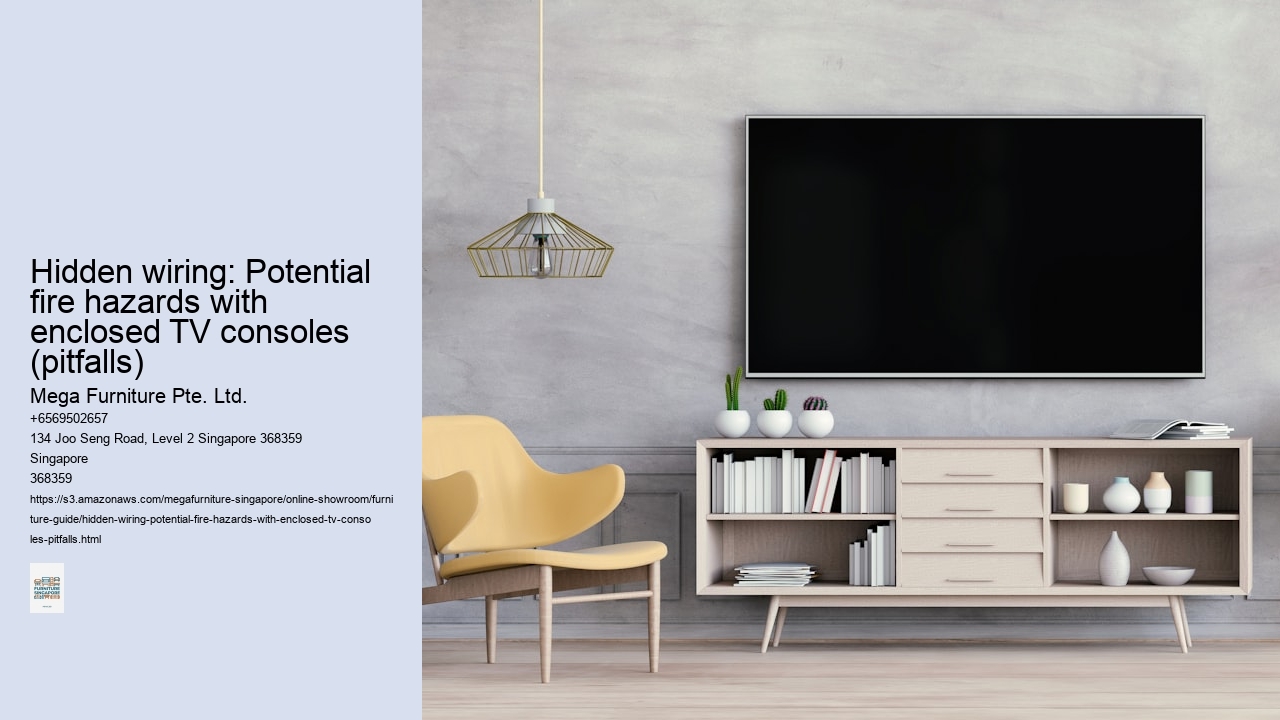
The back of a typical TV console, after a year in a 4-room BTO flat, often becomes a warm, damp tangle of dust—that’s the humidity at work, trapping heat around your PlayStation and router. Prioritising ventilation isn’t just about cooling; it’s a basic fire-safety measure in our 80% humidity, where enclosed consoles can turn into little ovens. Look for models with full-width mesh backing, elevated rear legs for a consistent air gap, or at the very least, open cable-management grommets that don’t seal the interior shut. It’s a small detail that prevents the slow cooking of expensive electronics.
Then there’s depth, a dimension that’s easy to overlook until your living room feels like a corridor. A queen-sized bed frame is 152cm wide, which sets the scale for the walkway beside it in many HDB bedrooms-turned-media-rooms. A console deeper than 45cm can start to pinch that crucial circulation space, forcing a sidestep shuffle. The goal is to maintain at least 60cm of clear floor for walking—so measure your intended wall, subtract the bed width, and see what’s left. A 180cm-long console might fit the wall, but its depth will decide if the room still feels organised.
For compact homes where the living area doubles as a play space or thoroughfare, anti-tip features move from a nice-to-have to non-negotiable. Wall-mounted or floating units should come with proper steel brackets and concrete wall anchors, not just basic drywall plugs. Floor-standing consoles, especially the top-heavy designs with display shelving, need a solid, weighted base or the option to be secured to the wall behind them. It’s a straightforward installation step that most buyers skip, but with toddlers and pets, it’s the only thing stopping a 70kg unit from becoming a real hazard.
Finishes matter, too, beyond just colour. A high-gloss laminate might look sleek in a showroom at Tampines, but in a household with a cat or a small dog, it’ll show every single claw-mark and nose-smudge within a week. Matte or textured laminates, powder-coated metal legs, and sintered stone tops are far more forgiving. They resist the minor scuffs of daily life in a space that’s also a dining area, a homework station, and a race track for toy cars. The right finish isn’t about luxury; it’s about accepting that every square metre in your flat is multi-functional, and your furniture should quietly keep up.
A solid wood frame is the quiet insurance policy for a console that’s going to hold a 65-inch TV for the next decade. It won’t sag or warp under that constant weight, even in the humidity that seeps into a Bedok flat from the monsoon season. Engineered wood, often used for longer spans, is a fine compromise — but you must check every edge is sealed, not raw. An unsealed chipboard edge in a Tampines condo is a sponge waiting to swell; that’s how drawers start sticking. The difference isn’t just about longevity; it’s about the console staying perfectly level so your television never looks crooked.
Many consoles use a wood veneer over a more affordable core, and that’s where the first cost-cutting signal appears. A paper-thin veneer, often just 0.3mm, will chip at a corner if you bump it with a vacuum cleaner — the underlying particle board shows through instantly. A quality piece uses a thicker veneer, around 0.6mm or more, which can be lightly sanded and refinished if it gets scratched. That extra fraction of a millimetre means the finish can age with the furniture, not disintegrate. In a family living room, that’s the difference between a lasting centrepiece and a disposable item.
Singapore’s climate is a relentless test for any material that isn’t explicitly designed for it. For a TV console placed against an exterior wall in an Aljunied resale flat, moisture-resistant finishes aren’t a luxury — they’re mandatory. Look for terms like ‘moisture-cured’ or ‘catalysed’ lacquers, which form a harder, less permeable seal than standard varnish. This protection guards against the white haze that can bloom on cheaper finishes in consistently damp air. Without it, you’re just hoping your furniture won’t degrade in plain sight.
The hidden screws, hinges, and drawer slides bear the entire functional load, and they’re the first things to fail on a budget unit. Robust hardware means thick-gauge steel, full-extension slides with soft-close mechanisms, and adjustment screws for levelling doors. Cheap, thin metal brackets will bend under the weight of a gaming console and a stack of media boxes; that’s when a door starts drooping. Good hardware allows for disassembly and reassembly, which is crucial for navigating the tight turns in a BTO staircase.
Laminated particle board is ubiquitous because it’s stable and cost-effective, but its failure mode is specific: delamination. Heat from an AV receiver or set-top box parked inside the console can soften the adhesive over years, causing the plastic laminate layer to peel up at the edges. Scrutinise the back panels and internal shelves — if the laminate is already bubbling in the showroom, it’ll only get worse. A well-made version uses higher-pressure lamination and sealed edges, which can look convincing and last, but you have to look for the tells. It’s a perfectly valid choice for a budget, provided you’re not expecting heirloom performance.
It's a familiar sight in many HDB living rooms: a sleek new TV console, bought to match a 75-inch screen, that looks oddly dwarfed by the feature wall. Choosing console length based solely on TV size is a classic misstep — the proportions of your actual wall space matter far more. A 240cm unit might suit your TV, but in a narrow 4-room BTO layout, it can dominate the room; conversely, a 120cm console under a large TV on a wide wall leaves awkward empty space on either side, making the setup look temporary and unfinished.
Overlooking cable management is another silent hazard. Buyers get excited about hiding away routers and game consoles, then stuff a tangle of power strips and HDMI cables into the enclosed compartment. That mess doesn't just look bad — it traps heat, creating a genuine fire risk over time, especially with older adapters. Proper management requires a console with built-in cable ports and channels, not just a hollow box.
Then there’s the assumption about ‘floating’ designs. Not all are built for HDB drywall, and installing one without proper reinforcement is asking for a catastrophic collapse. Many units need to be anchored into structural pillars or use specialised heavy-duty fixings; a few plastic wall plugs into the gypsum board won’t hold 40kg of wood and electronics. It’s a renovation headache waiting to happen.
Ventilation is often an afterthought, too. People love the clean look of a fully enclosed back panel, forgetting that their PlayStation or A/V receiver needs air to breathe. Ignoring those rear ventilation holes, or blocking them by pushing the console flush against the wall, leads to overheating and shortened electronics life. The best setups plan for airflow from the start, considering both the console’s design and the heat output of the gear you’ll store.
A console that’s a few centimetres too short can leave a 65-inch TV looking precarious, like a dinner plate balanced on a chopstick. That’s why a hands-on inspection at a showroom matters more than any product spec sheet—you’re not just checking dimensions, you’re gauging visual proportion and physical presence. Megafurniture’s range spans units for 40 to 75 inch displays, a spread that covers most BTO living room upgrades; the real test is whether a 180cm console feels substantial enough for a large screen, or if its legs look spindly under the weight. In the Joo Seng showroom, you can run a hand along the edge of a laminate finish to feel for any rough seams or warping—common fail points in humid climates. Integrated cable routing channels are a stated feature, but their practicality only becomes clear when you crouch down and trace the path a power brick and HDMI bundle would actually take. Some cavities are generous, others force a tight bend; it’s a small detail that decides whether you’ll have a tidy media wall or a nest of wires spilling out the back. Storage needs here are hyper-local. For a family in a 4-room resale flat, deep drawers that can swallow board games and Lego bins often trump open shelving meant for decor. Tempered glass doors on some models add a reflective, sleek look that works in condos with a monochrome palette, but they’ll show every fingerprint in a household with young children. The choice often comes down to whether you’re prioritising display or concealment. Material choices reveal themselves under showroom lighting. A wood-grain laminate might look convincingly warm online, but in person it can appear flat and plasticky beside a textured oak veneer. The heft of a drawer slide, the solid *thunk* of a cabinet door closing—these are the tangible checks that separate a piece that will rattle apart in two years from one that will stay level. It’s worth the trip to Tampines to see the full run; what looks like a simple length decision often unravels into questions of finish, function, and how much clutter you really need to hide. You can assess the full scope at
Megafurniture’s collection.
That delivery van pulling up to your HDB block is the first real test of your new console’s dimensions. Before it arrives, confirm lift access and staircase clearances with your seller — a 240cm solid-wood unit won’t make the turn into a narrow Bedok corridor. Professional assembly is often included, a necessary service when you’re dealing with heavy panels and concealed wire management systems in a 4-room BTO living room.
This assembly stage is also when you should verify the warranty’s fine print. A good policy covers more than just manufacturing flaws; it should explicitly cover termite resistance treatments for solid wood consoles and, crucially, joint integrity for one to three years. The constant opening and closing of heavy drawers filled with gaming consoles and media players puts stress on those hidden connections. Don’t assume it’s covered — ask for the clause in writing.
Keep the original packaging, flattened and stored behind a storeroom door or under a bed, for at least the warranty period. If a defect in the laminate or a warped door panel appears months later, most retailers will require photos of the damage and proof of purchase before they even discuss a claim; having the box makes the return logistics infinitely simpler. It’s a hassle, but less of one than trying to source a suitable box for a 180cm sintered stone top.
The real value of a warranty becomes apparent around the two-year mark, long after the excitement of the new setup has faded. That’s when the daily wear on a frequently used centrepiece shows itself — a slightly sagging shelf from the soundbar’s weight, or a soft-close hinge that’s lost its patience. A comprehensive warranty treats these as legitimate failures, not just aesthetic wear and tear. For a piece meant to organise the heart of your home, that long-term assurance is part of the purchase price.
Singapore shoppers ask questions that are less about design trends and more about practical survival in a humid, cable-choked flat. They’ve moved past wondering if a console looks nice; they’re figuring out if it’ll hold their PS5 without sagging or fit between two BTO doorways. ‘TV console standard height for 65 inch TV?’ There’s no official standard, but most consoles sit around 45 to 50cm high. That height centres a 65-inch screen’s midpoint roughly 110cm off the floor, which is comfortable for viewing from a typical sofa in a 4-room BTO living room. Buyer wanting storage for a soundbar might opt for a slightly lower, longer console to keep the bar from blocking the screen. ‘Best material for humid Singapore?’ Engineered wood with a good sealed finish, like laminated MDF, handles the climate reliably. Solid wood, especially rubberwood, is popular for its stability but needs consistent indoor humidity. For a truly worry-free option in a ground-floor flat near Bedok, sintered stone or ceramic-top consoles resist moisture completely—they won’t swell or warp, even if you leave the windows open during monsoon season. ‘Can wall-mounted console hold PS5 and soundbar?’ It can, provided the mounting system and wall are up to it. A wall-mounted unit needs a solid backing board, not just a thin panel, and must be fixed into the concrete HDB wall, not just the plaster. Total load—console itself, plus PS5, soundbar, and perhaps a centre speaker—often exceeds 30kg; that requires proper brackets and a check that your intended wall isn’t a lightweight partition. ‘Difference between 180cm and 210cm console in 4-room BTO?’ The 30cm gap is about proportion and floor space. A 180cm console fits neatly under a 65-inch TV with some breathing room on each side, leaving walkway space along the living room wall. A 210cm version fills the wall more completely, offering more storage but potentially crowding the entrance to a balcony or adjacent bedroom doorway—it’s a choice between balanced layout and maximum utility. For those measuring up, browsing the
TV console rangeonline first saves a trip to the showroom.
The most common mistake isn't buying a console that's too big—it's buying one that's too short. You'll measure for the TV, then forget the stereo receiver and game console need breathing room on either side, leaving you with a cramped, lopsided setup. Measure the wall twice, from skirting to skirting, and account for every existing power point and cable trunking; a 200cm console looks perfect until it covers the only accessible socket behind it.
List every device you intend to house, including future upgrades you're already eyeing. That means the current soundbar, the PlayStation, the fibre modem, and the inevitable 4K Blu-ray player or upgraded amplifier. A proper console isn't just a shelf; it's a ventilation system with cable management, and you need to know how many components it must organise before you step foot in a showroom.
Bring the room's dimensions and photos with you. A sales gallery's bright lighting can distort scale, making a 180cm unit look modest when it would dominate your 4-room BTO living room wall. Place your phone's photo next to a floor sample for a direct, sobering comparison against the product's specifications—especially its depth, which is often underestimated until it juts into a walkway.
This prep work turns a speculative browse into a targeted mission. You're not just looking for storage; you're matching a specific, documented need to the physical solutions available, whether that's a floating console for a Sembawang condo's feature wall or a deep, floor-standing unit for a family's media collection in Tampines. It’s the difference between hoping something fits and knowing it will.
One final check: note the console's internal clearance if you're using a set-top box or game console that vents upwards—those few centimetres of headroom are often the difference between a quiet component and one that overheats by Christmas. Then you're ready to visit a showroom like Megafurniture's to see the options in person, your requirements firmly in hand.
A four-room BTO's living area often leaves just 60cm between the sofa and a prospective media wall - that's the reality shaping console dimensions here. In such spaces, a 120cm unit can feel like a perfect fit, or an obstruction, depending entirely on whether it accommodates the building's pre-wired conduit points. Condo layouts offer more breathing room, but their non-standard floor plans introduce another variable; a generous 180cm console might align beautifully with a feature wall in a Tanah Merah condo, yet clash with an awkwardly placed structural column in a Bedok resale.
Landed homes present the opposite challenge. Their expansive walls demand consoles that won't look diminutive beneath a 75-inch screen, pushing lengths toward 240cm and beyond. The trick here isn't just filling space, but managing the inevitable tangle of cables for a soundbar, gaming console, and media streamers across that span - all while ensuring rear ventilation gaps aren't blocked by the wall itself. It's a balancing act between proportion and practicality.
Across all housing types, the concealed wiring mandate is non-negotiable. Enclosing power strips and adapters within a console's cabinet might seem tidy, but it creates a potential fire hazard if heat can't dissipate. A TV console anchors the wall opposite the sofa in the same way a tall bookshelf anchors a corner — long horizontal piece, mix of open and closed storage, defines the visual weight of one whole side of the room. Megafurniture's TV Console range covers floating wall-mounted designs, low-profile freestanding consoles, and modular feature-wall configurations. Most pieces sit at 40-50cm height, sized for screens up to 75 inches.. Display cabinets sit between bookshelf and storage cabinet in function — closed glass-front protection for the items you want visible but not collecting dust. Megafurniture's Display Cabinet range covers glass-front, curio, wall-mounted, and freestanding configurations in solid wood, MDF, and metal-framed constructions. Average pricing for glass-front variants sits around $271, with LED-lit and motorised-shelf models commanding the higher tier.. That's why many buyers opt for designs with dedicated cable management channels or rear cut-outs, solutions that keep cords organised but accessible. HDB-approved built-in options must also navigate these rules, and they can't obstruct any structural beams, which often dictates a floating console's exact placement.
Material choices follow suit. For a compact HDB space, a light oak or sintered stone top in a low-profile, wall-mounted design helps maintain an airy feel. In a landed property, a longer console in a richer finish like walnut or full-grain leather can anchor the room as a feature piece. The goal is always to integrate the unit into your home's specific architecture, not fight against it. A Bookshelf earns its place in Singapore homes through dual function — book and decor storage in the open shelves, soft visual division when placed mid-room in open-plan condominium layouts. Megafurniture's combined display unit and bookshelf hub covers tall book racks, cubby-hole designs, ladder shelves, modular cube systems, and glass-door pieces in oak, walnut, and MDF veneer finishes. Solid-wood pieces typically start around $425, with most heights spanning 120cm to 220cm to fit standard 2.6m HDB ceilings.. You'll find a range of solutions, from floating variants for tight spaces to substantial floor-standing pieces, at Megafurniture's collection.
A four-room BTO’s living area often leaves just 60cm between the sofa and a prospective media wall — that’s the reality shaping console dimensions here. In such spaces, a 120cm unit can feel like a perfect fit, or an obstruction, depending entirely on whether it accommodates the building’s pre-wired conduit points. Condo layouts offer more breathing room, but their non-standard floor plans introduce another variable; a generous 180cm console might align beautifully with a feature wall in a Tanah Merah condo, yet clash with an awkwardly placed structural column in a Bedok resale.
Landed homes present the opposite challenge. Their expansive walls demand consoles that won’t look diminutive beneath a 75-inch screen, pushing lengths toward 240cm and beyond. The trick here isn’t just filling space, but managing the inevitable tangle of cables for a soundbar, gaming console, and media streamers across that span — all while ensuring rear ventilation gaps aren’t blocked by the wall itself. It’s a balancing act between proportion and practicality.
Across all housing types, the concealed wiring mandate is non-negotiable. Enclosing power strips and adapters within a console’s cabinet might seem tidy, but it creates a potential fire hazard if heat can’t dissipate. That’s why many buyers opt for designs with dedicated cable management channels or rear cut-outs, solutions that keep cords organised but accessible. HDB-approved built-in options must also navigate these rules, and they can’t obstruct any structural beams, which often dictates a floating console’s exact placement.
Material choices follow suit. For a compact HDB space, a light oak or sintered stone top in a low-profile, wall-mounted design helps maintain an airy feel. In a landed property, a longer console in a richer finish like walnut or full-grain leather can anchor the room as a feature piece. The goal is always to integrate the unit into your home’s specific architecture, not fight against it. You’ll find a range of solutions, from floating variants for tight spaces to substantial floor-standing pieces, at Megafurniture’s collection.