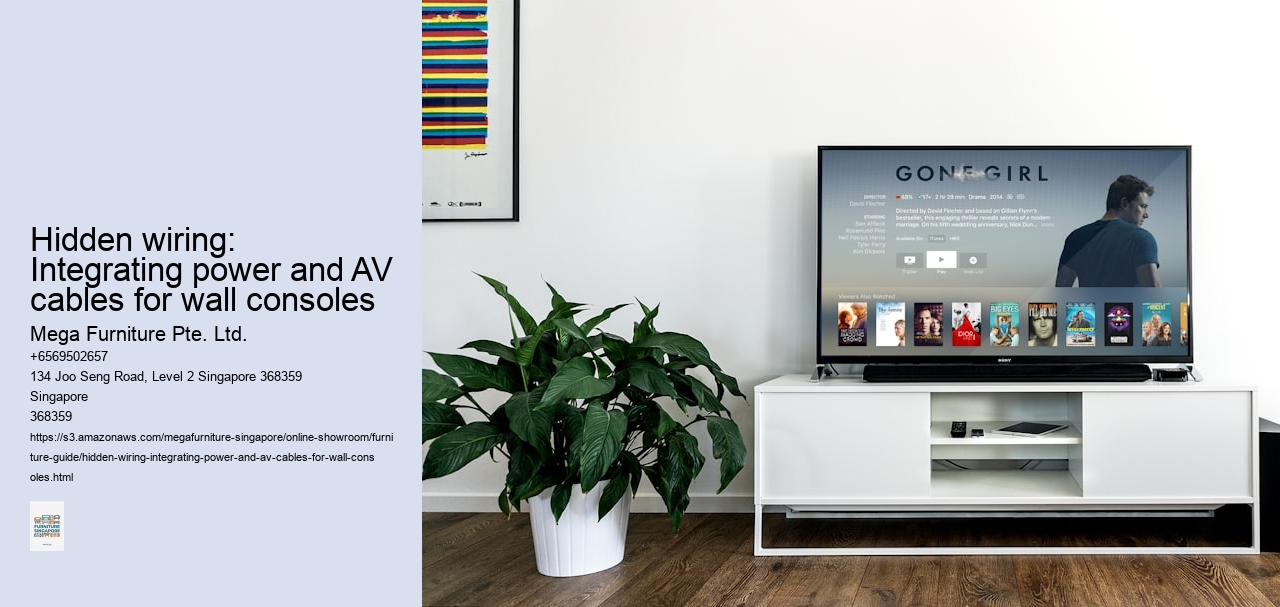
The first monsoon rain of the year reminds you why material choice matters. That creeping 80% humidity will find its way in, testing every fibreboard panel and solid wood joint. Untreated solid wood can warp in a Singapore season; if you’re set on that oak or teak look, ensure it’s been properly sealed or opt for engineered wood with a stable core. Laminates and melamine-faced boards typically hold up better, their plasticised surfaces shrugging off the moisture that condenses on walls in neighbourhoods like Bedok or Pasir Ris.
Pet owners understand fragile design differently. A cat’s leap onto a console isn’t a question of if, but when. That elegant open shelving with delicate brackets? It’s a casualty waiting to happen. Opt for cabinets with doors, or at least sturdy, boxed shelving that can withstand a sudden landing. Glass fronts are a risk, too—better to keep the display behind something more resilient, and save the breakables for a high shelf well out of tail-swatting range.
Space is the final, non-negotiable local condition. In a 12 sqm HDB common bedroom or a compact condo living area, floor space is currency. A floating console, mounted securely to the wall, preserves every centimetre beneath it—that’s room for a robot vacuum to pass or for the feeling of airiness to remain. Just ensure the mounting is into solid brick or a properly reinforced stud; plasterboard won’t cut it for a loaded unit.
What you put inside counts as much as the console itself. Singapore setups often include an AV receiver or a gaming console, which means depth is critical. Look for cabinets at least 45cm deep; anything shallower leaves components sticking out or forces awkward, overheating arrangements. Deep cabinets also let you coil excess cabling properly behind the equipment, which is the only real way to achieve that clean, integrated look. For a curated range that considers these practicalities, you can browse Megafurniture’s collection.
Look for clean, CNC-drilled holes for cables, not jagged hand-cut ones. That rough edge isn't just an eyesore; it frays your expensive HDMI and power cables over time. In a wall-mounted setup where wires are threaded tightly, a sharp plastic burr can cut right through the insulation. A machined port feels smooth to the touch and is sized precisely, which keeps cables organised and prevents dust from settling in awkward gaps. It’s a small detail that signals the manufacturer invested in proper tooling.
Singapore’s humidity is brutal on furniture joints, especially the thin veneer on engineered wood. Paper or melamine edge banding will peel within a year, leaving a swollen, whitish line along your console. You want PVC-wrapped edges—they’re more flexible and moisture-resistant, so they stay flush with the core material. This isn't about luxury; it's about the console looking intact after surviving our monsoon seasons. That swollen edge is a dead giveaway of a cost-cutting measure you’ll regret.
Soft-close mechanisms are non-negotiable for a living room piece. The quiet, dampened close prevents slammed drawers during movie nights and protects the console’s structure from constant impact. More critically, check the published weight rating—a drawer holding a PlayStation 5, an AV receiver, and game libraries needs a runner rated for at least 30kg. Cheap runners sag or fail silently, and you’ll only notice when your console drops an inch overnight.
The hidden internal frame matters more than the visible finish. Look for descriptions specifying solid wood or reinforced composite blocks at stress points, like where the console brackets to the wall. A frame built only from particleboard and staples won’t reliably hold 40kg of electronics cantilevered off your wall. Tapping the back panel should yield a firm, hollow knock, not a flimsy cardboard sound; that internal rigidity is what keeps everything level and secure for years.
A quality laminate or wood veneer should have a consistent, low-sheen texture that resists fingerprints and minor scuffs. Run your hand across it—it should feel cool and smooth, not plasticky or sticky. Inferior coatings can yellow under direct sunlight from a west-facing window in a Tampines flat, or show every wipe mark. The right finish maintains its colour and makes dusting a five-minute chore, not a battle against smears.
The clean lines of a floating console are irresistible in a 4-room BTO, but that sleek silhouette often gets ruined by a cluster of cables hanging like jungle vines. It’s a classic Singaporean oversight, usually because someone forgot to measure the depth of their skirting board before mounting the unit. The console ends up jutting out awkwardly, leaving a visible gap that collects dust and defeats the entire purpose of a wall-mounted design.
Underestimating cable bulk is another frequent miscalculation. You’re not just routing a single HDMI cord. There’s the power brick for the console itself, a separate surge protector, another HDMI for the soundbar, a LAN cable, and maybe an optical audio cable — that’s a significant bundle needing a large internal channel. Many off-the-shelf units have cable management holes that are barely 25mm wide, which forces you to either cram everything in or let it all spill messily out the sides.
Placement relative to other fixtures matters intensely here. Installing a wall-mounted unit directly beneath the air-con’s wall-mounted condenser is asking for trouble. The constant cycle of cooling and condensation can lead to moisture dripping directly onto your electronics; it’s a slow-motion disaster for gaming consoles and media players that generates service calls no one wants to deal with.
The solution lies in planning the entire media wall as a single system, not as individual components. You’ll need to account for the skirting, choose a console with genuinely generous rear channels or a false back, and keep a sensible distance from any moisture source. It’s a detail-oriented process, but getting it right means your living room centrepiece actually looks finished. For those considering an upgrade, browsing the options for wall-mounted designs with integrated cable management is a sensible first step.
The veneer on a grey oak TV console can look starkly different under your HDB’s warm LED strips versus the afternoon sun from a Pasir Ris balcony. That’s the first, practical reason to visit a showroom—you’re not just picking a colour, you’re assessing how a finish behaves under specific light, which is critical for wood tones like walnut or grey oak that can shift from warm to ashy. You can run a hand over the sintered stone top, test the action on every drawer glide, and feel the heft of a door hinge. It’s a tactile check that an online gallery’s high-resolution photos simply can’t replicate. Then there’s the matter of scale. A product description might list a unit at 220 centimetres, but will it actually fit into your BTO lift or navigate the tight corner into your living room? Seeing it in person, often styled within a mock-up of a typical 4-room flat layout, gives you an immediate sense of its true proportions against your planned media wall. You can judge if that floating console feels substantial enough beneath a 75-inch screen or if it’s precariously long for a narrower wall. Perhaps the most valuable interaction is with the staff, who can translate catalogue promises into real-world logistics. They’ll clarify if the delivery timeline aligns with your BTOP completion date or explain the installation process for a wall-mounted unit on your specific drywall. It’s a chance to ask pointed questions about cable management grommets, weight limits for open shelving, and the true dimensions of those concealed storage cavities meant for AV receivers. Ultimately, you’re verifying the reality of a major purchase. You’ll leave knowing whether the piece works for your space and your schedule, having moved beyond pixels and product specs. For a considered purchase like a
TV console, that confidence is worth the trip to Joo Seng or Tampines.
A wall-mounted console arrives in a box, not on your wall—that's the first reality check for most HDB deliveries. Standard delivery here typically means dropping the unit at your doorstep or inside your flat; actually fixing it to the wall is almost always an extra-cost service handled by a separate contractor. You'll need to confirm that cost upfront, as it can add $150 to $400 depending on the complexity of mounting and whether your BTO's concrete wall requires core drilling. Don't assume the guy with the trolley has a drill.
Assembly in a typical 4-room BTO corridor is a genuine logistical headache. Unpacking a 180cm console's panels in a space that’s barely a metre wide often means commandeering the living room floor before painting or flooring is finished, which introduces its own risks of scratches and damage. Many buyers find it’s smarter to schedule delivery for after the major renovation dust has settled, but before the sofa and TV arrive—a narrow window that requires precise coordination with your ID.
Then there’s the warranty, and for laminate finishes in our humidity, the standard one-year coverage feels insufficient. You want explicit terms that cover laminate peeling or bubbling caused by ambient moisture, not just manufacturing defects; that peeling often starts around the 18-month mark, just as the warranty expires. Look for retailers offering extended terms or, better yet, those who use humidity-tested boards from the start.
For a straightforward selection of wall-mounted options with clear service terms, you can browse Megafurniture’s collection. Their in-house assembly teams are familiar with the quirks of local builds, which beats trying to explain your flat’s layout to a third-party crew.
Ultimately, the clean, floating look of a wall-mounted console is worth the planning hassle—it saves precious floor space in a 4-room layout and makes cleaning a breeze. Just budget for the hidden costs of getting it there and keeping it intact.
The most common question about a wall-mounted TV console isn't about the mounting—it’s whether your 55-inch TV will actually fit on top. It will, but only if the console's top surface depth exceeds 30cm; the TV’s feet often sit surprisingly far apart, and you don't want that expensive screen teetering on the edge.
Best colour for a Jalan Besar flat with low light? Light oak or white finishes are your safest bet, as they reflect what little natural light filters in from the common corridor. Dark walnut or charcoal consoles, while stylish, can make a north-facing living room feel like a cave by six in the evening.
Soundbar fits inside the cabinet? You’ll need to measure the compartment height. Many modern soundbars require at least 15cm of vertical clearance, which rules out those sleek, low-slung compartments designed only for media boxes and game consoles. It’s a classic planning oversight—buyer gets the soundbar home, then finds it blocks the TV sensor.
Safe for marble flooring in a condo? Use thick felt pads under any contact points, and avoid consoles with thin, unprotected metal legs. That polished marble in a River Valley penthouse is unforgiving; a single shift during cleaning can leave a permanent, costly scratch right across the feature entry.
The most common regret isn't about colour or wood grain—it's that the console arrives and simply doesn't fit the space. You've measured the wall, but a 240cm unit shoved against a 250cm wall looks awkward and cramped. For visual balance, measure your wall's exact width and subtract 10cm; that's your realistic maximum length. A console that floats in the centre of the wall, with a bit of breathing room on each side, always looks more intentional.
Next, get down on the floor. Existing power points and data ports often sit exactly where your new console's solid back panel will go. If they're in the wrong spot, you'll either have a useless socket buried behind furniture or a visible, snaking cable run that defeats the purpose of a clean media wall. Relocating points isn't a DIY job for most; budget for an electrician, which can add $150 to $400 depending on your condo's concrete wall type.
Then, consider the journey home. A 210cm flat-pack box won't fit into some BTO lift cabins, particularly in older estates—you'll be hauling it up the staircase. Check your lift's interior dimensions and your staircase's turn clearances before you commit. It's a mundane detail that becomes a major logistical headache at 8pm on a delivery day.
Finally, think ahead. That 55-inch TV might feel sufficient now, but upgrade cycles are getting shorter. Check if the console's central compartment or top shelf can accommodate a deeper, larger panel stand, or if the design allows you to simply wall-mount a bigger screen above it later. A fixed, narrow centre section might lock you into your current TV size for a decade.
For a curated range of sizes and styles that suit local spaces, you can browse Megafurniture's collection. The key is to treat these final checks not as obstacles, but as the final step in visualising a setup that actually works for your home.
A 3.5-metre living room wall in a new BTO flat is a specific kind of problem. It's a generous width that tempts you toward a full 240cm console, but you'll need to leave breathing room for curtain stacks or a floor fan in the corner. That 65-inch TV you've budgeted for will demand a console at least 180cm long to look anchored, not perched - anything shorter feels like an afterthought against the clean expanse of a freshly painted feature wall.
Older resale flats tell a different story. Walk-up apartments in Queenstown or three-room units in Bedok often present living room walls under three metres. Here, the constraint is absolute. A console must stay under 200cm, sometimes as short as 160cm, to fit between existing built-in shelving or awkwardly placed doorways. A TV console anchors the wall opposite the sofa in the same way a tall bookshelf anchors a corner — long horizontal piece, mix of open and closed storage, defines the visual weight of one whole side of the room. Megafurniture's TV Console range covers floating wall-mounted designs, low-profile freestanding consoles, and modular feature-wall configurations. Most pieces sit at 40-50cm height, sized for screens up to 75 inches.. The choice becomes about proportion over presence; a low-slung, floating design in a light oak finish can stretch the visual space without cramming it.
Condo layouts, particularly those in newer developments, might offer more continuous wall space. But a longer wall in a condo living room isn't a blank cheque - it's an invitation to scale everything up. A 75-inch screen on a 280cm wall requires a console of at least 220cm to maintain visual balance; otherwise, the setup looks top-heavy and precarious. It's a common misstep in showflats, where massive TVs are paired with undersized furniture that wouldn't hold a soundbar and a media player, let alone look right.
For landed property, the calculus shifts again. The ‘hall' in a terrace house can easily run four metres or more, a length that makes most standard consoles look like toys. You're in the realm of custom joinery or searching for rare readymade pieces exceeding 240cm. This is where the console transitions from a functional piece to the room's architectural anchor, its length dictating the placement of sofas and coffee tables. The wiring challenge multiplies accordingly, with more devices to hide across a greater span.
Ultimately, your wall's dimensions - not the TV's screen size - dictate the console's maximum length. Measure the clear space, subtract 15cm at each end for visual comfort, and you've found your limit. Browse the options for TV consoles that fit within that frame, because a piece that's perfectly proportioned to its wall always looks more intentional than one that's merely large.
A 3.5-metre living room wall in a new BTO flat is a specific kind of problem. It’s a generous width that tempts you toward a full 240cm console, but you’ll need to leave breathing room for curtain stacks or a floor fan in the corner. That 65-inch TV you’ve budgeted for will demand a console at least 180cm long to look anchored, not perched — anything shorter feels like an afterthought against the clean expanse of a freshly painted feature wall.
Older resale flats tell a different story. Walk-up apartments in Queenstown or three-room units in Bedok often present living room walls under three metres. Here, the constraint is absolute. A console must stay under 200cm, sometimes as short as 160cm, to fit between existing built-in shelving or awkwardly placed doorways. The choice becomes about proportion over presence; a low-slung, floating design in a light oak finish can stretch the visual space without cramming it.
Condo layouts, particularly those in newer developments, might offer more continuous wall space. But a longer wall in a condo living room isn’t a blank cheque — it’s an invitation to scale everything up. A 75-inch screen on a 280cm wall requires a console of at least 220cm to maintain visual balance; otherwise, the setup looks top-heavy and precarious. It’s a common misstep in showflats, where massive TVs are paired with undersized furniture that wouldn’t hold a soundbar and a media player, let alone look right.
For landed property, the calculus shifts again. The ‘hall’ in a terrace house can easily run four metres or more, a length that makes most standard consoles look like toys. You’re in the realm of custom joinery or searching for rare readymade pieces exceeding 240cm. This is where the console transitions from a functional piece to the room’s architectural anchor, its length dictating the placement of sofas and coffee tables. The wiring challenge multiplies accordingly, with more devices to hide across a greater span.
Ultimately, your wall’s dimensions — not the TV’s screen size — dictate the console’s maximum length. Measure the clear space, subtract 15cm at each end for visual comfort, and you’ve found your limit. Browse the options for TV consoles that fit within that frame, because a piece that’s perfectly proportioned to its wall always looks more intentional than one that’s merely large.