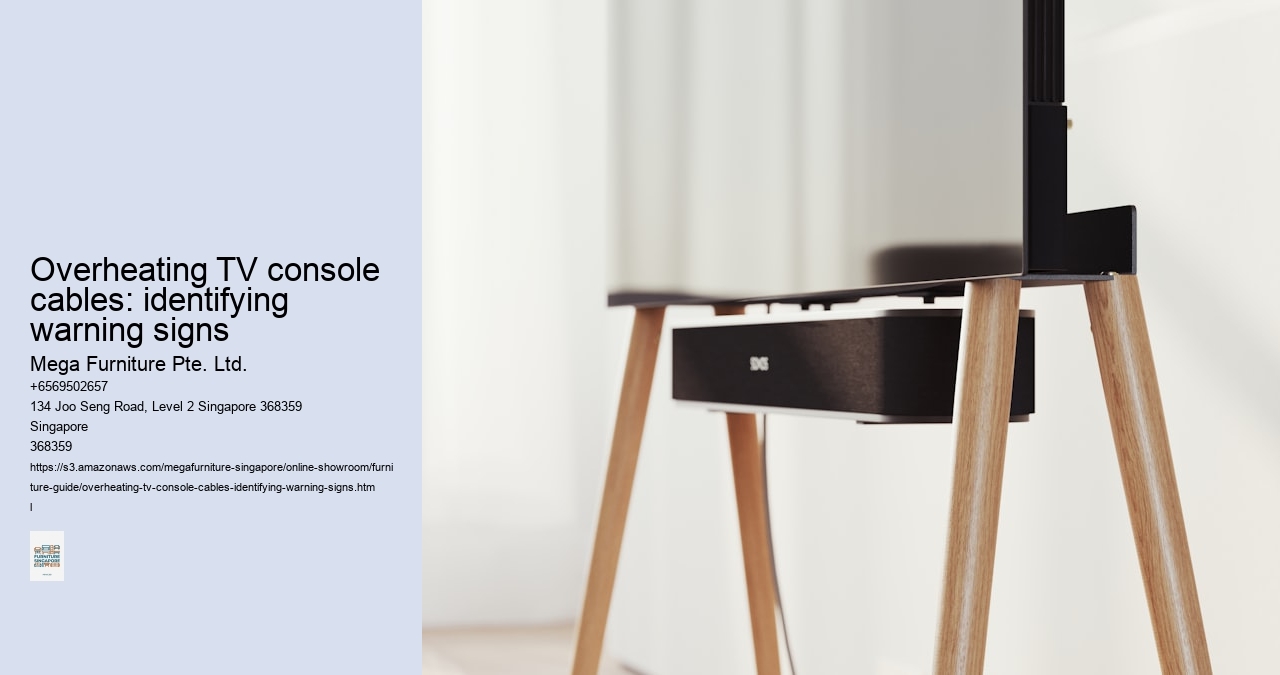
That 75-inch panel looks impressive on the feature wall, but it’ll dwarf a console meant for your old 40-inch set. The visual mismatch is only half the problem; a cabinet that’s too short leaves expensive components crowded at the centre, straining cables and looking precarious. For a balanced, stable setup, match the console length to the screen. A 120cm unit anchors a 40-inch TV comfortably, while a 240cm console provides the necessary foundation for a 75-inch model, distributing weight and giving each media box its own breathing room.
Material choice here is about more than aesthetics—it’s a defence against humidity. Cheap MDF will swell at the first sign of moisture, a real risk in our climate. Prioritise solid wood like rubberwood or acacia, or opt for a quality moisture-resistant laminate. These materials hold their structure, ensuring drawers slide smoothly and doors don’t warp out of alignment after a few rainy seasons.
Ventilation is critical. A fully sealed back panel might look neat, but it traps the heat generated by your AV receiver, game console, and set-top box—that’s a recipe for premature failure. Instead, look for a design with strategic rear cable management grommets. These routed holes allow cables to pass through cleanly while creating essential airflow channels behind the cabinet, letting heat dissipate naturally.
Consider the clearance underneath. Flat-bottomed consoles sitting directly on the floor become dust and hair traps, especially in homes with pets or near busy roads like Eunos or Bedok. Elevated legs, even a few centimetres high, make weekly cleaning with a mop or robot vacuum effortless. They also offer a favoured retreat for the family cat, keeping them from attempting to burrow into the back of the unit through those cable ports.
Finally, think about future-proofing your investment. Your next TV will likely be larger, not smaller. Choosing a console at the longer end of your current size range, or one with a modular design that can be extended, saves you from another shopping trip in a few years. It’s a pragmatic approach that acknowledges how our living room tech evolves.
Singapore’s humidity amplifies off-gassing from cheap plywood and particleboard. A buyer wants the CARB P2 or E0 label—it’s a clear signal for low formaldehyde emissions, especially when that console sits closed for months in a 4-room BTO living room. You’ll find it stamped inside a drawer or on a panel, not just advertised on a website. Ignoring this spec means that chemical scent lingers longer here than in drier climates, mixing with the heat from your PlayStation. It’s a basic health check, frankly, and one that separates mass-market units from properly engineered furniture.
Plastic drawer runners swell and stick after a few monsoon seasons. Metal glides, typically steel or aluminium, don’t warp; they ensure your media accessories slide out smoothly even when the console’s internal humidity climbs. That’s crucial for daily access to cables and controllers in a family flat. Listen for a solid, rolling sound—not a plastic scrape—when you test a unit in a showroom. Cheap consoles often hide plastic runners behind a nice front facade, but the mechanism fails first.
A sealed back panel traps heat and moisture around your power strips and HDMI switchers. Look for a ventilated design, either with a mesh section or a fully removable panel you can detach for cable routing. This passive airflow prevents that warm, damp microclimate which accelerates corrosion on connectors. In many installations, the console backs against a wall, so that rear surface needs to breathe. It’s a simple feature that speaks to long-term practicality over pure aesthetics.
Printed film wraps peel and bubble under sustained humidity, revealing a cheap substrate. Real wood veneer, even a thin layer of oak or walnut, expands and contracts more uniformly with the core material—it’s far more stable. The difference is visible at the edges and corners after a year in a condo near the coast. That textured grain isn’t just for looks; it’s a functional skin that handles the climate. For a feature piece on your living room wall, this durability matters as much as the initial finish.
Heft a console before you commit. Weight correlates directly with material density and solid construction—a light unit often means hollow-core panels and minimal framing. A substantial piece, around 40 to 60 kg for a 180cm model, suggests thicker wood, proper joinery, and robust internal supports that resist sagging over time. In a humid environment, that structural integrity prevents doors from misaligning and drawers from dropping. It’s a blunt but effective proxy for quality when other signals aren’t obvious.
The most expensive mistake a buyer makes isn't the console itself—it’s treating a 140cm unit like a universal storage solution for every piece of electronics they own. You’ll see a PS5, a soundbar, a router, and a NAS drive crammed into a single cavity, with cables forced into a dense, knotted mass behind them. That’s a recipe for thermal throttling and premature hardware failure, because nothing in that tight space can breathe.
Power management is another frequent oversight. Using an undersized power strip, often the free one that came with a printer years ago, for a high-draw setup is asking for trouble. The strip can overheat under the sustained load from a console and its peripherals, creating a genuine fire hazard in a confined wooden cabinet. It’s a corner cut that simply isn’t worth the risk in a 4-room BTO living room where everything is packed in.
Cable handling matters more than most realise. Coiling excess HDMI or power cables tightly into a ‘heat knot’ behind the equipment traps warm air exactly where it shouldn’t be. That trapped heat then radiates back into your console and media players, raising their ambient operating temperature cycle after cycle. The proper method is to use velcro straps to create loose, figure-eight loops, allowing for airflow and easier future access.
Ventilation is often an afterthought. Pushing a game console flush against the back wall of the console, especially if it’s also against the living room wall, eliminates the exhaust pathway. Most modern devices need at least a 5cm air gap at the rear for effective convection cooling; without it, you’re essentially baking the components. In many Singapore installations, that necessary gap is sacrificed for a cleaner look, a trade-off that shortens the lifespan of your gear.
The goal should be organised access, not just concealed clutter. A well-planned console installation considers heat dissipation and cable routing as critical as aesthetics, ensuring your entertainment hub remains reliable for the long term.
The drawer that glides smoothly in an air-conditioned showroom can become a stubborn, swollen block in Singapore’s 80% humidity. It’s a subtle failure—one you can’t see in a product image, but one you’ll feel every time you reach for a remote or charging cable. That’s the primary argument for visiting a showroom like Megafurniture’s Joo Seng outlet; you can test the action on a humid day, applying pressure to the sides to feel for any telltale resistance that suggests material swelling. It’s a five-second check that saves months of frustration. Online photos also flatten critical details, particularly for cable management. A picture might show a neat row of grommets, but it can’t convey the depth of the internal channels behind them. In person, you can gauge whether those passages will actually accommodate a bulky international plug, a tangle of HDMI cables, and a power strip, or if they’re just shallow trenches that push everything into a single messy heap. Running your hand along the back panel to assess its true thickness and organisation potential is a tactile necessity. Scale is another visual trick. A 180cm console can look imposing online, yet appear modest against a 4-metre BTO living room wall. Standing the 180cm and 210cm models side-by-side at Joo Seng lets you physically compare their proportions, visual weight, and how much floor space they’ll truly command. You’ll quickly realise if the longer model offers the balanced, anchored look you want for a 75-inch TV, or if it simply overwhelms your layout. Finally, a showroom visit turns abstract delivery policies into concrete planning. Staff there can clarify specifics for your BTO estate, especially if you’re dealing with narrow lift landings or tight stairwells common in older neighbourhoods like Bedok or Tampines. They’ll know if a console comes flat-packed or assembled, and what the two-man team will realistically handle—details that prevent a stressful delivery day where your new centrepiece gets stuck in the corridor. It’s prudent to
browse the options online, but the final confirmation should happen in three dimensions.
Getting a new TV console up to a pre-1990 resale flat often means navigating narrow stairwells, and that’s where delivery charges can spike. Many retailers, including Megafurniture, will confirm a stairwell charge for these older blocks, as their lifts are simply too small for a 180cm console box. It’s a common, if annoying, extra that can add around $40 to $80 to your delivery fee; you’ll want to clarify this upfront when organising delivery for a Tampines or Bedok resale flat.
Assembly is typically a two-man job, and it’s often scheduled for the same day as delivery to save you a second wait. That means you’ll need to clear the space in your 4-room BTO living room beforehand — there’s little point having a sleek new console arrive if it’s going to sit boxed in the middle of your sofa for a week. The team will handle the main build, but you’ll likely be asked to confirm the final position against the wall before they tighten the last screws.
Once assembled, the standard warranty is 12 months, but you must check the fine print. Many warranties exclude damage from Singapore’s high humidity or from termites, which is why a solid wood console in a ground-floor flat near Eunos might be a riskier long-term bet than one in sintered stone. Keep all the packaging materials, especially the polystyrene corner protectors and cardboard, for at least 48 hours in case you discover a manufacturing defect like a mismatched drawer slide or a chipped laminate edge.
The 12-month coverage is fairly standard, but it’s really about material integrity — you’re covered if a welded corner gives way, but not if the engineered wood veneer warps because you placed it directly against a perpetually damp wall. That’s why the advice to keep packaging is so practical; it’s your only leverage if you need to return a faulty piece, and most retailers won’t accept a return without it.
After the team leaves and you’re routing your HDMI cables through the back panels, that’s when you’ll appreciate a well-built unit. A good console should feel solid when you push it flush against the feature wall, with no wobble across its full length — anything less suggests a rushed assembly job on a cramped delivery day.
The question arrives around the second month, usually after the first major downpour. You’ve organised the cables neatly behind your new 180cm console, but now there’s a faint, plastic smell when the PS5 and soundbar are both on.
Can I place my router inside a closed cabinet? You can’t, and you shouldn’t. That’s a recipe for both heat buildup and severe signal loss; your Wi-Fi will struggle to reach the bedroom in your 4-room BTO, and the router itself may throttle performance. It’s a common compromise in media wall designs, but the best solution is a small, ventilated compartment or a wall-mounted shelf discreetly placed above the console.
Why do my HDMI cables feel hot to the touch? It’s rarely the cable itself. The likely culprit is an overloaded power strip buried behind the console, its transformers generating concentrated heat that then radiates through everything around it. Poor rear ventilation in a deep, floor-standing unit exacerbates this; you need to separate power bricks and ensure there’s at least a few centimetres of air flow behind the cabinet.
Best cable ties for our humidity? Skip the plastic zip ties. They trap moisture against the wires and can degrade or become brittle over time. Use Velcro straps instead—they’re reusable, allow for easy changes when you upgrade a device, and won’t create a damp microenvironment in the back of your console.
If the console’s surface is too hot to touch, that’s a critical warning. It means the internal heat from your components has nowhere to go, and you need to redesign the layout immediately—rearrange devices, add a USB exhaust fan, or consider a console with an open-back design or integrated cable management channels that promote air flow.
The tape measure is your best friend here, and your worst enemy if you forget it. Before you even look at console options, measure your wall twice—once for ambition, once for reality. In many 4-room BTO living rooms, that reality includes existing skirting boards that can add 20–30mm to a console’s effective depth, leaving you with a unit that sits awkwardly proud of the wall. It’s a common oversight that turns a clean media wall into a clunky afterthought. Plan your cable load with a healthy margin for future upgrades. If you currently run power to a TV, soundbar, and gaming console, you’ll likely add a streaming stick, a NAS drive, or smart home hubs within a year. A good rule is to plan for 30% more cables than you use now, which means prioritising models with dedicated internal wire channels and rear venting slots. Those vents aren’t just for show; they allow heat from your PlayStation or AV receiver to dissipate, preventing the trapped, warm air that slowly cooks components and shortens their lifespan. For integrated media walls, the console’s depth must precisely match your built-in shelving’s depth. A console that’s even 50mm shallower than the surrounding cabinetry creates a shadowy recess that collects dust and looks unfinished, while one that protrudes will catch knees and ruin the flush line. Bring your floor plan—digital or printed—to the showroom and lay it against potential units. You’re not just checking if it fits the space; you’re visualising cable runs from wall sockets, the clearance needed for rear-mounted power strips, and how a 240cm console will frame a 75-inch TV. This final step is where theoretical planning meets physical constraints. A visit to a showroom with your dimensions in hand lets you test drawer glides, feel the heft of a rubberwood frame, and see if that sintered stone top reflects your ceiling lights in an annoying way. It’s the difference between buying furniture and commissioning a piece of your home’s infrastructure. You can start by browsing the
TV console rangeonline to shortlist styles, but confirming those details in person saves the headache of a return. After all, the console is what you see, but the organisation behind it is what you live with.
That 180cm console you bought for the new 65-inch TV might be the right length, but it's also a heat box in a humidity chamber. Singapore's average 80% relative humidity doesn't just feel sticky; it actively warps the particle board in budget cabinets and degrades the plasticisers in those tidy cable ties holding your AV spaghetti together. Stack a PlayStation, an AV receiver, and a media streamer inside a confined console bay, and you're accelerating the process-heat from the gear bakes the moisture right into the materials.
Space compounds the issue. In a typical 4-room BTO, the living room might be 14 sqm, leaving just one viable wall for the entire media setup. Every centimetre counts, pushing buyers toward longer consoles that maximise that wall but also concentrate more heat-generating equipment in a single, poorly ventilated unit. Resale flats often present a trickier puzzle with irregular layouts and even less free wall space, forcing equipment into tighter corners where air can't circulate.
The result is a predictable failure sequence. You'll notice it first in the details: cable ties become brittle and snap, letting cords slump into a tangled mess behind the drawers. Then, the cabinet itself might start to swell, especially at the rear panel where there's no finish, making drawers stick or doors misalign. It's a slow deterioration, often mistaken for general wear and tear, but it's directly tied to our environmental constants.
Choosing a console, then, isn't just about aesthetics or matching your TV size. You're selecting for a climate. Solid wood or plywood construction resists moisture warp far better than laminated particle board, and a design with strategic ventilation-mesh panels, open backs, or raised legs-allows that trapped heat to escape. It's a practical upgrade that often gets overlooked for a more photogenic finish.
For those furnishing a condo media wall, the principles are similar but the scale is different. The built-in look can easily create dead-air pockets behind equipment; smart integration means planning for cable access and airflow from the start, not as an afterthought.
That 180cm console you bought for the new 65-inch TV might be the right length, but it’s also a heat box in a humidity chamber. Singapore’s average 80% relative humidity doesn’t just feel sticky; it actively warps the particle board in budget cabinets and degrades the plasticisers in those tidy cable ties holding your AV spaghetti together. Stack a PlayStation, an AV receiver, and a media streamer inside a confined console bay, and you’re accelerating the process—heat from the gear bakes the moisture right into the materials.
Space compounds the issue. In a typical 4-room BTO, the living room might be 14 sqm, leaving just one viable wall for the entire media setup. Every centimetre counts, pushing buyers toward longer consoles that maximise that wall but also concentrate more heat-generating equipment in a single, poorly ventilated unit. Resale flats often present a trickier puzzle with irregular layouts and even less free wall space, forcing equipment into tighter corners where air can’t circulate.
The result is a predictable failure sequence. You’ll notice it first in the details: cable ties become brittle and snap, letting cords slump into a tangled mess behind the drawers. Then, the cabinet itself might start to swell, especially at the rear panel where there’s no finish, making drawers stick or doors misalign. It’s a slow deterioration, often mistaken for general wear and tear, but it’s directly tied to our environmental constants.
Choosing a console, then, isn’t just about aesthetics or matching your TV size. You’re selecting for a climate. Solid wood or plywood construction resists moisture warp far better than laminated particle board, and a design with strategic ventilation—mesh panels, open backs, or raised legs—allows that trapped heat to escape. It’s a practical upgrade that often gets overlooked for a more photogenic finish.
For those furnishing a condo media wall, the principles are similar but the scale is different. The built-in look can easily create dead-air pockets behind equipment; smart integration means planning for cable access and airflow from the start, not as an afterthought.