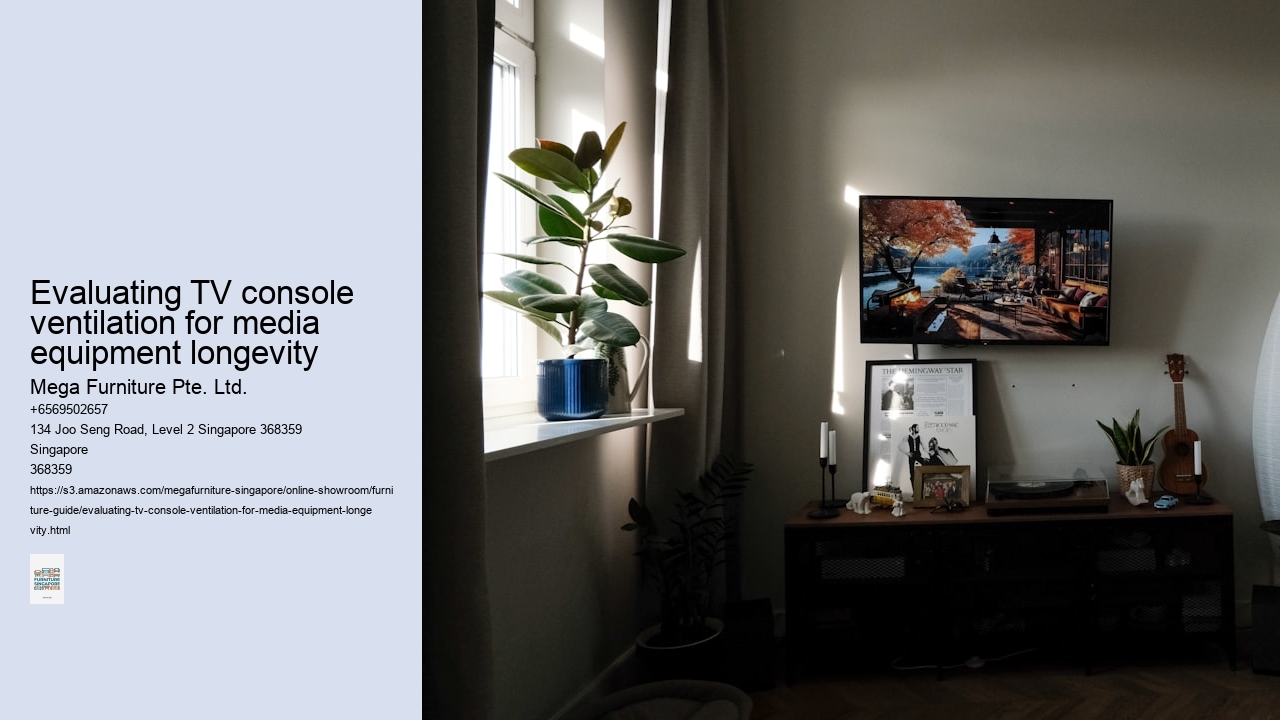
That 65-inch TV looks sleek on its own, but in a 4-room BTO living room it’ll dominate the wall unless you’ve got a console that anchors it properly. The rule here is simple: console length should exceed TV width by 15 to 20 centimetres. For a typical 65-inch screen, that means you’re shopping for a unit around 180 to 190 centimetres long—anything shorter leaves the screen floating awkwardly, anything much longer risks overwhelming a compact space.
Material choice is critical, and it’s not just about aesthetics. Singapore’s humidity, averaging around 80%, can warp solid wood if it hasn’t been properly acclimatised after delivery. Engineered wood, laminates, or sintered stone tops are more forgiving, resisting moisture without the need for a lengthy settling period. A low-profile design, often under 50 centimetres tall, also helps visually in a 12 sqm HDB common bedroom or a condo media wall; it keeps the focus on the screen and maintains a sense of openness.
Beyond proportion and material, the console’s function needs to match the household’s reality. Open shelving for decorative display is nice, but concealed storage for media equipment, game consoles, and the inevitable cable clutter is what actually keeps a living room organised. For families, consider rounded corners and soft-closing drawers—they’re not just design features; they’re practical safeguards for child accessibility and pet safety, preventing bumps and bruised knees.
Ultimately, buyer wants storage that works for their space and their daily life. A console that’s too deep can eat into precious floor area in a narrow layout, while a floating variant can create a cleaner look but might sacrifice some storage volume. It’s about balancing those priorities against the room’s actual dimensions and the TV’s substantial presence.
Full-extension drawer glides are the first tell of a console built for daily use. They let you access the entire drawer depth, which is essential for reaching that old gaming console or router tucked at the back. Hardware that only allows partial access often feels cheap and will wear out faster, especially under the weight of media equipment. You'll find them on consoles priced from around $1,200 upwards; they're a clear signal the manufacturer invested in the hardware. Test them in the showroom — a smooth, silent pull with no wobble at full extension means they're likely to last.
Adjustable shelving isn't just a feature — it's a necessity for adapting to your ever-changing tech stack. A fixed shelf might fit your current soundbar, but next year's model could be taller. Look for systems that use solid metal pins or brackets, not flimsy plastic clips that snap under weight. The ability to reorganise interior space means a single console can evolve from storing DVDs to holding a PlayStation 5 and its peripherals. It's a long-term flexibility that pays off in a typical four-room BTO layout where storage needs aren't static.
Thin back panels and side panels are a common weak point, especially in longer consoles spanning 180 to 240 centimetres. They can bow or vibrate slightly when the subwoofer is active, creating a faint buzz that ruins the audio experience. A good panel should be at least half an inch thick, either solid wood or a sturdy engineered core, and feel rigid when you press against it. This structural integrity also prevents the whole unit from sagging over years of supporting a 75-inch TV's weight. It's a detail you check by looking at the construction, not just the finish.
High-pressure laminates are the pragmatic choice for Singapore's humidity; they resist swelling and are easy to wipe down after spills. Veneers offer a premium, natural wood look but require more care to avoid moisture damage in non-air-conditioned spaces. The choice often comes down to whether you prioritise maintenance in a busy family living room or the aesthetic for a condo media wall. Both should be firmly bonded to the substrate — no edges that feel like they could peel or lift. The surface is what you see every day, so its durability directly impacts your long-term satisfaction with the piece.
Integrated cable management grommets are essential, not optional, for a clean setup. They allow you to route power cords, HDMI cables, and internet wires directly from the equipment inside the console to the wall outlet behind it, eliminating tangled nests. Without them, you're left with cables spilling out the back or draped over the side, which becomes a tripping hazard and visual clutter. Good systems include multiple grommets sized for different cable types and sometimes even internal channels to guide them. This feature turns the console into a true organisational hub, hiding the necessary mess of modern entertainment.
A common oversight in older HDB blocks isn’t about the console itself, but the journey it must take to reach your living room wall. Buyers fixate on centimetres of wall space, then discover their chosen 220cm solid wood unit won’t clear the staircase landing in a 1980s Ang Mo Kio point block. Delivery teams often can’t manoeuvre bulky flat-packs or assembled pieces past tight turns and low ceilings; measuring your lift’s interior dimensions and your corridor’s narrowest point is a non-negotiable first step, not an afterthought.
That north-facing common room in many BTO flats already struggles for light, a condition worsened by selecting a dark, monolithic console in espresso or walnut finish. The piece becomes a shadowy mass that visually shrinks the space. Lighter finishes like oak or white washed veneer, or even a mid-tone grey sintered stone, work better to reflect what ambient light there is — and a design with slender legs or a floating mount creates an impression of airiness the room physically lacks.
Another frequent miscalculation involves internal storage depth. A standard media compartment might be 40cm deep, which comfortably fits a soundbar but leaves an AV receiver or a PlayStation 5 protruding awkwardly from the front, cables exposed. The true requirement is often closer to 50cm for proper clearance and cable management, a spec you must check against your equipment list before committing. It’s a practical failure that undermines the console’s primary function: to hide the clutter of modern entertainment.
There’s also a persistent style mismatch in Singaporean living rooms, where a sleek, minimalist floating console ends up flanked by ornate Chinese rosewood side tables or a heavily patterned rug. The dissonance makes both pieces look worse. Consider the existing layout’s dominant lines and materials; a transitional design with clean lines and warm wood tones typically bridges modern and traditional elements more successfully in our hybrid homes.
Finally, the impulse to maximise surface area with a console stretching wall-to-wall can overwhelm a modest 4-room BTO layout. Leaving 30 to 40cm of breathing space on each side allows for floor lamps or plants, preventing the furniture from feeling like a built-in obstruction. Proportion, not just pure length, dictates whether the piece anchors the room or simply dominates it.
The difference between a catalogue image and the piece in a showroom is often the difference between a wish and a purchase. Buyer wants storage, but catalogue can’t show you whether drawer glides stick on a humid afternoon or if laminate edges feel sharp against a wrist. That’s why a visit to a Megafurniture showroom — the Joo Seng or Tampines locations — shifts the decision from speculative to concrete. You’re there to assess finish quality and storage ergonomics with your own hands, not through a screen. Start with the mechanics. Test drawer action on every unit you consider; a smooth, full-extension glide that doesn’t sag when loaded is a sign of durable hardware. Check door alignment on cabinet styles — gaps or uneven closures suggest assembly issues that might worsen. Surface feel matters too; run a hand over laminate tops to detect any rough seams or over the edge of a solid wood piece to judge its finishing polish. These tactile checks reveal build integrity that photos simply can’t convey. Their collection typically ranges from 140 to 220 centimetres, a span that suits many BTO living room layouts where wall space is around three to four metres. That length range accommodates TVs from 55 to 75 inches proportionally. In a showroom, you can visualise how a 180cm console will actually occupy your 4-room flat’s media wall, judging the leftover space for plants or side tables. Seeing the actual dimensions in person prevents the common mistake of buying a unit that’s either dwarfed by a large TV or overwhelms a modest wall. Beyond size, examine storage configurations. Open a cabinet door and see if internal shelves are fixed or adjustable; test the weight of a sliding panel on a media console. Consider whether the mix of concealed compartments and open shelving matches your needs — gaming consoles and router hidden, decorative items displayed. The showroom allows you to
browse the current stockand judge these practical details in three dimensions, which is where most online shopping fails. You’ll leave knowing whether a piece’s promise of organisation holds up under physical scrutiny.
A two-man delivery team will haul the console off the lorry and up the HDB lift lobby, but that's not the same as upstairs placement in your actual unit. Confirm with the retailer—verbally, then in the order confirmation email—that 'white glove' service includes navigating the common corridor, crossing your threshold, and situating the unit exactly where you want it against that feature wall. Many families in Tampines or Bedok flats discover the hard way that delivery ends at the void deck, leaving a 240cm-long crate for you to wrangle.
Self-assembly is a common cost-saving route, but it’s a gamble with solid wood or veneered MDF in our climate. Panels that slot together perfectly in an air-conditioned showroom can swell or warp in a humid 4-room BTO living room, leading to doors that won't close or shelving that sits visibly out of square. You’re not just fighting instructions; you’re fighting the moisture in the air from Jurong to Pasir Ris. It’s often worth the extra $80 to $150 for professional assembly, simply to guarantee alignment.
Warranties matter more than you think. Look beyond a one-year general guarantee and seek explicit coverage for structural integrity—the frame and load-bearing joints—and all hardware like drawer glides and hinges, for a period of three to five years. That’s the timeframe when cheap cam locks tend to strip and particle board shelves might begin to sag under the weight of a soundbar and gaming consoles. A robust warranty is a sign the manufacturer trusts the materials.
Finally, factor in lead times, especially for imported consoles. It’s typical to wait four to eight weeks from order to delivery. If you’re coordinating with a contractor for a media wall feature or new flooring in your condo, this timeline is critical—you don’t want your renovated space sitting empty for a month because the centrepiece hasn’t shipped. Plan backwards from your intended completion date, and get a written delivery estimate before you commit. You can browse the options and confirm these service details directly with the retailer.
The most common TV console question isn't about style or price — it's a frantic, tape-measure-in-hand calculation of whether a 200cm unit will actually fit on that 3.5-metre HDB wall with the balcony door. It won't, not if you want to open the door. You need to subtract the door swing, typically 90cm, and leave at least 10cm clearance on each side for visual balance; that leaves you with a realistic wall space of around 2.3 metres. A 180cm console is the safer, proportional bet.
How to protect wood from west sun exposure? It's a relentless problem for flats facing the setting sun. Direct UV will bleach and warp even solid teak over time. The practical answer is to avoid oiled or light oak finishes entirely and opt for thermally modified wood, or a console with a sintered stone or laminate top that can take the heat. Full-length blackout curtains are the final defence, but that's a living compromise many aren't willing to make.
Is wall-mounted or floor-standing better for parquet flooring? Wall-mounted is kinder to herringbone and chevron patterns — it doesn't obscure the floor's design and avoids concentrated weight points. But floor-standing offers more substantial storage, which is the real priority for families. If you go floor-standing, use wide, felt-padded feet to distribute weight; those narrow metal legs on some modern designs will dent your parquet over the years.
What console height aligns with a 75-inch TV's centre line? The ideal viewing centre is around 105cm from the floor. A 75-inch TV is roughly 93cm tall, so its bottom edge needs to sit about 58cm high. Therefore, your console top should be at or below 58cm. Many popular consoles sit at 40-45cm, which works perfectly, leaving a 13-18cm gap for your soundbar or a little breathing room. That gap is functional, not a design flaw — it's where all the cables you promised to hide will inevitably live.
The console that looked perfect in the Tampines showroom can feel strangely imposing in your 4-room BTO living room — the last step is a forensic check of your actual space, not the curated floor. Re-measure your wall with a tape, accounting for the skirting board that eats up a few centimetres and noting the exact height of your power points; a console’s back panel that sits flush against the wall can block access, forcing you to snake cables awkwardly over the top.
Balance is everything. A 180cm console can anchor a 55-inch TV beautifully, but if your viewing distance is under two metres, the unit might dominate your entire sightline. You’re not just matching TV width; you’re judging the piece’s visual weight as the room’s focal point. Storage needs often clash with a clean aesthetic — a buyer wants hidden space for routers and game consoles, but also wants a sleek, low-profile silhouette that doesn’t shout “cabinet”.
That’s where the details matter. The laminate sample you admired under showroom LEDs might read differently in your north-facing living room’s natural light. Insist on seeing the exact finish and colour of the delivery model, not just a similar-looking display piece; variances in wood veneer batches or laminate sheen are common, and what seemed like a warm oak can arrive looking decidedly pink.
Finally, treat the console as a permanent installation. A feature piece shouldn’t just hold your TV — it should organise the clutter of daily life and hold its own visually when the screen is off. Confirm the internal layout works for your media boxes and that the cable management isn’t an afterthought, because you’ll be living with those small frustrations for years.
The wall you measure in a showroom is rarely the wall you get at home. A TV console anchors the wall opposite the sofa in the same way a tall bookshelf anchors a corner — long horizontal piece, mix of open and closed storage, defines the visual weight of one whole side of the room. Megafurniture's TV Console range covers floating wall-mounted designs, low-profile freestanding consoles, and modular feature-wall configurations. Most pieces sit at 40-50cm height, sized for screens up to 75 inches.. In Singapore, that difference is everything - a 4-room BTO's living room wall might be a clean 3.2 metres, while a resale corridor unit's is interrupted by a swinging main gate, and a condo's media wall is a built-in statement piece that swallows standard furniture. A Bookshelf earns its place in Singapore homes through dual function — book and decor storage in the open shelves, soft visual division when placed mid-room in open-plan condominium layouts. Megafurniture's combined display unit and bookshelf hub covers tall book racks, cubby-hole designs, ladder shelves, modular cube systems, and glass-door pieces in oak, walnut, and MDF veneer finishes. Display cabinets sit between bookshelf and storage cabinet in function — closed glass-front protection for the items you want visible but not collecting dust. Megafurniture's Storage Cabinet range covers glass-front, curio, wall-mounted, and freestanding configurations in solid wood, MDF, and metal-framed constructions. Average pricing for glass-front variants sits around $271, with LED-lit and motorised-shelf models commanding the higher tier.. Solid-wood pieces typically start around $425, with most heights spanning 120cm to 220cm to fit standard 2.6m HDB ceilings.. Buying a console based on your TV size alone is a classic mistake; you're really buying for the leftover space after doors, ledges, and quirks have taken their cut.
For a typical 3.2-metre HDB living room wall, a 120cm console fits comfortably, leaving breathing room for floor lamps or plant stands on either side. That's the pragmatic choice for most flats, creating a centred, proportional look without crowding the space. In many resale units, though, you'll need to account for the inward swing of a metal gate - losing another 30 to 40cm of usable width - which can force a downsized console or an asymmetrical layout that designers often wrestle with.
The scale shifts dramatically with property type. A 240cm console, which would overwhelm an HDB wall, starts to make sense in a landed home's living area or an open-plan condo where walls stretch beyond four metres. These longer units aren't just about holding a bigger TV; they provide serious storage for media libraries, board games, or even serving as a de facto sideboard during gatherings. The key is measuring the actual clear wall space, from any permanent obstruction like an air-con ledge to the point where a door arc would clip the cabinet's corner.
It's a process that rewards patience. Mark the intended space with masking tape on the floor, live with the outline for a few days, and you'll quickly see if a floating design clears a swing or if a floor-standing unit blocks a vital pathway. That extra step saves the headache of a delivery day mismatch - because in our compact homes, every centimetre negotiates with another.
The wall you measure in a showroom is rarely the wall you get at home. In Singapore, that difference is everything — a 4-room BTO’s living room wall might be a clean 3.2 metres, while a resale corridor unit’s is interrupted by a swinging main gate, and a condo’s media wall is a built-in statement piece that swallows standard furniture. Buying a console based on your TV size alone is a classic mistake; you’re really buying for the leftover space after doors, ledges, and quirks have taken their cut.
For a typical 3.2-metre HDB living room wall, a 120cm console fits comfortably, leaving breathing room for floor lamps or plant stands on either side. That’s the pragmatic choice for most flats, creating a centred, proportional look without crowding the space. In many resale units, though, you’ll need to account for the inward swing of a metal gate — losing another 30 to 40cm of usable width — which can force a downsized console or an asymmetrical layout that designers often wrestle with.
The scale shifts dramatically with property type. A 240cm console, which would overwhelm an HDB wall, starts to make sense in a landed home’s living area or an open-plan condo where walls stretch beyond four metres. These longer units aren’t just about holding a bigger TV; they provide serious storage for media libraries, board games, or even serving as a de facto sideboard during gatherings. The key is measuring the actual clear wall space, from any permanent obstruction like an air-con ledge to the point where a door arc would clip the cabinet’s corner.
It’s a process that rewards patience. Mark the intended space with masking tape on the floor, live with the outline for a few days, and you’ll quickly see if a floating design clears a swing or if a floor-standing unit blocks a vital pathway. That extra step saves the headache of a delivery day mismatch — because in our compact homes, every centimetre negotiates with another.