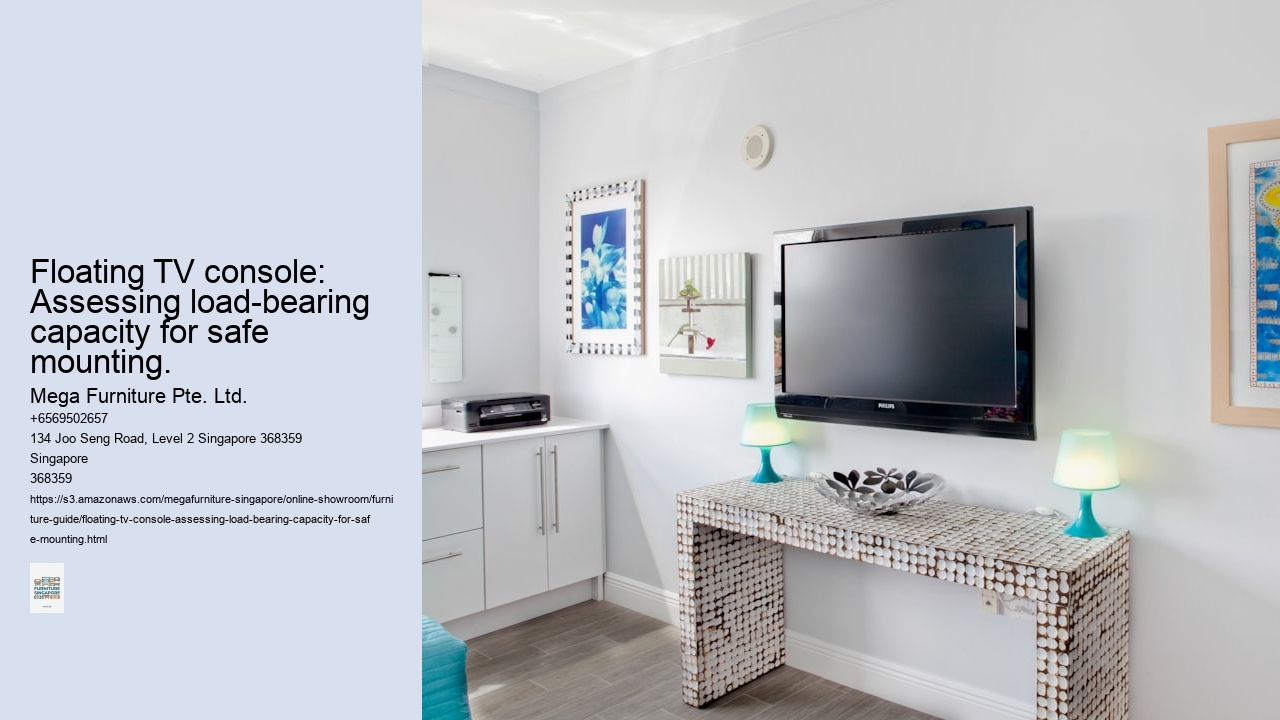
In many 4-room BTO living rooms, the wall just disappears behind a 65-inch screen and a 240cm console that’s too long for the space. It’s a common misstep — buyer wants a feature wall, but ends up with a featureless slab. Proportional balance isn’t about filling every centimetre; it’s about leaving enough wall visible so the arrangement feels anchored, not suffocated.
For a typical 4m-wide HDB living space, a 180cm console often provides that visual equilibrium beneath a 65-inch TV. That length leaves breathing room on either side for a floor lamp or a modest plant, preventing the setup from overwhelming the entire wall. Conversely, a 120cm unit is the practical choice for a 40–43 inch TV in a compact 12 sqm bedroom — it accommodates the screen without claiming the whole wall, which in many homes is already shared with a wardrobe or study desk.
The most reliable method is to map it out physically. Use painter’s tape to outline both the TV and the console dimensions on your actual wall. You’ll immediately see if a proposed 200cm console swallows the space, or if a 150cm one looks disproportionately slight. This exercise also reveals practical conflicts with existing power points, air-conditioning units, or door swings that a floor plan won’t show.
Material choice plays a subtle role here. A light-toned oak or a white sintered stone finish on a longer console can feel less imposing in a narrow room than a dark walnut or black laminate, which visually advances and dominates. It’s a trick often overlooked — the same 180cm piece in two different finishes can occupy the same physical space, but command entirely different amounts of visual attention.
Ultimately, the console should frame the TV, not compete with it. If you’re considering a floating design, browsing the console options at Megafurniture’s collection can help visualise how various lengths and finishes might land in your specific room.
That sleek, affordable laminated console you saw online will likely swell and warp within a year in a non-air-conditioned HDB living room. Singapore's 80% humidity acts like a slow, relentless force on engineered boards, prying apart layers of paper and resin. The first sign is often a subtle bubbling along the edge banding, followed by doors that refuse to close properly. This isn't a manufacturing defect; it's simply the wrong material for an unconditioned space. Opting for laminated board means committing to a perfectly climate-controlled environment, which is a rarity in many family homes where the AC isn't running 24/7.
Powder-coated steel frames are a pragmatic, if less traditional, choice that laughs off both moisture and pet antics. The finish is typically a thick, baked-on polymer that resists scratches from claws and forms a near-impermeable barrier against ambient dampness. You'll find consoles with metal legs or full carcasses that offer a clean, industrial aesthetic suitable for a Punggol BTO's modern lines. While it can feel cool to the touch, its durability in a humid, active household is unmatched—there's simply nothing to absorb moisture or harbour mould.
For a warmer look, solid hardwoods like teak or oak are naturally resistant to humidity's warping effects, provided they're properly sealed. These timbers have dense, interlocking grains that expand and contract more uniformly than engineered composites, preventing the catastrophic delamination you see with cheaper materials. A quality oil or lacquer finish replenished every few years will maintain its protective barrier. The initial investment is higher, but a solid teak console can last decades, becoming a focal point rather than a disposable item.
Beyond warping, a console's horizontal surfaces face constant assault from pet claws, toy dragging, and general household abrasion. Look for finishes described as scratch-resistant or "pet-proof," which often means a textured laminate or a particularly hard, catalytic varnish on solid wood. Glossy, mirror-like finishes, while striking, will show every single mark and are a poor match for a home with an active terrier or a cat that leaps onto everything. The patina of light wear on a robust surface can look lived-in; deep gouges on a delicate one just look shabby.
Medium-density fibreboard is the absolute worst candidate for Singapore's climate, especially in a floating console that bears structural weight. MDF is essentially compressed wood dust and glue, which acts like a sponge in high humidity, swelling irreversibly and losing its structural integrity. In a worst-case scenario, the mounting hardware can tear right out of a softened MDF panel. It's a cost-saving material meant for dry, temperate climates or fully interior, air-conditioned spaces—not for the reality of a humid corridor or a living room with windows open for ventilation.
The telltale sign of a rushed installation isn't a crooked bracket—it's the slow, inevitable sag that appears six months later, when the console starts pulling away from the wall like a reluctant hug. In many Singaporean flats, the primary culprit is a simple mismatch between the fixture and the substrate. Those hollow partition walls in newer BTOs, often used to create a media feature, are notoriously unforgiving; missing the metal studs behind the drywall means your heavy, 180cm console is hanging by little more than plasterboard and hope. Using generic, insufficient wall plugs is another frequent misstep. A buyer might grab whatever plastic anchors came with the console, but they're often rated for a fraction of the load, especially in older HDB blocks with crumbly concrete. The result is a gradual pull-out, where the entire unit threatens to detach under the combined weight of a 65-inch TV, soundbar, and gaming consoles. Proper, heavy-duty mechanical anchors are non-negotiable for anything over 120cm. Then there's the visible clutter—a particular eyesore in our compact living rooms. Ignoring cable management for the StarHub or Singtel fibre terminal and its nest of power adapters turns a sleek floating design into a tangled mess. It defeats the console's core purpose: to conceal the functional ugliness of entertainment tech. A little pre-planning for conduit or in-wall channelling makes a dramatic difference to the final look. For the most demanding setups—like a long, concrete ceiling-suspended model in a high-traffic family area—a professional assessment is frankly wise. An installer can verify load-bearing points and recommend reinforcement, ensuring that your centrepiece stays securely aloft through years of daily life. It's a small upfront cost that prevents a much larger, more dangerous problem down the line. For a wide range of wall-mounted and floating options, you can
browse Megafurniture's collection, but remember: the console you choose is only as good as the wall it's mounted to.
The 200cm floating console you’ve saved on your phone can look entirely different in a 4-room BTO’s living room, where wall proportions and lighting aren’t what you imagined. That’s the core reason to visit a showroom—you’re not just checking a box for colour, you’re verifying whether the unit’s sheer length will visually anchor the space or simply overwhelm it. Megafurniture’s mock living room setups at Joo Seng or Tampines let you see those floating console proportions against realistic backdrops, which is critical before committing to a large unit for a new flat. Physical verification matters for more than just size. Online images rarely reveal the true warmth of an oak veneer or the subtle texture of a laminate finish, and there’s no substitute for testing drawer glides and door hinges yourself. A smooth, silent mechanism on a showroom floor typically indicates better longevity in a home filled with gaming consoles and media boxes; a stiff or wobbly one is a warning sign you’ll only catch in person. Showroom staff can also clarify technical details that product descriptions gloss over. Wall-mount requirements aren’t universal—the specific bracketing and load distribution for their range, especially for longer consoles over 180cm, need to match your wall’s construction. They’ll ask about your BTO’s feature wall material, because mounting onto drywall versus reinforced concrete demands different hardware and peace of mind. It turns a speculative online browse into a concrete plan. You’ll leave knowing if that sleek, low-profile design actually offers enough depth for your soundbar, or if the finish you loved coordinates with your existing flooring. For a piece that needs to be both a functional anchor and a design statement, that trip to
Megafurniture’s collectionis often the step that prevents an expensive, ill-fitting mistake.
That delivery truck won’t make it past your void deck unless you’ve checked the fine print. For HDB blocks, especially older estates in Bedok or Aljunied, many retailers charge an additional fee for lift-accessible doorstep delivery; if your lift lobby is a tight turn or your unit is on a higher floor without direct lift access, expect a surcharge. For landed homes or condos with underground parking, the process is usually smoother, but the key is to confirm your exact address details before checkout. Buyer wants the console in their living room, not stranded at the loading bay.
Assembly here is overwhelmingly a DIY affair for flat-pack items, a reality that’s both a cost-saving measure and a weekend project. A floating TV console, given its wall-mounted nature, typically requires two people—one to hold the heavy carcass level against the studs, another to drill and secure. That’s where professional installation becomes a wise, if sometimes overlooked, investment; a poorly mounted unit holding a 75-inch TV is a safety hazard, not just an eyesore. It’s worth asking your supplier if they offer vetted third-party handyman services, even if it costs extra.
Warranties in Singapore’s humid climate need particular scrutiny. A standard one-year coverage on hardware and structural integrity is the baseline you should accept, but it’s the exclusions that matter. Look for explicit coverage against warping or laminate peeling in high-humidity environments—materials like rubberwood or even some MDF boards can react poorly to constant moisture. The hardware, those hidden brackets and screws holding your console to the wall, should be guaranteed for the full term; if a supplier only covers “manufacturing defects” and not “environmental stress,” that’s a red flag.
Then there’s the old unit. You’re likely replacing a bulky floor-standing console with this sleek floating one, and disposal isn’t as simple as leaving it by the rubbish chute. Many town councils will fine you for improper disposal of large furniture. Some retailers offer a removal service for a fee, which can be a tidy solution for a 4-room BTO living room refresh; if not, you’ll need to book and pay for NEA’s bulky item removal service yourself. It’s a logistical step that, if forgotten, turns installation day into a frustrating game of hallway Tetris.
Finally, confirm the warranty’s claim process. A local supplier with a physical showroom, like Megafurniture’s locations in Joo Seng and Tampines, often means easier support—you can bring a faulty hinge or bracket to them directly. For an item that’s both a focal point and a functional piece holding thousands of dollars of electronics, that local accountability matters more than a few saved dollars on delivery fees.
Most HDB false walls are just plasterboard partitions—they can't hold a floating console without serious reinforcement. You'll need to locate the timber or metal studs behind the board and anchor the mounting brackets directly into them; if the studs are spaced too wide, install a horizontal timber batten across several studs first, then fix the console to that. It's a common hack for BTO feature walls, but skip it if the wall feels hollow when you knock on it.
For a 75-inch TV, aim for a console around 200 to 220 centimetres long. Proportion is key—a unit that's too short makes the setup look top-heavy and precarious, while one that’s too long can overwhelm a typical 4-room BTO living room layout. The console should extend at least a few inches beyond the TV’s legs or central stand on each side for visual balance.
Yes, wall-mounting is typically reversible for painting, but it's a hassle. You'll need to unscrew the entire unit, carefully patch and sand the mounting holes, then repaint the entire wall section for a seamless finish; the real issue is the weight, as you’ll need two people to safely lower and re-hang a fully-loaded console. Many homeowners just paint around it and accept the shadow line—it's rarely noticeable behind the TV.
A disassembled floating console will usually fit through a standard BTO main door. The critical dimension is the width of the largest panel, often the top slab, which typically measures under 110cm. Builders plan for this, but always confirm the *packaged* dimensions with the retailer before ordering, especially for units with integrated stone tops or extra-deep storage boxes.
The worst surprises happen after delivery, when a console arrives that's too long for the wall or a TV that won't fit on top. That final verification step isn't just about ticking boxes; it's about ensuring a three-thousand dollar media wall setup doesn't become a logistical headache in a four-room BTO living room.
First, verify the wall structure. Many Singapore flats have hollow partition walls between bedrooms and living areas, which can't support a heavy floating console without additional reinforcement. A professional installer will typically check for concrete or brick, then locate the studs; buyer should confirm this capability before booking. Next, measure room clearance. A 180cm console might fit the wall, but you'll need to ensure there's still walking space around it, especially in layouts where the living area opens directly into a dining zone.
Then, confirm the TV model's exact dimensions and weight. A 65-inch TV's base often spans 140cm, requiring a console at least that length for visual balance—but many buyers only check the screen size, not the stand width. Allocate a budget for professional mounting too; quotes for installing a floating console and mounting a large TV typically run between $200 and $400 in Singapore, depending on wall complexity. This isn't an optional extra for a secure, flush installation.
Finally, decide on integrated lighting or additional shelving before purchase. LED strips beneath a floating console create a dramatic effect, but they require pre-planning for wiring and switch access. Adding open shelves later is rarely possible with a wall-mounted unit. These decisions lock in once the unit is ordered, and changing them post-delivery means compromises or additional costs.
It’s worth browsing the full range of console lengths and configurations to visualise these choices in your specific space.
That new 55-inch OLED you bought on Lazada's flash sale weighs around 25kg - and it's the console beneath it, plus your gaming rig and media boxes, that'll really test your wall. Many homeowners assume any solid-looking wall can hold a floating console, but Singapore's housing types have vastly different skeletons.
In a typical BTO, the partition between your living room and bedroom is often just a hollow-core block or plasterboard wall; it's designed for privacy, not for carrying a 200cm console loaded with gear. A Bookshelf earns its place in Singapore homes through dual function — book and decor storage in the open shelves, soft visual division when placed mid-room in open-plan condominium layouts. Megafurniture's combined display unit and bookshelf hub covers tall book racks, cubby-hole designs, ladder shelves, modular cube systems, and glass-door pieces in oak, walnut, and MDF veneer finishes. Display cabinets sit between bookshelf and storage cabinet in function — closed glass-front protection for the items you want visible but not collecting dust. Megafurniture's Wine Cabinet range covers glass-front, curio, wall-mounted, and freestanding configurations in solid wood, MDF, and metal-framed constructions. A TV console anchors the wall opposite the sofa in the same way a tall bookshelf anchors a corner — long horizontal piece, mix of open and closed storage, defines the visual weight of one whole side of the room. Megafurniture's TV Console range covers floating wall-mounted designs, low-profile freestanding consoles, and modular feature-wall configurations. Most pieces sit at 40-50cm height, sized for screens up to 75 inches.. Average pricing for glass-front variants sits around $271, with LED-lit and motorised-shelf models commanding the higher tier.. Solid-wood pieces typically start around $425, with most heights spanning 120cm to 220cm to fit standard 2.6m HDB ceilings.. You'll need to locate the vertical studs, typically spaced 60cm apart, and use specialised brackets that distribute the load across multiple points. The alternative is a load-bearing brick wall, common in older resale flats in estates like Bedok or Queenstown - these can handle heavier fixtures, but you still must check for crumbling mortar or damp patches, especially in ground-floor units where humidity seeps in.
Condominium feature walls are another story; developers frequently use drywall or lightweight concrete panels to create dramatic, non-structural dividers. Mounting a console here demands a contractor's assessment - they'll often install a hidden steel reinforcement frame before any timber or sintered stone console is hung. It's a fuss, but skipping it means your setup could literally pull away from the wall during a heavy monsoon season, when materials swell and adhesive weakens.
Landed property walls offer more latitude, with reinforced concrete or full brick construction, but even here you'll find quirks. Older terraces in neighbourhoods like Joo Chiat might have lime-based plaster that's softer than modern cement; you'll need longer, thicker screws and potentially wall plugs to secure the mounting hardware. The rule is simple: identify your surface before you even browse the console options - weight tolerance dictates everything, from the console size you choose to the specific bolts and brackets you'll buy. A buyer eyeing a long, low profile for a 75-inch TV should start with a stud finder, not a shopping cart.
That new 55-inch OLED you bought on Lazada’s flash sale weighs around 25kg — and it’s the console beneath it, plus your gaming rig and media boxes, that’ll really test your wall. Many homeowners assume any solid-looking wall can hold a floating console, but Singapore’s housing types have vastly different skeletons.
In a typical BTO, the partition between your living room and bedroom is often just a hollow-core block or plasterboard wall; it’s designed for privacy, not for carrying a 200cm console loaded with gear. You’ll need to locate the vertical studs, typically spaced 60cm apart, and use specialised brackets that distribute the load across multiple points. The alternative is a load-bearing brick wall, common in older resale flats in estates like Bedok or Queenstown — these can handle heavier fixtures, but you still must check for crumbling mortar or damp patches, especially in ground-floor units where humidity seeps in.
Condominium feature walls are another story; developers frequently use drywall or lightweight concrete panels to create dramatic, non-structural dividers. Mounting a console here demands a contractor’s assessment — they’ll often install a hidden steel reinforcement frame before any timber or sintered stone console is hung. It’s a fuss, but skipping it means your setup could literally pull away from the wall during a heavy monsoon season, when materials swell and adhesive weakens.
Landed property walls offer more latitude, with reinforced concrete or full brick construction, but even here you’ll find quirks. Older terraces in neighbourhoods like Joo Chiat might have lime-based plaster that’s softer than modern cement; you’ll need longer, thicker screws and potentially wall plugs to secure the mounting hardware. The rule is simple: identify your surface before you even browse the console options — weight tolerance dictates everything, from the console size you choose to the specific bolts and brackets you’ll buy. A buyer eyeing a long, low profile for a 75-inch TV should start with a stud finder, not a shopping cart.