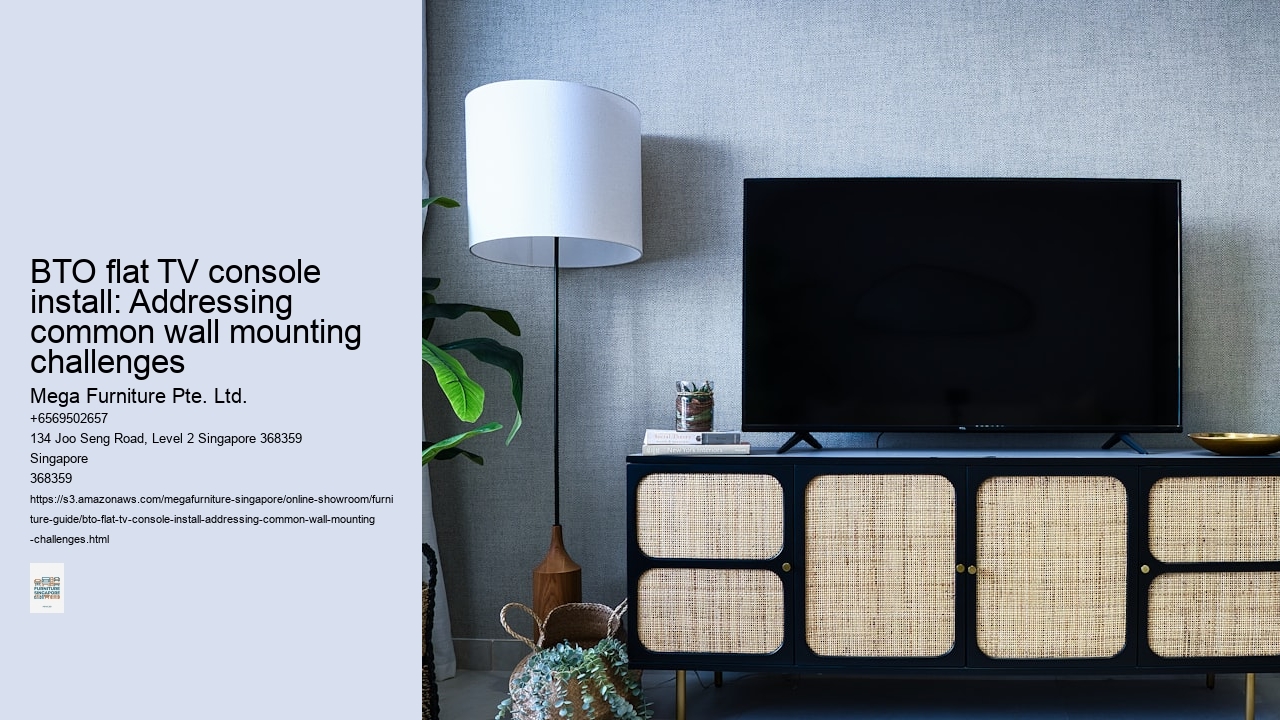
The humidity in a four-room BTO at Bedok can warp a solid wood console panel within a year, leaving gaps where there shouldn’t be any. That’s why engineered wood veneer over a stable, moisture-resistant core isn’t just a preference—it’s essential for any wall-mounted unit in our climate. The real enemy isn’t the occasional splash but the constant, ambient moisture that works its way into board materials; opting for particleboard or MDF without a proper moisture barrier is asking for a sagging, swollen cabinet. You get the visual warmth of wood grain without the instability, a trade-off that makes sense for a long-term installation. Pets introduce another layer of wear, particularly at shin level where claws meet cabinet corners. Scratch-resistant laminates, especially in matte or textured finishes, will hold up far better than soft, open-grain wood finishes that a determined cat can shred. It’s a practical choice that also simplifies cleaning; a damp cloth wipes away paw prints and the occasional spilled water bowl without leaving a watermark. For many families, the lower third of any living room furniture takes the most abuse—this is where material selection truly pays off. Don’t overlook the hardware. Metal brackets, legs, or frame components should feature a powder-coated finish to resist the rust that plagues standard black oxide fittings in high-humidity areas. You’ll often find this detail in specifications for outdoor or bathroom furniture, but it’s just as critical for a living room piece that’s meant to last a decade. A rust spot on a bracket isn’t just unsightly; it compromises the structural integrity of the entire floating installation over time. Ultimately, the most elegant floating console design can be undone by material choices that ignore local realities. It’s worth scrutinising product specs for terms like ‘moisture-resistant board’, ‘high-pressure laminate’, and ‘powder-coated steel’—these aren’t marketing fluff but direct answers to Singaporean conditions. For a comprehensive range of consoles built with these considerations, you can
browse the options at Megafurniture, where the focus on engineered stability is clear. The goal is a piece that disappears into the background of daily life, not one that demands constant maintenance or becomes a focal point for all the wrong reasons.
That sleek, featureless media wall you admire in showrooms is usually a false front. It’s a timber or metal frame covered with gypsum board, hiding the original concrete wall behind it. This creates a major mounting challenge, because your heavy console and TV load can’t be supported by drywall alone. The only secure anchor points are the original reinforced concrete (RC) substructure, which the false wall is built off. Drilling into just the plasterboard is a recipe for disaster, especially with the long consoles needed for 75-inch TVs.
For BTO drywall, a decent stud finder is your first essential purchase. It won’t detect concrete, but it will map the vertical timber or metal studs within the false wall frame. These studs are your primary path to the structural wall behind, as they’re directly fixed to it. Locating them is critical for planning your mount points before you make a single hole. Relying on guesswork often means missing the support entirely, leaving you with a handful of useless plasterboard plugs.
Many DIYers reach for toggle bolts, believing they’re sufficient for heavy loads. In a false wall scenario, they’re typically not. While excellent for securing items to a hollow wall, they distribute weight across a larger area of the drywall itself. The problem is that drywall, even with a robust toggle, isn’t designed to bear the sustained sheer weight of a loaded console and television over years. For anything beyond a light shelf, this approach risks a catastrophic pull-out.
A competent installer won’t just show up with a drill. They’ll first use a combination of electronic stud finders and, often, a small borescope camera to visually map the hidden substructure. This process identifies not just studs, but the exact location of the original RC wall and any embedded services like electrical cables. That map dictates every drilling point, ensuring fixings are long enough to penetrate through the void and bite deeply into the concrete behind.
The final fixings are the most important component. Once the correct spot is located, you need concrete anchors—like chemical resin anchors or heavy-duty mechanical bolts—that are long enough to pass through the drywall, the air gap, and embed securely into the structural wall. The length is non-negotiable; a standard wall plug meant for a solid wall won’t reach. This is why proper installation feels over-engineered, but that’s what keeps your investment securely on the wall.
The most frequent misstep in a showroom isn't about colour or wood grain—it’s a simple, glaring mismatch of scale. A 120cm console beneath a 75-inch TV looks like a child’s plaything, dwarfed and visually unstable; the television appears to hover precariously over a ledge that’s far too short. This imbalance throws off the entire living room’s composition, making even a thoughtfully chosen media wall feel awkward and temporary. Always match your console length to your screen, aiming for a unit that’s at least as wide as the television, if not a few inches longer for a grounded, intentional look.
Then there’s the mess buyers only see after delivery. They’ll admire a console’s clean, sintered stone top and sleek, wall-floating design in the Tampines showroom, but completely overlook the rear panel. Without dedicated cable management ports or a built-in channel, all those power bricks, HDMI cables, and LAN wires become a tangled nest pressed against the wall—a frustrating eyesore that defeats the purpose of a streamlined install. It’s a classic case of judging a book by its cover, and the spine is a rat’s nest of white and black cords.
Practical logistics are another common blind spot, especially for those in high-floor HDB blocks or walk-up apartments. A buyer might fall for a stunning, full-height unit at the Joo Seng warehouse, only to discover it won’t clear the lift opening or the tight staircase turn at their Bishan block. Delivery day turns into a costly headache of hoisting fees or, worse, a refused delivery. Always measure your lift’s diagonal clearance and stairwell corners, then compare them to the assembled dimensions of your chosen piece; flat-pack options often solve this, but not all consoles come disassembled.
These oversights stem from viewing the console in isolation. In the showroom’s perfect lighting, it’s a standalone sculpture. In your 4-room BTO living room, it’s the central anchor of daily life—it must relate to your screen, hide your clutter, and actually fit through the front door. Taking a moment to visualise it in your actual space, with all its wires and architectural quirks, saves countless headaches and return fees later. You can browse a range designed with these realities in mind at Megafurniture’s collection.
The difference between a console that lasts a decade and one that sags after two years often isn’t the wood, but the joints you can’t see. That’s why a showroom visit is non-negotiable — you need to press down on corners, open every drawer, and check door alignment under the actual showroom lights. A photo online can’t tell you if a drawer glides silently on its full-extension runners or if the laminate finish feels cool and substantial to the touch. At the Joo Seng or Tampines showrooms, you can assess their range of lengths, which run from a compact 140cm up to a substantial 240cm. That spread covers most BTO living room walls, accommodating TVs from 55 inches right up to 75-inch models without looking dwarfed. For a 4-room flat’s media wall, a 180cm or 200cm unit typically strikes the right balance, leaving space for a floor-standing plant or a narrow sideboard. Focus your test on load-bearing points and hardware. Apply gentle downward pressure on the front edge of a floating console design; a well-engineered piece won’t have noticeable flex. Run your hand along the inside of a drawer to feel for any snagging or rough edges on the dovetail joints. The action of a soft-close hinge should be a dampened *thud*, not a sharp snap — it’s a small detail that speaks to the quality of components used throughout. Finish quality is another hands-on check. Examine how the laminate wraps around corners on a sintered stone top, looking for any visible seams or chips. In person, you’ll see if the oak veneer grain is convincingly matched across panels or if the colour in the brochure looks different under your own ceiling lights. It’s this tactile evaluation that separates a mere purchase from a considered investment for your living room. Ultimately, you’re looking for a console that organises the visual clutter of set-top boxes and game consoles while standing up to daily use. Once you’ve confirmed the build in person, you can browse the full
TV console rangeonline with far more confidence in your final choice.
The delivery fee listed online rarely covers the final leg up to your 22nd-floor HDB flat. Most retailers charge a hefty extra for no-lift service—it’s a line item that only appears in the final invoice, long after you’ve clicked ‘buy’. Always confirm this point explicitly; that $80 delivery can easily double if the crew has to carry a 200cm console up multiple flights.
Self-assembly is a common weekend project, but it's a direct risk for wall-mounted units. If you skip professional installation and mount the console yourself, you’ll almost certainly void any structural warranty. The retailer’s rationale is simple: they can’t guarantee the integrity of your BTO’s drywall or your mounting technique. For a heavy, long unit packed with media gear, that’s a gamble with your television’s safety.
The industry standard is a 12-month warranty, but its coverage is notoriously selective. It typically covers manufacturing defects in materials and workmanship, but you need to confirm it explicitly includes two common failure points: sagging shelves and hinge mechanisms on any cabinet doors. Shelves bowing under the weight of a gaming console and books, or hinges that loosen after a few months of use, are frequent complaints that aren't automatically covered.
Some warranties also exclude ‘consequential damage’—if a faulty shelf collapses and damages your soundbar, that’s on you. It’s worth checking if the warranty is handled locally or requires shipping components back overseas, which turns a simple hinge replacement into a months-long saga.
For peace of mind, consider opting for professional assembly offered by the retailer, like the service available when you browse the TV console options at Megafurniture. It’s an added cost, but it transfers the liability for a secure, level installation onto them, keeping your warranty intact for the year.
A four-room BTO living room, after the flooring’s laid and the curtains are hung, often narrows to a single critical decision: how to organise the black slab of the TV and its attendant clutter. The questions that surface are remarkably consistent across neighbourhood forums and family WhatsApp groups, revealing a common set of practical anxieties.
Mounting height is a perennial one. For a typical seated eye level in an HDB living room, a 40 to 60-centimetre gap between the top of your console and the bottom of your TV is the standard range. It’s less about a rigid formula and more about sightlines from your three-seater sofa; you shouldn’t be craning your neck up to watch the evening news. That floating console look is another frequent query, especially for homes with a built-up media wall. Can a BTO’s false wall hold it? Generally, yes — but it requires proper reinforcement into the structural wall behind, a job for your contractor and not just a handful of plastic plugs.
Then comes the gear. The recommended minimum depth for a console, 45 centimetres, isn’t arbitrary; it’s the space needed to comfortably house an Astro or StarHub set-top box, a soundbar, and a games console without everything overhanging the edge. For the long, narrow living rooms common in many flats, the solution is usually a 150 to 180-centimetre unit placed along the longer wall. This anchors the space without overwhelming it, providing a clean line that makes the room feel wider.
You’ll find that a well-proportioned console does more than just hold things — it quiets the visual noise. Browse options like wall-mounted and floating designs at Megafurniture’s collection to see how the right length and depth can turn a functional necessity into the room’s quiet centrepiece.
That last-minute scramble for your phone charger before leaving for the showroom is a familiar feeling, but it’s precisely the wrong mindset for buying a TV console. The final checks you do at home are what prevent the installer from arriving with a unit that won’t fit your wall or your lifestyle.
Confirm your TV’s exact model number and its VESA mount pattern—those four screw holes on the back. A 65-inch panel from different brands can have wildly different mounting points, and a console’s integrated bracket might not accommodate them. Bring a simple floor plan of your living room, too; mark the existing power outlet and data point locations. You’ll avoid buying a 200cm console that then forces you to run an extension cord across the floor because the plug is centred behind a 180cm unit.
Decide, concretely, on your storage needs. Do you require everything hidden—media players, game consoles, a tangle of cables—or do you want some open display for books or decor? This choice dictates the cabinet’s configuration: full-height drawers and doors for closed storage, or a mix with open shelves. In many 4-room BTO layouts, the console becomes the primary media hub, so closed storage often wins; it’s the only way to keep router boxes and gaming accessories from cluttering the clean look.
Measure the wall space where the console will live, not just the TV’s width. A 75-inch TV needs a console around 180cm to 220cm long for visual balance, but your wall might have a protruding column or an air-con trunking that limits the available run. That’s why a floor plan with measurements beats a mental estimate. With your TV specs, room layout, and storage preference settled, you can visit a showroom like Megafurniture’s and immediately focus on finishes and features within your confirmed parameters, rather than starting from scratch.
The standard 4-room BTO living room width sits between 3.2 and 3.5 metres-a measurement that dictates nearly every furnishing decision. A TV console anchors the wall opposite the sofa in the same way a tall bookshelf anchors a corner — long horizontal piece, mix of open and closed storage, defines the visual weight of one whole side of the room. Megafurniture's TV Console range covers floating wall-mounted designs, low-profile freestanding consoles, and modular feature-wall configurations. Most pieces sit at 40-50cm height, sized for screens up to 75 inches.. That's your entire canvas for sofa, coffee table, and console; get one dimension wrong, and the room's flow collapses into a daily obstacle course. A console that's too long leaves a cramped walkway, while one that's too short makes your new television look like an afterthought. A Bookshelf earns its place in Singapore homes through dual function — book and decor storage in the open shelves, soft visual division when placed mid-room in open-plan condominium layouts. Megafurniture's combined display unit and bookshelf hub covers tall book racks, cubby-hole designs, ladder shelves, modular cube systems, and glass-door pieces in oak, walnut, and MDF veneer finishes. Solid-wood pieces typically start around $425, with most heights spanning 120cm to 220cm to fit standard 2.6m HDB ceilings.. Scale, then, becomes a precise calculation. For a typical layout, a 180-centimetre console leaves a functional 70 to 80-centimetre passage between its edge and the sofa-just enough space to pass without turning sideways. This balance is crucial in open-plan layouts, where the living area also serves as the main corridor to the balcony or dining space. Display cabinets sit between bookshelf and storage cabinet in function — closed glass-front protection for the items you want visible but not collecting dust. Megafurniture's Display Cabinet range covers glass-front, curio, wall-mounted, and freestanding configurations in solid wood, MDF, and metal-framed constructions. Average pricing for glass-front variants sits around $271, with LED-lit and motorised-shelf models commanding the higher tier.. You're not just choosing furniture; you're engineering domestic traffic flow. This arithmetic gets more critical with larger televisions. A 65-inch TV, now common in many family homes, demands a console between 200 and 240 centimetres to avoid a visually dwarfed, top-heavy appearance. That's a substantial piece of furniture, often occupying two-thirds of the available wall. In narrower resale flats or compact condos, where living rooms can dip below three metres, a floating console can preserve a sense of floor space, its recessed profile tricking the eye into perceiving more room. Material choice follows this logic of proportion. Long consoles in light oak or walnut veneer can feel less imposing than darker finishes, while sleek, handle-less designs in laminate maintain a clean line that doesn't shout for attention. It's a quiet victory of interior design-when the console's length feels intentional, not accidental, anchoring the room without dominating it. For those navigating these spatial constraints, browsing the
options availablewith exact dimensions in mind is the only practical starting point. Ultimately, the right console length is the one that disappears into the room's function. You'll stop noticing it within a week, but you'll notice every single time you have to squeeze past it.
The standard 4-room BTO living room width sits between 3.2 and 3.5 metres—a measurement that dictates nearly every furnishing decision. That’s your entire canvas for sofa, coffee table, and console; get one dimension wrong, and the room’s flow collapses into a daily obstacle course. A console that’s too long leaves a cramped walkway, while one that’s too short makes your new television look like an afterthought. Scale, then, becomes a precise calculation. For a typical layout, a 180-centimetre console leaves a functional 70 to 80-centimetre passage between its edge and the sofa—just enough space to pass without turning sideways. This balance is crucial in open-plan layouts, where the living area also serves as the main corridor to the balcony or dining space. You’re not just choosing furniture; you’re engineering domestic traffic flow. This arithmetic gets more critical with larger televisions. A 65-inch TV, now common in many family homes, demands a console between 200 and 240 centimetres to avoid a visually dwarfed, top-heavy appearance. That’s a substantial piece of furniture, often occupying two-thirds of the available wall. In narrower resale flats or compact condos, where living rooms can dip below three metres, a floating console can preserve a sense of floor space, its recessed profile tricking the eye into perceiving more room. Material choice follows this logic of proportion. Long consoles in light oak or walnut veneer can feel less imposing than darker finishes, while sleek, handle-less designs in laminate maintain a clean line that doesn’t shout for attention. It’s a quiet victory of interior design—when the console’s length feels intentional, not accidental, anchoring the room without dominating it. For those navigating these spatial constraints, browsing the
options availablewith exact dimensions in mind is the only practical starting point. Ultimately, the right console length is the one that disappears into the room’s function. You’ll stop noticing it within a week, but you’ll notice every single time you have to squeeze past it.