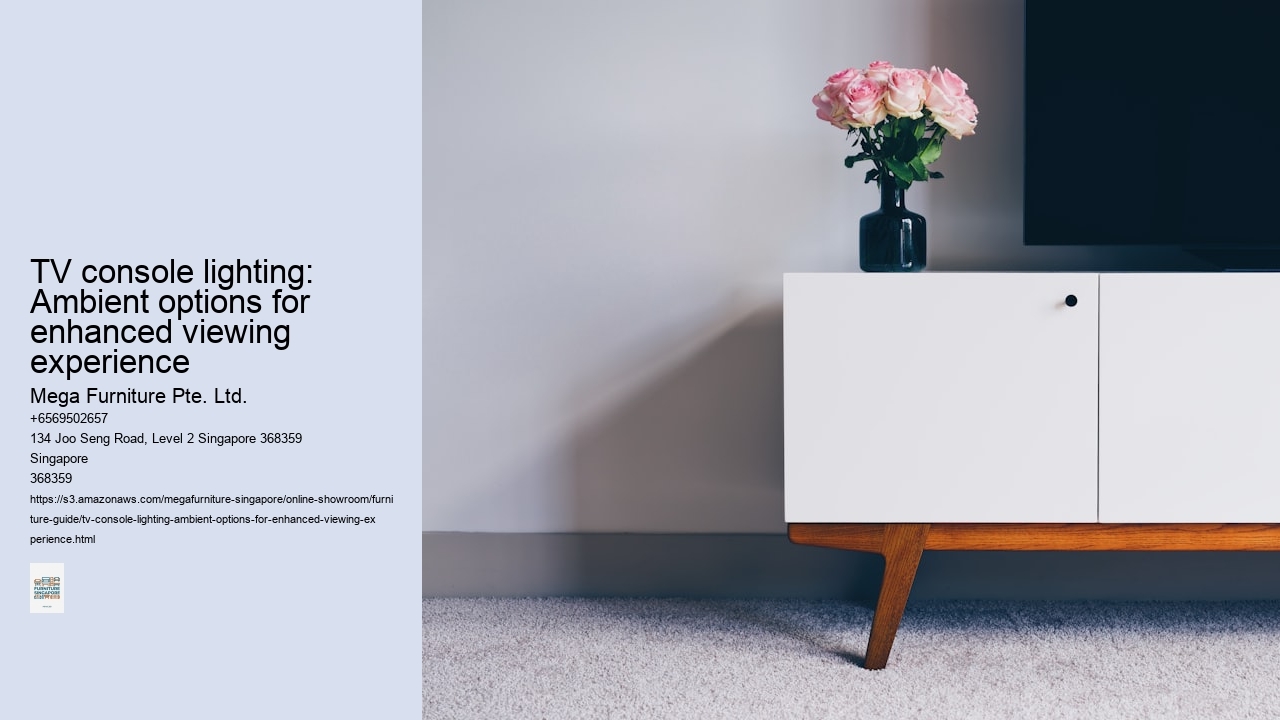
A 180cm TV console often looks right in a 4-room resale HDB living area — it matches the typical wall length between balcony doors, anchoring the space without crowding walkways. You’ll need to check door clearance, though; older flats with inward-opening balcony doors can leave a frustrating 15cm gap that complicates cord management and cleaning. That’s why many opt for slimmer, floor-standing designs around 40cm deep, which tuck neatly under the TV without blocking crucial airflow to the equipment inside.
Condo layouts, especially in newer developments, typically grant more flexibility. Their media walls are often designed for built-in cabinetry, making floating or wall-mounted consoles a natural fit. This approach lifts the storage off the floor, creating an illusion of space that’s valuable in a 90 sqm unit. It also simplifies cleaning and lets you run a single, clean trunking line down to the power point.
Landed homeowners, conversely, rarely face such spatial penalties. A solid wood console, 60cm deep and 240cm long, becomes a substantial feature piece in a terrace house living room — it’s a commitment to permanence and material heft that most flats can’t support. The extra depth accommodates deeper AV receivers and gaming consoles without everything being crammed at the front edge.
Your choice, then, isn’t just about style; it’s dictated by the architecture you live within. A BTO owner might prioritise a modular, wall-mounted system for future reconfiguration, while a landed property can handle a monolithic teak console that will outlast the TV mounted above it. The proportions of the room should always win over the proportions of the screen.
Singapore's 80% humidity is a slow, quiet destroyer of flat-pack furniture. That swollen, fuzzy edge on a bargain console after one rainy season? It's almost always moisture-sensitive MDF or particleboard, its laminated edges peeling like a bad sunburn. Prioritise thermofoil-wrapped carcasses or treated solid woods like rubberwood or acacia; their sealed surfaces repel ambient moisture far more effectively. This isn't about occasional spills, but the constant, heavy air in a Bedok ground-floor flat or a north-facing condo wall. A console that survives that will likely outlast your TV.
A cat's favourite runway is that long, low profile right in front of the screen. Their claws, plus the occasional excited dog tail, demand a scratch-resistant armour. High-pressure laminate tops in matte or textured finishes are the pragmatic choice, hiding fine scuffs that glossy lacquers highlight. Avoid soft woods and thin veneers; a single enthusiastic leap can leave a permanent dent. It's about selecting a workhorse surface that looks presentable for guests, not a museum piece that causes stress every time your pet walks past.
In a typical 4-room BTO living room, visual clutter is the enemy of calm. Open shelving, while stylish, becomes a magnet for random remotes, school worksheets, and charging bricks. Floor-standing consoles with full-height cabinet doors or sleek push-to-open drawers are essential for taming that chaos. They hide the inevitable tangle of console wires, game discs, and board games that families accumulate. The result is a clean media wall where the TV is the focus, not your storage solutions.
Reserve it for a deliberate, curated display, not default storage. One or two floating shelves above a console can work if they hold a cohesive set of books, a single sculptural object, or a planned row of indoor plants. The moment you mix decorative items with daily necessities, the look falls apart. It demands discipline most households don't have, which is why for many, a single open cubby for the soundbar is a safer compromise. The rest should stay behind solid fronts.
Think of it as a checklist for longevity here. First, a moisture-resistant core—thermofoil or treated wood. Second, a tough, scratch-proof laminate for all horizontal surfaces. Third, robust hardware on doors and drawers that can withstand daily use from kids and pets. This material stack matters more than any fleeting trend in colour or leg style. A console built to these specs might cost a bit more upfront, but it won't need replacing when the climate or your Labrador has other plans. You can browse options built with this philosophy at Megafurniture's collection.
A console that wobbles when you slide a drawer shut, or that sounds like a rattling MRT train on the East-West Line, has already failed its first test. The heft of the unit is your initial clue; a flimsy, lightweight construction simply won’t anchor a 65-inch television with confidence, especially on a polished porcelain tile floor common in newer BTOs. You’re looking for a dense, planted feel—a signal of solid core panels or heavier engineered wood, not hollow, paper-thin boards.
Drawer action tells you everything about longevity. Run your hand along the side of a drawer as you open it. Full-extension glides, where the drawer comes completely clear of the cabinet, aren't just a convenience for reaching that back cable—they're a hallmark of hardware built to last thousands of cycles. Compare that to a drawer that jolts to a halt halfway, straining on a cheap nylon wheel; that’s the one that’ll give you grief in two years when it’s laden with game controllers and charging bricks.
Look behind the facade. A decent backing board, at least 5mm thick and properly fastened, keeps the structure square and dust out of your stored items. Particle board or MDF carcasses are standard, but they demand flawless, heat-activated edge banding—peeling or chipped edges on the internal shelves are a sure sign of corner-cutting. For the exterior, a veneer over a solid plywood core is perfectly acceptable for a media unit; it’s stable, resists warping in our humidity, and offers a clean surface for that matte walnut or oak finish.
And on that note, finish is pragmatic. A high-gloss lacquer might look sleek in a showroom under perfect lights, but in a typical 4-room flat with windows facing Bedok Reservoir, it’ll show every fingerprint and a daily layer of dust. A matte or satin finish is far more forgiving, hiding smudges and blending into the ambient lighting of your media wall setup. It’s the practical choice for a piece that’s meant to be lived with, not just looked at.
It’s a classic HDB scene: a brand new 65-inch TV perched precariously on a console that’s a full 20 centimetres shorter. The proportions look awkward, but the real issue is safety—that expensive screen has no overhang support at the edges, creating a genuine tipping hazard. Console length isn’t just an aesthetic choice; it’s the foundation for your entire media setup. For a 65-inch model, you’ll typically need a unit at least 180cm long, and many buyers forget to account for the width of soundbars or decorative objects they might place on either side. That focus on surface dimensions often means other critical measurements get overlooked entirely. In many condos and resale flats, the built-in media wall niche has a fixed depth—and a power strip with bulky adapters for your router, game console, and set-top box can easily protrude, preventing the console from sitting flush against the wall. You’ll need to check the required clearance behind the unit, which is easily forgotten in the showroom. Similarly, the excitement of a new TV delivery can evaporate when movers can’t navigate the tight staircase turn at your Clementi block or fit the packaging into the BTO lift. Cable management is another frequent casualty, especially with floating or wall-mounted consoles. The clean, minimalist look is instantly ruined by a tangled web of HDMI and power cords snaking down to the floor socket. Opting for a design with integrated cable routing channels or a back panel with punch-outs isn’t just about tidiness; it’s a practical necessity that keeps cords from becoming a dust trap or a toddler’s plaything. Material and finish choices in high-traffic family spaces also demand more foresight than they often receive. A glossy white lacquer finish might look stunning in a showroom under perfect lighting, but in a household with young children, it becomes a magnet for sticky fingerprints, scuffs, and scratches that are nearly impossible to buff out. A textured wood veneer or a matte laminate in a darker tone will hide the inevitable wear and tear of daily life far better, maintaining its look for years. Finally, there’s the delivery day itself. Assuming your chosen console will fit through the door is a gamble—always verify the packed dimensions, not just the assembled ones, against your elevator and staircase clearances. A disassembled flat-pack from a
retailer's rangesolves many access issues, but for a large, pre-assembled unit, those final few metres from the lobby to your living room are where the real logistics test happens.
The difference between a matte laminate finish online and under showroom spotlights isn’t subtle — it’s everything. You’ll find that grain texture you liked on screen can vanish into a flat, dull sheet, or the oak veneer that looked warm at home reads as brassy orange under Megafurniture’s Joo Seng lighting. That’s precisely why a trip to their Tampines or Joo Seng showroom is non-negotiable; you’re not just browsing, you’re stress-testing a centrepiece under conditions that mimic a living room’s evening ambience. Bring your floor plan, too, because a 180cm console that felt right in a 4-room BTO’s virtual layout can overwhelm a real wall once you account for door swings and air-con trunking. Their range, consolidated for direct comparison, directly addresses Singapore’s common 120–240cm requirements, letting you physically verify if that 210cm model leaves enough space for your plant stand. Test every drawer glide and cabinet hinge while you’re there — a storage mechanism that stutters in the showroom will only worsen under the weight of game consoles and amplifier boxes. Focus on the practicalities of daily use that photos never reveal. Run a hand along the sintered stone top to check for seams; open every cable management hatch to see if it’ll actually fit a multi-plug. For families, the lower drawers are key — they’ll need to withstand toys being shoved in and pulled out, not just remote controls placed neatly inside. It’s here, with your own items in mind, that you’ll decide if a wall-mounted unit offers enough concealed storage or if a floor-standing design with deeper cabinets is the smarter play for your household’s clutter. That consolidated selection is the main advantage. You can move from a rubberwood option at $799 to a lacquered MDF design at $1,400 within a few paces, feeling the heft and finish variation in real time. It turns an abstract decision into a tactile one. Ultimately, the right console is the one whose proportions hold up under showroom scrutiny and whose storage solves your specific mess — you can
browse the options onlineto shortlist, but you’ll only know by being there.
The delivery van pulls up at 2pm, but your HDB lift lobby's booked for renovations until 4pm — welcome to the first logistical hurdle. Most retailers, including Megafurniture, offer two-hour delivery windows for BTOs and condos; you'll need to confirm your slot and building access details well in advance. For older walk-up apartments, expect a staircasing fee, typically $20 to $40 per flight, which can add a surprising $80 to your final bill for a fourth-floor flat in Tiong Bahru.
Assembly seems straightforward until you're staring at a 200cm console with a 2mm misalignment. Factory-tightened joints can loosen during transit across Singapore's humid districts, and self-assembly risks that slight but infuriating lean. It’s a minor annoyance for floor-standing units, but for wall-mounted or floating consoles — where a single misdrilled hole means patching your feature wall — professional installation is a non-negotiable expense. The peace of mind it buys, especially for a piece holding a 65-inch TV, is worth the extra $80 to $150.
Warranties here aren't just about manufacturing flaws; they're a hedge against the climate. Scrutinise the fine print for coverage of hardware corrosion and surface defects like veneer peeling or laminate swelling, common in our constant 80% humidity. A one-year warranty is standard, but look for extensions on structural frames and drawer glides. The real test is whether the policy covers damage from "normal household conditions" in Singapore — a phrase that should explicitly include our persistent dampness.
You'll want the warranty document to specify response times for service calls, too. A promise to "rectify promptly" is less useful than a commitment to assess within five working days, especially when your gaming consoles and router are piled on the floor. Keep your invoice and assembly receipt filed not in a drawer, but somewhere you'll remember — perhaps with your BTO documents. After all, that sleek console isn't just furniture; it's the operational centre of your living room, and its logistics need to be just as solid as its engineered wood frame.
A common misjudgement is setting the console height too low, forcing you to crane your neck at the TV; the ideal centreline is typically at seated eye level, around 110cm from the floor when you’re sunk into a sectional sofa. That’s the ergonomic baseline, but heat management is the practical one — AV equipment crammed into a closed cabinet in a humid room is a recipe for early failure. You’ll want at least 5cm clearance behind the unit for cables and airflow, and perforated metal back panels or open-grille designs are worth hunting for, especially if you’re running a gaming console or an older amplifier that doubles as a space heater. If your console ends up shorter than the TV, the visual gap feels unstable. Bridge it with a low-profile media shelf mounted directly to the wall behind the console, creating a tiered effect that houses smaller items like streaming boxes or decorative objects. Alternatively, flank the console with two tall, narrow bookcases or display cabinets; this builds a framed media wall that makes the shorter centrepiece look intentional, not undersized. Irregular walls in pre-war shophouse living areas, with their exposed bricks and uneven plaster, demand a more forgiving approach. A floating console, mounted with a French cleat system that allows for minor adjustment, can follow a wall’s contour better than a rigid floor-standing piece. For truly bowed surfaces, consider a console built as two separate modules — they can be installed independently to mitigate the unevenness, and the gap between them can be disguised with a vertical plant or a slim art piece. Ultimately, console sizing is less about matching the TV’s exact width and more about balancing the wall’s proportions and your storage needs; a 75-inch TV on a 180cm console in a narrow room feels oppressive, whereas a 200cm console in a wider space gives you room for proper speaker placement and maybe even some display shelving. You’ll find that longer consoles, around 200 to 240cm, often provide the most flexible storage solutions for a family’s accumulated tech, which is why many buyers gravitate toward them in
Megafurniture’s longer models.
The last step before buying a TV console is often where a rushed decision unravels. You've found a design you like, but its proportions are subtly off — it looks fine in the showroom, yet it'll visually crowd your 4-room BTO living room wall. That's the moment to cross-reference your three key criteria: the physical measurements, the material's suitability for a humid climate, and the piece's overall visual weight. Start with the tape measure, not the aesthetic. A 75-inch TV typically needs a console around 180cm to 200cm long to avoid a top-heavy look; a 40-inch screen can sit comfortably on a 120cm unit. But length is just the start — you also need to check depth for your media boxes and height for any existing skirting boards. Then consider material: a solid rubberwood console can handle Singapore's humidity better than many veneered options, while sintered stone tops resist moisture rings from forgotten coasters. Visual weight matters, too — a floor-standing unit in dark timber anchors a room, but a wall-mounted or floating design in a lighter finish can make a narrow HDB space feel less hemmed-in. Function should always trump fleeting trends. A buyer wants storage for gaming consoles and media players, not just a surface to hold the TV. Check that the internal compartments actually fit your devices, with proper ventilation for amplifiers or game consoles that heat up. Cable management is non-negotiable; a console with a tidy cable port at the back and some internal organisers will save you from the inevitable nest of wires. Does the design let you access those ports easily when you need to plug in a new HDMI cable? If not, it's more sculpture than furniture. Run a final checklist before purchase. Storage needs met — enough enclosed space for the clutter, perhaps some open shelving for books or decor. Cables managed, not just hidden. Proportions that harmonise with your room's architecture, not just the TV size. The right console doesn't shout; it quietly enables your viewing experience and holds the room together. You can explore a range that prioritises these practical considerations at
Megafurniture's TV console collection, where dimensions and material specs are clearly listed. Then you can decide if that bold, trendy piece you liked is actually right for your home, or if a simpler, more proportional design will serve you better for the next decade.
The 75-inch screen that dominates a modern BTO media wall isn't just a display; it's an architectural element, and the console beneath it is its foundation. Older, shorter units-those 140cm cabinets designed for 40-inch TVs-now look dwarfed and disjointed, creating a visual gap that undermines the room's cohesion. In many Singapore living rooms, the console's primary role has shifted from mere storage box to visual anchor; it's the low, horizontal line that organises the entire wall, balancing the TV's vertical presence and providing a grounded centre for the seating arrangement.
Its practical function, of course, remains critical. A well-proportioned console, typically 180 to 240cm long, must house not just the media player and soundbar but also conceal the inevitable router, its tangled cables, and a collection of gaming consoles. Open shelving offers a controlled display space for books or decor, while closed compartments keep the clutter of daily life-board games, spare chargers, remote controls-from spoiling the clean look. For design-focused households upgrading their setup, the choice isn't just about finding a cabinet that fits; it's about selecting a piece that actively contributes to the room's aesthetic narrative, whether as a minimalist floating line or a substantial floor-standing statement in sintered stone or oak.
This evolution reflects a change in how we use our living spaces. The media wall in a condo or a 4-room BTO flat is often the focal point for both entertainment and casual gathering, so its composition needs to feel intentional. A TV console anchors the wall opposite the sofa in the same way a tall bookshelf anchors a corner — long horizontal piece, mix of open and closed storage, defines the visual weight of one whole side of the room. Megafurniture's TV Console range covers floating wall-mounted designs, low-profile freestanding consoles, and modular feature-wall configurations. Most pieces sit at 40-50cm height, sized for screens up to 75 inches.. A console that's too short leaves the TV floating awkwardly, while one that's too deep can encroach on precious floor space in a compact layout. The right piece bridges these practical and visual demands, offering a disciplined base that makes the technology feel integrated rather than invasive. You'll find a range designed to meet these specific needs, from wall-mounted variants that enhance a sense of spaciousness to robust floor models that offer ample storage, at Megafurniture's collection.
Ultimately, in a room where every square metre is accounted for, the console becomes a key tool for domestic order. It's where the visual chaos of technology gets tidied away, allowing the living room to function as a relaxed centre rather than a wiring closet. That's why the upgrade from an older unit isn't merely about size; it's about adopting a piece that performs a more sophisticated, dual role.
The 75-inch screen that dominates a modern BTO media wall isn’t just a display; it’s an architectural element, and the console beneath it is its foundation. Older, shorter units—those 140cm cabinets designed for 40-inch TVs—now look dwarfed and disjointed, creating a visual gap that undermines the room’s cohesion. In many Singapore living rooms, the console’s primary role has shifted from mere storage box to visual anchor; it’s the low, horizontal line that organises the entire wall, balancing the TV’s vertical presence and providing a grounded centre for the seating arrangement.
Its practical function, of course, remains critical. A well-proportioned console, typically 180 to 240cm long, must house not just the media player and soundbar but also conceal the inevitable router, its tangled cables, and a collection of gaming consoles. Open shelving offers a controlled display space for books or decor, while closed compartments keep the clutter of daily life—board games, spare chargers, remote controls—from spoiling the clean look. For design-focused households upgrading their setup, the choice isn’t just about finding a cabinet that fits; it’s about selecting a piece that actively contributes to the room’s aesthetic narrative, whether as a minimalist floating line or a substantial floor-standing statement in sintered stone or oak.
This evolution reflects a change in how we use our living spaces. The media wall in a condo or a 4-room BTO flat is often the focal point for both entertainment and casual gathering, so its composition needs to feel intentional. A console that’s too short leaves the TV floating awkwardly, while one that’s too deep can encroach on precious floor space in a compact layout. The right piece bridges these practical and visual demands, offering a disciplined base that makes the technology feel integrated rather than invasive. You’ll find a range designed to meet these specific needs, from wall-mounted variants that enhance a sense of spaciousness to robust floor models that offer ample storage, at Megafurniture’s collection.
Ultimately, in a room where every square metre is accounted for, the console becomes a key tool for domestic order. It’s where the visual chaos of technology gets tidied away, allowing the living room to function as a relaxed centre rather than a wiring closet. That’s why the upgrade from an older unit isn’t merely about size; it’s about adopting a piece that performs a more sophisticated, dual role.