



 22-23 / 112

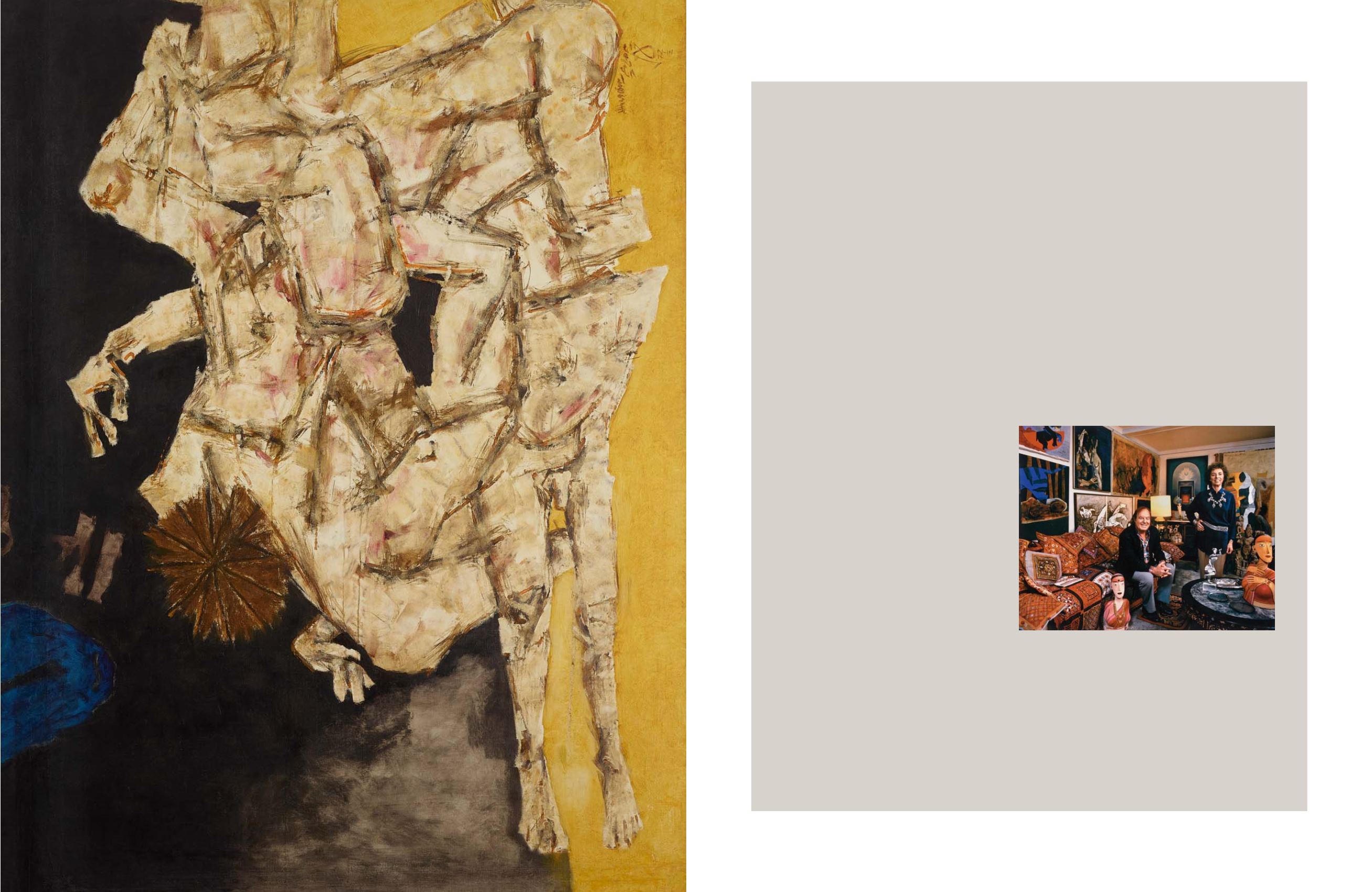
HUSAIN AND THE HERWITZES
The importance of the present lot is heightened due to its illustrious provenance: The Davida and
Chester Herwitz Collection. From Worcester, Massachusetts, the Herwitzes shared a passion for
travelling and collecting art and are credited with amassing one of the world’s largest collections of
modern Indian art, built over a period of 30 years. At the heart of their extensive collection were
works by Husain. “In the opinion of Chester Herwitz, ‘Husain stands like a colossus over the Indian art
movement’.” (Susan Bean, “Viewed from Across the Globe: The Art of M F Husain,” Sumathi Ramaswamy,
Barefoot Across the Nation: Maqbool Fida Husain & the Idea of India
, Noida: Yoda Press, 2011, p. 237)
The Herwitzes had developed a special relationship with M F Husain, whose art was one of their
very first purchases. “In the 1960s they were among many Americans who travelled to India and
were enthralled by the cultural richness and visual abundance they experienced. On one of their first
trips they visited the National Gallery of Modern Art in New Delhi where they were captivated
by Husain’s mural‒like painting
Zameen
… Already serious art enthusiasts and collectors, the
Herwitzes eagerly sought out the artist’s work and began to acquire paintings. They soon had the
opportunity to meet Husain and struck up a friendship that lasted their lifetimes.” (Bean, p. 236)
The Herwitzes’ first acquisition was a group
of
Mahabharata
paintings, which perhaps
included the present lot. Over the years,
Husain introduced them to many artists, and
the collection grew to include works by more
than 70 Indian artists. The Herwitzes did not
simply buy art: they engaged with it on a
cerebral level and were deeply involved with
artists, art critics and gallerists. Through their
active support of Indian artists, they were, in a
way, instrumental in placing Indian art on the
international scene. “Within a few years of their
first acquisition, the Herwitzes had become
part of the Indian art movement, in dialog with
artists who appreciated their serious interest,
buying at a time when few others did, and
advocating for exhibitions of Indian art in Europe and America, to which they lent liberally.” (Bean, p. 237)
Among the 4,000 paintings which were part of their collection, they loaned many to galleries and museums
for public viewing. Following their demise, the Peabody Essex Museum acquired nearly 1,600 paintings
by modern Indian artists from their collection. The Museum remains unrivalled in its collection of post‒
Independence art from the Indian subcontinent.
Davida and Chester Herwitz at home, 1995
Image courtesy of the Herwitz Archive, Peabody Essex Museum, Salem,
Massachusetts, USA
Photo by Shawn G Henry
22