THREE
PERFECT
DAYS
ASISTEPOUTONTO
thecourtyardbalconyatMansiónde la
Luz,theonlycloudsIseearea fewwhitewispsskirting the
peaksofFuegoandAcatenango.I feel avolcanic rumbling
and look for more smoke from Fuego, but it’s onlymy
stomach, so I cross the courtyard to the hotel restaurant,
where I eagerly order another
desayuno típico
, topping it
offwith a cupof strongGuatemalan coffee.
Afterbreakfast,ImeetNormaninthe lobby.He’sagreedto
drivemethehourandahalftoLagodeAtitlán,oneofCentral
America’sgreatestnaturalwonders.“The lake ismy favorite
place inGuatemala,”he tellsmeaswedrive througha rocky
mountainpass.Soon,aswitchbackingroaddropsus intothe
lakeside townofPanajachel.Past the shops,restaurants and
foodcartsofCalleSantander,we reach thePortaHotelDel
Lago. I dropmy bags inmy room and step out onto the
balcony.Threehuge volcanoes—Atitlán,Tolimán andSan
Pedro—risefromtheflatbluesurfaceofthe lake,itselfnearly
amileabove sea level.I’vegot togetouton thatwater.
I walk down to the docks,whereNorman has hired a
motorboat to ferry us around the lake.We skip across the
surface,curvearounda fisherman,whowaves atus fromhis
small
cayuco
—thesimplewoodencanoeusedby locals—and
traverseapatchof improvisedcrab trapsbeforepullingup to
thedocksof thevillageofSan Juan laLaguna.
Upasteep inclinefromthedocks,wefindGaleríadeArte
ChiyayCreaciónMaya,runbylocalhusband-and-wifeartists
AntonioCochéMendozaandAngelinaQuic.Westepinside
thegallery,itswallsfilledwithvividdepictionsofmarketplaces
painted fromabird’s-eyeperspective.QuicandCochéhave
taught the technique tomany studentsover theyears.
“Igotthe idea24yearsago,atCerrode laCruz,while look-
ingdown from above the town,”Quic says.“Thenwe took
photos from a rooftopof childrenwithbaskets at amarket,
and started tomake thesepaintings.”
Coché, a self-taught artistwhohas beenpainting since
age10, leadsme into aback room,wherehehangshis own
works,canvases burstingwith fruit,Rivera-esque calla lilies
andMayan villagers. “I paint the life of the peasants that
you see in thecoffeeplantationshere,”he tellsme.“The
streets,the lake.A littleof everything.”
After buying a coupleof paintings,Norman and
I continueup the street.At the topof thehill,we
reachAsociaciónIxoqAjkeemMujerTejedora,
a cooperative of local women who hand-
weavetextiles intraditionalMayanfashion.
Co-opmemberCatarinaMéndezdem-
onstrates how the cloth is spun,dyed
andwoven. It’s about to get chilly
againback in theStates,so Ipick
upamarvelousnew scarf.
Weheadback to theboatandzipover toanother lakeside
town,SantiagoAtitlán.WeslogupanotherhilltoRestaurante
el Pescador,wherewe sit on a second-floor deck andwatch
the localsbelow:women inMayangarb leadingchildrenby
thehand,youngmenstanding in thebedsofmovingpickup
trucks.Iorderafriedwhole
mojarra
fish,accompaniedbyrice,
vegetablesandamountainof chipsandguacamole.
After lunch,wewalk through the plaza, stopping at the
IglesiaParroquialSantiagoApóstol.Theplaqueshereoffera
soberingreminderofGuatemala’sturbulentpast.Thecivilwar
was particularlybrutal in this region,and thepastor,Father
StanleyRother,allowedmany families tosleep in thechurch
for safety.Adeath squadkilledhim forhiskindness,but the
grateful townspeopleburiedhisheart in thechurch.
The late-afternoonwind ispickingupand the lake isget-
tingchoppy,sowehead for theboat andback toPanajachel.
Afterdocking,we followa rowof lakesideeateriesandsettle
onthedeckatRestauranteLosCayucos,hangingoutoverthe
Fried
chancol
cheese sticks fromLosTresTiempos, inAntigua
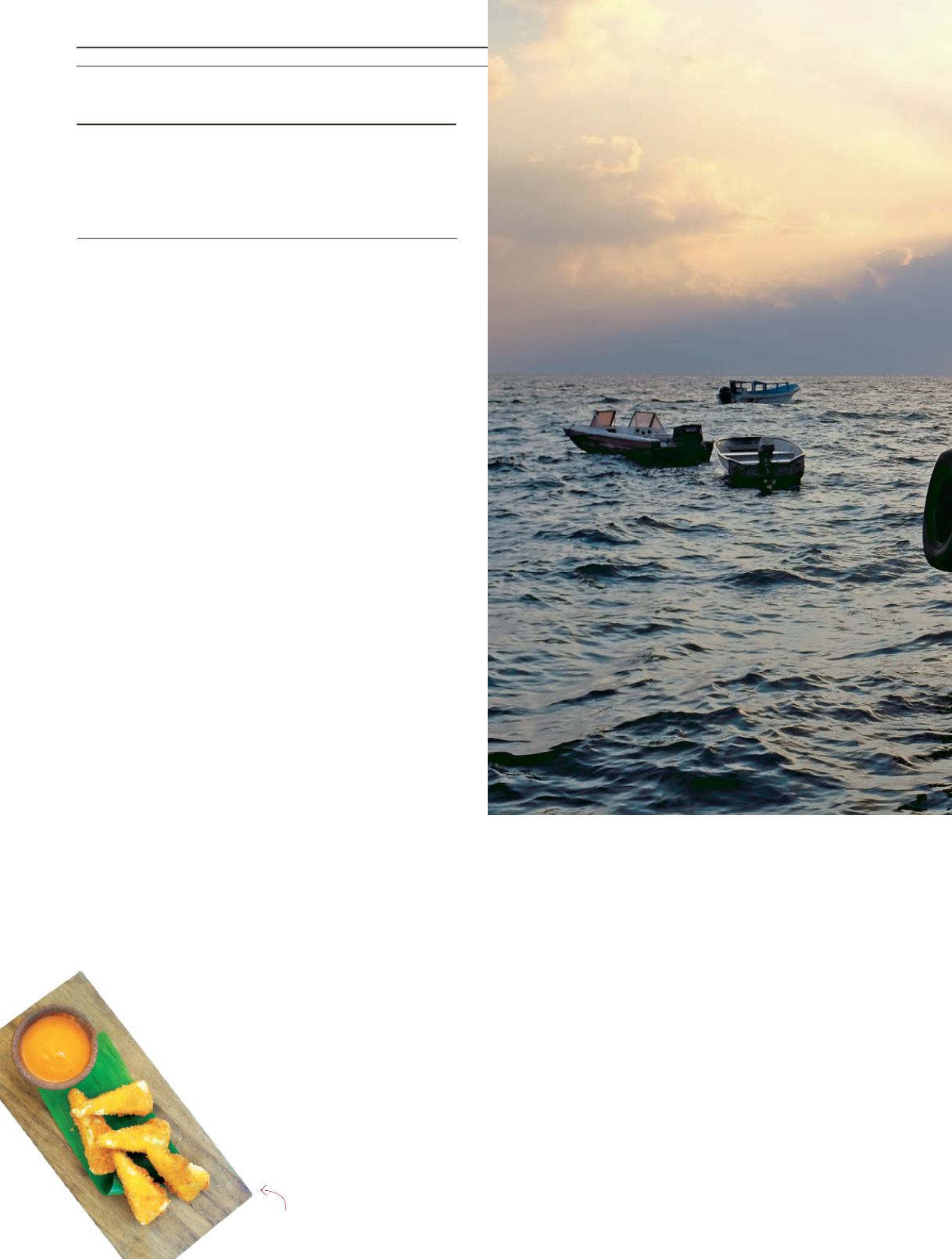
SunsetoverLagodeAtitlán, seen
from thePanajachelpublicdocks
DAYTHREE
InwhichJustin chatswithMayanartists,watches the
sun setoverapristine lakeandmeetshis spiritguide


