66
FAHTHAI
I
t was a Chinese emissary visiting the ancient Khmer
Kingdom in 1296 who first documented pepper
production in Cambodia. And it was the French who
traded on its strong, floral quality. By the turn of the
20th century they were shipping Cambodian – or more
specifically, Kampot – “black gold” to Europe by the tonne. In
the colonial power’s finest restaurants, Cambodia’s high-grade
spice was considered a must-have. France remained in the grip
of pepper fever after independence, and by the 1960s it was
exporting about 100,000 tonnes per year.
Then, almost overnight, Cambodian pepper vanished. In
1975, the communist Khmer Rouge swept across the country,
emptying cities and pressing virtually the entire population
into servitude on collectivised rice farms. Rice was traded for
weapons with China and nationwide, orders went out that
yields were to be maximised at all costs. This left little room for
luxuries like pepper, and Kampot’s spice fields were torn up and
cut into rice paddies. The ancient spice that had earned global
renown disappeared.
Kampot native Anna Him was born during the Khmer
Rouge era. In the years before the regime, her father and uncle
had worked as helicopter mechanics, which was considered
a bourgeois occupation. When the party came to power, her
entire family was pressed into forced labour on the rice farms.
Anna’s mother was worked almost to death; her father and
uncle didn’t survive the regime.
With the dissolution of the Khmer Rouge in the late 1990s,
Anna became a key figure in the regeneration of the Kampot
region – using pepper as her tool. “The Khmer Rouge totally
destroyed all Kampot pepper production,” Anna says. “The
land had been taken over by the jungle. But when we were
clearing the land [in 2002], we found some pepper plants
growing in the wild.”
Armed with little more than a handful of seeds from these
SPICE GIRL
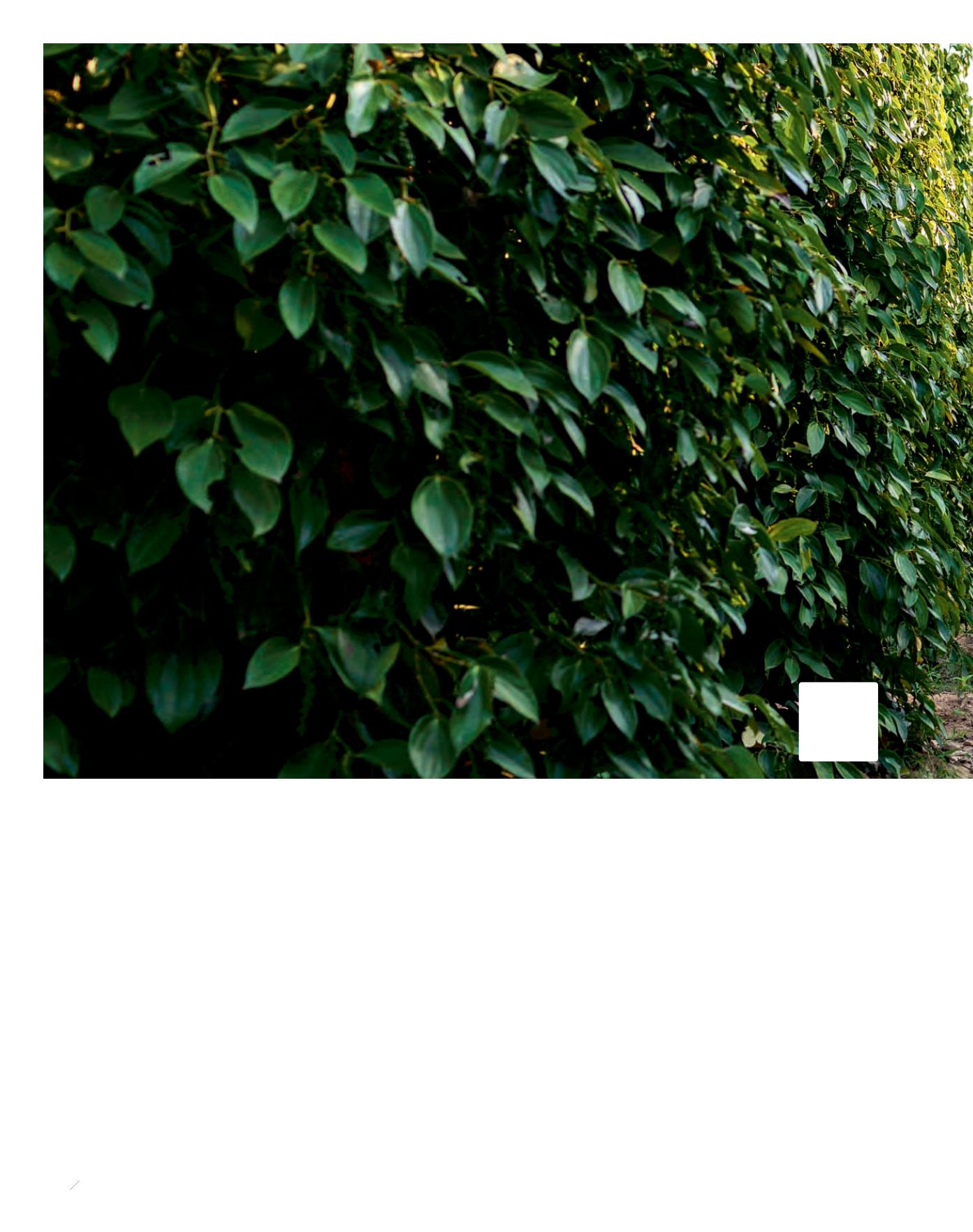
Starling Farm will
treble itsproduction
by 2020 to meet
intense demand
for the pepper


