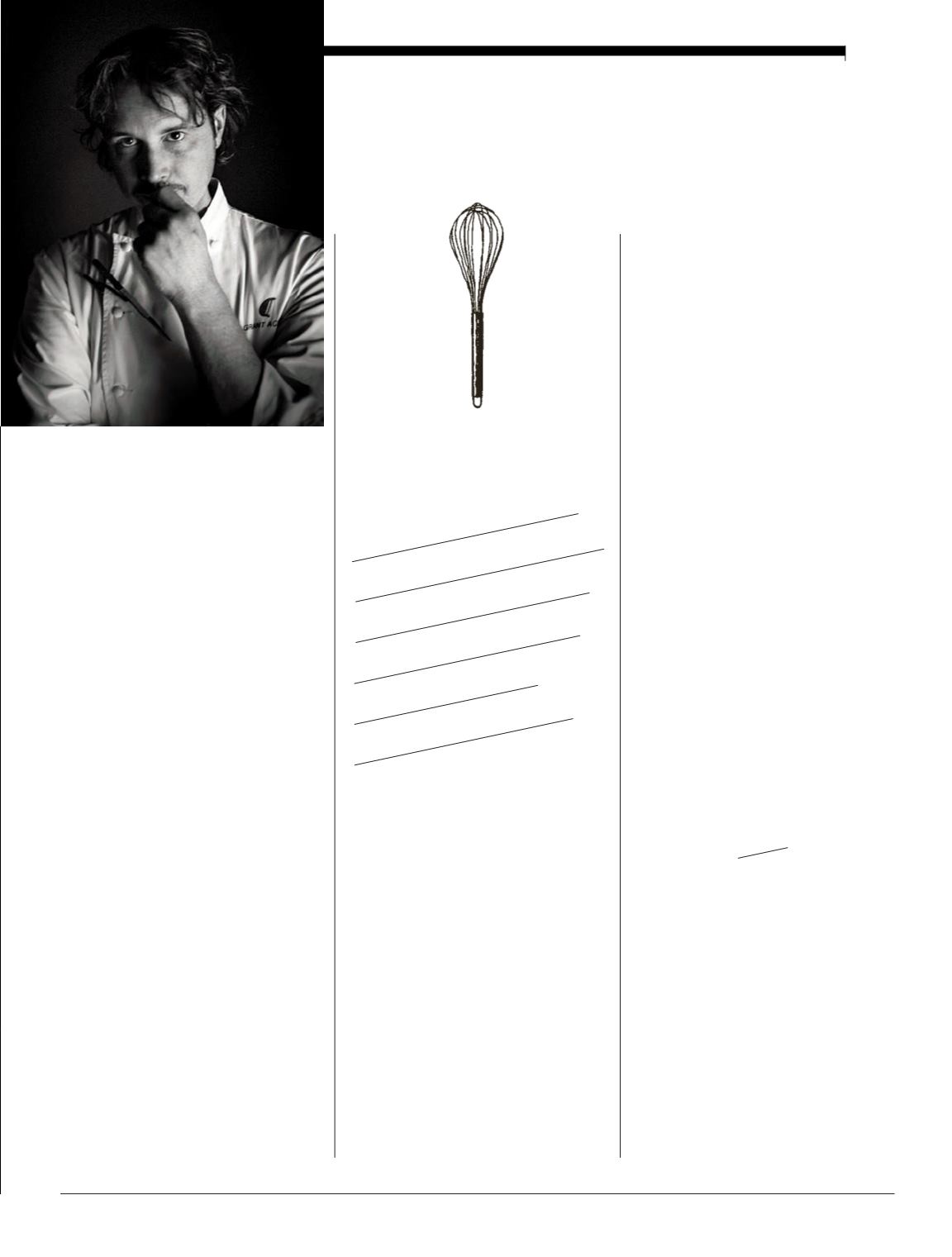
OPPOSITEPAGE: LARAKASTNER. THISPAGE: ERICWOLFINGER
marketsofEurope—albeitonesthatare
overrunbyAsianhawkerstandsandLatin
Americanmercadovendors.Heenvisions
Ibéricohamshanging inarowandaguy
behindacountercookingseafoodonplan-
chas, theflatmetalgrill found intapasbars.
“Iwant ittobecontinually interestingon
repeatvisits,”hesays.
Ashe’sspeaking,awaiterappearswith
anorderof lambburgerswhileanother
refillsourwaterglasses.Anoldergentle-
man,a lunchcustomer,approachesthe
table. “Ienjoyedyourshowtheotherday
withDaniel,”hesays,placingahandon
Bourdain’sshoulderand leaning in. “You
havetoconvincehimtomakethatdishhis
fathermadeontheshow.”
Theman isreferringtotheLyonepi-
sodeof
PartsUnknown
,whichwasset in
chefDanielBoulud’shometown inFrance.
Theepisodewasdivided intotwosegments,
thefirstofwhich focusedonanopulent
feast—thinkshavedblacktruesandan
enormoustrolley freightedwithpot-au-feu
—overseenbyPaulBocuse,arguablyoneof
theworld’sgreatest livingchefs.Theother
centeredonatriptotherustic farmhouse
whereBouludgrewupandwhere,dur-
ingoneparticularscene,Boulud’s father
createdahomeydishconsistingofan
entirepumpkinstuedwithbacon, cream,
day-oldbreadandcheese,andthenbaked
inahearth. It’sthisdeeplycountrified
recipethattheman, later identifiedasa
Bouludregular, reallywantedtotry,not
the fussierwhite-tableclothdishes.
Besidesallowinghimto fulfillhis
longtimedreamofmeetingthevener-
ableBocuse, theLyonepisodereminded
Bourdainoftheparadoxof food, something
heseesplayingout inAmericancuisine:
Evenas itscalesnewheightsof luxury, the
morevaluablecookingalways involves
somequotientofcomfort. “Theengineof
gastronomyhasalwaysbeennecessityor
need,”Bourdainsays. “Soeventhefine-
diningrestaurantsarebecomingmore
casual,becausethat’swhatpeoplewant.
“Itused tobe thatnorestaurantwould
even thinkofservinganysteakother than
sirloin,”Bourdainexplains,pointingout
thatakindofhomogeneitywascentral to
oldmenus.Butnow,hesays, “Insteadof
sirloin, it’sas faraway from thatasyou
canget.”
ImentionNewYorkrestaurants like
TheNoMadandRotisserieGeorgette,
whichhaveseeminglyreplacedtheirbig-
ticketsteakswithbonemarrowraviolior
deluxetakesonroastchicken—perhaps
themostwidelyacceptedcomfort food
there is—stuedwithwildmushrooms,
truesand foiegras.This isadeparture
fromthetried-and-true formulasofred
meatandCaesarsaladstossedtableside.
“We’vereachedareallyweirdpoint in
Americancuisine, at least in thecities,
where ifyouwant toeatchickenor tripe,
moreoften thannotyougo intoarela-
tivelyexpensiverestaurant,”Bourdain
says.TheNoMad’schicken for two, for
example, costs$82.
¡¢£¤¥¥¤¦§¨
abandontheoldrules—andget fantastic
results— isoneof thedriving factors
behindAmerican foodcoming into itsown.
Onetheoryholdsthatas foodtelevision
transitioned fromacoupleof instruc-
tionalshowsonPBStoaplethoraofcable
channelssaturatedwithcelebritychefs,
itbecameharder foranyone’scookingto
standout.Asaresult, chefsstartedtocraft
narrativesthrough food:DavidChangof
NewYork’sMomofukustreamlinedthe
kimcheehegrewupeating intoconsommé
servedwithcarefullybraisedheritage
pork;GrantAchatzbroughttheautum-
nalscentofraked leavesheremembered
“THEENGINEOFGASTRONOMY
HASALWAYSBEENNECESSITYOR
NEED. SOEVENTHEFINE DINING
RESTAURANTSAREBECOMING
MORECASUAL, BECAUSE
THAT’SWHATPEOPLEWANT.”
AA.COM CELEBRATEDLIVING
AUTUMN
57


