not consideredsafe forhomecooks toattempt.Dryaging results
inbeef that isboth tendererandmuch richer. Likewise,many top
steakhousesflash-searsteaksat incrediblyhigh temperatures, in
excessof 700degreesFahrenheit,which issimplybeyond the
homekitchen’sability.
Asdemandhas risen for theverybest cuts, consumersfind
itharder topurchasesuchqualitybeef at thesupermarketand
increasinglyhave tousespecializedpurveyors—oreatout. “You
cangetSelectandChoice inmost supermarkets, butPrimebeef is
hardly inmarketsatall becauseof the tremendouspricediffer-
ence— itgoesup35 to40percentatwholesalebetweeneach level,
andwithdry-agedbeef, it’smore like55percent,”explainsStan-
leyLobel, ownerofNewYork’s famedLobel’sbutchershop, abou-
tique retailerof someof thefinestmeatsavailable toconsumers.
“TheavailabilityofPrime is just 2percentof all beef produced in
theUnitedStates, andwithmore restaurants, it’sscarcerand
harder thanever forconsumers toget.”
Fortunately,greatsteaksareeasier thanever toget inrestau-
rants—andbetter.As thesheernumberofsteakhouseshasgrown,
so toohave theirvariety,quality,andhospitality. “Themostobvious
changehasbeen in the lookand feel,”notesAdamRapoport,editor
inchiefof
BonAppétit
magazine. “Steakhousesno longerhave tobe
bastionsofmasculinity. It turnsout that friendlywaitersandmod-
erndecorgogreatwithamedium-rareporterhouse.”
Restaurantshavealsomovedbeyondubiquitoussidedishes
suchascreamedspinachandhashbrowns.ChefMichaelMinagives
hiscreativeappetizersandsidesbillingequal to thatof thegrass-
fed,dry-agedbeefathisBourbonSteakandStripsteakeateries,
wowingcustomerswitheverything frombeet-and-potatognocchi to
charredoctopus.Likewise,WolfgangPuck’sCUTsteakhouses fea-
tureavastarrayofrare,dry-agedsteaks,butareequally loved for
theirgourmetcavatappi takeonmacaroniandcheeseandhighly
originalstarters likeapplesaladwithdates,almonds,andcheese.
“I thinkhigh-endsteakhousesoffermoreexcitementnow; you
SteakSpeak:
Deciphering amodern-day steak-housemenu
GRASS FED
: Beef from cows that graze entirely or
mostly on grass instead of grain, a once-standard
but now rare (though common in Argentina) prac-
tice. Steaks are leaner andoften slightly gamier.
CORN FED
: Most U.S. cattle have a diet of corn,
whichmakes themgrowbigger faster andproduces
fattiermeat—whichmany consider tastier.
CORN FINISHED
: Some farmers graze cows ongrass
until older, then introduce corn— a hybrid of the
twomaindietary styles.
NATURAL
: Beef that is raisedwithout hormones or
antibiotics; it has no artificial ingredients and is
minimally processed.
KOBEBEEF
: A legendarily tastybeef produced from
the Tajima-gyu breed of cattle in Japan’s Hyogo
prefecture. Delicious in Japan, but USDA regula-
tions forbid the import of any Japanese beef.
Instead, Kobe beef onU.S. menus indicates steaks
produced in a similarmanner.
WAGYU BEEF
: Literally “Japanese cattle,” Wagyu
typically refers to historically Japanese breeds.
While the USDA bars import of Japanese beef,
there are reputableU.S. breeders who have raised
pure lineages of these breeds. It’s worth seeking
out reputable restaurants indicating specific
breeds and the farms supplying them.
PRIME
: This designation from theUSDA is typically
given to about the top 2percent of domestic beef,
basedon age and fat content.
DRY AGED
: When meat is stored (usually 21 to 50
days) with proper temperature and air-circulation
control, its connective tissues break down and
water evaporates, making the meat tender, rich,
and more concentrated in flavor. Most agree that
dry aging improves flavor, often radically.
FALL 2012
celebratedliving.com
46
FOOD
All Sizzle, Plenty of Steak
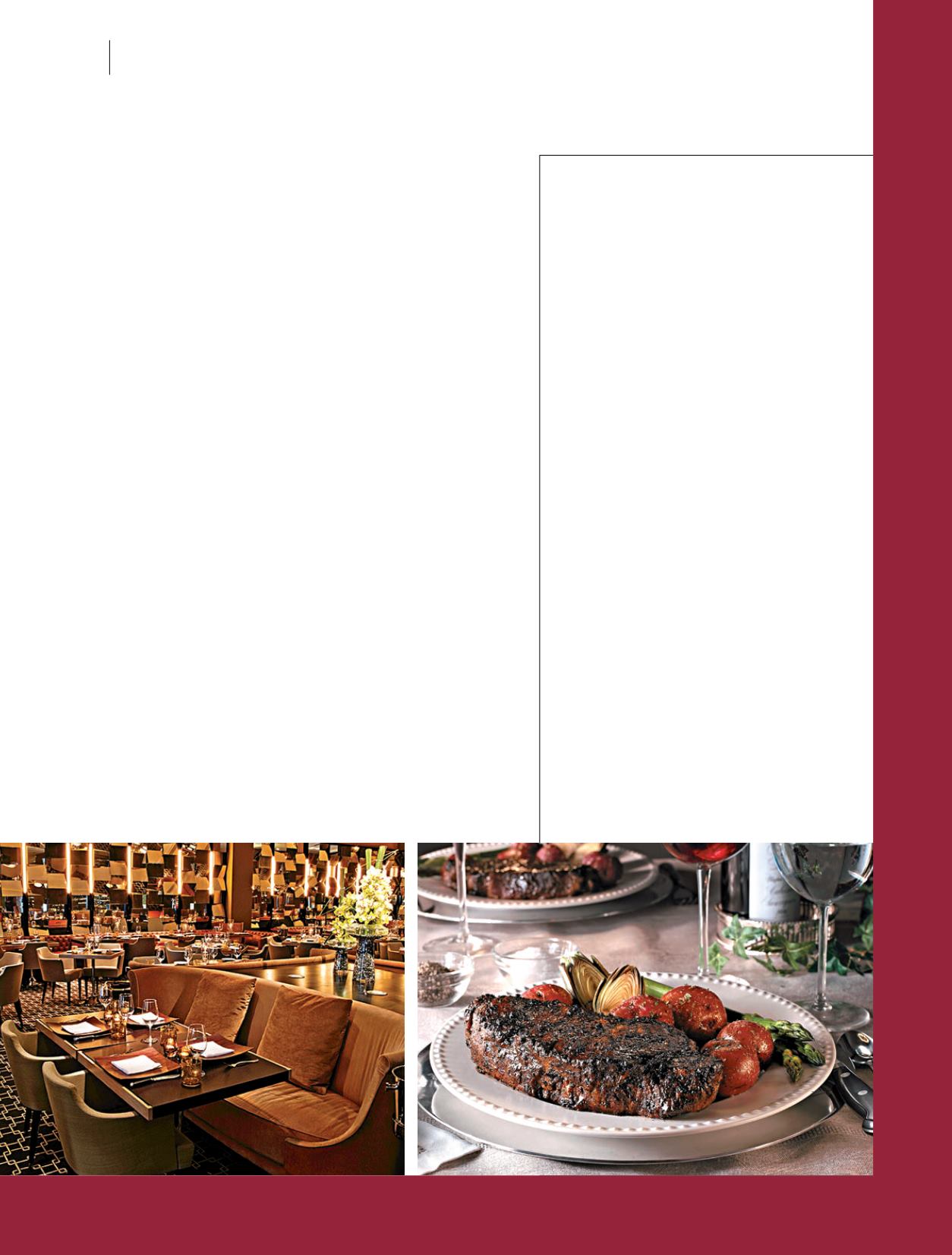
Lobel’s strip steak
Bourbon Steak, Miami
FAR LEFT:
©MINAGROUP


