natural wood expectations
Wood products, including cabinet doors and face frames, are typically affected by environmental conditions. Color
variation over time, as well as normal movement due to wood’s expansion and contraction, is part of the natural
characteristics of wood. This normal movement may cause hairline separations in the finish surface at the joints and is
considered a normal characteristic of semi-opaque or painted finishes. This does not affect the strength of a cabinet and
will not be considered a reason for product replacement.
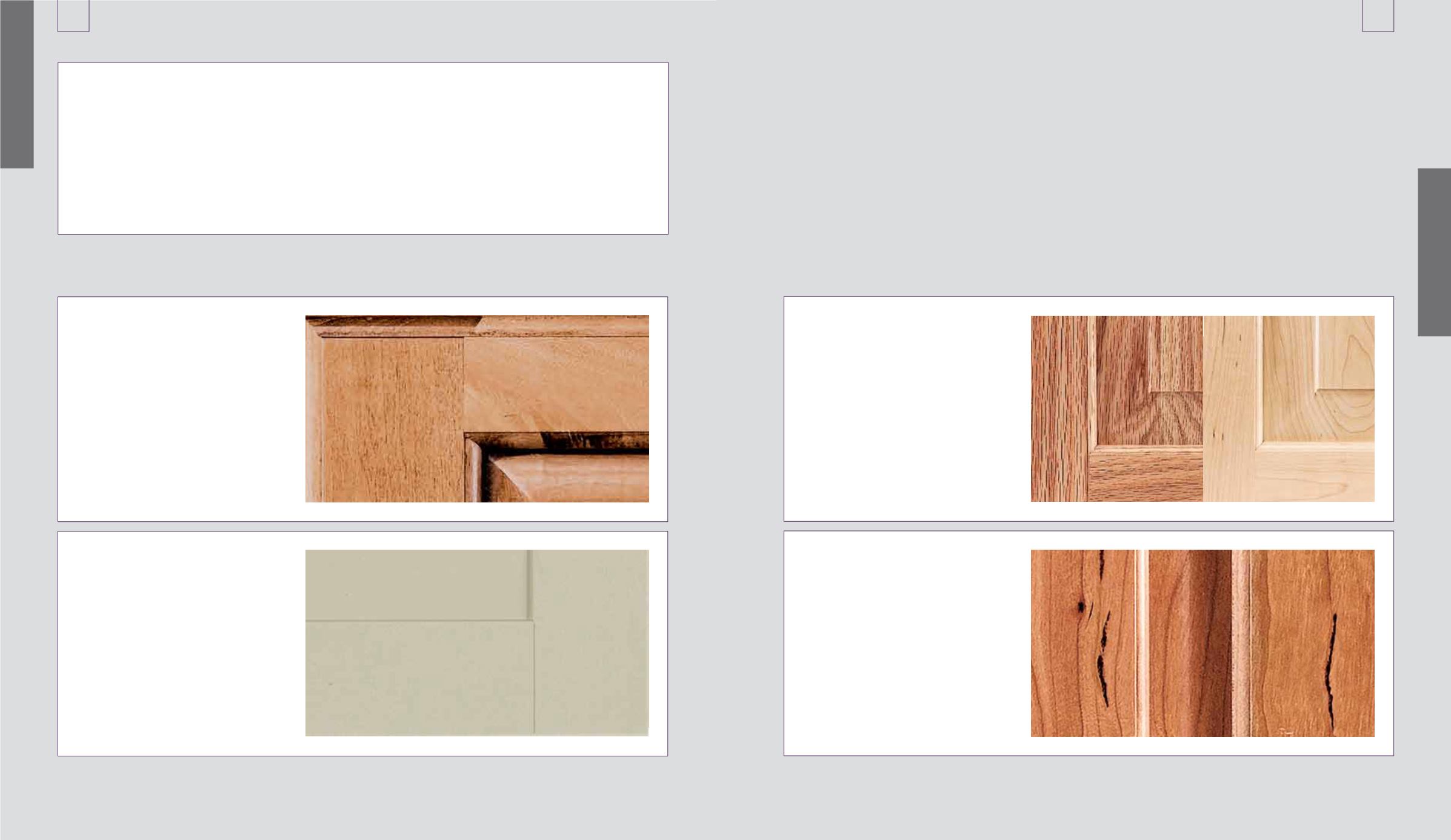
End Grain
End grain surfaces and softer areas of the wood may
accept more stain and often appear darker than other
surfaces. This is a natural reaction when finishing wood
products and potential variances cannot be controlled.
Joint Lines
Since wood is in a constant state of expansion and
contraction, visible lines are normal at the joints on the
cabinet face frames and doors. This does not weaken
the finish or the strength of the joint.
Telegraphing
All wood species show some wood grain. The amount
of grain will vary by species and finish. Oak is an open
or coarse grain wood. The grain will “telegraph” or
visibly show through the stain. Birch and maple are
closed or fine grain woods. Some “telegraphing” will
occur, though the effect will be subtle.
oak
maple
Mineral Streaks
In nature, mineral deposits may form in the wood as
the tree extracts nutrients from the soil. Common
in many wood types, these mineral deposits cause
blackish-blue streaks in the grain. When a finish is
applied to mineral streaks, it may appear lighter or
darker than other areas of your cabinetry.
91
90
natural wood expectations
natural wood expectations


