


Page 219 - TransportationPlanUsetsGuide
P. 219
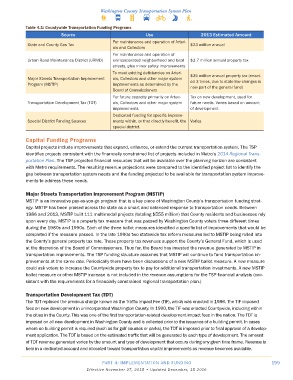
Table 4�1: Countywide Transportation Funding Programs
                           Source                             Use                    2013 Estimated Amount
                                                For maintenance and operation of Arteri-
             State and County Gas Tax                                            $23 million annual
                                                als and Collectors
                                                For maintenance and operation of
             Urban Road Maintenance District (URMD)  unincorporated neighborhood and local   $3.7 million annual property tax
                                                streets, plus minor safety improvements
                                                To meet existing deficiencies on Arteri-
             Major Streets Transportation Improvement   als, Collectors and other major system   $35 million annual property tax (enact-
                                                                                 ed 3 times, due to state law changes is
             Program (MSTIP)                    improvements as determined by the   now part of the general fund)
                                                Board of Commissioners
                                                For future capacity primarily on Arteri-  Tax on new development, used for
             Transportation Development Tax (TDT)  als, Collectors and other major system   future needs. Varies based on amount
                                                improvements                     of development
                                                Dedicated funding for specific improve-
             Special District Funding Sources   ments within, or that directly benefit, the  Varies
                                                special district.


            Capital Funding Programs
            Capital projects include improvements that expand, enhance, or extend the current transportation system. The TSP
            identifies projects consistent with the financially constrained list of projects included in Metro’s 2014 Regional Trans-
            portation Plan. The TSP projected financial resources that will be available over the planning horizon are consistent
            with Metro requirements. The resulting revenue projections were compared to the identified project list to identify the
            gap between transportation system needs and the funding projected to be available for transportation system improve-
            ments to address these needs.


            Major Streets Transportation Improvement Program (MSTIP)
            MSTIP is an innovative pay-as-you-go program that is a key piece of Washington County’s transportation funding strat-
            egy. MSTIP has been praised across the state as a smart and balanced response to transportation needs. Between
            1986 and 2013, MSTIP built 111 multimodal projects (totaling $555 million) that County residents and businesses rely
            upon every day. MSTIP is a property tax measure that was passed by Washington County voters three different times
            during the 1980s and 1990s. Each of the three ballot measures identified a specific list of improvements that would be
            completed if the measure passed. In the late 1990s two statewide tax reform measures led to MSTIP being rolled into
            the County’s general property tax rate. Those property tax revenues support the County’s General Fund, which is used
            at the discretion of the Board of Commissioners. Thus far, the Board has invested the revenue generated by MSTIP in
            transportation improvements. The TSP funding structure assumes that MSTIP will continue to fund transportation im-
            provements at the same rate. Periodically there have been discussions of a new MSTIP ballot measure. A new measure
            could ask voters to increase the Countywide property tax to pay for additional transportation investments. A new MSTIP
            ballot measure or other MSTIP increase is not included in the revenue assumptions for the TSP financial analysis (con-
            sistent with the requirements for a financially constrained regional transportation plan.)


            Transportation Development Tax (TDT)
            The TDT replaced the previous charge known as the Traffic Impact Fee (TIF), which was enacted in 1986. The TIF imposed
            fees on new development in unincorporated Washington County. In 1990, the TIF was enacted Countywide, including within
            the cities in the County. This was one of the first transportation-related development impact fees in the nation. The TDT is
            imposed on all new development in Washington County and is collected prior to the issuance of a building permit. In cases
            where no building permit is required (such as for golf courses or parks), the TDT is imposed prior to final approval of a develop-
            ment application. The TDT is based on the estimated traffic that will be generated by each type of development. The amount
            of TDT revenue generated varies by the amount and type of development that occurs during any given time frame. Revenue is
            held in a dedicated account and allocated toward transportation capital improvements as revenue becomes available.


                                            PART 4: IMPLEMENTATION AND FUNDING                                    199
                                     Effective November 27, 2015 • Updated December, 15 2016

