


Page 158 - TransportationPlanUsetsGuide
P. 158
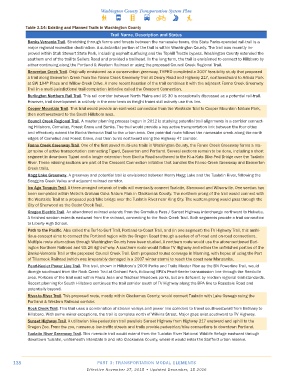
Table 3�14: Existing and Planned Trails in Washington County
                                               Trail Name, Description and Status
             Banks-Vernonia Trail. Stretching through farms and forests between the namesake towns, this State Parks-operated rail-trail is a
             major regional recreation destination. A substantial portion of the trail is within Washington County. The trail was recently im-
             proved within Stub Stewart State Park, including asphalt surfacing and the Tophill Trestle bypass. Washington County extended the
             southern end of the trail to Sellers Road and provided a trailhead. In the long term, the trail is envisioned to connect to Hillsboro by
             either continuing along the Portland & Western Railroad or using the proposed Council Creek Regional Trail.
             Beaverton Creek Trail. Originally envisioned as a conservation greenway, THPRD completed a 2007 feasibility study that proposed
             a trail along Beaverton Creek from the Fanno Creek Greenway Trail at Denny Road and Highway 217, northwestward to Arleda Park
                     th
             at SW 194  Place and Willow Creek Drive. A more recent iteration of the trail combines it with the adjacent Fanno Creek Greenway
             Trail in a multi-jurisdictional trail completion initiative called the Crescent Connection.
             Burlington Northern Rail Trail. This rail corridor between North Plains and US 30 is occasionally discussed as a potential rail-trail.
             However, trail development is unlikely in the near term as freight trains still actively use this line.
             Cooper Mountain Trail. This trail would provide an east-west connection from the Westside Trail to Cooper Mountain Nature Park,
             then northwestward to the South Hillsboro area.
             Council Creek Regional Trail. A master planning process begun in 2012 is studying potential trail alignments in a corridor connect-
             ing Hillsboro, Cornelius, Forest Grove and Banks. The trail would provide a key active transportation link between the four cities
             and effectively extend the Banks-Vernonia Trail to the urban area. One potential route follows the namesake creek along the north
             edges of Cornelius and Forest Grove, and then turns northward along the Highway 47 corridor.
             Fanno Creek Greenway Trail. One of the first paved multi-use trails in Washington County, the Fanno Creek Greenway forms a ma-
             jor spine of active transportation connecting Tigard, Beaverton and Portland. Several sections remain to be done, including a short
             segment in downtown Tigard and a longer extension from Bonita Road southward to the Ki-a-Kuts Bike-Ped Bridge over the Tualatin
             River. These missing sections are part of the Crescent Connection initiative that bundles the Fanno Creek Greenway and Beaverton
             Creek trails.
             Hagg Lake Greenway. A greenway and potential trail is envisioned between Henry Hagg Lake and the Tualatin River, following the
             Scoggins Creek Valley and adjacent railroad corridor.
             Ice Age Tonquin Trail. A three-pronged network of trails will eventually connect Tualatin, Sherwood and Wilsonville. One section has
             been completed within Metro’s Graham Oaks Nature Park in Clackamas County. The northern prong of the trail would connect with
             the Westside Trail at a proposed ped/bike bridge over the Tualatin River near King City. The western prong would pass through the
             City of Sherwood as the Cedar Creek Trail.
             Oregon Electric Trail. An abandoned railroad extends from the Cornelius Pass / Sunset Highway interchange northward to Helvetia.
             A finished section extends eastward from the railroad, connecting to the Rock Creek Trail. Both segments provide a trail connection
             to Liberty High School.
             Path to the Pacific. Also called the Turf-to-Surf Trail, Portland-to-Coast Trail, and (in one segment) the TV Highway Trail, this ambi-
             tious concept aims to connect the Portland region with the Oregon Coast through a series of off-road and on-road connections.
             Multiple route alternatives through Washington County have been studied. A northern route would use the aforementioned Burl-
             ington Northern Railroad and US 26 right-of-way. A southern route would follow TV Highway and either the unfinished portion of the
             Banks-Vernonia Trail or the proposed Council Creek Trail. Both proposed routes converge in Manning, with hopes of using the Port
             of Tillamook Railroad (which was irreparably damaged in a 2007 winter storm) to reach the coast near Manzanita.
             Pearl-Keeler Power Line Trail. This trail, shown in Hillsboro’s 2009 Parks and Trails Master Plan as the BN Powerline Trail, would
             diverge southward from the Rock Creek Trail at Orchard Park, following BPA’s Pearl-Keeler transmission line through the Reedville
             area. Portions of the trail exist within Paula Jean and Trachsel Meadows parks, but are deficient by modern regional trail standards.
             Recent planning for South Hillsboro continues the trail corridor south of TV Highway along the BPA line to Rosedale Road and
             potentially beyond.
             River-to-River Trail. This proposed route, mostly within Clackamas County, would connect Tualatin with Lake Oswego using the
             Portland & Western Railroad corridor.
             Rock Creek Trail. This trail uses a combination of stream valleys and power line corridors to travel southwestward from Bethany to
             Hillsboro. With some minor exceptions, the trail is complete north of Wilkins Street. Major gaps exist southward to TV Highway.
             Sunset Highway Trail. A utilitarian bike-pedestrian trail parallels Sunset Highway from Highway 217 eastward and uphill to the
             Oregon Zoo. From the zoo, numerous low-traffic streets and trails provide pedestrian/bike connections to downtown Portland.
             Tualatin River Greenway Trail. This riverside trail would extend from the Tualatin River National Wildlife Refuge eastward through
             downtown Tualatin, underneath Interstate 5 and into Clackamas County, where it would enter the Stafford urban reserve.


      138                                 PART 3: TRANSPORTATION MODAL ELEMENTS
                                     Effective November 27, 2015 • Updated December, 15 2016

