



 60-61 / 112

15
PENG WEI
(b. 1974)
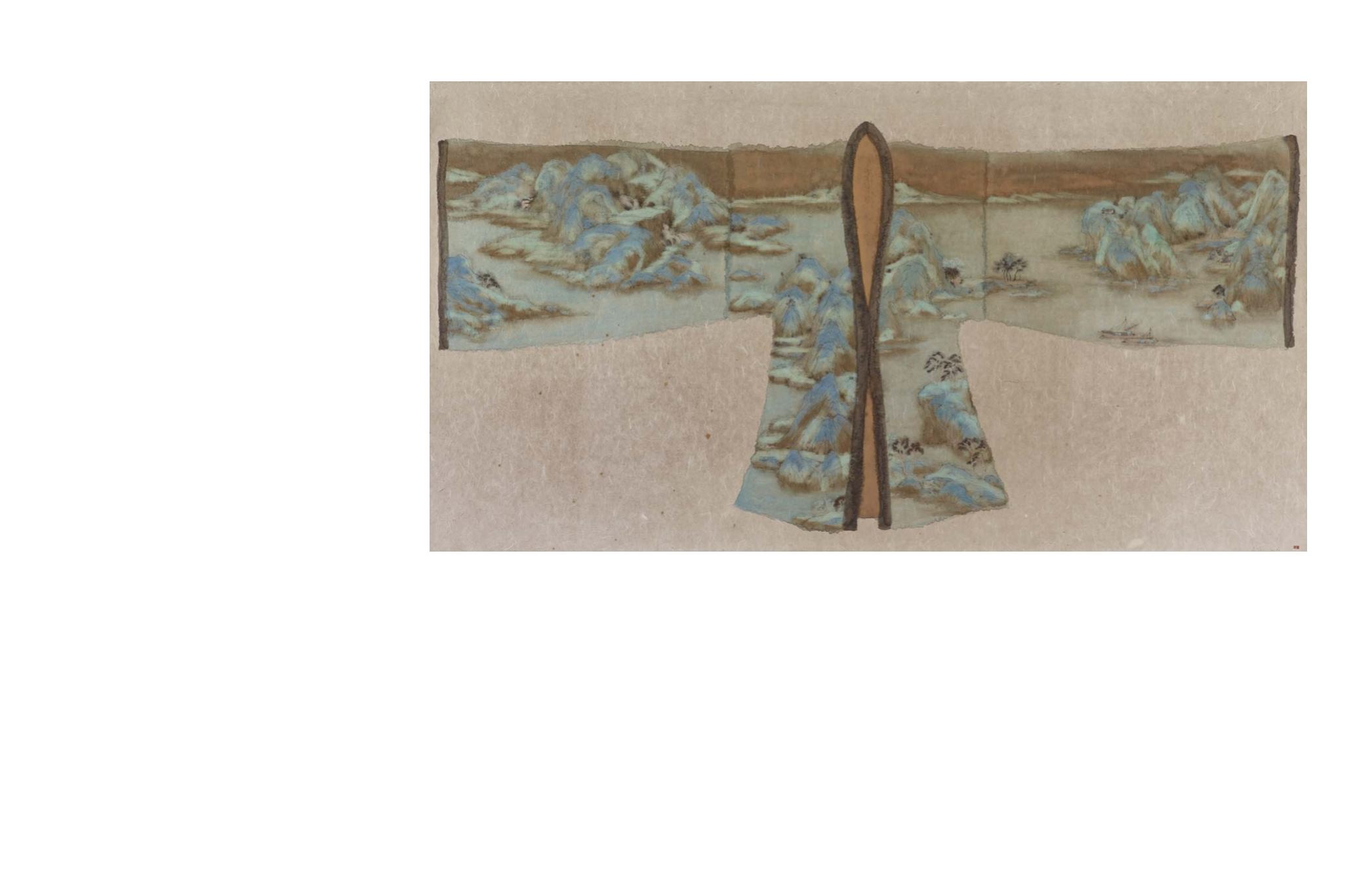
Kingdom of Mountains and Rivers
Signed and dated ‘Wei, 2007’ with artist stamp (lower right)
2007
Ink on rice paper pasted on board
33 x 62.5 in (84 x 158.5 cm)
Rs 7,00,000 ‒ 9,00,000
$ 10,000 ‒ 12,860
EXHIBITED
Peng Wei
, Beijing: Gallery ARTSIDE, 26 April ‒ 19 May 2009
Born in Chengdu, China in 1974, Peng Wei is a versatile contemporary
artist known for her graceful ink paintings that apply the imagery of
traditional Chinese literati art styles onto diverse mediums including
rice paper mannequins, silken shoes and Chinese fans. The daughter of
well‒known classical Chinese artist Peng Xiancheng, she began to paint
at a very young age. A hiatus followed, but she returned to art in college,
finding that it was “still the only thing I was really good at.” (Artist quoted
in Li Hongrui, “Painter Peng Wei: Art is my Lifetime Friend,”
China Daily
,
2016, online) Peng Wei studied painting at Nankai University in Tianjin,
followed by a master’s degree in Philosophy and Aesthetics. She also
worked as a reporter and editor for
Art
, a journal published by the China
Artists’ Association. The artist is currently based in Beijing, and her work
has been exhibited in China, Hong Kong, Japan, Switzerland and New
York, and is part of several international collections.
The present lot belongs to a series of Chinese robes that the artist
painted on rice paper using the ink and wash technique. In the elegant,
classical style, the robe portrays cloudy, pastel blue mountains and gentle
waters; the hemlines of the neck and sleeves are painted to appear like
brocade trimmings. “Rather than saying Peng Wei is painting clothing, it
would perhaps be more apt to say she's “painting skin”... Clothing forms a
metaphorical manifestation of her experiences, memories, and interests.
Onto the life‒likeness of the clothing, she applies a dimly discernible
illusoriness. There is no doubt that everything is “past,” yet it nevertheless
shares the property of natural things that have a hypothetical history...
Besides being implicated in body politics or serving as symbols and
declarations of identity, [clothes] are also capable of achieving a kind
of state of mind. They add value to emotion, and in a clamorous and
chaotic world, they can be enriched with a dispassionate self‒expression.”
(Feng Boyi, “Splendor in Ink and Wash,”
pengweiart.cn, online)
Artist Xu Lei also finds something universal in these depictions of
embroidered gowns, likening them to ghosts, with extravagantly woven
exteriors that conceal hollowness and nostalgia. “These reminiscences are
unclaimed and disordered, coinciding with Chinese poetry’s emotional
recollections of a “past world” that is now lost, so they do not meet in
isolation; they are a general worry about history… The shells of life, such
as cicada shells and dried flowers, are often more complete and lasting,
and deeper, than life itself. This is also true of Peng Wei’s embroidered
gowns; their beautiful floral decoration condenses lost emotion into
form, amazing us with the exquisiteness within the fragility.” (Quoted in
“Cicada Shells and Dried Flowers,”
pengweiart.cn, online)
60
61