81
sausage, caramelized fennel, avocado, and egg
white; blackChilean seabasswith truffled yuca
puree and a port wine and foie gras sauce; and,
for a finale, a slab of guava goat cheesecake. “I
hope you’re going to take a longnap after this,”
Pagán says with a grin.
But no rest for thegastronomicallyweary.I’m
meeting themuseum’sVenezuelan-born curator,
Juan Carlos López Quintero, for a tour.The
museum isorganizedaccording to themes rather
than chronology—“You have 18th-century
paintings next to photographs next to video
installations”—whichmakes for a lively expe-
rience. It seems fitting that the first gallery we
enter,after such a gluttonous lunch, is “Plátano
Pride”—a collectionof artworks celebrating the
island’s staple starch, including a portrait of a
boywearing a life-size goldplantainon a chain
around his neck.
“The plantain has been an icon of Puerto
Ricanart since JoséCampeche,”LópezQuintero
says, leadingme to the master’s 1797 portrait
of the governor’s two young daughters. “For
the first time, youhave elements that belong to
this country—themaracas, the pineapple.” I’m
particularly takenwithamassive triptychnearby
called
The Garden of Intolerance
by Arnaldo
RocheRabell,a local neo-Expressionist painter
whose swirlsof thicklyappliedpaint call tomind
a tropical vanGogh.It also seems aperfect rep-
resentation of the island’s noise and humidity
and color—the “muchness”of PuertoRico.
I find my appetite inexplicably whetted,
so Idrivea fewminutes to JoseEnrique,anunas-
suming eatery set in a bungalow on the lively squareLa
Placita.Enrique trainedat theCulinaryInstituteofAmer-
ica, andwas the first PuertoRican chef nominated for a
JamesBeardAward.He personifies a newwave of chefs
here,buthisheartyrustic fare—riceandredbeans,tripletail
fish fritters, deep-fried skirt steak topped with fried
eggs,coconut pudding—would satisfy themost ardently
traditionalist
abuelita
.
Before bed, I stop for a drink at La Factoría, whose
pockedwalls and dim lighting call tomind the kind of
place where (heavily tattooed) revolutionaries might
have gathered to talk shop.The feeling of intrigue is
heightened by the nesting-doll layout, with different
bars extendingbeyond a successionof unmarkeddoors.
I sit beside a wall inscribed with “
Hijos de Borinquen
”
(Borinquen being the island’s pre-ColumbianTaíno
name) and sip aDeLoMejor, a cocktail of housemade
horchata, tequila, Cointreau, lime, and a smoky local
rum,Ron del Barrilito.
This hip speakeasy vibe is spreading. Just next
door is La Cubanita, a new bodega-inspired cocktail
bar (its shelves ironically stockedwith saint candles and
bottles of Clorox) where you can order spirits mixed
with fresh juices. My Guayabera (Barrilito, guava,
lime, and sugar) is a great drink but a terrible
nightcap, in that it makes me want to go dance the
merengue rather than settle down.But it’s been a long
day.Maybe tomorrow.
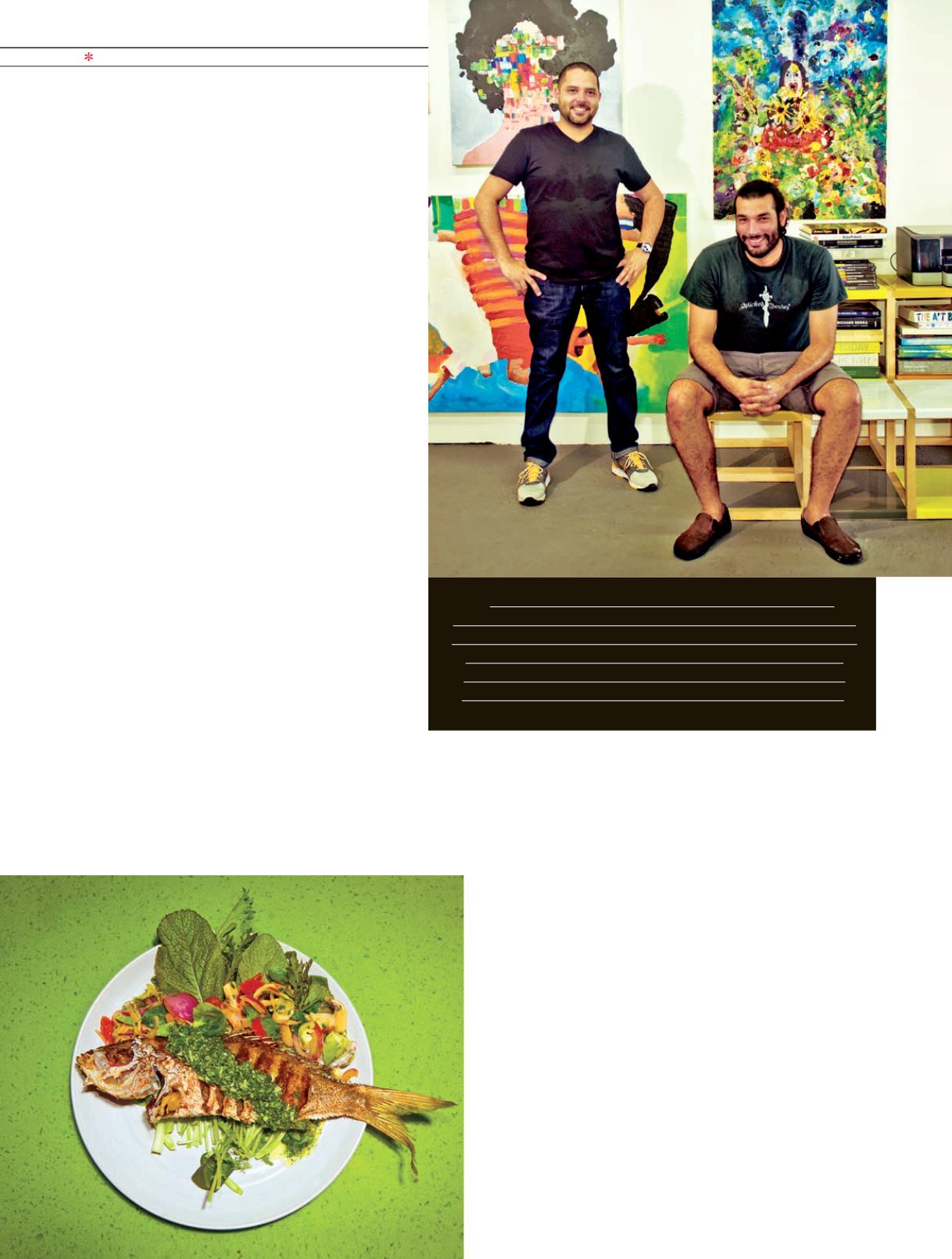
“SANTURCEWASATONEMOMENTACULTURAL
DISTRICT,BUT ITCAMEDOWN.WE’RETRYINGTOMAKE
ITCOMEBACKUP—NOTWITHGOVERNMENTHELP,BUT
WITHOURMONEY.WEHAVEALOTOFABANDONED
SPACES,ANDWE’REMAKINGAPUSHFORARTISTSTO
COMEHEREANDRENTSPACES.WE’RETAKINGRISKS.”
MARTÍNALBARRÁNLOPÉZ
Artist andownerofLaProductora
(with fellowartist JothamMalavé, right)
28,000ACRES IN EL YUNQUENATIONAL FOREST


