BOARDINGPASS
Unitedmakes it easy tovisit
San Juanwithup to79weeklynonstopflights,
includingdaily service fromChicago, Houston, and
NewYork/Newark, andweekend service from
Cleveland andWashington-Dulles. Bookyourflight at united.com.
Hemispheres
senior editor
Nicholas DeRenzo
never
considered himself a rum guy until the whiskeylike Ron
delBarrillito came salsa-ing intohis life.
At the forest headquarters, I meet archaeologist
RaymondFeliciano,whohasoffered todrivemearound the
park inhisSUV.The selfie-stickcrowd tends tokeep to the
main route,butFelicianowants to showme another sideof
the forest: the top.Becausemy ideaofmountainclimbing is
gettingup thesubwaysteps inonepiece,wemake theascent
bycar rather than foot.
Aswenavigateaseriesoftreacherousswitchbacks,Imen-
tionhow untouched the forest feels. “Iwanted to get in a
coupleofdinosaurs,”Feliciano saysdryly,“whichwasn’twell
received.Butyoudoget thewhole JurassicParkexperience.”
In fact, this land-that-time-apparently-forgot is mostly
second-growth forest,plantedbytheNewDeal–eraCivilian
ConservationCorps following the ravages of erosion and
misuse.Felicianodescribes it as“creatednature.”
Our destination is the1930sMountBrittonobservation
tower,which looks like a giant rook from a chess set.We
climb the spiral staircase and emergeonto a castellated roof
overlooking a staggeringly epic expanse.From this height,
you can seeSan Juan,aswell as the islands ofVieques and
Culebra.“Onaclearday,youcanseeall thewaytotheVirgin
Islands,”Feliciano says.
Closer at hand is El Yunque Peak, the second-tallest
mountain in the forest.“When theSpanishcame toextract
gold, themountainwas coveredby a cloud,”Feliciano tells
me.“TheTaínonatives called it
yu-ke
, the restingplace of
their god of creation.The Spanish heard
yunque
,which
means ‘anvil.’Sonowpeoplecomeexpectingtoseeananvil.”
Anvil orno,it’seasy tobe sweptup in thegrandeurof it all.
For lunch, I head to the nearby Luquillo Beach
kioskos
. These ramshackle eateries are a staple along
PuertoRicanbeaches, each serving its take on classics like
alcapurriasdejueyes
(crabfritters)and
bacalaítos
(friedsaltcod
pancakes).Istopatkiosk20,Terruño,takeaseatoverlooking
thepalm-linedbeach,andorderaMedallaLight(a local light
beer that’s less than$2apop),acrispy rabbit turnover,anda
snow-whitedishofgroupercooked inriceandcoconutmilk.
Fromhere, it’s a 20-minute drive to the decidedlymore
elegant confines of the St.RegisBahiaBeach.Occupying
400-plus acres on a former coconut plantationboundedby
two rivers, the resort is centeredon thePlantationHouse,
whereIcheckin.Iwanderpastaminimalistkoipondandinto
what feels likeagrandprivateestate,whereI’m immediately
greetedwitha rumpunch.
Luxury, though, is only part of the story here.The St.
RegisBahiaBeach is the first property in theCaribbean to
benamedaGold-CertifiedSignatureSanctuarybyAudubon
International.“We function like a tiny national park,”says
resident ecologistAshleyPerez,who’swaiting forme at the
hotel’sboathouse,ready tocoaxme intoa two-personkayak.
Withinminutes of paddling away from the dock,we’re
surrounded by a diverse array of wildlife, includ-
ing a greenheron,which responds toour presence
withdramatic squawking.“He’s cursing at us,”she
sayswith a laugh.“‘You ruinedmy lunch!’They’re
very clever.They use tools—they throw sticks in
the water as bait.”We see egrets and chickenlike
gallinules walking among mangrove
roots on comically oversize feet. “I
love the little sandpipers,”Perez says,
“because they always look like they’re
dancing.”
Then there’s the feisty
chango
—thesame
bird that so inspiredSanturce artist Jaime
Rodriguez Crespo. These birds, Perez
tells me, have a habit of whining
and begging their parents for food
evenafter they’reoldenough to feed
themselves. “When Puerto Rican
kids get really annoying,” she says
with a laugh,“their parents always say, ‘
Ay chango!
’”
Wedock thekayakandsetout inagolfcart toexplore the
nonwatery part of the preserve,passing trees swollenwith
cementlike termitenests.Soon,amongoose skitters across
our path.“They’re rare to see!”Perez exclaims.“Mongoose
were brought to the island tokill rats.Andnow…Puerto
Rico justhas ratsandmongooses.”
The sunhas started to set, so I freshen up inmy suite’s
room-size rainforest shower, then head to dinner at the
PlantationHouse.To get there, I navigate the boardwalks
that crisscross the resort (better to leave the slitheringblue
ground lizards and lumbering iguanas belowundisturbed),
serenadedbyachorusof
coqui
frogscroakingthetwo-syllable
refrainthatgivesthemtheironomatopoeicname.It’sasound
thatnearlyeveryPuertoRican I’vemethas said they’dmiss
if theyever left the island.
Spilling out onto a seafront veranda, Jean-Georges
Vongerichten’sFern isanexceptionally refinedaffair.Aftera
refreshingwatermelon julep and adinner of roasted lobster
with creamy corn and chili vinaigrette, I popdown to the
lobby bar.EverySt.Regis boasts a signatureBloodyMary
(thedrinkwas inventedat theManhattan flagship in1934),
andhere it’s thespicyEncantoMary,infusedwith
ajípicante
chilies, rimmedwith crushedplantain chips,andgarnished
withplantain-stuffedolives.
Thebartender catchesme staring at thepaintingbehind
the bar,amonumental neo-Expressionistworkdepicting a
Taínonative cutting through aplant-filledmarsh in aboat.
“It’sanArnaldoRocheRabell,”shesays,andI’mremindedof
somethinganartmuseumemployee toldme:“PuertoRican
art is colorful and loud and spicy and full of flavor—and so
is our food,and so is ourmusic,and so is all of our culture.”
Even inaplace like thisgenteelbar,youcan’tescape the true
essenceofPuertoRico.
5NUMBEROFMISSUNIVERSEWINNERSWHOHAVEHAILEDFROMPUERTORICO
THREE
PERFECT
DAYS
87
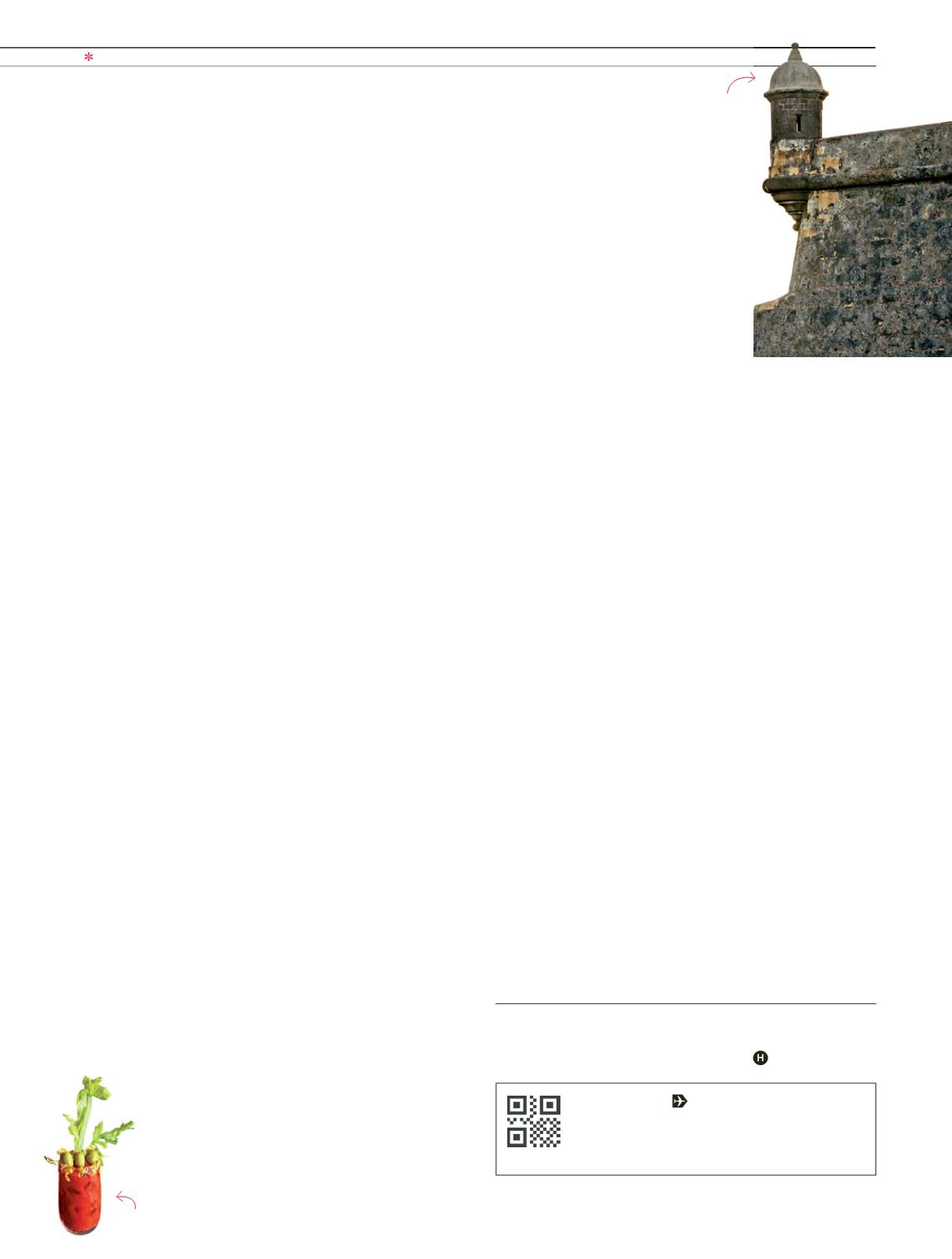
TheSt.Regis’EncantoMary
CastilloSanFelipe delMorro


