FEBRUARY 15 2009
AMERICANWAY 59
theydid. Thebestguysusually start in radio, because
you have to do the basics. On TV, you have to pull
back howmuch talking you’redoing. So start talking
a lot on the radio, and then learn how to cut it down
forTV. It’s important tohavea senseof humorabout
this stuff too.
Who, in your opinion, are some
of the greatest sports broadcasters
of all time?
Webber:
Chick Hearnwas the man. And the best
in theworld ever is JohnMadden. He’s one of those
guys you always look up to.
Albert:
At a young age, I started working for a
number of announcers, including Marty Glickman,
who really set the terminology of basketball and
football. He did radio in the ’40s. He was probably
the first athlete-turned-sportscaster. I learned how
to do this job from him.
Rashad:
Howard Cosell. He was a forerunner in
makingbigstarsof sportscasters.We’dwatchgames
together. He hadmore stories than you can imagine.
What kindof preparation goes
into calling a game?
Jones:
We have meetings with coaches and play-
ers, along with watching practice, watching video
of games, reading game notes, digging intomy vast
Rolodex tomakepersonal calls toplayersand scouts,
and wrapping everything up with a game-day pro-
ductionmeeting.
Albert:
I canget ready for agame inabout four to
five hours.Much of that is on the airplane. I read all
the newspaper clips from the previous two weeks
so nothing surprises me during a game regarding
a player or a coach. You don’t want to force too
much into a game, so if I get, maybe, 15 percent
of the information I have into a broadcast, that’s
pretty good. But I want to have everything at my
fingertips.
Rashad:
I read three sports pages every single
day. And NBA.com is so informative. I’m there all
the time.
Walkme throughwhat a typical
gameday is like.
Barry:
Ongame day, we attend themorning shoot-
around and conduct interviews with players and
coaches fromboth teams. Then,wehave lunchwitha
producer anda commentary team todiscussgeneral
story lines and the telecast’s opening segment. Then,
I’ll go back to the hotel, hoping to sneak in a quick
workoutandnap. I’ll go to thearenaabout twohours
prior to the game and speak with players, coaches,
and front-office executives. We’ll do a segment for
ESPNews from the arena just prior to the game.
Sometimes, it’s tough to sleep after agame telecast.
I’m often as amped as I was as a player, frequently
reflecting onmy performance.
When you’renotworking a game,
are you “calling it” fromhome?
Albert:
No. Mywife kidsme, “Why don’t you call a
game for a couple ofminutes?” I don’t think so. I try
to get away from sports from time to time.
Jones:
I’m usually pretty quiet when I’mwatching
a good game, until there’s a great play. Then, Iwake
up the housewithmy shouting.
What’s your favorite cityor arena
towork in?
Jones:
OracleArena inOakland, California.Whether
the [Warriors are] havingagreat year or abad year,
the fans are always devoted.
Barry:
Phoenix. I always wanted to play there.
There iswarmweather, and the team is fun towatch.
Plus, I canbringalongmygolf clubs. Anywhere I can
bringmy sticks is a bonus.
Albert:
New York, Boston, Chicago, Los Angeles,
and [Oakland]. The fans, the arenas— they’re above
anything else.
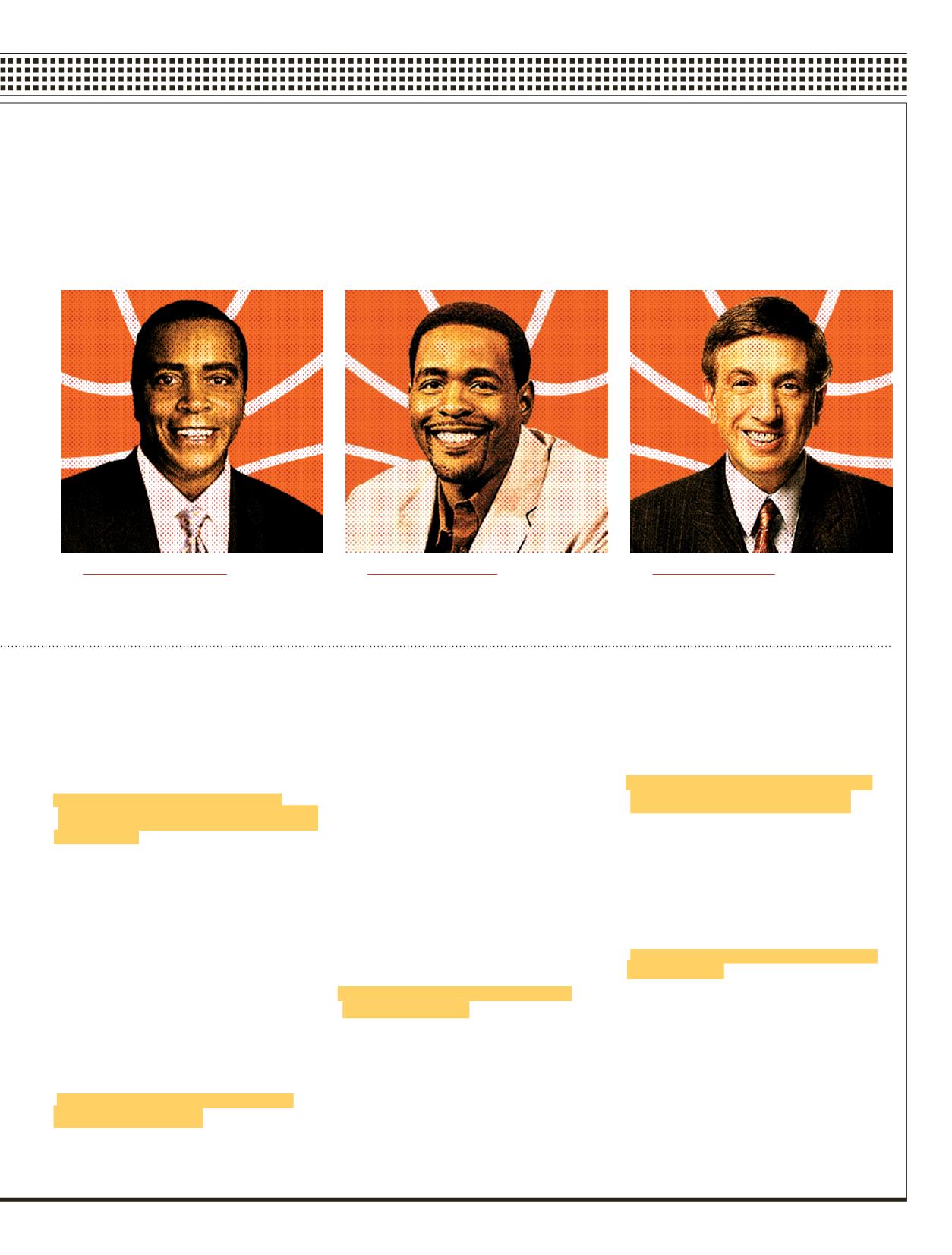
Emmy-winning sportscaster,
NBA commentator/producer,
host of NBATV’s
FanNight
Five-timeNBAAll-Star,NBATV
studio analyst
VeteranNBA play-by-play commenta-
tor, the voice of theNBA
AHMADRASHAD:
CHRISWEBBER:
MARVALBERT:


