SmallScreen
58 AMERICANWAY
FEBRUARY 15 2009
ILLUSTRATIONSBYSEANMcCABE
What are thehigh and lowpoints
of your gig?
Mark Jones:
The high points include being able
towitness all six ofMichael Jordan’s NBA titles and
seeing transcendent performances from some of the
game’s greatest players. It’s always hardbeingaway
frommy family, though.
JonBarry:
The lowpoint forme, after 14 years as
aplayer, is that thereareno longer anyhomegames.
In this profession as a broadcaster, every game is a
roadgame.
Tellme an interestingbenefit, a
cool perk, or anunusual challenge
of your job.
Ahmad Rashad:
I have traveled the globe many
times over in the name of basketball — promoting
it, celebrating it, finding it in some of the weirdest
places in theworld. That’s a cool perk.
ChrisWebber:
Truthfully, thehardest part of this
job for me is just beingmyself. As an athlete, you’re
used to being judged for everything you say and do.
When you’redoingwhat I donow, you’repaid touse
that voice. You
have
to.
Barry:
I sit courtside for NBA games — and get
paid for it.
Jones:
I think people would be surprised to know
how much we actually memorize for this job. We
don’t read everything off a teleprompter.
Marv Albert:
People would be surprised at how
difficult it is to travel with one ofmy partners, Mike
Fratello, who really has to be led around. He travels
with boxes for his suits instead of normal luggage
because that way, he doesn’t have to have his suits
pressed. Instead of a single piece of luggage, which
most humanbeings use, he carries six littlebags. It’s
amusing and very, very frustrating. [
Laughs
]
Howmanymiles have you traveled
in yourNBAbroadcasting career?
Albert:
I’vebeendoing this for awhile. [
Laughs
] It
wouldprobably be impossible to calculate.
Jones:
I’ve traveled 1.9 million miles on American
Airlines alone.
Rashad:
I think I’ve probably traveled close to six
millionmiles for basketball.
What’s thebest ormost exciting
game you’veever called?
Barry:
Themost excitinggamewasPhoenix/Dallas
[March 14, 2007]. It was a high-scoring double-
overtime game with buzzer-beaters. It was a great
game, and Ihad tomakea run to thebathroomafter
thefirst overtime.
Albert:
TheNBADreamTeam in the ’92Barcelona
Olympics, where you had the greatest group of ath-
letes ever assembled from a team sport—Michael
Jordan, CharlesBarkley, PatrickEwing, KarlMalone.
Itwas a great thrill to do that.
IalsodidmostofMichael Jordan’schampionships
with the Bulls. In the Finals against Portland in ’92,
hiswas one of the greatest single performances I’ve
ever seen. We talked to Michael before one game
about what hewas going to do that night. He came
out shooting three-pointers, which he rarely did. He
ended up getting six straight. He looked over at me
during the game, and he gave me a little wink and
a shrug, as if to say, “I can’t believe I’m doing this.”
[
Laughs
]
What’s thekey todoing a great
jobbehind themicrophone?
Jones:
Read a lot of anything; it improves vocabu-
lary. It’s also important to use anecdotes beyond
the statistics. It humanizes the players, which al-
lows people to understand where their greatness
comes from.
Albert:
I starteddoinggameswhen Iwasakid. I’d
shut the sound down onmy TV and talk into a tape
recorder. I just practiced all the time. And I’d listen
to other guys do it for real. I’d absorb everything
We asked fi e superstar
NBA broadcasters—
veterans ofTNT,ESPN,
ABC, andNBATV— to
dish on the coolest parts
of their jobs, the best
games they’ve ever called,
and their favorite arenas
to visit.By J.Rentilly
Behindthe
Mike
ESPN studio host and play-by-play
commentator
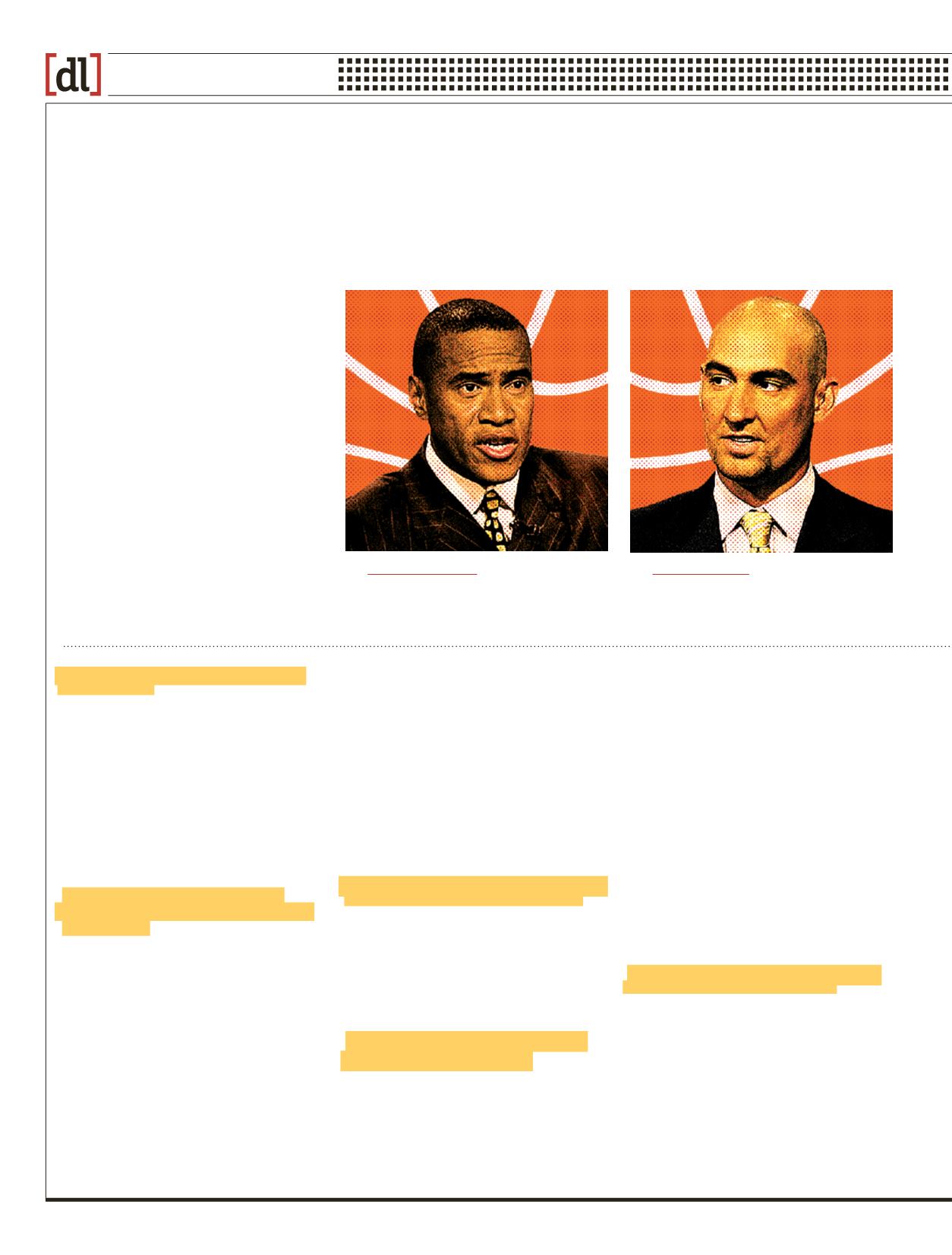
ESPN game and studio analyst,
14-yearNBA veteran
MARK JONES:
JONBARRY:


