PRINCE2, which stands for Projects IN Controlled Environments, is a structured project management methodology widely used in the UK and around the world. At the core of PRINCE2 are seven principles that guide project managers in delivering successful projects.
The first principle is continued business justification, which ensures that a project remains viable and aligned with the organizations objectives throughout its lifecycle. This principle emphasizes the importance of regularly reviewing and validating the business case to ensure that the project is delivering value to the organization.
The second principle is learn from experience, which encourages project managers to build on the lessons learned from previous projects. By capturing and sharing knowledge from past projects, organizations can avoid repeating mistakes and improve their project management practices.
The third principle is defined roles and responsibilities, which defines clear roles and responsibilities for all project team members. By clearly outlining who is responsible for what, PRINCE2 helps to ensure accountability and effective communication within the project team.
The fourth principle is manage by stages, which breaks the project into manageable stages with defined objectives and deliverables. By dividing the project into stages, project managers can better control risks and monitor progress, making it easier to make adjustments as needed.
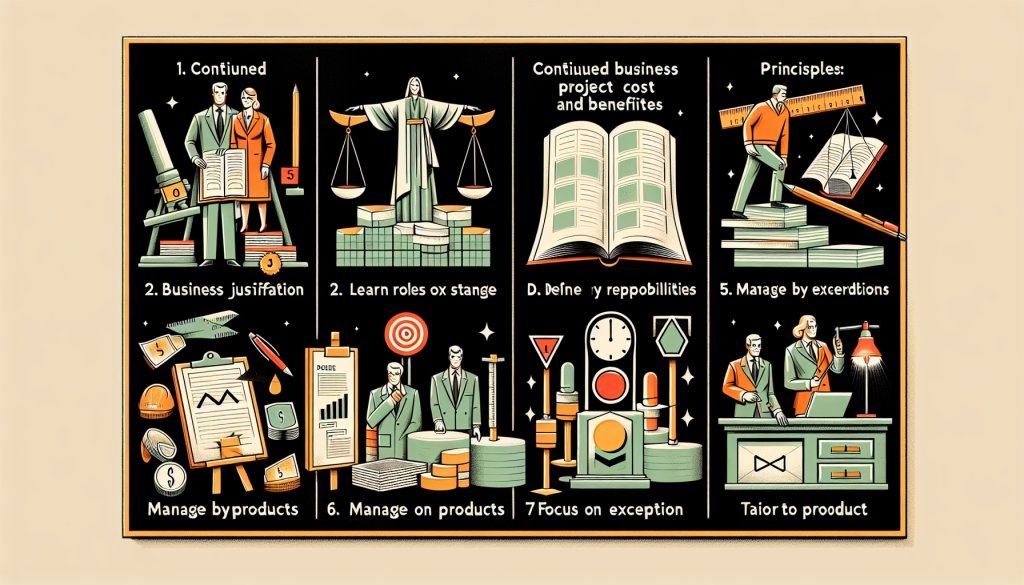
The fifth principle is manage by exception, which empowers project managers to focus on exceptions and deviations from the plan. By setting tolerance levels for key variables such as time, cost, and quality, project managers can delegate decision-making authority to team members while still maintaining overall control of the project.
The sixth principle is focus on products, which emphasizes the importance of defining and delivering the projects products or deliverables. By focusing on the end result rather than the process, project managers can ensure that the project meets the needs and expectations of stakeholders.
The seventh principle is tailor to suit the project environment, which recognizes that no two projects are the same. PRINCE2 is designed to be flexible and adaptable, allowing project managers to tailor the methodology to suit the specific needs and constraints of each project.
In conclusion, the seven principles of PRINCE2 provide a solid foundation for successful project management. The Future of Project Management: PRINCE2 Principles Trends . By adhering to these principles, project managers can increase the likelihood of delivering projects on time, within budget, and to the satisfaction of stakeholders.