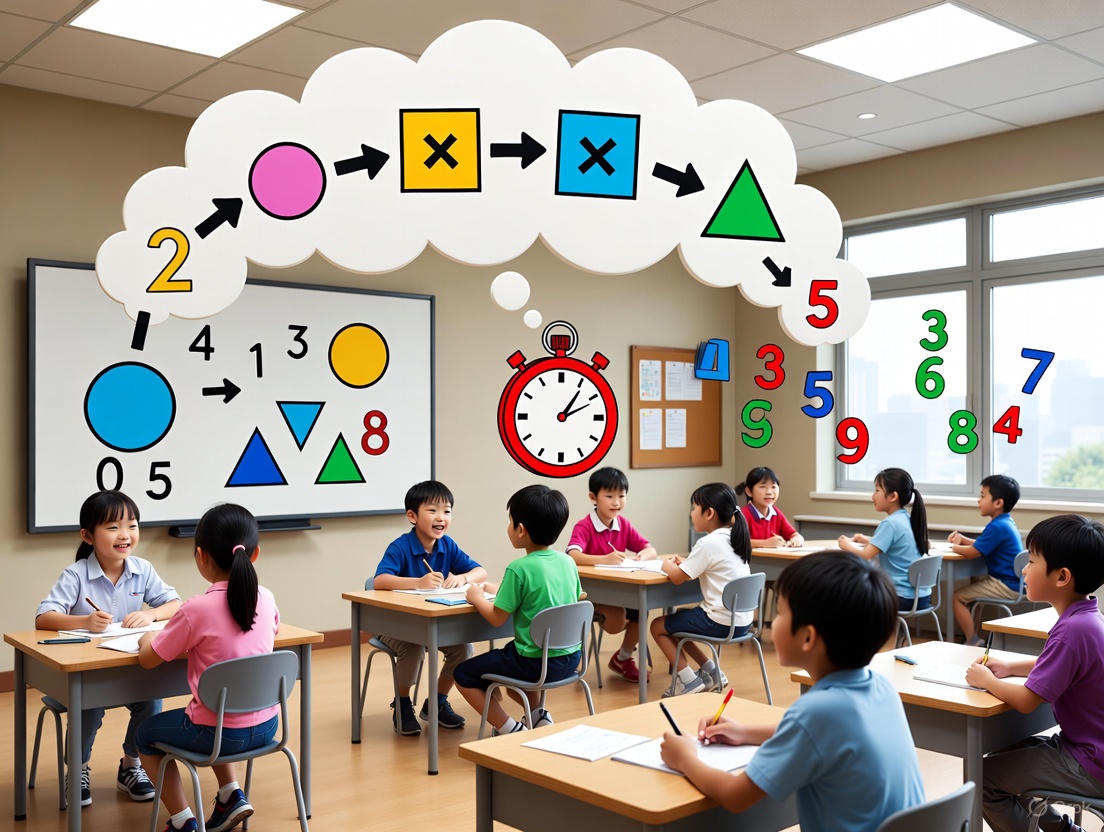
Metrics to measure improvement in PSLE math problem-solving speed

Introduction: The PSLE Math Time Crunch

The PSLE Math exam. Just hearing those words can send shivers down the spines of many Primary 6 students (and their parents!). It's not just about knowing the concepts; it's about applying them quickly and accurately under immense time pressure. Imagine facing a barrage of challenging problem sums, each one a mini-puzzle demanding your attention, all while the clock relentlessly ticks down. This time constraint can significantly impact a student's performance, even if they understand the underlying math principles. Knowing your stuff isn't enough; you need to be a math whiz and a speed demon! This is where effective strategies and perhaps some singapore primary 6 math tuition tips come in handy.

Why Time Matters So Much

Think of the PSLE Math paper as a race against time. Every second counts. When students feel rushed, they're more likely to make careless mistakes – misreading the question, choosing the wrong operation, or simply miscalculating. These errors can be easily avoided with better time management skills and a calm, focused approach. Furthermore, the pressure of time can lead to anxiety, which further hinders problem-solving abilities. It's a vicious cycle: time pressure leads to anxiety, which leads to mistakes, which further increases time pressure. Siao liao!

Fun Fact: Did you know that the PSLE (Primary School Leaving Examination) was introduced in Singapore in 1960? Back then, it served a slightly different purpose, primarily to allocate students to different secondary school streams based on their academic abilities.

Metrics to Measure Improvement in PSLE Math Problem-Solving Speed

So, how do you know if your child is actually getting faster at tackling those tricky math problems? Here are some key metrics to track:

  • Time per Question: This is a crucial metric. Calculate the average time your child takes to solve a variety of PSLE-style questions. Track this over time to see if it's decreasing. Aim for a steady and consistent improvement, not just occasional bursts of speed.
  • Number of Questions Attempted: Are they able to attempt more questions within a set time frame? This indicates improved efficiency in understanding and solving problems.
  • Accuracy Rate Under Time Pressure: Speed without accuracy is useless. Monitor the accuracy rate while practicing under timed conditions. The goal is to increase speed without sacrificing accuracy.
  • Types of Questions Mastered: Identify specific question types (e.g., ratio problems, percentage problems, geometry problems) and track the time taken to solve each type. This helps pinpoint areas where your child needs more focused practice.
  • Mock Exam Performance: Regularly conduct mock exams under realistic PSLE conditions. This provides a comprehensive assessment of your child's overall problem-solving speed and accuracy.

Interesting Fact: Many top math students in Singapore utilize techniques like "chunking" (breaking down complex problems into smaller, more manageable parts) and "pattern recognition" (identifying recurring problem types and applying pre-learned solutions) to improve their speed and efficiency.

Utilizing Past PSLE Papers in Math Tuition

One of the most effective ways to improve problem-solving speed is by working through past PSLE papers. These papers provide valuable insights into the types of questions asked, the level of difficulty, and the time constraints involved. Metrics for tracking student engagement during PSLE math tuition . But it's not enough to simply solve the questions; you need to analyze your child's performance and identify areas for improvement. This is where good singapore primary 6 math tuition tips and strategies come into play.

How to Maximize the Benefits of Past Papers:

  • Simulate Exam Conditions: Create a quiet, distraction-free environment and strictly adhere to the time limits. This helps your child get used to the pressure of the actual exam.
  • Analyze Mistakes: Don't just mark the answers as right or wrong. Take the time to understand why your child made a mistake. Was it a conceptual error, a careless mistake, or a time management issue?
  • Identify Weak Areas: Use the past papers to identify specific topics or question types where your child struggles. Focus your tuition efforts on these areas.
  • Practice Regularly: Consistent practice is key. Schedule regular sessions to work through past papers and reinforce key concepts.
  • Seek Professional Guidance: Consider engaging a qualified math tutor who can provide personalized feedback and guidance. They can help your child develop effective problem-solving strategies and improve their time management skills.

History Snippet: The format and content of the PSLE Math exam have evolved over the years to reflect changes in the Singaporean education system and the increasing emphasis on problem-solving skills.

Singapore Primary 6 Math Tuition Tips to Boost Speed

Beyond past papers, other singapore primary 6 math tuition tips can significantly improve your child's problem-solving speed:

  • Master the Fundamentals: A strong foundation in basic math concepts is essential. Ensure your child has a solid understanding of arithmetic, algebra, geometry, and data analysis.
  • Learn and Practice Key Formulas: Memorize important formulas and practice applying them to different types of problems.
  • Develop Mental Math Skills: Encourage your child to perform calculations mentally whenever possible. This can significantly speed up the problem-solving process.
  • Use Visual Aids: Diagrams, charts, and graphs can help visualize complex problems and make them easier to understand.
  • Time Management Strategies: Teach your child how to allocate their time effectively during the exam. Encourage them to start with the easier questions and come back to the more challenging ones later.
  • Practice, Practice, Practice: The more your child practices, the faster and more confident they will become.

Ultimately, improving problem-solving speed in PSLE Math is a journey that requires consistent effort, effective strategies, and a supportive learning environment. In the challenging world of Singapore's education system, parents are increasingly intent on arming their children with the competencies needed to excel in challenging math programs, including PSLE, O-Level, and A-Level studies. Identifying early signals of struggle in subjects like algebra, geometry, or calculus can create a world of difference in fostering resilience and mastery over advanced problem-solving. Exploring dependable math tuition singapore options can deliver tailored assistance that corresponds with the national syllabus, guaranteeing students obtain the boost they need for top exam results. By emphasizing interactive sessions and regular practice, families can help their kids not only satisfy but exceed academic standards, clearing the way for prospective chances in demanding fields.. By tracking key metrics, utilizing past papers, and implementing proven singapore primary 6 math tuition tips, you can help your child conquer the time crunch and achieve their full potential. In Singapore's rigorous education framework, parents play a essential function in leading their youngsters through significant tests that form scholastic trajectories, from the Primary School Leaving Examination (PSLE) which tests foundational abilities in subjects like numeracy and scientific studies, to the GCE O-Level exams focusing on high school mastery in multiple subjects. As pupils move forward, the GCE A-Level examinations necessitate more profound critical abilities and discipline proficiency, frequently influencing university placements and professional directions. To remain updated on all elements of these national exams, parents should investigate authorized information on Singapore exam supplied by the Singapore Examinations and Assessment Board (SEAB). This guarantees entry to the newest syllabi, assessment timetables, registration information, and instructions that align with Ministry of Education criteria. Regularly consulting SEAB can assist families plan effectively, minimize uncertainties, and support their kids in reaching optimal outcomes amid the competitive scene.. Can or not? Can!

Metric 1: Average Time Per Question (Overall)

So, your kiddo is in Primary 6 and the PSLE math exam is looming, right? Don't panic! One of the biggest challenges is often speed – can they solve the questions fast enough? Let's talk about how to measure and improve their math problem-solving speed, one step at a time. This is where tracking comes in lah!

Tracking Time: Your First Weapon

We're going to dive into a simple yet powerful metric: the average time your child spends on each question. This isn't about piling on the pressure; it's about understanding where they're getting stuck and how to boost their efficiency. This is where good singapore primary 6 math tuition tips come in handy, but we'll get to that!

What is it? Simply put, it's the total time spent on a practice paper divided by the number of questions. It gives you a bird's eye view of their overall pacing.

Why is it important? If the average time per question is way too high, it's a clear sign that they need to work on their speed and efficiency. It pinpoints a potential bottleneck.

How to track it? Grab a stopwatch (or your phone timer!). Time your child as they complete a full PSLE practice paper. Note the total time and divide it by the number of questions. In Singapore's bilingual education system, where fluency in Chinese is vital for academic success, parents frequently seek approaches to help their children conquer the lingua franca's intricacies, from word bank and interpretation to composition crafting and speaking proficiencies. With exams like the PSLE and O-Levels establishing high benchmarks, early assistance can avert common pitfalls such as subpar grammar or limited access to cultural elements that enrich knowledge acquisition. For families striving to improve results, investigating Chinese tuition resources provides perspectives into organized courses that match with the MOE syllabus and foster bilingual self-assurance. This specialized support not only improves exam readiness but also cultivates a more profound respect for the language, paving opportunities to cultural roots and future career benefits in a multicultural society.. Keep a record of this over multiple practice sessions.

Fun Fact: Did you know that the modern stopwatch, crucial for timing everything from races to math tests, was refined in the 19th century? Before that, people used pocket watches and estimated times – imagine trying to time a PSLE paper that way!

Utilizing Past PSLE Papers in Math Tuition

Past PSLE papers are gold! They are the most accurate representation of what your child will face on the actual exam. Incorporating these papers into their singapore primary 6 math tuition tips strategy is crucial.

Why use past papers? They provide realistic practice, expose your child to common question types, and help them get comfortable with the exam format. Plus, they're a fantastic tool for tracking progress and identifying areas for improvement.

Simulating Exam Conditions

Create a quiet, distraction-free environment that mimics the actual exam hall. In a digital era where ongoing education is essential for occupational advancement and individual improvement, leading schools globally are eliminating hurdles by providing a wealth of free online courses that cover varied topics from informatics science and commerce to liberal arts and wellness fields. These programs allow individuals of all origins to utilize high-quality lectures, assignments, and resources without the economic load of standard enrollment, commonly through systems that provide adaptable scheduling and engaging elements. Uncovering universities free online courses provides doors to renowned institutions' insights, empowering driven individuals to advance at no charge and obtain certificates that improve CVs. By making elite instruction readily obtainable online, such initiatives encourage worldwide fairness, strengthen marginalized populations, and foster innovation, proving that high-standard education is progressively simply a click away for anyone with online availability.. This helps your child get used to the pressure and time constraints. No TV, no phones, kena focus!

Analyzing Weak Areas

After each practice paper, carefully review the questions they struggled with. Identify the specific topics or question types that consistently cause problems. This allows you to tailor their singapore primary 6 math tuition tips to target those weaknesses.

Interesting Fact: The PSLE (Primary School Leaving Examination) has evolved over the years, but its core purpose remains the same: to assess students' abilities and place them in appropriate secondary school streams. It's a Singaporean institution!

Beyond the Average: Digging Deeper

While the overall average time is useful, it's important to look at the details. Some questions are naturally more time-consuming than others. Break down the analysis further.

Category-Specific Timing: Track the average time spent on different question types (e.g., algebra, geometry, word problems). This will reveal which areas are slowing them down the most. This is where singapore primary 6 math tuition tips can really shine, focusing on specific weaknesses.

Question-by-Question Analysis: Go through each question and identify those that took an unusually long time. What was the specific challenge? Was it a lack of understanding, a calculation error, or simply getting stuck?

By understanding where the time is being lost, you can work with a tutor, or even on your own, to develop targeted strategies for improvement. Think of it as detective work for math success!

Metric 2: Average Time Per Question (By Question Type)

Category Breakdown

To truly understand where your child is excelling or struggling, break down the PSLE math questions into specific categories. In the Lion City's vibrant education scene, where learners face considerable stress to succeed in math from early to tertiary stages, finding a educational facility that combines proficiency with genuine passion can create significant changes in fostering a appreciation for the field. Enthusiastic educators who extend outside repetitive learning to motivate analytical problem-solving and tackling skills are rare, yet they are crucial for aiding students tackle obstacles in areas like algebra, calculus, and statistics. For families hunting for this kind of devoted support, JC 2 math tuition shine as a example of dedication, motivated by instructors who are profoundly invested in individual pupil's journey. This consistent dedication translates into personalized instructional approaches that modify to individual demands, resulting in improved performance and a lasting respect for numeracy that extends into prospective scholastic and career endeavors.. This could include topics like algebra, geometry, fractions, decimals, percentages, and word problems. By analyzing the average time spent on each category, you gain valuable insights into areas where focused practice is needed. This targeted approach is far more effective than simply practicing randomly, and it's a key singapore primary 6 math tuition tip we share frequently.

Algebra Analysis

Algebra often presents a challenge for Primary 6 students. In Singapore's rigorous education landscape, where English functions as the main vehicle of education and plays a crucial position in national exams, parents are keen to assist their youngsters surmount typical obstacles like grammar affected by Singlish, word gaps, and issues in interpretation or essay creation. Developing robust basic competencies from elementary stages can significantly elevate assurance in tackling PSLE parts such as contextual writing and spoken interaction, while high school students gain from focused training in literary analysis and argumentative papers for O-Levels. For those looking for successful strategies, delving into English tuition provides valuable perspectives into curricula that sync with the MOE syllabus and highlight dynamic learning. This supplementary support not only sharpens test techniques through simulated exams and reviews but also promotes home habits like regular literature plus conversations to foster long-term language proficiency and academic excellence.. If your child is consistently spending a longer time on algebra questions, it might indicate a need for a deeper understanding of the underlying concepts. Consider revisiting fundamental algebraic principles and practicing a variety of algebra problems to build confidence and speed. Remember, consistent practice, especially with past PSLE papers, is crucial for improvement. Utilizing Past PSLE Papers in Math Tuition helps identify specific areas of weakness.

Geometry Gems

Geometry, with its shapes and formulas, can also be a time-consuming area. Analyzing the time spent on geometry questions will reveal if your child struggles with spatial reasoning or applying geometric formulas. If time is a constraint, focus on understanding key geometric theorems and practicing problems that require visual thinking. Fun fact: Geometry has its roots in ancient Egypt, where it was used for land surveying after the Nile River flooded!

Word Problems

Word problems often require multiple steps and careful reading comprehension. If your child is taking a long time to solve word problems, it might indicate a need to improve their problem-solving strategies or reading skills. Encourage them to break down the problem into smaller, manageable steps and to identify the key information needed to solve it. Remember, "kiasu" (fear of losing out) is not the way; clear thinking is!

Past Papers

Utilizing Past PSLE Papers in Math Tuition is invaluable for understanding question types and time allocation. By analyzing the time your child spends on different question types within past papers, you can identify patterns and areas for improvement. This helps in tailoring your child's study plan and focusing on specific areas where they need the most help. Remember, practice makes perfect, and past papers are excellent practice tools for the PSLE math exam.

Accuracy Rate Under Time Pressure

Assess your child's accuracy rate when solving problems under timed conditions. Maintaining accuracy while increasing speed is crucial for PSLE success. This metric highlights the effectiveness of time management strategies learned during tuition.

Completion Rate of Past Papers

Measure how consistently your child completes full past PSLE papers within the allocated time. A higher completion rate demonstrates improved stamina and pacing skills. This reflects a better understanding of the exam format and time constraints.

Number of Attempted Questions

Monitor the number of questions your child attempts within a set timeframe. An increase in attempted questions suggests better time management and problem selection skills. This metric reflects enhanced confidence and strategic thinking during problem-solving.

Time Spent Per Problem

Track the average time your child spends on each problem during practice. Reducing this time indicates improved efficiency and familiarity with problem-solving techniques. Regular monitoring helps identify areas where speed can be further optimized.

Metric 3: Percentage of Unanswered Questions

So, your kiddo's tackling the PSLE Math, and time seems to be their biggest enemy? Don't worry, many Singaporean parents can relate! One super important metric to keep an eye on is the percentage of unanswered questions. This isn't just about getting the answers right; it's also about getting to all the questions in the first place. If your child is consistently leaving questions blank, especially towards the end of the paper, it's a clear sign of time management woes. Think of it like this: even if they know how to solve the problem, it's zero marks if they don't even get to attempt it!

A high percentage of unanswered questions screams, "Help! I need better singapore primary 6 math tuition tips!" It's a red flag that shouldn't be ignored. We need to figure out why time is running out. Is it a lack of speed in solving problems? Are they getting stuck on certain types of questions? Or is it a combination of both?

Utilizing Past PSLE Papers in Math Tuition

One of the best ways to tackle this is by diving into past PSLE papers. This isn't just about practicing; it's about detective work! By analyzing which questions are consistently skipped, we can pinpoint specific topics that are causing the most trouble. This is where targeted singapore primary 6 math tuition tips can make a HUGE difference.

Fun fact: Did you know that the PSLE Math syllabus is designed to test not just knowledge, but also problem-solving skills and logical reasoning? It's not just about memorizing formulas; it's about applying them effectively!

Subtopics to Consider:

  • Identifying Frequently Skipped Topics: Go through past papers with your child and highlight the questions they consistently leave unanswered. Are they struggling with fractions? Percentage problems? In this island nation's highly competitive academic landscape, parents are dedicated to supporting their children's success in crucial math assessments, commencing with the basic challenges of PSLE where problem-solving and theoretical comprehension are examined rigorously. As students advance to O Levels, they face increasingly intricate subjects like coordinate geometry and trigonometry that necessitate accuracy and critical skills, while A Levels present sophisticated calculus and statistics needing deep insight and application. For those resolved to offering their children an educational advantage, locating the singapore maths tuition tailored to these curricula can revolutionize educational journeys through focused methods and specialized knowledge. This commitment not only boosts exam results across all tiers but also cultivates lifelong quantitative proficiency, creating pathways to renowned universities and STEM fields in a knowledge-driven economy.. Geometry? Knowing the enemy is half the battle!
  • Time Allocation Strategies: Work with your child to develop a realistic time allocation strategy for the exam. How much time should they ideally spend on each question? Practice sticking to this plan during mock tests. It's like planning a road trip – you need to know how long each leg of the journey will take!
  • Building Speed and Accuracy: This is where targeted practice comes in. Focus on the topics they struggle with, and work on building both speed and accuracy. Flashcards, online quizzes, and focused tuition can all be helpful tools.

Interesting fact: The PSLE has evolved significantly over the years. Early versions focused more on rote memorization, while today's exam emphasizes critical thinking and problem-solving skills. This shift reflects the changing needs of our society and the importance of preparing students for a rapidly evolving world.

Remember, addressing the percentage of unanswered questions isn't just about improving scores; it's about building confidence and reducing exam-day stress. With the right singapore primary 6 math tuition tips and a focused approach, your child can conquer their time management challenges and shine on the PSLE Math paper! Jiayou!

Metric 4: Accuracy Rate vs. Time Spent

Accuracy vs. Speed: Striking the Right Balance in PSLE Math

So, your child is blazing through those PSLE math questions, shiok right? But hold on lah! Are they getting them right? It's no use being the fastest if the answers are all wrong! This metric looks at the relationship between accuracy and time. Are they rushing and making careless mistakes? Or are they taking their time and getting most of them correct? This is crucial for singapore primary 6 math tuition tips.

We need to find that sweet spot where speed and accuracy meet. It's about efficiency, not just speed. We want them to be both fast and accurate.

  • High Accuracy, Slow Speed: This suggests a strong understanding but potential issues with time management. We need to help them find ways to solve questions faster without sacrificing accuracy.
  • Low Accuracy, Fast Speed: This indicates rushing and a lack of understanding. Slow down, hor! In this island nation's demanding scholastic environment, parents devoted to their children's achievement in numerical studies often emphasize grasping the organized development from PSLE's foundational analytical thinking to O Levels' complex topics like algebra and geometry, and further to A Levels' sophisticated concepts in calculus and statistics. Staying informed about curriculum updates and test guidelines is essential to providing the appropriate support at all phase, guaranteeing students build confidence and secure outstanding outcomes. For authoritative insights and tools, visiting the Ministry Of Education platform can offer valuable updates on guidelines, curricula, and educational strategies tailored to local criteria. Engaging with these credible content enables parents to align home study with institutional requirements, nurturing enduring success in numerical fields and beyond, while keeping abreast of the latest MOE efforts for all-round student development.. Focus on understanding the concepts first.
  • High Accuracy, Fast Speed: Jackpot! This is the ideal scenario. Keep up the good work!
  • Low Accuracy, Slow Speed: This suggests a fundamental misunderstanding of the concepts. More focused practice and possibly singapore primary 6 math tuition tips are needed.

Fun Fact: Did you know that the PSLE Math syllabus has evolved over the years to emphasize problem-solving skills rather than rote memorization? It's all about understanding the "why" behind the math!

Utilizing Past PSLE Papers in Math Tuition: Spotting the Trade-offs

Utilizing Past PSLE Papers in Math Tuition is super important. It's not just about doing the papers; it's about analysing how your child approaches each question. Are they consistently making the same type of mistakes? Are there certain topics where speed significantly impacts accuracy?

By using past year papers, we can see where the trade-offs are happening. Maybe they're great at algebra but struggle with geometry. Identifying these weaknesses is key to targeted improvement and effective singapore primary 6 math tuition tips.

Identifying Error Patterns

Does your child always get the units wrong? Or maybe they misread the question? Spotting these patterns is half the battle. Once you know what they're struggling with, you can focus on those specific areas.

Simulating Exam Conditions

Practice makes perfect, but practicing under exam conditions is even better! Set a timer, minimize distractions, and make them feel like they're in the real thing. This will help them get used to the pressure and improve their time management skills. This is where singapore primary 6 math tuition tips can provide guidance on effective exam strategies.

Interesting Fact: The PSLE is graded using T-scores, which compare a student's performance to their peers. This means understanding the difficulty level of questions and strategizing accordingly is key!

Metric 5: Time Spent on 'Problem Sums' (Heuristics)

Specifically track the time spent on complex word problems that require heuristic approaches and strategic problem analysis. This is where the rubber meets the road in singapore primary 6 math tuition tips. We're not just looking at whether your child *can* solve the problem, but *how quickly* they can dissect it and apply the right strategy. Think of it like this: a seasoned chef doesn't just know the recipe, they know how to chop those veggies with lightning speed! Same concept applies here lah.

Utilizing Past PSLE Papers in Math Tuition is crucial for heuristic practice. These papers are goldmines, offering a realistic simulation of the actual exam environment. They expose your child to the types of questions, the level of difficulty, and the time constraints they'll face. It's like training for a marathon by running the actual route beforehand – you know what to expect!

Why Time Tracking Matters for Problem Sums

  • Pinpoints Weak Areas: If your child consistently struggles with a particular type of problem sum, the timer will reveal it. Is it rate problems? Percentage questions? Time to focus your singapore primary 6 math tuition tips on those specific areas!
  • Builds Exam Stamina: PSLE Math isn't just about knowledge; it's about endurance. In modern times, artificial intelligence has transformed the education industry worldwide by allowing individualized learning journeys through responsive systems that customize content to individual learner rhythms and approaches, while also automating evaluation and operational duties to free up instructors for increasingly significant connections. Globally, AI-driven tools are overcoming learning disparities in underserved locations, such as employing chatbots for language acquisition in developing countries or predictive tools to detect vulnerable learners in the EU and North America. As the incorporation of AI Education gains speed, Singapore shines with its Smart Nation initiative, where AI technologies enhance syllabus tailoring and accessible instruction for diverse demands, covering special learning. This approach not only improves exam outcomes and engagement in regional classrooms but also matches with worldwide efforts to cultivate lifelong educational competencies, preparing pupils for a tech-driven economy in the midst of ethical concerns like data protection and equitable reach.. Practicing under timed conditions helps build the mental stamina needed to tackle the entire paper effectively.
  • Encourages Strategic Thinking: When the clock is ticking, your child is forced to think strategically about which problems to tackle first and how to allocate their time.
  • Boosts Confidence: As their speed improves, so will their confidence. Seeing tangible progress in their time management can be a huge motivator.

Fun Fact: Did you know that the PSLE Math syllabus has evolved significantly over the years? Early versions focused more on rote memorization, while the current syllabus emphasizes problem-solving and critical thinking. Talk about a glow-up!

How to Effectively Track Time on Problem Sums

  • Use a Timer: Obvious, but essential! A simple stopwatch or even the timer on your phone will do.
  • Break Down the Problem: Instead of just timing the overall solution, break it down into smaller steps: understanding the question, choosing a strategy, executing the calculations, and checking the answer. This allows for more granular analysis.
  • Record the Data: Keep a record of the time spent on each problem, along with any notes about difficulties encountered. This data will be invaluable for identifying patterns and areas for improvement.
  • Review and Adjust: Regularly review the data with your child and their tutor. Discuss strategies for improving speed and accuracy.

Subtopic: Incorporating Heuristics into Time-Based Practice

Subtopic Description: Integrating specific heuristic techniques (like "Draw a Model" or "Work Backwards") into timed practice sessions is vital. This helps students not only learn the methods but also apply them efficiently under pressure.

When practicing with past PSLE papers, actively encourage your child to use heuristics. For example, if they're struggling with a ratio problem, prompt them to "Draw a Model". Then, time how long it takes them to solve the problem using this method. Over time, they'll become more comfortable and efficient with these techniques.

Interesting Fact: The "Model Drawing" heuristic, so popular in Singapore math, was actually inspired by techniques used in engineering and architecture to visualize complex problems! Who knew?

This focused approach, coupled with effective singapore primary 6 math tuition tips, will help your child not only master the content but also develop the speed and confidence needed to ace those tricky problem sums. Jiayou!

Strategies for Improvement and Monitoring Progress

So, your kiddo's in Primary 6 and PSLE math is looming? In Singapore's competitive education system, where scholastic excellence is paramount, tuition generally refers to independent supplementary lessons that offer targeted support beyond classroom programs, helping learners grasp topics and prepare for major tests like PSLE, O-Levels, and A-Levels during strong pressure. This private education industry has developed into a lucrative market, powered by guardians' commitments in customized guidance to bridge knowledge gaps and enhance performance, though it commonly increases burden on developing students. As machine learning appears as a transformer, investigating cutting-edge math tuition agency approaches uncovers how AI-powered platforms are personalizing learning journeys worldwide, delivering adaptive coaching that exceeds standard techniques in efficiency and participation while resolving global academic gaps. In the city-state specifically, AI is disrupting the conventional supplementary education approach by allowing cost-effective , on-demand tools that correspond with national programs, possibly cutting costs for parents and boosting results through analytics-based insights, although principled issues like over-reliance on digital tools are examined.. Don't worry, you're not alone! Many Singaporean parents are looking for ways to boost their children's problem-solving speed and accuracy. This section will explore how to effectively measure improvement and adapt your strategies for success, especially when leveraging singapore primary 6 math tuition tips.

Metrics That Matter: Tracking Progress

Forget vague feelings of "maybe they're getting better." We need concrete data! Here's how to track your child's progress in tackling those tricky math problems:

  • Time Per Question: This is a big one! Record the time taken to solve different types of problems. Is there a specific area (fractions, algebra, geometry) where they consistently lag?
  • Accuracy Rate: How many questions are they getting right? Track this overall and by topic. Aim for consistent improvement, not just sporadic bursts of brilliance.
  • Error Analysis: Don't just mark the answers wrong. Analyze why they're wrong. Is it a careless mistake, a misunderstanding of the concept, or a calculation error? Identifying the root cause is key.
  • Mock Exam Scores: Regular mock exams under timed conditions are crucial. Simulate the real PSLE environment to build stamina and reduce anxiety.

Fun Fact: Did you know the PSLE wasn't always around? It evolved from earlier versions of standardized testing in Singapore's education system, designed to ensure fair placement in secondary schools.

Adapting Strategies Based on Data

Collecting data is only half the battle. You need to use it to adjust your approach. Here's how:

  • Targeted Practice: Focus on the areas where your child is struggling the most, identified through error analysis.
  • Vary Question Types: Don't just stick to routine problems. Expose them to different question formats and problem-solving techniques.
  • Adjust Time Limits: Gradually decrease the time allowed per question as their speed improves.
  • Seek Expert Help: If you're seeing persistent difficulties, consider singapore primary 6 math tuition tips from experienced tutors. They can provide personalized guidance and identify underlying weaknesses.

Utilizing Past PSLE Papers in Math Tuition

One of the most effective singapore primary 6 math tuition tips is to make good use of past PSLE papers. These papers provide invaluable insights into the types of questions asked, the difficulty level, and the exam format. Using them strategically can significantly improve your child's performance.

Benefits of Using Past PSLE Papers

  • Familiarization: Exposure to past papers helps students become familiar with the exam format, reducing anxiety and increasing confidence.
  • Identifying Weak Areas: By analyzing performance on past papers, you can pinpoint specific topics or question types that require more attention.
  • Time Management: Practicing with timed past papers helps students develop effective time management skills, crucial for completing the exam within the allotted time.
  • Understanding Question Trends: Analyzing trends in past papers can provide insights into the types of questions that are frequently asked, allowing students to focus their preparation accordingly.

Interesting Fact: The PSLE Math syllabus is regularly updated to reflect changes in curriculum and pedagogical approaches. Staying current with the latest syllabus is essential for effective preparation.

How to Effectively Use Past PSLE Papers

  • Start Early: Begin incorporating past papers into your child's study routine well in advance of the exam.
  • Simulate Exam Conditions: Create a quiet, distraction-free environment and adhere to the time limits specified for the actual exam.
  • Review and Analyze: After completing a past paper, thoroughly review the answers and identify areas for improvement.
  • Seek Clarification: If your child struggles with certain questions, seek clarification from their teacher or tutor.

Remember, consistent practice and a strategic approach are key to success in PSLE math. With dedication and the right singapore primary 6 math tuition tips, your child can achieve their full potential!

Time your child while they solve practice papers or topical questions. Note the time taken for each question or section to identify areas for improvement.
This varies depending on the question type and difficulty, but aim for an average of 2-3 minutes per question. Focus on accuracy first, then gradually increase speed.
Track the average time taken per question, the number of questions completed within a set time, and the reduction in time taken to solve specific question types over time.
Accuracy is crucial. Focus on understanding concepts and avoiding careless mistakes. Speed without accuracy is not beneficial.
A tutor can identify areas where your child struggles, teach efficient problem-solving strategies, and provide targeted practice to improve both speed and accuracy.
Practice regularly, understand key concepts, learn shortcuts and heuristics, and break down complex problems into smaller, manageable steps.

Check our other pages :