FAHTHAI
55
O
n the surface, Yangon
doesn’t look much
different than it did
50 years ago: the
crumbling architectural
relics of its colonial past remain and
basic infrastructure is frustratingly
inadequate. Yet if you happen to
stumble across a gallery downtown
called Pansodan Scene on a Sunday
afternoon, the conceptual shift is
profound. On this particular Sunday, a
large group of overseas visitors, some
sporting dreadlocks, are immersed
in a Burmese lesson while nearby, a
group of locals engages in a spirited
intellectual debate. A cheerful-looking
sign on a blackboard entices customers
to sample exotic-sounding smoothies
or cappuccinos, items that until a few
years ago were virtually unknown.
“Yangon is so much more alive
nowadays. The fear has gone. We used
to be constantly afraid of being arrested.
The whole country felt like a big prison,”
says Nay Phone Latt, 34, who in 2010
was included on
Time
magazine’s list
of 100 Heroes. At the time he was two
years into a 21-year prison sentence.
Having risen to prominence as a blogger
and activist, Nay Phone Latt was targeted
by the military – along with countless
others – and while under interrogation
was forced to hand over his Gmail
password under threat of execution (at
the time, even Gmail itself was illegal).
Though Nay Phone Latt provided
the password for what he hoped was
a “safe” account, intelligence officers
discovered a cartoon of General Than
Shwe in his inbox, which earned him a
16-year sentence under the draconian
Electronics Act. He was released two
years ago as part of a mass presidential
amnesty and immediately launched
a campaign championing freedom of
speech and later, one against hate speech.
“I’m not afraid of returning to prison; I
don’t think it will happen,” Nay Phone
Latt says with a cautious smile.
While Nay Phone Latt was serving
his sentence within Hpa’An Prison’s
blackened walls, baby-faced Burmese
diaspora entrepreneur Ivan Pun was living
a very different life. Raised in England
and a graduate of Oxford University,
Pun joined Condé Nast’s editorial team
in New York and spent his early twenties
attending Manhattan’s latest bar and
restaurant launches and art exhibitions.
He’d returned periodically to Yangon
with his family over the years and seen
the city as a languid, idle place, “a city
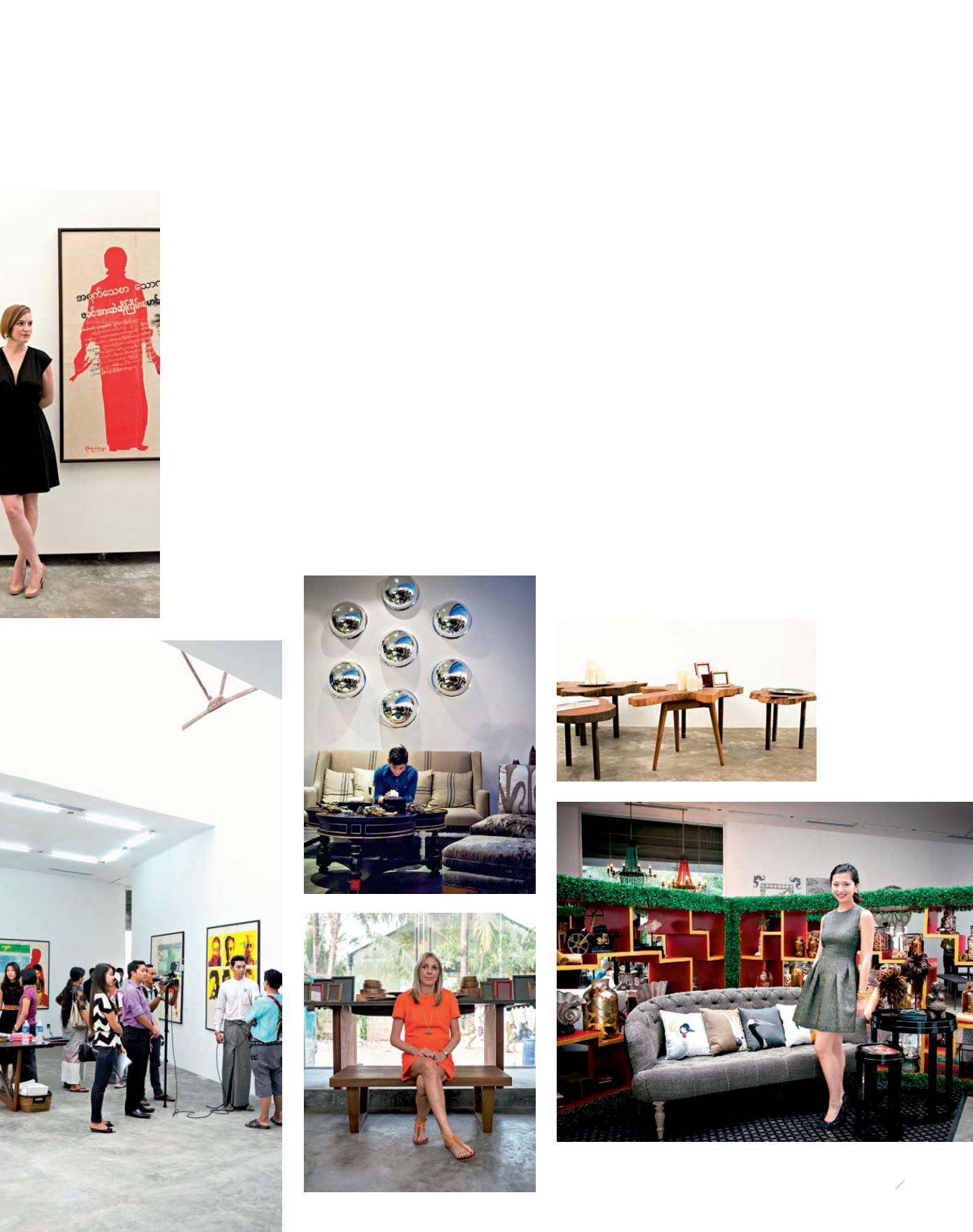
IN TRANSIT
Contemporary art
and fashion are
displayed at Transit
Shed No. 1


