Savvy Year-End Strategies
Tax lawsarecomplexand subject tochange. MorganStanleySmithBarneyLLC (“Morgan
Stanley”), its
DIĆOLDWHV
andMorganStanleyFinancialAdvisorsandPrivateWealthAdvisors
do not provide tax or legal advice and are not
êĆGXFLDULHVë
(under the Internal Revenue
Code or otherwise) with respect to the services or activities described herein except as
otherwise agreed to inwriting byMorgan Stanley. Individuals are encouraged to consult
their tax and legal advisors regarding any potential tax and related consequences of any
investmentsmadeunder suchaccount.
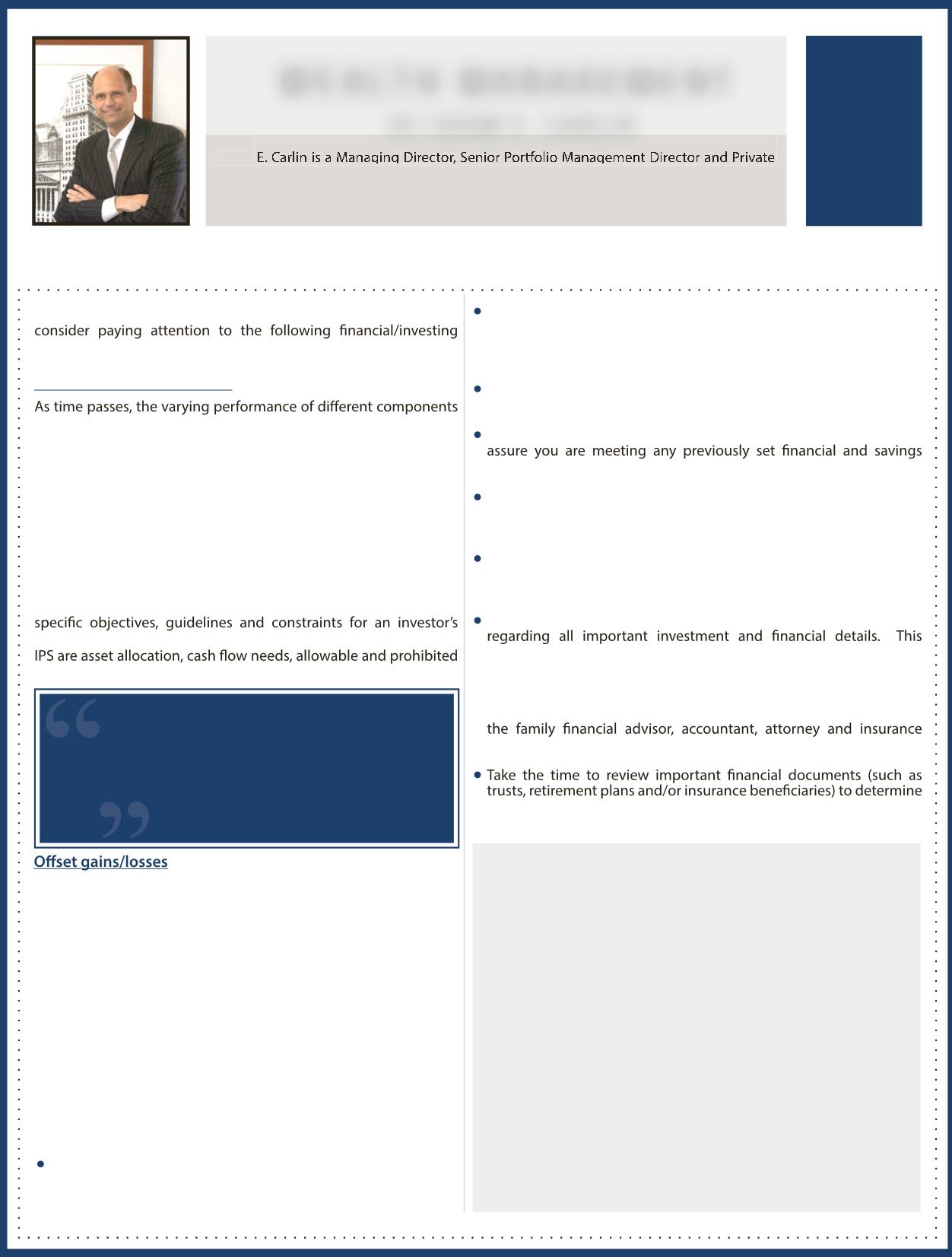
AdamE.Carlin isaPrivateWealthAdvisorwith thePrivateWealthManagementDivision
of Morgan Stanley in Coral Gables. The information contained in this article is not a
solicitation topurchaseorsell investments.Any informationpresented isgeneral innature
andnot intended toprovide individually tailored investmentadvice. The strategiesand/or
investments referencedmay not be suitable for all investors as the appropriateness of a
particular investment or strategy will depend on an investor's individual circumstances
andobjectives. Investing involves risks and there is always the potential of losingmoney
when you invest. The views expressed herein are those of the author and may not
necessarily r
HćHFW
the views of Morgan Stanley Smith Barney LLC, Member SIPC, or its
DIĆOLDWHV
“As time passes the varying performance of different
components of aportfoliooften increases the likelihood
that over time theasset allocationof one's portfolio can
vary dramatically from the portfolio’s intended asset
allocation.”
A
swequicklyapproach theendof another year, it's important to
tasks:
PortfolioReview/Rebalance
ofaportfoliooften increases the likelihood thatover time theasset
allocation of one's portfolio can vary dramatically from the
portfolio’s intended asset allocation. As a result, it's important to
considerputting inplaceaonceperyear reviewofone'sportfolio's
present asset allocation verses the portfolio’s intended asset
allocation. This task is also important for investments with
longer-term investment horizons such as retirement plans set up
through an employer. Furthermore, for those investors who
happen to have a written Investment Policy Statement (IPS) it is
also important to assure at least annually that their portfolio is in
compliance with themandates spelled out within their IPS. As a
general rule, an IPS is a document which is used to spell out
portfolio. Examplesof theareaswhichare typicallyaddressed inan
investmentsaswell as risk tolerance.
Adam E. Carlin is aManagingDirector, Senior PortfolioManagement Director and Private
Wealth Advisor at Morgan Stanley PrivateWealth Management located in Coral Gables,
Floridaandmaybe reachedat (305-476-3302or
Wealt
h Management
by
Adam E. Carlin
advertisement
Inorder tobe able tobeproactive inmanaging andminimizing a
portfolio'spotential yearly taxexposure, another important endof
year task is to consider what realized gains and losses have been
takenwithineachofone'snon retirement/taxableaccounts.This is
particularly important for investorswith investmentssuchas funds
whichare required todistributeall realizedcapitalgainsand losses
to their shareholders who own the fund as of the record on the
dateof thedistribution. Inorder toavoidpaying taxesongainsyou
didn't even receive, this is also important for investors considering
the purchase of certain investments during the latter part of the
year. Your accountant should be able to assist with examining
these issues.
In addition to the suggestions already discussed, listedbelow are
someother tasks investors should consider adding to their endof
theyear check list:
Be sure to make all desired and previously committed charitable
contributions. Anygifts notmadeby theendof the yearwouldnot
beeligible for consideration as apossible taxdeduction for that tax
year.
Make sureyouhavecontributed toand if appropriatemaximizedall
employee401kcontributions.
Take the time to evaluate your current budget and savings plan to
goals.
For those investors turning the age of 70 1/2 who also have
retirementaccounts,determine ifyouaresubject towhat iscalledan
annual RequiredMinimumDistribution (RMD) from thoseaccounts.
Attempt tominimize taxesonordinary incomeby takingadvantage
of the allowance of being able to apply up to $3,000 in net capital
lossesagainstordinary income.
Take the time toproperlyeducate familymembers, suchasaspouse,
discussion would generally include topics such as a review and
explanation of: the makeup of one’s investment portfolio, estate
planningand insurancedocumentsaswellas thenamesandcontact
numbers of thosewho shouldbe contacted for any questions or in
the event of an emergency. Examples of such individualswouldbe
agent.
ifanychangesshouldbemade. It is typically recommended thatone
be sure todo this taskonceevery threeyears.
Makingsureyouhavemadealldesiredannualgifts to familyand
friends. Currently, the annual gift tax exclusion, or the amount
whichcanbegiven toanunlimitednumberofpeople freeofgift
taxconsequences is$14,000.


