PROMOT ION
n thenorthwest cornerofRomania, amid the lush
countrysideofSatuMareCounty, lies the townofNegreşti
Oaş.Thesettlement, just50km from thecentreofSatu
Mare,upholds the traditional customsof theOaşpeople–especially
theirartisticheritageanduniquearchitecture. Itsname, according
todocumentsdating from1270, comes from theblackcolouringof
thegube–a thick, longhairedcoatwornby the townsfolk.Although,
somehistoriansargue that it’snamedafter thedarkoak forests that
surround the town.
The town’sstatusdevelopedsteadily from1389and throughout
the14th, 15thand16thcenturies itwasruledbyvariouswealthy
families.Notably,byDrag– thedescendantofDragoş, awarlord from
MaramureşCounty– from1389and thewell-knownHunyadi family
from1452.Throughout the18thcentury thewholecountywasunder
Habsburgruleand, according toan1809documentbyauthorAntal
Szirmay,NegreştiOaşwas the largestRomaniansettlement in the
area,with300housesstretchingover77hills. Itwasonly in1964 that
thesettlement received the titleof a town.
Experience therichheritageofNegreştiOaş
Visitorswanting themostauthentichistoryof the townshouldcheck
out theMuseumofOaşLand,whichsitson themainVictoriei street.
Established in1966, theethnographicmuseumwasdesigned todepict
a typicalOaş town.Thepermanentexhibition features folkartand
costumes from theOaşregion, aswell as fabrics,pottery fromVama,
furniture, elementsof architectureandphotosby I.G.Andron,whose
interwarworkrepresents the last imagesof anarchaicworld.Theart
collection includes theworkofpainter IoanŢânţaş.
Theopen-airmuseumsits in thecentreof town,on thebanksof the
TurRiver, and featuresmonumentsofpeasantarchitecture from the
17th to the20thcentury.Themost remarkablepieces includehouses
I
Visitors to thisquaint town inSatuMare
Countywill find itperfectlypreserved, full of
authenticbuildingsandartisticpassions
A ROMANIAN
WORK OF ART
fromCămârzanaandRacşa, twounicellularhousesanda shed from
GherţaMică, the sheep shedand storage room fromBixad, the
circular coop fromNegreşti and thewoodenchurch fromLechinţa,
dating from 1604.
Thebiggest attraction is the ‘living’ part of themuseum. The
section,madeof technical installations, featuresamill,whirlpool
andmillmachineoperatedbywater, theblacksmithworkshop,
thepotteryworkshopand theoperationalmachine formaking the
local brandy, pălinca. The journey through themuseumends in
anexcitingpotteryworkshop, inabeautifulwoodenhouse from
thebeginningof the20thcentury. Theworkshophas sixelectrical
potterywheels, twokilns, amasticator andplentyof furniture to
accommodate itsguests.
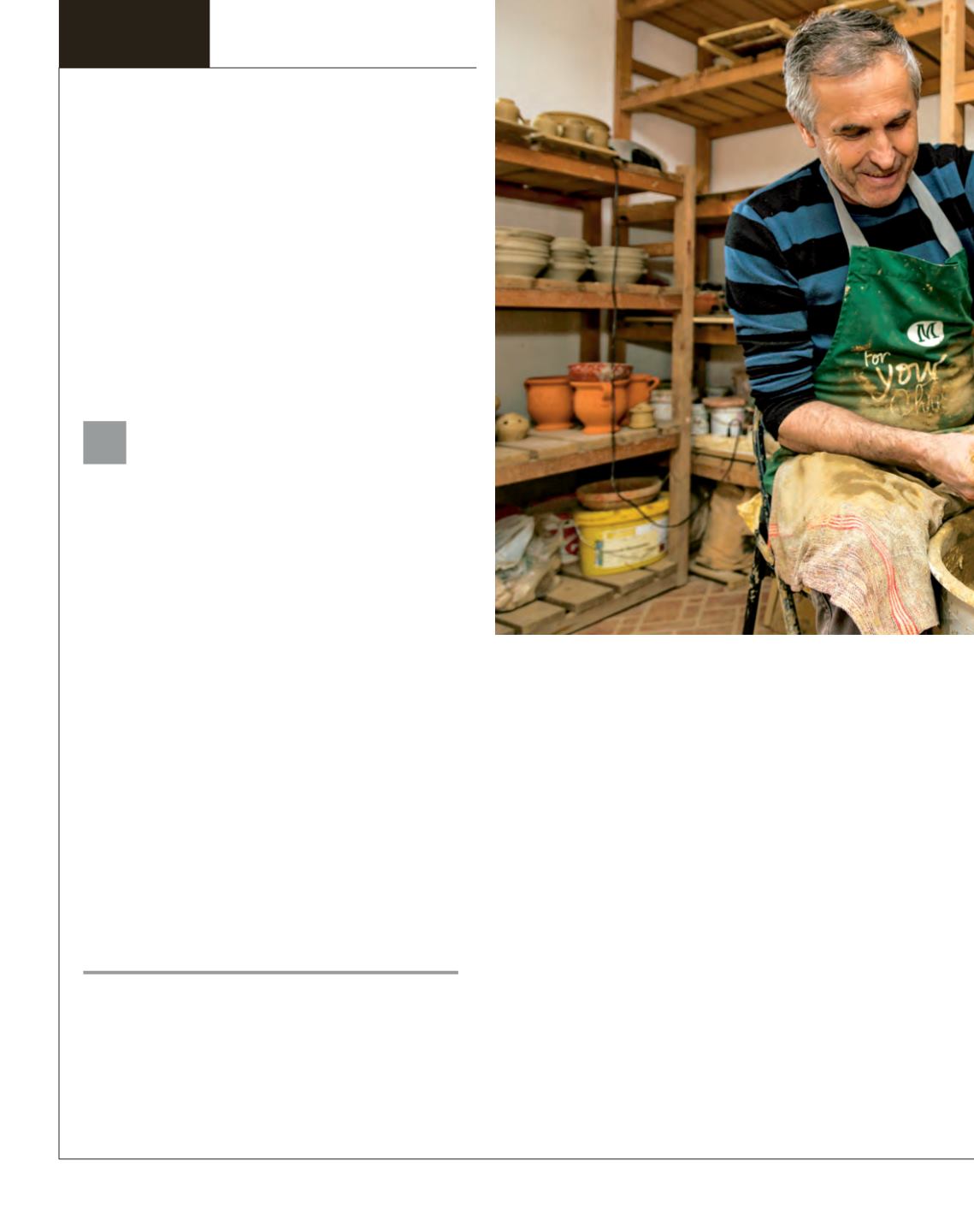
Thepottery tradition
This long-standing traditionofpottery that firstappearedunder the
influenceof theByzantineempire is furthermaintained in theVama
commune,which lies to theeastofNegreştiOaş.Archiveddocuments
suggest thepracticewasaroundbefore1850and thenumberof
potters in thisareaslowlydwindled to justone today:Geza Istvanfi.
After learning thecraft fromhis fatherandgrandfather, Istvanfi
dedicatedhis life to thispassion. Inhisworkshopyoucanwatchhow
thepotter’swheel transforms theclay into jarsandplates.
Ceramics fromVamaaredecoratedbygeometricalmotifs–points,
lines, circlesandspirals.Formerly, thepottersused tocarry their
goods inhorse-drawncarriages to the fairs thatused to takeplace in
NegreştiOaş.Fromhere, thegoodswereoftenboughtby tradesmen
andsold inSighet,Carei, SatuMareandZalău.
TheMuseum of Oas Land features folk
art and costumes from theOas region,
as well as fabrics, pottery from Vama,
furniture, elements of architecture and
interwar photos by I. G. Andron


