75
BEGINNERS’ BOTANY
THANK YOU, LEONARD
We owe much of our knowledge of Philippine forests to Leonard Co, the country’s premier field botanist, who knew the lush terrain
like the back of his hand. Before his tragic death while on a research expedition in Samar, Leonard had recognized the urgent need to
preserve our natural environment. He established the Philippine Native Plants Conservation Society Inc (PNPCSI) and spent most
of his life making botany accessible to the general public. In naming the nation’s wildflowers, he forged an emotional link between the
human and botanic worlds and offered a glimpse into both the world of Philippine flora and the natural environment as a whole.
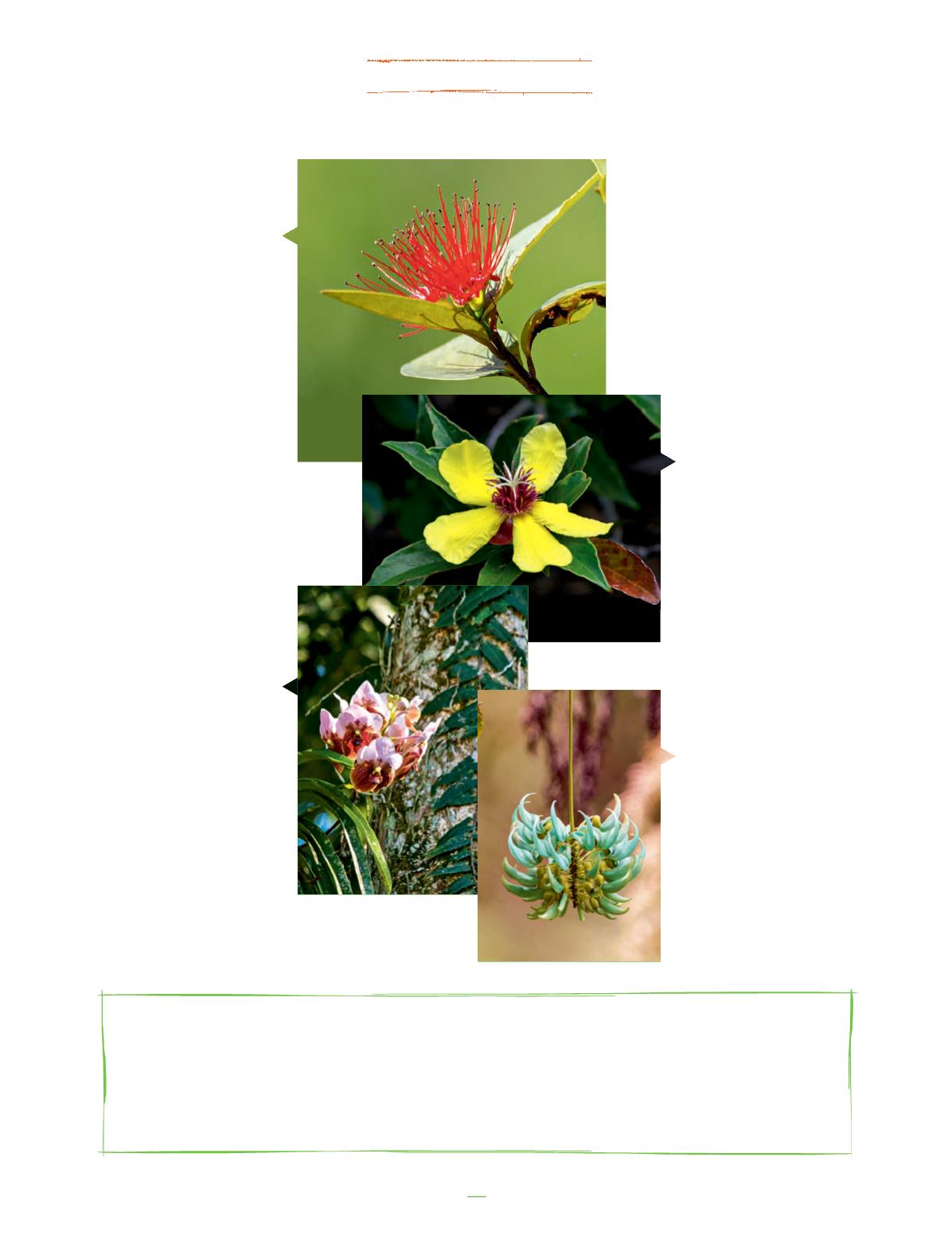
MANGKONO
Xanthostemon
verdugonianus
The mangkono, a tree that’s
endemic to the Philippines, is
reputed to have the hardest
wood in the country. While it
might take three hours to cut
down an average hardwood
tree with an ax, anecdotal
accounts suggest it would take
about two to three days to get
the job done on a mangkono
of the same diameter. Needless
to say, these legendary trees
are now very rare and are most
beautiful when in bloom.
WALING-WALING
Euanthe sanderiana
The queen of Philippine
flowers is held sacred by
some indigenous tribes and
was recently declared a
national flower along with the
sampaguita. The waling-waling
is endemic to Mindanao and
is a better representative of
the distinct flora of the region
than it is of the botanic jewels
of the archipelago as a whole.
A prime target of poachers,
it hasn’t been seen in the wild
for quite some time. Ironically,
what has probably saved the
species from extinction is the
political instability in some of
the regions where it’s found —
the risk of collecting it is just
too great. The waling-waling is
the parent to some of the
most flamboyant hybrids
in the orchid trade.
JADE VINE
Strongylodon elmeri
This is a woody vine that
grows along streams and in
other damp areas in Philippine
forests. The jade vine can
reach lengths of as much as
20m. The distinctive color of its
flowers, ranging from turquoise
blue-green to subtle jade, is
very rare in the wild. A prized
possession in any serious
botanic garden, it’s arguably
the ideal embodiment of the
Philippine tropical rainforest.
While the jade vine grows
on most of the archipelago’s
major islands, you won’t find it
anywhere else in the world.
CATMON SIBUYAN
Dillenia sibuyanensis
Until recently, this small but
spectacular flowering tree (with
yellow blooms) was thought
to be endemic to the island of
Sibuyan, off Romblon. That
is, until a separate population
of the trees was discovered
on the neighboring island
of Panay. In Sibuyan, it’s a
common roadside plant that’s
typically ignored by the locals
in spite of its landscaping
potential. It thrives under full
sun, in waterlogged areas and
in foothills, but it can also be
found in forest interiors near
waterfalls and clearings.


