THEADVENTURE
85
JULY 2015
soaring over southern and east Africaonone of their epic
annual flying safaris. Having seen thehighlights of this
extraordinarypart of the continent from the air, they are
now about to showme their Kenyanhome.
Campi YaKanzi is not a regular house, but a safari camp
that’s beenbuilt by the couple over thepast 15 years.
When 51-year-old Luca and46-year-oldAntonella first
came to the area, the only other inhabitantswerenomadic
Maasai herdsmen. “Wewalkedpaths createdby
elephants,” Antonella remembers, “and lived in a tent for
eight years. Therewereno roads. No airstrip. Nowater. No
phone. Our daughter spent the first two years of her life, in
fact, in a tiny two-man tent, until we could afford
somethingbigger.”
Today, Campi YaKanzi is a sophisticated safari camp,
hailednot only as one of themost ecologically friendly
spots on the continent, but one of themost innovative.
Unlikemany so-called “safari” operations that are
constructed in crowdednational parks or conservancies,
this 16-bedroom camp is the only onewithin this vast
1,000 sq km tract ofwilderness betweenAmboseli, Chyulu
Hills andTsavoNational Parks.
Looking out from the camp’s traditional stone, wood
and thatched living area and comfortable tented rooms,
there’s nothingbut empty space and rawbush as far as
the eye can see. Theirs is the only campherebecause, as
Luca explains, this area isn’t anational park, but aGroup
Ranch: an areaof land specifically set aside for theMaasai.
Traditionally, the tribewouldhavewandered about this
great expanse of grassland as nomads, raising cattle,
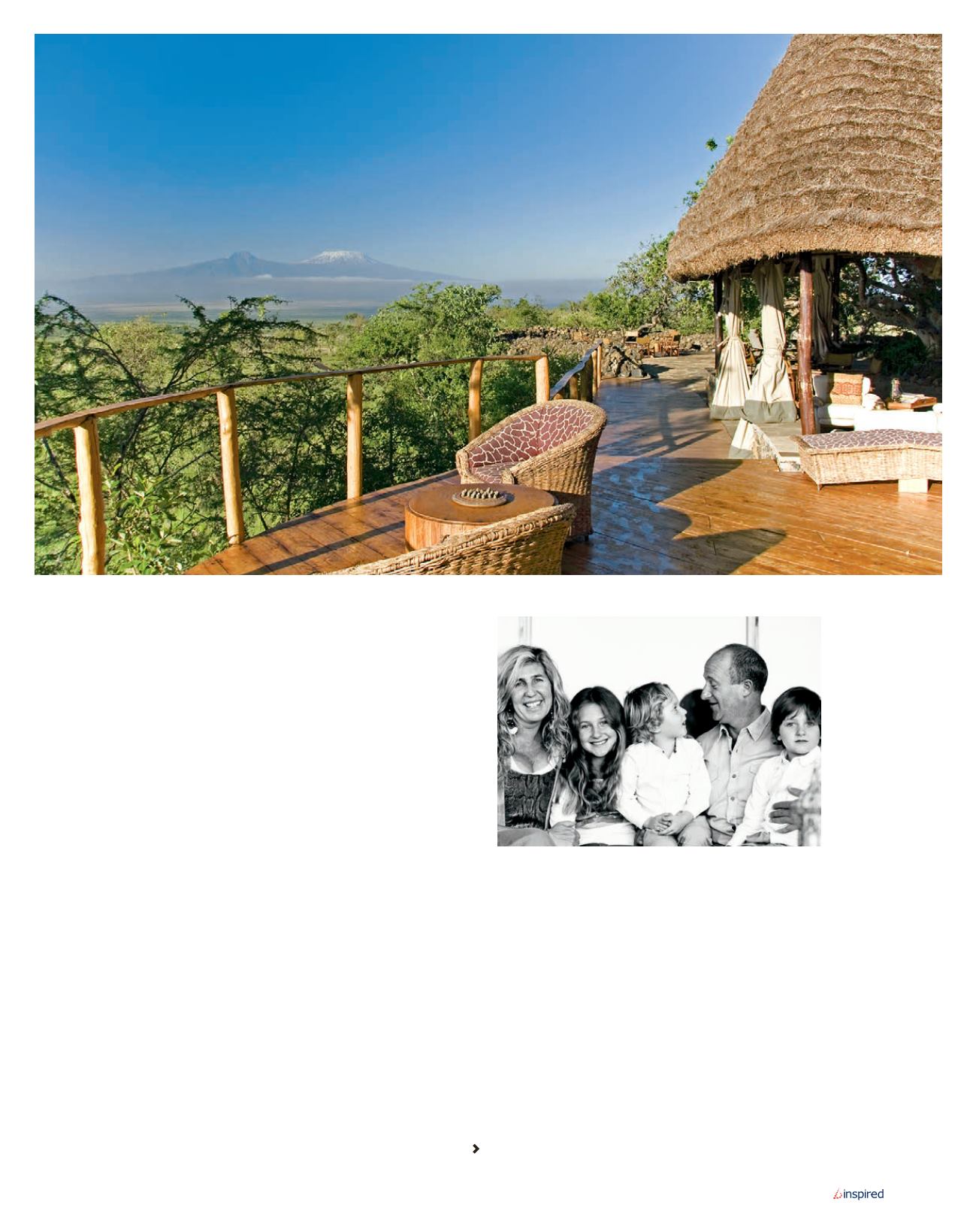
Top: thespectacularviewsofMountKilimanjaro from
CampiYaKanzi.Above:LucaandAntonellaBelpietro,
theconservationistsbehindthe idea,withtheirchildren
Wewalkedpathscreated
byelephantsand lived
ina tent foreightyears


