48 AMERICANWAY
JANUARY 1 2008
of tiny crabs, sea urchins, and branzino (sea bass) carpaccio; lin-
guine steeped in ebony cuttlefish ink; and a simple, flawless zuppa
di pesce (fish soup) containing the all-important posthangover re-
storative ingredient, tomatoes. Though I got here before everyone
else, I’mdetermined to spendmydayhere— tooutlast theTriestini
in theirhatsand fursgrandlydrinking theirChampagne—aspiring
tobecome some solitary object ofmystery, should anyone occasion
aglance.
Thenextday, theskiesareasearingblue.Myroomat thespectac-
ularGrandHotelDuchid’Aosta looksoutonto thePiazzadell’Unità
d’Italia, where children and their dogs rampage after the local pi-
geons. There are some who flock to Trieste just to tour its famous
cafés (themajestic Caffè SanMarco, Caffè Tommaseo, and Joyce’s
teensyPirona), but I elect topay the lowerprice foranequallygood
shot of Illyat variousbars onmyway toSanGiusto, the ruinedRo-
man crown atopTrieste’s skull. Thewalk is not that steep, and the
reward isgetting to standamong the rubbleof a forum, in the com-
panyof a fewoverfed cats, andgazeout at theplacidblue curtainof
water that inearlier times receivedone invadingfleet after thenext.
Returningdownhill, I encounter amodest little housewhere Joyce
taughtEnglish classes.
I’ve been gearing up for an atypically purposeful day in which
I visit the Risiera di San Sabba, a former rice factory on the out-
skirts of town. In 1944, the Nazis converted the old plant into a
concentration camp and installed a crematorium there. It’s a stark
and gruesomely compellingmuseum today. As I walk through the
former death house, studying its minuscule cells and the tattered
artifacts of its condemned, it occurs tome that I canhear screams.
After several bewilderingminutes, I discover the source: There’s a
small amusement park just behind the rearwall of theRisiera, and
childrenare screechingasa ridewhips them through theair.At last
I’ve foundadownside toTrieste’s indifference to juxtaposition.
Thevisit isno lessaffecting, however.Af-
ter taking a cabback to the center of town,
I findmyself unable to do anything except
shuffle broodingly through the streets and
watch the boats clank against the canal’s
docks.Triesteabidessuchmoods, of course.
It doesn’t spite youwith cheeriness orwith
the crush of urban bustle. Passing by the
market stalls, I’m slightly cheered by the
bright purple radicchio and the jars of lo-
cally produced marmalade. The clothing-
store signs announce winter
sconti
, or dis-
counts. Inside a slick Illy bar, I encounter a
swarm of ultrafashionable 20-somethings
strung out on caffeine and their ownunas-
sailable grooviness. A few doors down the
block isafineboutiquegrocerystore,where
Ipurchaseabottleof Slovenianoliveoil for
mymother. I’m starting to feel like myself
again. Andanyway, I’malmost there.
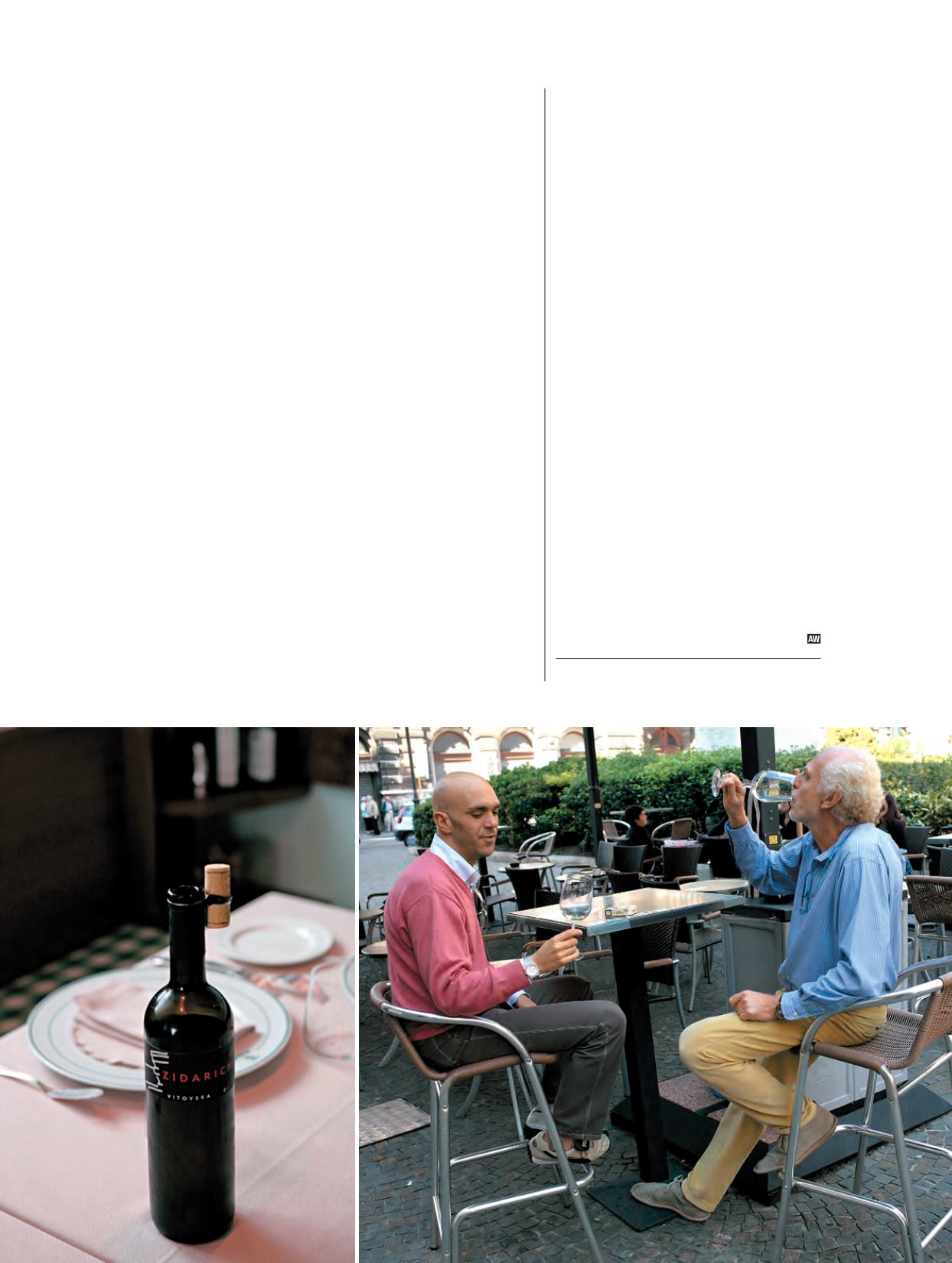
Almost there, to thebar stool that awaits
at GranMalabar, where the barman greets
me as the Adriatic would. I stare at the ar-
madaof exoticFriulian andSlovenianwine
bottles. He stares at me. It’s ameaningless
little moment … except that it feels like a
wonderful little fulcrum. Choose your own
poison?Author your own identity?Outlast
your conquerors?
Tutto èpossibile.
It feels thatwayhere.
RobERt DRApER
is an author and a correspondent for
GQ
. His
most recent book is
DeadCertain
.
Al Bagatto
(left) andGran
Malabar


