46 AMERICANWAY
JANUARY 1 2008
mostAmericanshaveneverheardof it, orof
thegorgeous regionofwhichTrieste is capi-
tal, Friuli Venezia Giulia. For that matter,
many Friulians don’t connect to their capi-
tal, sinceTrieste fell into Italianhands only
at the conclusionofWorldWar I.
Still, just as 50 million Elvis fans can’t
be wrong, there’s something to be said for
a city that the Romans, Huns, Byzantines,
Lombards, Goths, Cossacks, Venetians,
Austrians, Nazis, Yugoslavs, and Italians
each took the trouble to invade. The allure
is Trieste’s seaport, wedged invitingly into
the crossroads ofWestern andEasternEu-
rope. Because of this geographical happen-
stance, blood has washed through Trieste
for centuries — most recently (as monu-
ments and street names throughout town
attest), as a result of the grueling battles
on the Carso plateau above the city during
theFirstWorldWar andof the lynchings of
Nazi resistersduringWorldWar II.
But Idon’t ever feel the remotest senseof
tragedy as I move through Trieste. If any-
thing, the mortal collisions have bestowed
an exotic legacy. Someof theTriestini sport
keen Slavic cheekbones along with gold
Hapsburg hair. They take their finemade-
in-Trieste Illy coffee (whose president, Ric-
cardo Illy, is the town’s former mayor) in
splendidAustrian-style cafés, where aneb-
bish expat namedJames Joyce furiously scribbledout first
Dublin-
ers
and then
APortrait of theArtist as aYoungMan
. The restaura-
teursmixup theirnorthern Italianmenuswithgoulash fromHun-
gary, strudel fromAustria, a cinnamon-savorypasta called cialzons
from the Carnic Pre-Alps, and a strange but agreeable bean soup
made with sauerkraut, potatoes and pork and named jota from
Slovenia.
There’snonativist chest-beatinghere.History is strewnabout as
if it were an afterthought. At the edge of the city’s glitzy shopping
district is an exquisiteRoman amphitheater that wouldbe a lesser
town’s centerpiece; here it goes thoroughly ignored.Gold statues of
Joyce and Trieste’s famous homegrown author Italo Svevo jut up
unexpectedly frompedestrian streets. ThePiazzadell’Unitàd’Italia
— formymoney, right up therewith thePiazzaSanMarco inVen-
ice, thePiazzaNavona inRome, and thePiazzadelCampo inSiena
in its photogenicity— audaciously spills out of the city center and
into theAdriatic likeagleaming carpet ofmarble.
Trieste doesn’t fuss over itself or over its visitors. It’s not a life-
coach kind of city.What I’ve seen inTrieste is nothing like world-
weariness or a pining princess. Instead, Trieste is so self-possessed
that the smallmatters ofwho claims toown it orwhomight ignore
it areof perfect irrelevance.
Ibegin theyear2007
inTrieste. It’sacold,wetmorning,
the dreaded bora wind sending periodic bullwhip cracks of frigid
currents across the gulf. The streets are empty, and the city’smer-
chants, nodoubt feelingasnonindustrious as I amon thismorning
afterNewYear’sEve, have reposed for theday. But I’m in luck:One
of thebest restaurants in town, Ai Fiori, is open for lunch.
Youdon’t come all thisway for the familiar—not evenwhen the
body thinks it requires comfort food. And so, I opt for an antipasto
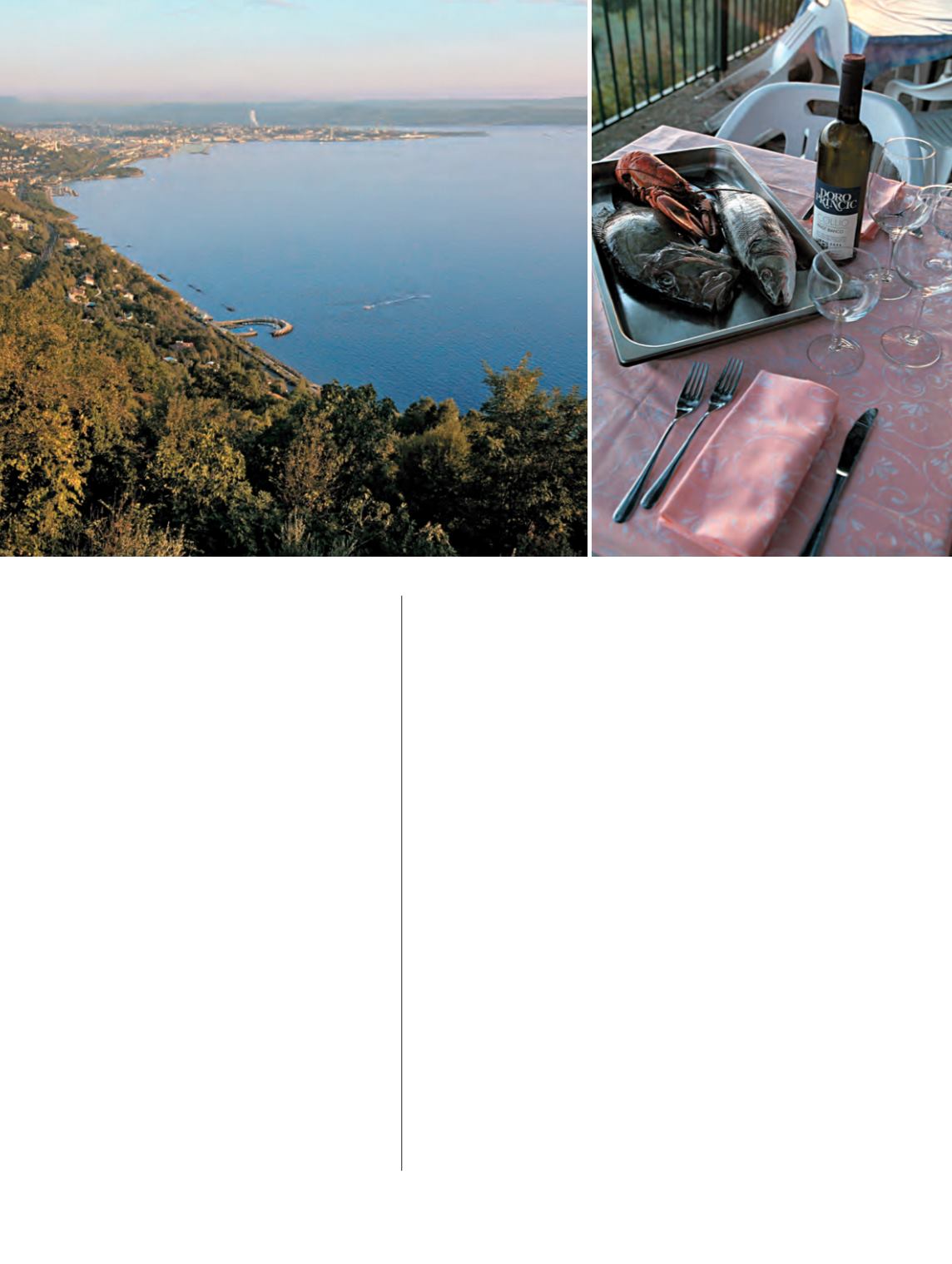
A viewof the
Trieste gulf (left)
fromSlauko (right)


