26 AMERICANWAY
DECEMBER 15 2008
S C I E N C E
WhEN IRA LEvINE, phd,
told his mother
he was leaving medical school to become
a phycologist, she didn’t protest at first.
But when she realized her son was going
to spend his career analyzing algae, not
the neuroses of affluent clients, she didn’t
speak tohim for a year. If onlyMrs. Levine
could seeher sonnow.
Algae— pond scum, kelp, seaweed, and
the like — is enjoying a heyday. Scientists
and entrepreneurs now tout it as much
more than the nori that wraps your sushi
or the carrageenan that thickens everything
from ice cream to toothpaste. It could be
the biofuel feedstock that saves the world
without raising food prices, a vacuum that
sucks up globe-warming carbon dioxide,
and even a material that makes bioplas-
tics,whichdisintegrate into compost rather
than stickaround for eternity.
“It’skindofrefreshing,”saysLevine,anas-
sociate professor at theUniversity of South-
ernMaine andan expert on the commercial
cultivationof algae. “Peoplecallmeup.Ven-
One
Word:
plastics
Algae
Pond scummight turn out tobe theworld’s best source
for, well, saving theworld.
ByHeatherMillar
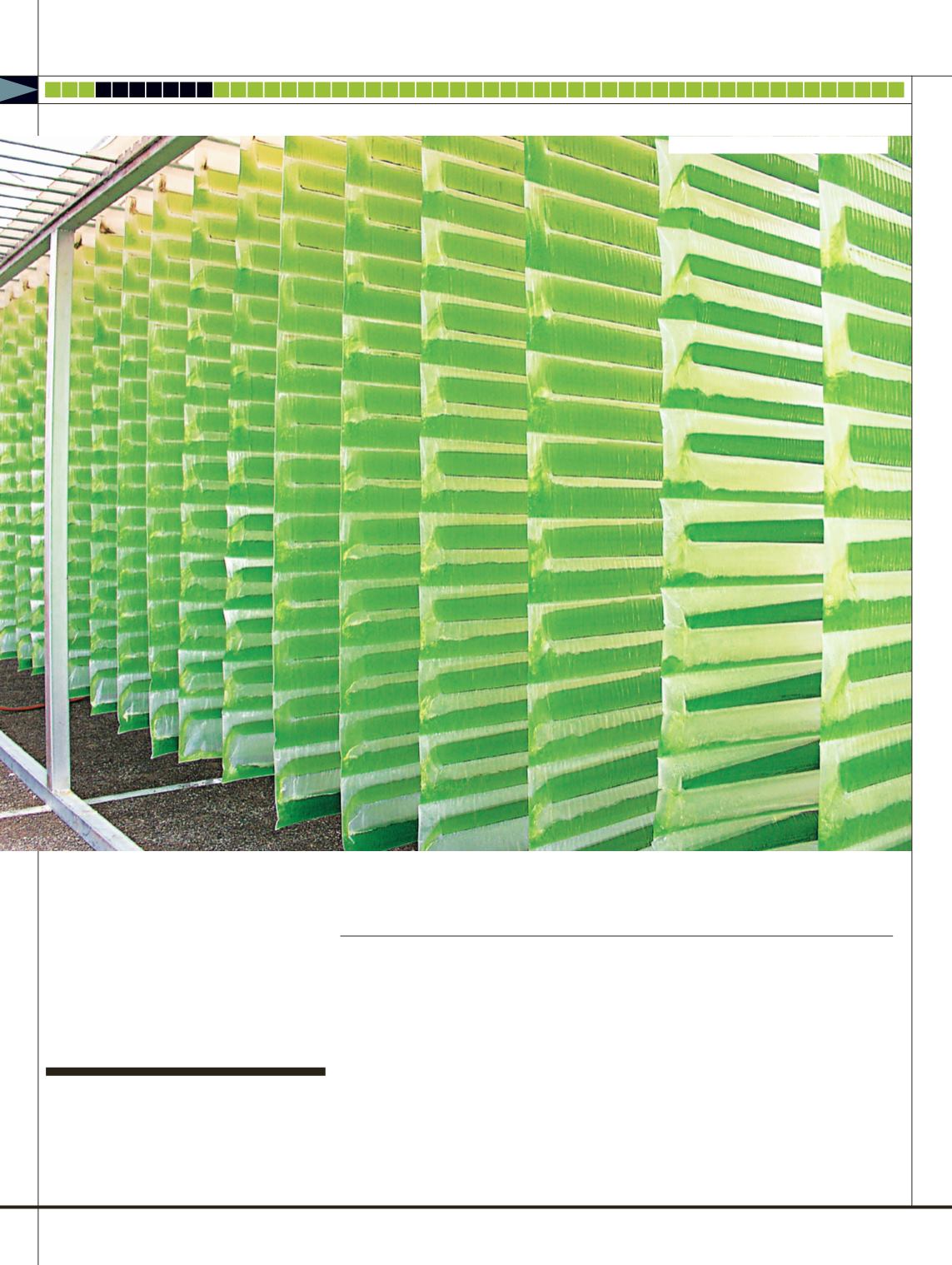
Growing algae at Valcent inEl Paso, Texas


