Most drivers picture a car wash when they hear the word detailing, but the two are not the same thing. A wash rinses away loose dirt. Car detailing is a full restoration of a vehicle's exterior finish and interior cabin, bringing paint, glass, wheels, carpet, leather, and trim back toward their best condition and protecting them going forward. For drivers across Louisville and the surrounding Kentucky and Southern Indiana region, understanding what professional car detailing actually does helps explain why it is worth far more than a trip through an automatic wash.
Sun Tint has spent over 40 years in vehicle care, and its dedicated in-shop detailing bays handle the full range of the work rather than a quick once-over. The result is a finish that looks and feels renewed, a cabin that is clean down to the materials themselves, and a vehicle set up to hold that condition longer. Walking through what a professional detail involves shows why the gap between a wash and a detail is so large.
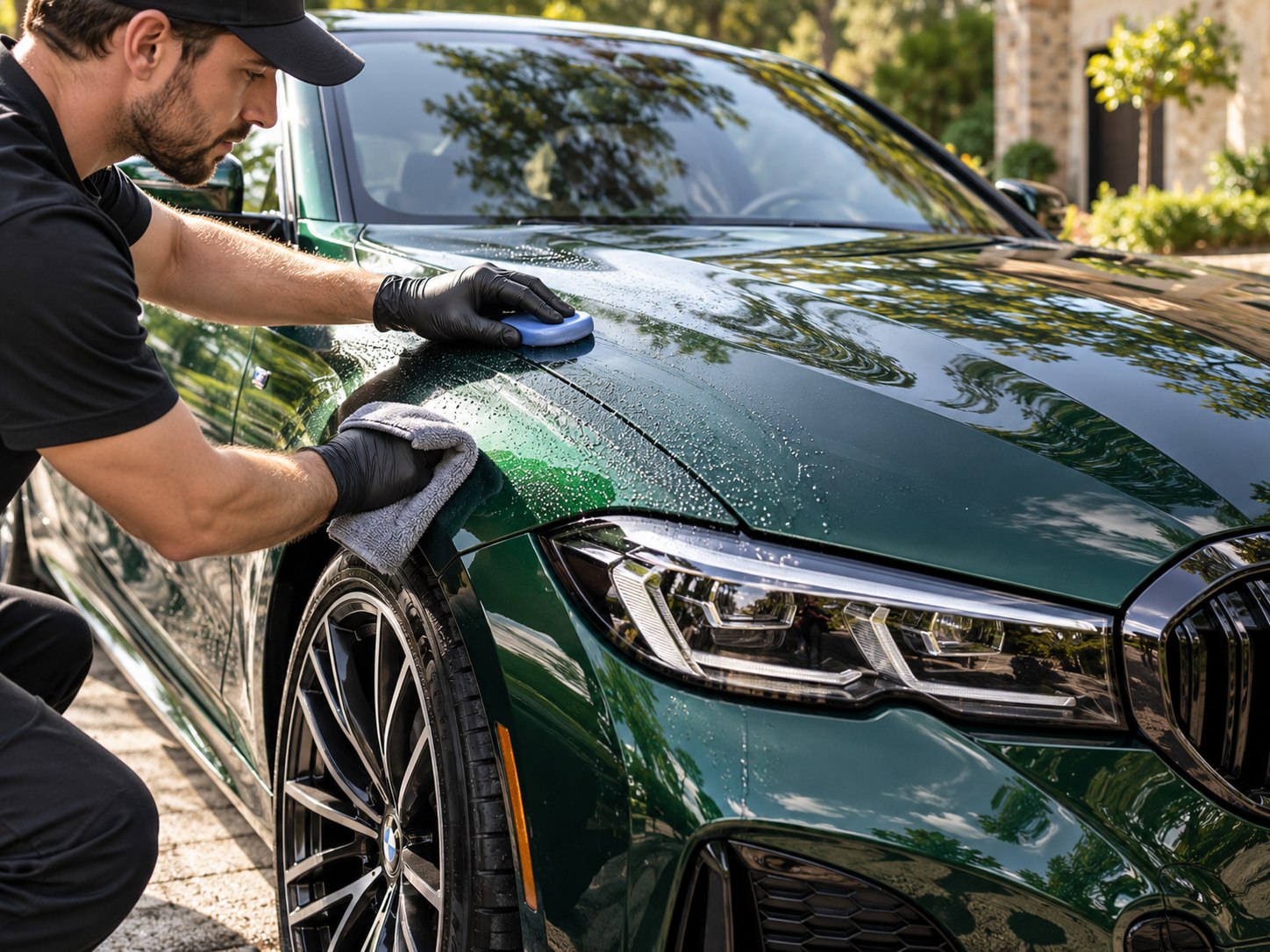
Car detailing starts outside with a careful hand wash using a pH-balanced shampoo and a soft wash mitt, followed by a microfiber towel dry that avoids the water spots air drying leaves behind. That is only the beginning. The step that sets detailing apart is clay bar decontamination, where a detailing clay lifts the bonded contaminants that washing cannot touch: industrial fallout, iron brake dust, tree sap, and road tar that have embedded in the clear coat, the thin protective layer over a car's color. After claying, the paint feels like glass, and only then is it ready for protection.
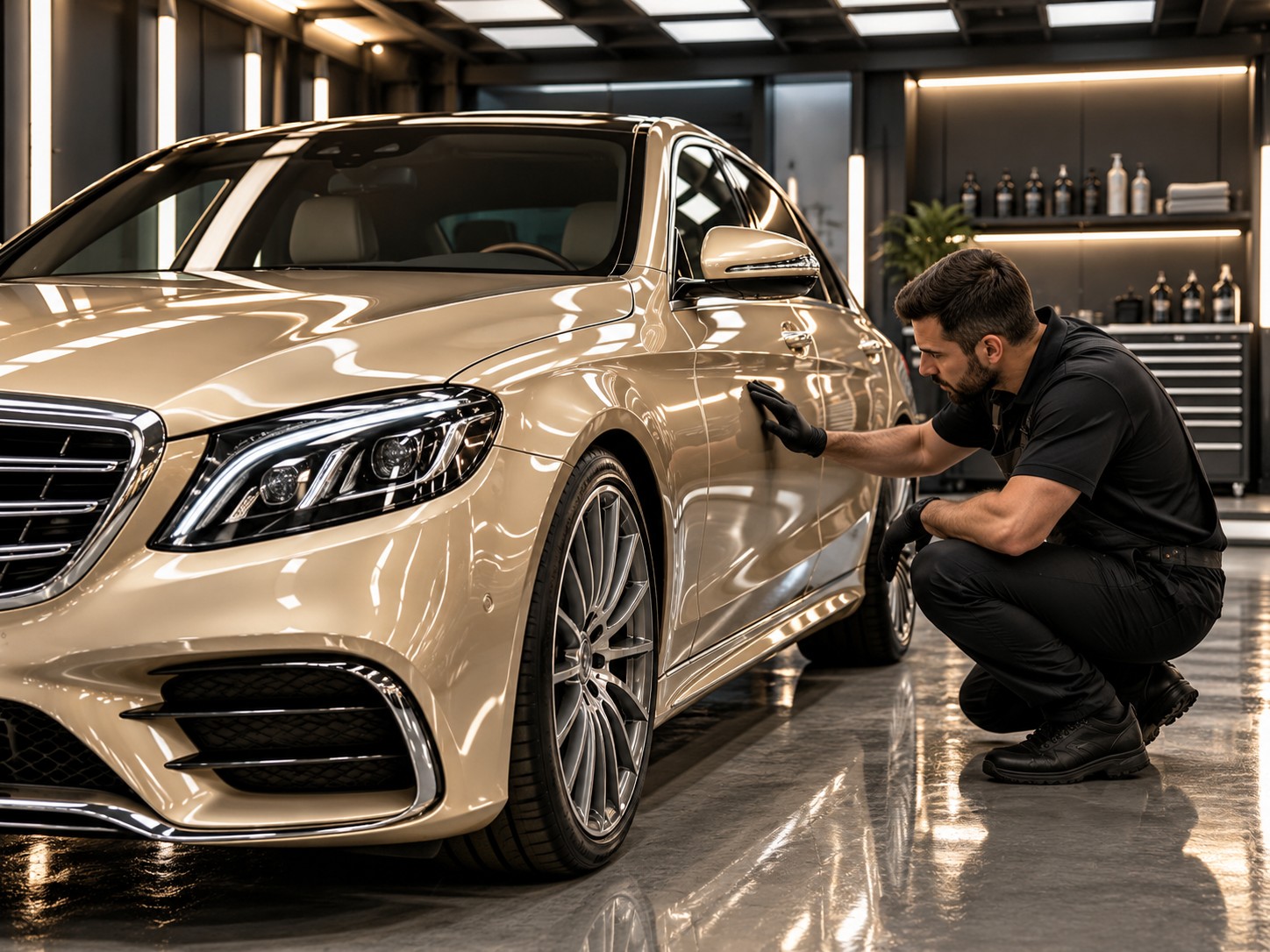
Wheels and tires get their own attention, with wheel-safe cleaners that remove the iron brake dust that causes orange staining and, left alone, pitting of the wheel finish. The exterior glass is cleaned with ammonia-free products, which matters because ammonia degrades window tint adhesive over time. Plastic and rubber trim is treated to slow UV fading. With the surfaces clean and decontaminated, a hand wax or paint sealant goes on to protect the clear coat, with carnauba wax and synthetic sealants giving different balances of warmth and longevity. This decontaminate-then-protect sequence is the backbone of exterior car detailing.
Ultraviolet light is a leading cause of dashboard cracking, leather drying, and trim fading, because it breaks down the plasticizers and oils in cabin materials over time. Regular interior cleaning and conditioning slows that aging, which is why a detail addresses UV damage as much as dirt.
A clay bar lifts industrial fallout, brake dust, tree sap, and road grime that have bonded to the clear coat and that washing alone cannot remove. Running a hand over the paint after claying reveals a glass-smooth surface, which is also why decontamination comes before any wax, sealant, or coating.
Oxidized, yellowed headlight lenses can reduce light output substantially, by as much as roughly 80 percent in heavily clouded cases, which affects nighttime visibility. Headlight restoration removes the oxidized layer and seals the lens, recovering clarity and output without replacing the housing.
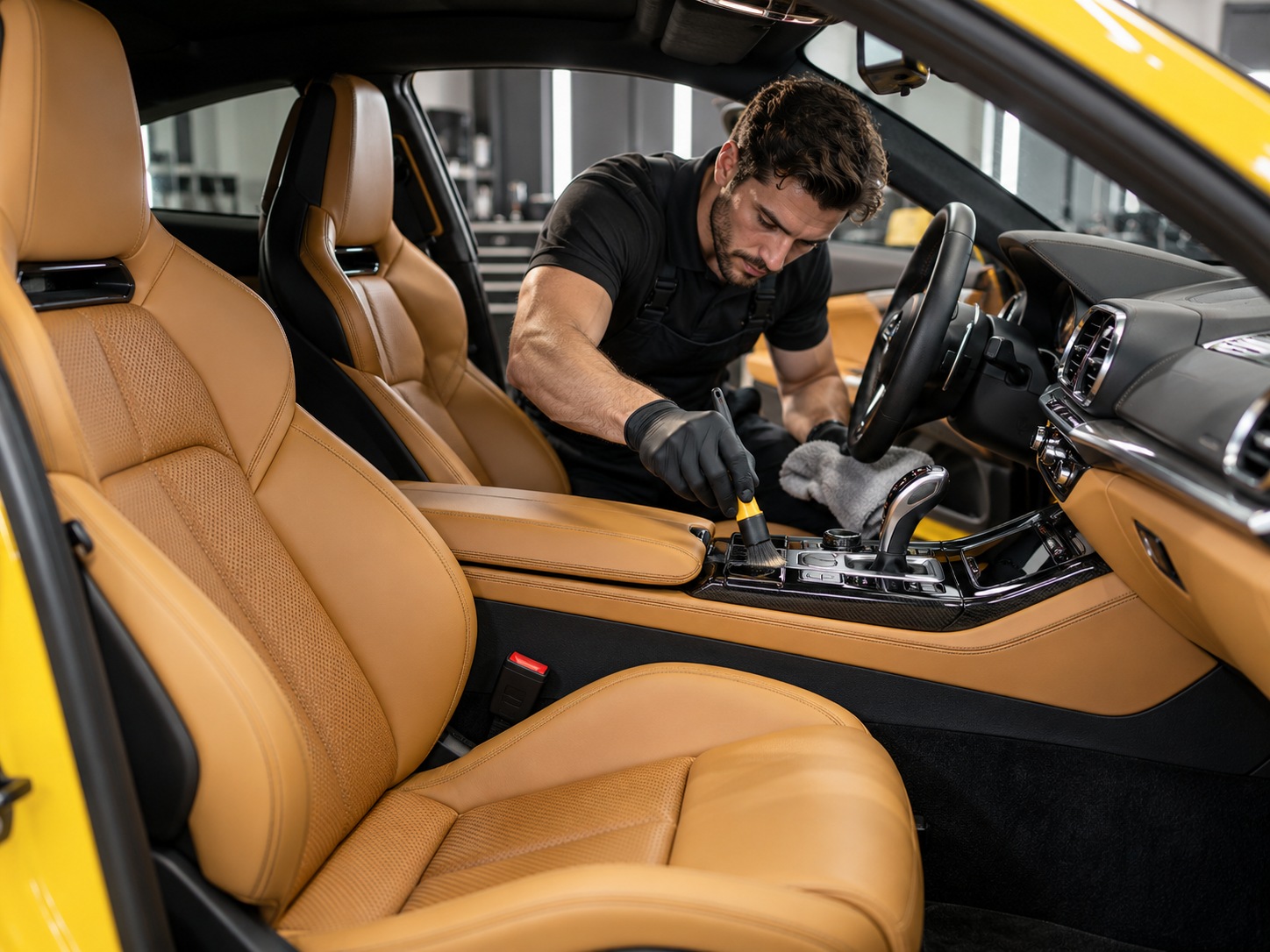
Interior car detailing reaches well past a vacuum and a wipe. A full vacuum pulls debris from carpets, mats, and seats, and hot water extraction follows, injecting heated solution into the carpet and drawing it back out along with embedded dirt, allergens, mold spores, and the bacteria behind many odors. Floor mats are cleaned separately. The result is carpet cleaned down to the backing rather than only on the surface, which is what removes both staining and the smells that live in the fibers.
Leather is cleaned with a pH-neutral cleaner and then conditioned, which restores moisture and UV resistance and slows the cracking and fading that Kentucky heat drives in a closed cabin. Every hard surface gets attention: the dashboard, door panels, center console, cup holders, vents, steering wheel, and gear shifter, cleaned with interior-safe products. Interior glass is cleaned ammonia-free to clear the hazy film that outgassing plastics leave behind, the film that causes windshield glare. Odor treatment addresses smoke, pet, mildew, and food smells at the source rather than masking them. This depth is why a detailed interior feels like a different vehicle.
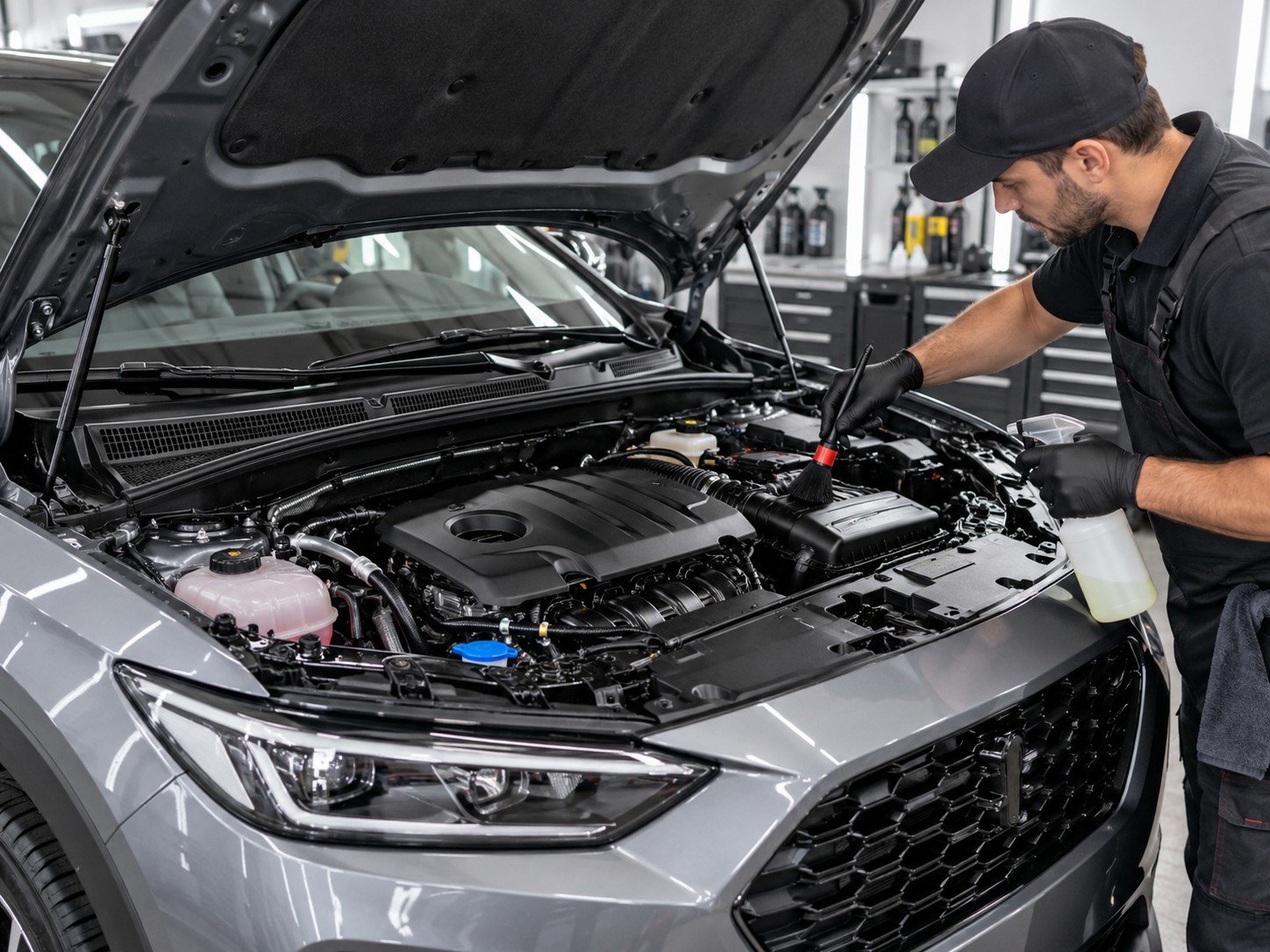
A professional detail can carry into services that a wash never could. Headlight restoration wet-sands, polishes, and seals oxidized, yellowed lenses, recovering clarity and the light output that heavy oxidation can cut by a large margin. Engine bay cleaning uses low-pressure methods and degreasers to remove built-up grime without soaking sensitive components. For drivers who want lasting protection, ceramic coating adds a semi-permanent hydrophobic layer that beads water and resists contamination, and paint protection film, a clear urethane layer sometimes called a clear bra, guards high-impact areas against chips with a self-healing top layer.
These add-ons share a reason to begin with a detail: they all perform best on a fully decontaminated surface. Applying a ceramic coating or paint protection film over bonded contaminants traps that grime underneath, which is why the clay bar and surface prep in a detail are part of a proper coating or film job. Sun Tint handles detailing, ceramic coating, paint protection film, and window tinting under one roof, so a vehicle can move from a deep clean into long-term protection without changing shops. That one-stop vehicle care is part of what car detailing makes possible.

Sun Tint performs its car detailing in-shop rather than outdoors or from a mobile unit, and the setting shapes the result. A dedicated detailing bay offers controlled lighting that reveals swirls, contamination, and missed spots a driveway never would, along with the water, power, and equipment that deep extraction and proper decontamination require. Controlled conditions also protect freshly cleaned and coated surfaces from the dust, pollen, and sudden weather that an outdoor detail cannot avoid. For work meant to restore and protect a finish, that environment is part of the quality.
The in-shop approach also means the same trained team handles the vehicle from assessment through the final walkthrough, using professional-grade products chosen for the surfaces they touch rather than one all-purpose cleaner. This matters most on high-end, luxury, and exotic vehicles, where the wrong product or method can do harm, and on classic and collector cars, where original materials need care. The controlled bay and the trained hands behind professional car detailing are why the outcome is consistent rather than left to the weather and a parking lot.
No two vehicles arrive in the same condition or carry the same needs, and good car detailing accounts for that. A daily commuter coated in highway film and winter salt needs heavy exterior decontamination. A family SUV with years of spills and pet hair needs deep interior extraction and odor work. A luxury or exotic vehicle needs careful product selection and finish work. A classic or collector car needs gentle, material-appropriate methods. A pre-sale or trade-in vehicle needs the presentation that supports its value. Sun Tint assesses each vehicle and matches the work to it rather than running every car through an identical process.
That assessment is where the free quote comes in. Because the right scope depends on the vehicle's condition, how it is used, and the owner's goals, Sun Tint looks at the actual car before recommending the work, and shares transparent pricing before anything begins. There are no published per-vehicle figures because the honest number depends on what the vehicle needs. This match-to-the-vehicle approach, backed by over 40 years of experience, is what separates professional car detailing from a one-size-fits-all package.
Detailing is maintenance for a vehicle's appearance, and like any maintenance it pays off over time. Left unaddressed, bonded contaminants etch the clear coat, UV cracks the dashboard and dries the leather, oxidation dulls the paint, and odors settle into the materials, all of which lower how a vehicle looks and what it is worth. Regular detailing reverses the reversible damage and slows the rest, which keeps a Louisville car looking cared for year after year rather than aging faster than it should. For an owner planning to keep a vehicle, or to sell it well later, that ongoing protection is one of the quiet returns of the work.
This is true across the vehicles that fill Louisville and the surrounding region, from daily commuters to family SUVs to weekend classics. A daily driver in Louisville that is detailed on a sensible schedule holds its finish and cabin far better than one that only ever sees an automatic wash, and the gap widens every year. The owner who treats detailing as part of regular upkeep, rather than a one-time cleanup, is the one whose vehicle still looks years younger than its mileage when the time comes to trade or sell in the Louisville market.
Many drivers rely on an automatic brush car wash, and over time that choice works against a finish. The spinning brushes and recycled water drag grit across the paint, leaving the fine micro-scratches and swirl marks that dull a clear coat and show up in direct sun. The wash removes loose surface dirt but leaves the bonded contaminants, the iron brake dust, fallout, sap, and tar, exactly where they are, and it does nothing for the interior. What looks clean leaving the tunnel is still contaminated at the surface and still aging underneath.
Professional detailing takes the opposite approach. A careful hand wash lifts dirt away from the paint rather than grinding it in, clay bar decontamination removes what has bonded, and the surface is then protected rather than left bare. The interior is cleaned down to the materials instead of ignored. The contrast is why a detailed vehicle looks and feels different from a freshly washed one, and why Louisville owners who care about a finish move away from the automatic wash toward professional work and proper aftercare, including a soft wash mitt and pH-balanced shampoo between visits.

A professional detail sets a baseline, and simple aftercare keeps a vehicle close to it between visits. Washing by hand with a pH-balanced shampoo and a soft microfiber mitt, drying with microfiber to avoid water spots, vacuuming the interior regularly, and wiping cabin surfaces with interior-safe products all preserve the work. Avoiding automatic brush washes protects the finish from the swirls they cause. For vehicles with a ceramic coating, following the coating care guidelines keeps the hydrophobic layer performing. None of this is difficult, and it extends the time a vehicle looks its best after a detail.
Sun Tint shares care instructions at the final walkthrough, so a Louisville owner leaves knowing how to protect the result. Paired with a sensible detailing interval, that aftercare is what keeps detailing from being a one-time effort and makes it part of how a vehicle is kept. The combination of professional work and informed upkeep is what separates a vehicle that holds its condition from one that slides back within weeks.
Professional car detailing restores a vehicle inside and out, from decontaminated, protected paint to a cabin cleaned down to its materials, and it sets up the surface for lasting protection through ceramic coating or paint protection film. Sun Tint brings over 40 years of vehicle care experience, dedicated in-shop detailing bays, professional-grade products, and one-stop service across Kentucky and Southern Indiana. To see what a full detail would involve for a specific vehicle and get a free quote, reach Sun Tint or call (502) 254-0001.
Redirect to:
|
This page is a redirect. The following categories are used to track and monitor this redirect:
|