How to choose the right skip bin hire in Auckland (2026)
Whether you're doing a weekend declutter, a garden blitz, or a full renovation, choosing the right skip bin in Auckland can save you money, stress, and a lot of back-and-forth. By 2026, the city's waste rules and costs have continued to nudge people toward smarter sorting and better recycling, and skip providers have lifted their game with clearer pricing and faster service. Still, the best result comes from matching the bin and the company to your job, site, and schedule. Here's how to do it well.
Start with the three W's: What, how much, and where
- What are you throwing out? Waste type determines the bin you need and what it will cost. General household junk is different from hardfill (concrete, brick, tiles), green waste, soil, or clean, single-stream materials like plasterboard. Mixed heavy waste costs more than light, bulky waste because of disposal fees and weight.
- How much volume and weight? Skip sizes are measured in cubic metres (m³). As a rough guide: a 3 m³ bin suits a small room clear-out; 4–6 m³ works for bathroom or kitchen rip-outs; 9–12 m³ fits larger renos or big garden jobs. Weight matters just as much. Light, fluffy waste might average 100–150 kg per m³. Hardfill can exceed 1,500 kg per m³. If you're loading soil, concrete or tiles, a smaller bin is safer and cheaper because of truck lifting limits and landfill charges.
- Where will it sit? Auckland driveways can be steep, narrow, or tree-lined. Measure access width and check for low eaves, wires, or branches. If the bin needs to go on the berm or road, you may require a permit from Auckland Transport and may need cones or night-time visibility measures. Apartments and shared driveways often need body corporate approval. For outer suburbs or island locations, ask about extra cartage or ferry fees.
Know the rules before you book
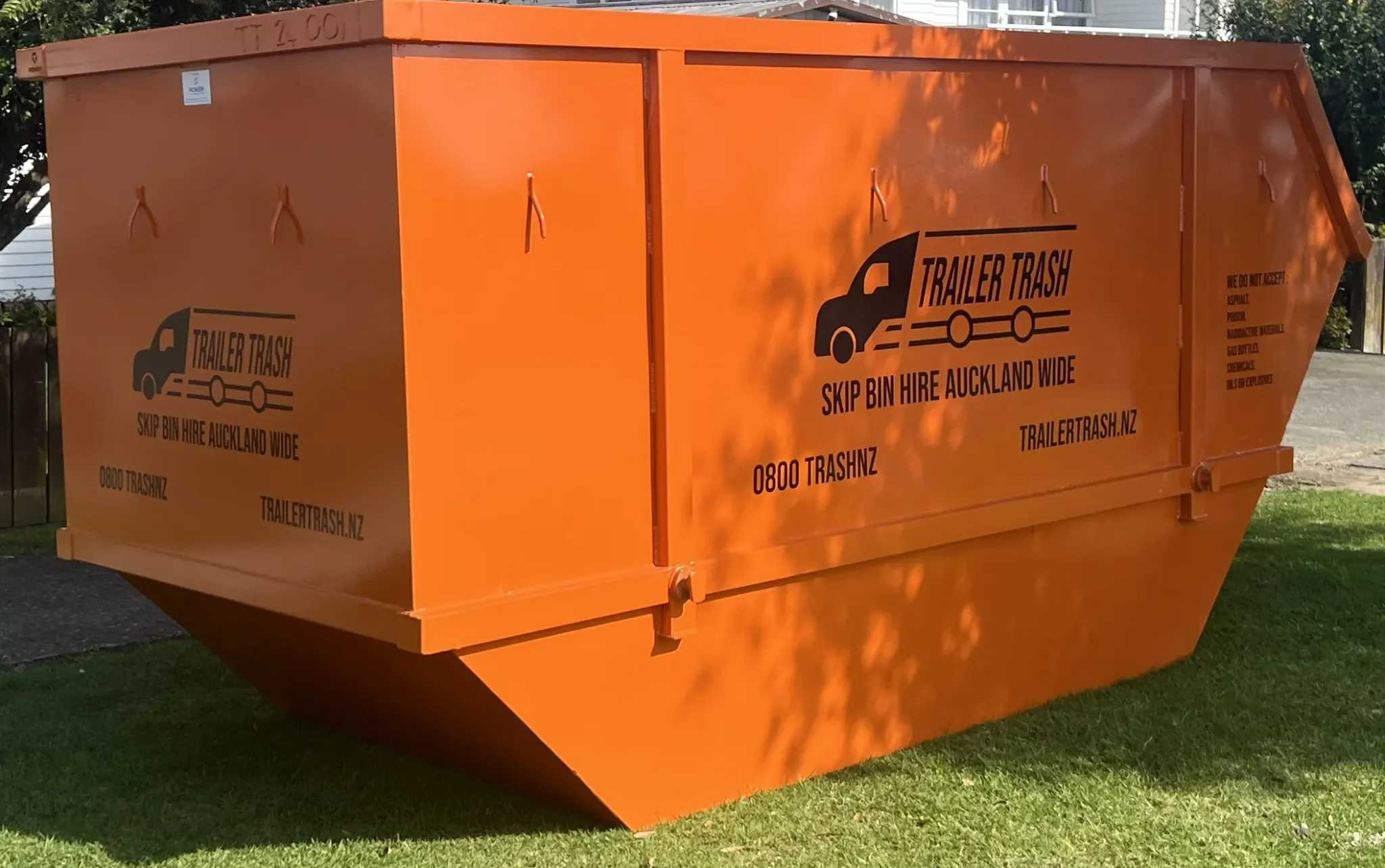
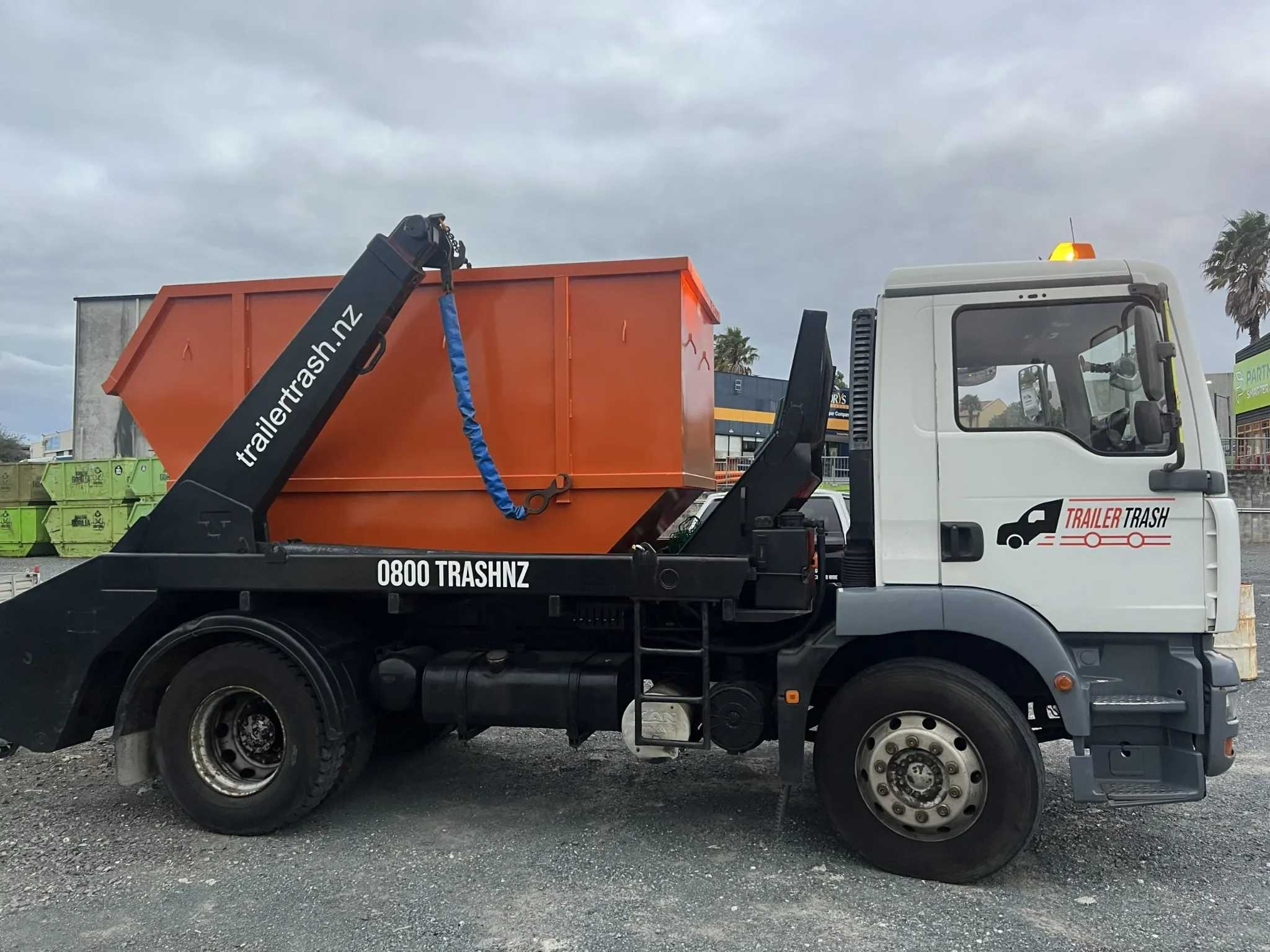
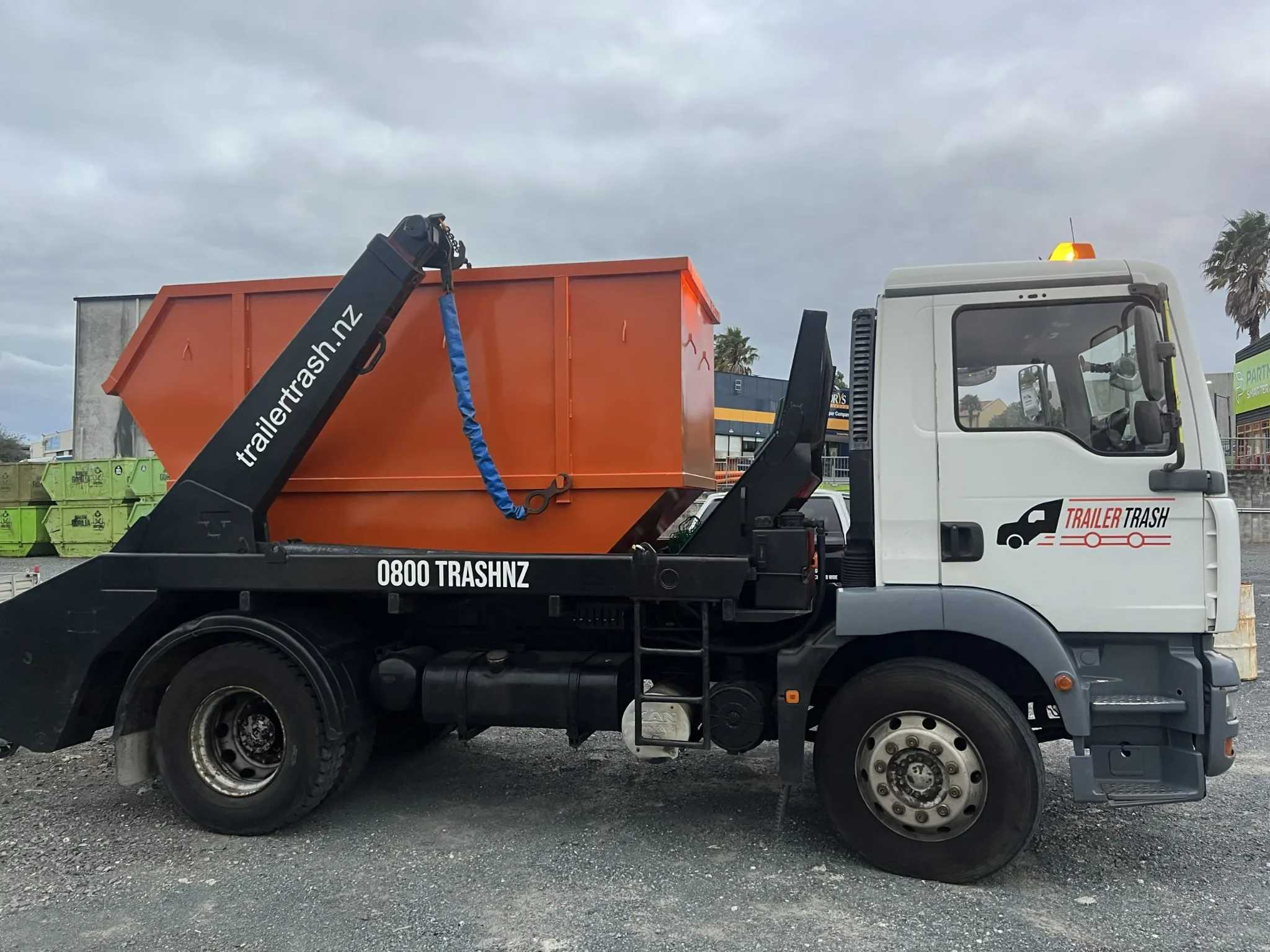
For people comparing skip bins hire auckland services, Trailer Trash offers practical options for household cleanups, renovation waste, green waste, and trade jobs across Auckland.. - Prohibited items: Most skip companies will not accept asbestos, liquids (paints, oils, chemicals), gas bottles, tyres, batteries, or e-waste in general bins. These require special handling. If you suspect asbestos (older lino, textured ceilings, soffits), stop and get a licensed assessor; don't toss it in a skip.
- Overfilling and level loads: You can't heap waste above the rim-trucks must tarp bins safely. Overfilled bins can trigger extra fees or a refusal to collect.
- Council and road rules: If you place a bin on public land or the road reserve, check current requirements with Auckland Transport and Auckland Council. Rules and fees can change; get written confirmation if your provider is arranging any permit.
- Stormwater awareness: Don't set a bin over or next to drains. Rain running through waste can cause pollution and fines.
Price the job properly (and avoid surprise fees)
Skip hire quotes can look similar until you read the fine print. Ask for an all-in price that includes:
- GST (15%), delivery and pickup
- Hire duration (standard is often 3–5 days; weekend specials exist; extra days may be charged)
- Weight allowance and overage rate (per 100 kg or tonne)
- Waste stream (mixed, green, hardfill, cleanfill)
- Access or distance surcharges (tight sites, long driveways, out-of-zone)
- Failed delivery/collection fees if the truck can't place or retrieve the bin
A good rule: if you're dealing with heavy waste, choose a smaller bin with a clear weight allowance. If you're dealing with light, bulky waste, go larger to avoid ordering a second bin.
Choose a provider with real recycling and clear standards
Landfill levies have risen over recent years, and in 2026 costs still reward smart sorting. Strong providers:
- Publish diversion rates and explain what they recycle (metals, timber, cardboard, plasterboard, green waste, concrete)
- Offer single-stream bins (e.g., clean plasterboard or hardfill) at better rates than mixed waste
- Are members of industry bodies (e.g., WasteMINZ) and follow Worksafe requirements
- Provide disposal documentation on request (weight dockets, facility receipts for commercial jobs)
If sustainability matters to you, ask where your waste goes and how much is diverted. You'll quickly spot who's serious versus who's vague.
Match service to your schedule
- Lead times: Same-day or next-day delivery is common across the isthmus, but demand spikes around long weekends, pre-Christmas, and during large weather clean-ups. Book early for these periods.
- Delivery windows: Ask for an AM/PM window and the driver's call-ahead. Provide a placement photo or mark the spot on site to avoid delays.
- Flexibility: Can you extend hire easily? Can they swap a full bin for an empty one quickly? If you're staging a renovation, a reliable swap-out beats guessing a giant bin upfront.
Think safety and site care
- Protect driveways and pavers with timber boards if you're worried about marks or weight
- Keep kids and pets away; sharp materials should go in first, covered with softer waste
- Load evenly to avoid tipping; place heavy items at the bottom
- Don't block sight lines on the street; use cones or safety markers if near traffic
Two quick Auckland examples
- Bathroom renovation in a villa: Plasterboard, cabinetry, old fittings, and some tiles. Likely 4–6 m³. If you can separate clean plasterboard and metal, you may cut costs. Tiles are heavy; if there's a lot, consider a small hardfill bin plus a general bin rather than one big mixed bin with high overage.
- Titirangi garden tidy: Branches, leaves, some soil. A 6–9 m³ green waste bin is cost-effective if it's mostly organics. Soil is heavy and usually excluded from green waste pricing-bag or separate it, or book a small cleanfill bin just for soil.
Consider alternatives when they fit better
- Skip bags: Great for small, light loads or tight access where a truck can't place a steel bin. Check weight and collection limits; placement must be reachable by a hiab.
- Man-and-truck services: If you want help loading or have mixed awkward items, a labour-included clearance can be comparable in cost to a bin plus your time.
- Direct drop-off: For a one-off heavy item or pure recyclables (metals, cardboard), dropping at a transfer station can be cheaper than a bin.
A short checklist for 2026 Auckland skip hire
- Define your waste types and estimate volume and weight
- Measure access and decide on private land vs public placement
- Confirm current council/AT requirements if using road reserve
- Get two to three GST-inclusive quotes with clear weight allowances and overage rates
- Ask about recycling/diversion, and single-stream pricing if you can sort
- Book early for peak periods; request delivery windows and placement notes
- Load safely, keep it level, and avoid prohibited items
- Keep paperwork or dockets if you need compliance records
The right skip bin isn't just the cheapest upfront-it's the one that fits your waste, your site, and the city's rules, with a company that communicates clearly. With a bit of planning, you'll finish your Auckland project in 2026 with fewer trips, lower fees, and a lighter footprint.