INDUSTRY NEWS: FAA Report IDs ‘Issues’ with
Boeing 787, Declares It Safe



Tampa Bay | Open House

The Tampa Bay Open House on March 29, 2014, will be an awesome chance to check out the campus and have a great time. If you shoot and hit a basket, you will win free prizes from bracelets to t-shirts. All of our admissions representatives will be available for guided tours and to answer any questions.
Tampa Bay | Captain Irby Rivera

Captain Irby Rivera, a United Airlines commercial pilot, will host a public session from 11:30 AM to 1 PM this Saturday to discuss his illustrious career in aviation and the mentorship program that has been established for pilot training students at Broward College.
Captain Rivera ascended the ranks as a decorated pilot in the United States Air Force after attending Rutgers College; his subsequent employment at United Airlines, as a captain and check airman, allowed for the distinct honor of flying President Barack Obama in 2008. The mentorship effort, which includes Captain Rivera, aims to connect experienced airline pilots with students to provide seasoned practical insight and career guidance in the face of an upcoming pilot shortage within the in the industry.

New England | Scholarship Winners

New England | Open House
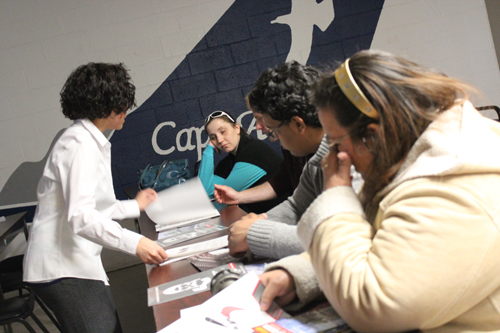
Admissions representative, Keillyn Diaz, speaks to a potential student and his family regarding the classes included in the program at NAA. (Photo: Jim McNeil)
NAA New England’s March Madness Open House was held on March 22, 2014. This eventful day allowed over fifty potential students to visit the Lincoln North facilities and hangar. Instructors and the admissions staff provided campus tours and information about programming. We look forward to welcoming the new students who attended. Stay tuned for more detail about the next open house in New England which is scheduled for June.

FAA Report IDs ‘Issues’ with
Boeing 787, Declares It Safe
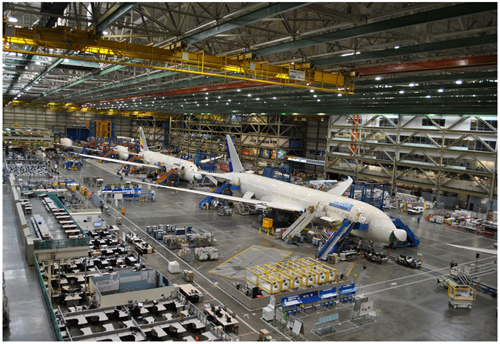
A joint FAA-Boeing review team issued four recommendations related
to Dreamliner production and design processes.
The U.S. Federal Aviation Administration recommended that Boeing address four “issues” related to manufacturing and supplier quality in a new report released on March 19. The report details the results of a joint review of the Boeing 787’s design manufacturing and assembly processes ordered after the January 2013 lithium battery fire aboard a Dreamliner parked at Boston Logan Airport. The review team also made recommendations for improved, “risk-based” FAA oversight to account for new business models.
Team members traveled to manufacturing facilities in the U.S. and abroad and used in-service data and “safety risk management principles” to conduct reviews of the 787’s critical systems. They chose specific components to examine more thoroughly, including the aircraft’s variable-frequency starter generators, electrical power panels, fuel-line couplings and aft fuselage sections.
The review team recommended, first, that Boeing establish a means to ensure suppliers identify realistic program risks and complementary mitigation plans through what it called “closed-loop flowdown validation of requirements.” Closed-loop corrective action involves a process in which suppliers define and describe the problem in question, identify causes, test, validate, implement and sustain the solutions and monitor their results. According to the report, the review team found cases in which complete and accurate design requirements did not “flow down” from Boeing to its primary supplier then to the subtier suppliers involved. The failure to adequately validate and verify design requirements resulted in inconsistency in parts manufacturing, part failures and operational disruptions such as turn backs and diversions.
Read more...
Going Global: Boston's
International Flight Expansion
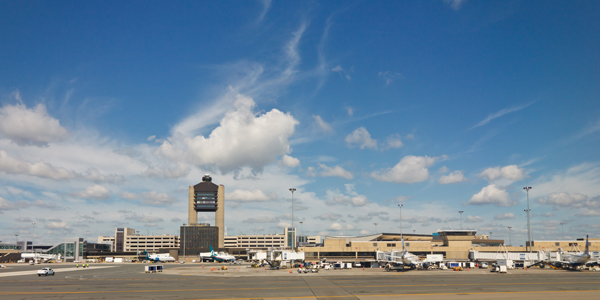
BOSTON – Promoting the Massachusetts economy in the global market took center stage Tuesday at a Greater Boston Chamber of Commerce government affairs forum. Gov. Deval Patrick joined executives from Copa Airlines and Hainan Airlines along with Massport to discuss the value of international air service to our growing economy.
“Lasting growth in the 21st century global economy will come from our competitiveness in global markets,” said Governor Patrick. “Thank you to the Chamber and the team at Massport for working side-by-side to better establish Massachusetts as an international business and tourist destination.”
The Greater Boston Chamber of Commerce has identified the expansion of international connections as one of its top priorities for promoting the Massachusetts economy in the global market. Logan now serves 36 overseas markets with nonstop service, up from 26 international destinations a decade ago.
”Direct international connections to Logan benefit our economy and our community, providing improved access to overseas markets and showcasing Boston as a gateway to our region,” said Paul Guzzi, president and chief executive officer of the Greater Boston Chamber of Commerce. “Thanks to the work of Governor Patrick, Massport, and other leaders, we have been remarkably successful in expanding the number of these flights, and the Chamber strongly supports continuing these efforts moving forward.”
International air service is the fastest growing segment of the Logan Airport travel market, up 20% in the past decade with 5.7 million international travelers served last year. International travelers now constitute 1 in 5 passengers at Logan Airport with long-range forecast predicting the number of international departing seats increasing 7.5% in 2014.
Read more...
 Rocketdyne F-1 Engine
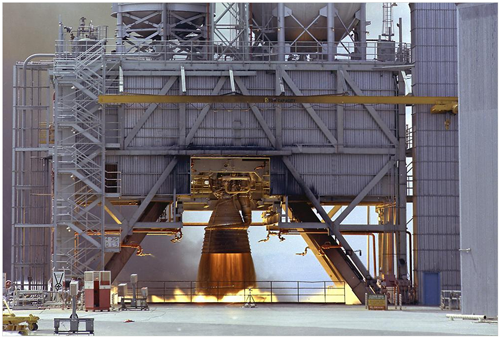
The Rocketdyne F-1 was developed in the 1950s to power the United States’ burgeoning space program. Despite its relative antiquity, the F-1 remains the most powerful liquid-fuel propulsion system ever built, putting out 1.5 million pounds of thrust. Five F-1s were used for each Saturn V launch, with each engine burning more than 400 gallons of liquid oxygen per second, approximately 5,000 times the amount of a high-powered jet engine used on commercial airliners today. The F-1 was a critical component to NASA’s successful space launches in the 1960s, leading to the famous lunar mission of Apollo 11 in 1969.

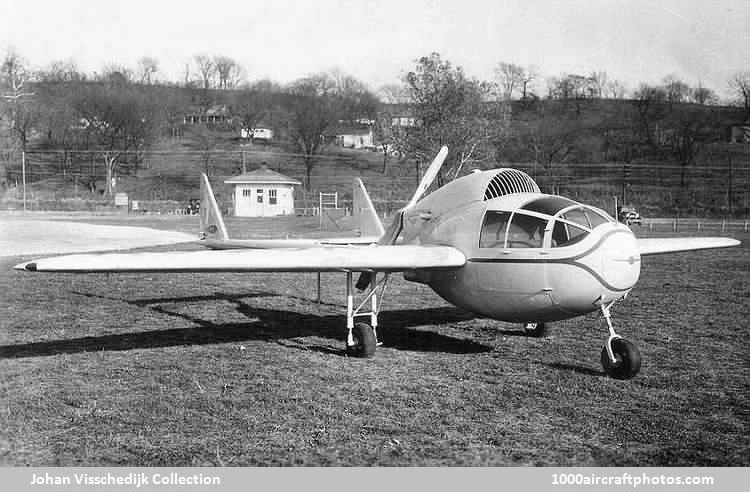 Campbell F
This aircraft was designed by Hayden S. Campbell, and was about the fourteenth important small low-priced aeroplane which had been designed to the Bureau of Air Commerce's call for tenders. The aircraft was produced in 1935 at the newly formed Campbell Aircraft Company at 526 North 2 Street, St. Joseph, Missouri, USA. The aircraft was damaged in a demonstration flight and never repaired.
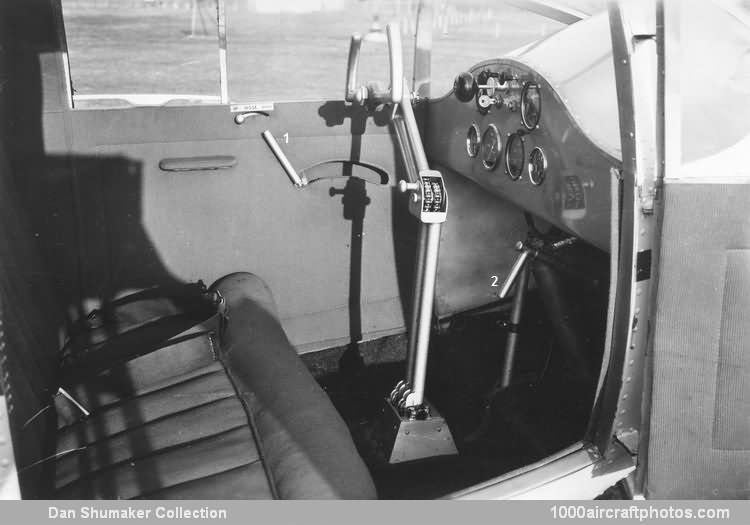 In this photo (Dan Shumaker Collection) of the simple cabin, the wing flap control (1) and the nose wheel adjustment lever (2) are shown. Below the entry in the 1937 edition of Jane's All the World's Aircraft.
TYPE. Two-seat light cabin monoplane.
WINGS. Mid-wing cantilever monoplane in one piece. Structure is of metal multi-cellular construction, the smooth metal skin being further reinforced with longitudinal stringers. Center portion of wing supports engine, cabin, tail-booms and undercarriage.
NACELLE. Egg-shaped structure of light alloy construction with cabin in the nose and the engine enclosed in the after end.
TAIL UNIT. Monoplane type with twin fins and rudders carried on two monocoque metal tail-booms. The booms are readily detachable from the main spar of the wing. Tail surfaces are metal framed.
UNDERCARRIAGE. Three-wheeled type. Two main wheels are each sprung by two Bendix shock-absorber struts which are rigidly braced to the wing structure. Steerable front wheel below the nose of the nacelle, also with Bendix shock-absorber strut. 15 in (38 cm) travel on main struts, 10 in (25 cm) on nose strut. Wheel brakes on main wheels.
POWERPLANT. A converted Ford V-8 eight-cylinder water-cooled V-engine developing 100 hp at 3,800 rpm. Engine mounted direct onto wing on four rubber bushings and drives pusher airscrew through 2 : 1 reduction gear and 30 in (76 cm) extension shaft integral with the engine. Water radiator mounted on brackets attached to the engine. Entire engine unit can be removed by undoing four holding-down bolts and fuel lines.
ACCOMMODATION. Enclosed accommodation for two side-by-side in nose of nacelle with direct access from ground through door on starboard side.
DIMENSIONS AND WEIGHTS. No figures available.
PERFORMANCE. Maximum speed 120 mph (192 kmh), Cruising speed 100 mph (160 kmh), Landing speed (normal load) 45 mph (72 kmh), Initial rate of climb 580 ft/min (177 m/min).

NAA Announces RedHawk Aircraft

(Click Here)
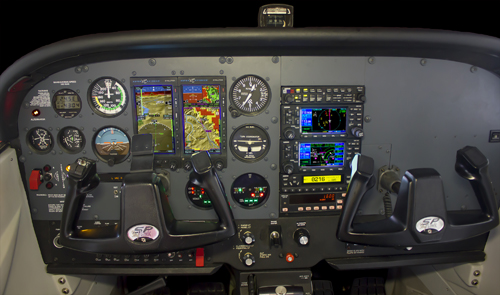
NAA has been chosen as one of three distinguished flight training organizations in the nation to evaluate the Redhawk diesel-powered Cessna 172. The fully restored aircraft’s Continental diesel engine burns half of the fuel of a conventional gas powered aircraft which should significantly improve emissions and the cost of flight. The environmental and economic impact of this aircraft represents the ever growing push towards a bright and responsible future for aviation. The aircraft will be on static display at the Fort Lauderdale/Hollywood International Airport on March 26, 2014.
NAA trains aircraft maintenance technicians and professional pilots at facilities in Clearwater, FL and Bedford, MA, and at Broward College in Ft. Lauderdale, FL. Exceptional skills, professionalism, and excellence are instilled to meet the growing demands of the aviation industry.
(Click Here)
For additional details about NAA, the open house, or to attend, please contact Nate Wade at (800) 659-2080 or email nwade@naa.edu.
Check out more stories about the new Redhawk diesel-powered Cessna 172.

Louis Bleriot
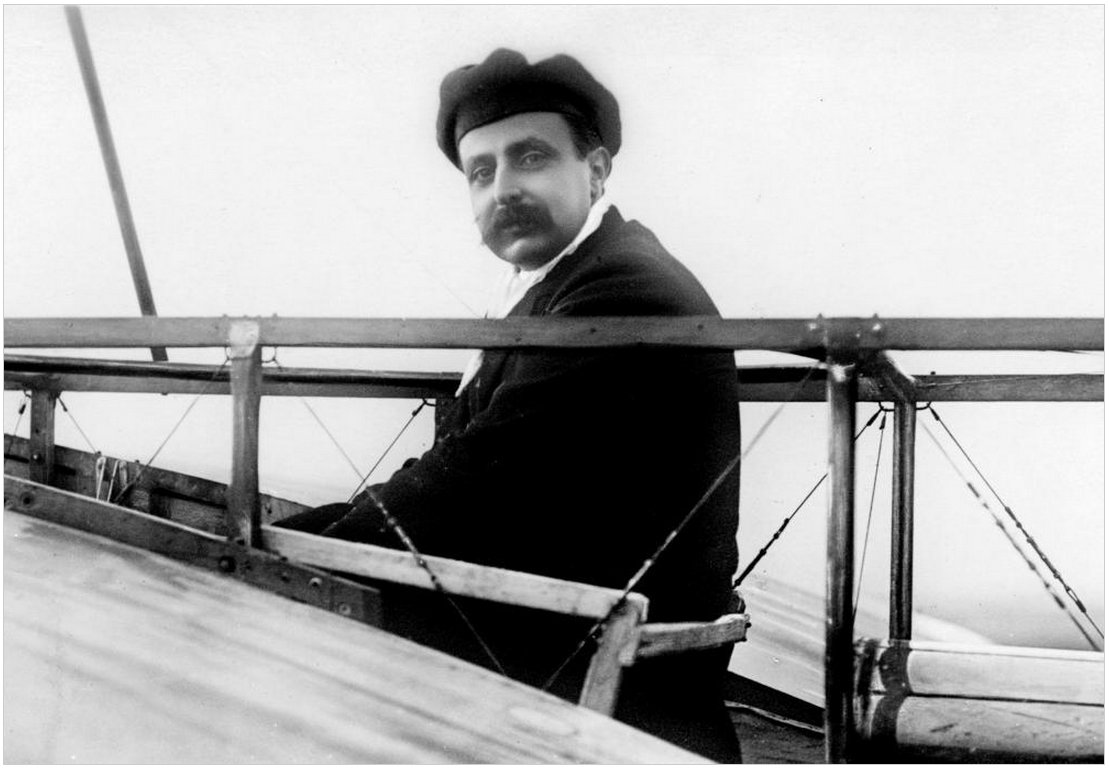
Frenchman Louis Bleriot secured a slot in the history books when he successfully crossed the English Channel in the summer of 1909. He was flying the Bleriot XI, an evolution from his earlier Bleriot models designed with major contributions from French engineer Raymond Saulnier. The design is a wood and fabric structure controlled by wing warping, powered by a single engine of various models with a horsepower range of 25 to 100. The Channel crossing made the Bleriot XI an instant international hit, making Bleriot one of the first successful mass producers of airplanes.
The airplane flew missions in World War I and Bleriot exported the XI as far as Australia and the United States, where the Queen Aeroplane Company in New York became a producer and Clyde Cessna was inspired to build his first airplane Silver Wings. AB Enoch Thulin Aeroplane Company, a factory in Sweden, also produced the airplane under the name Thulin A. More than 100 years later, there are still a few Bleriot XIs in flying condition.
Tampa Bay | Student Council
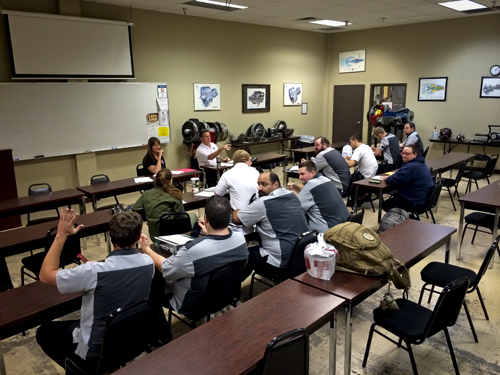 As the last few students trickle in the meeting, roll call is taken before
the meeting. (Photo: James Clary)
With 30 students and staff in attendance, many good discussions took place during this month's student council meeting. Food trucks, operation procedures, and future plans were all discussed. Also, Snap-On Account Manager, Matt Sadler, was in attendance to answer any questions about the company. The next student council meeting will be on Tuesday, March April 22, 2014.


 Live Chat
Website
View Online
Forward
Live Chat
Website
View Online
Forward