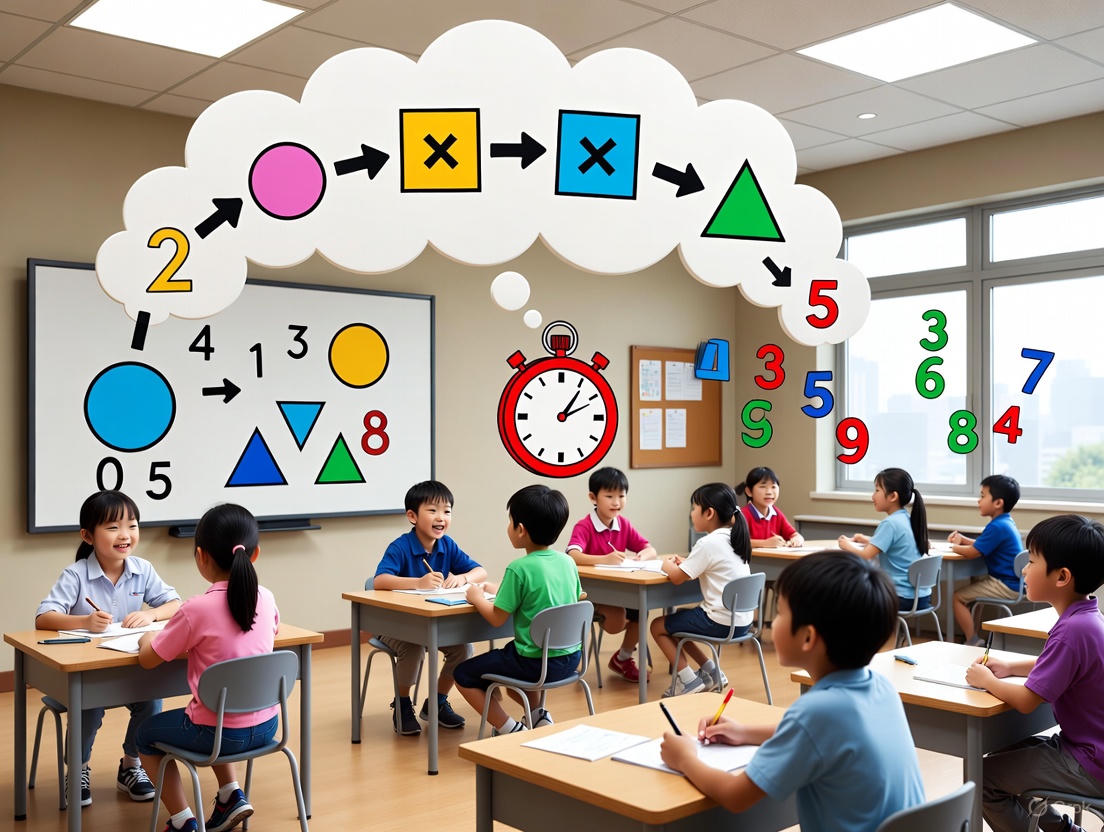
Common Pitfalls in Teaching Number Bonds to Primary 1 Students

Introduction: Unveiling Number Bonds

Number bonds are the building blocks of mathematical understanding for our Primary 1 kids! They show how numbers can be broken down and combined – like how 5 can be made up of 2 and 3, or 1 and 4. Mastering these bonds early on is super important because they form the foundation for addition, subtraction, and even more complex math concepts later on. If your child has a strong grasp of number bonds, tackling word problems and mental calculations becomes much easier. Think of it like learning your ABCs before you can read!

And that's where singapore primary 1 math tuition tips come in! Sometimes, kids need a little extra help to really "get" number bonds. These tips, often shared by experienced tutors, can provide alternative explanations, fun activities, and targeted practice to solidify your child's understanding.

Fun Fact: Did you know that the concept of breaking down numbers has been around for centuries? Ancient civilizations used different methods, but the core idea of understanding number relationships has always been crucial for calculations and problem-solving.

Common Pitfalls in Teaching Number Bonds to Primary 1 Students

Many parents and educators face similar challenges when teaching number bonds. Here are some common pitfalls to watch out for:

  • Rote Memorization Without Understanding: Simply memorizing number bonds without understanding the underlying concept is a big no-no. Kids might be able to recite "5 is 2 and 3" but not understand why.
  • Lack of Hands-On Activities: Abstract concepts can be tough for young learners. Relying solely on worksheets can make learning feel dry and disconnected.
  • Moving Too Quickly: Each child learns at their own pace. Rushing through number bonds before a child has truly grasped the concept can lead to frustration and gaps in understanding.
  • Not Connecting to Real-World Examples: Math shouldn't feel like something that only exists in textbooks. Failing to connect number bonds to everyday situations makes it harder for kids to see their relevance.

Effective Strategies for Teaching Basic Math Concepts

So, how can we make learning number bonds more effective and enjoyable? Here are some strategies that have worked wonders:
  • Use Manipulatives: Objects like counters, building blocks, or even colourful candies can make number bonds tangible. Let your child physically break down and combine these objects to represent different number bonds.
  • Make it Visual: Drawings, diagrams, and colour-coded charts can help children visualize number bonds. For example, you can draw a circle representing the whole number and then divide it into smaller sections representing the parts.
  • Turn it into a Game: Games make learning fun and engaging! Use dice, cards, or even create your own number bond games to practice different combinations.
  • Connect to Real-Life Scenarios: Use everyday situations to illustrate number bonds. For example, "We have 6 apples. In this nation's rigorous education structure, parents fulfill a crucial part in directing their children through significant tests that influence educational futures, from the Primary School Leaving Examination (PSLE) which assesses basic skills in disciplines like numeracy and science, to the GCE O-Level tests emphasizing on secondary-level expertise in multiple fields. As pupils progress, the GCE A-Level assessments necessitate advanced analytical abilities and subject mastery, commonly determining university admissions and professional trajectories. To stay knowledgeable on all aspects of these countrywide exams, parents should explore authorized materials on Singapore exam supplied by the Singapore Examinations and Assessment Board (SEAB). This secures entry to the most recent curricula, test timetables, enrollment details, and guidelines that correspond with Ministry of Education requirements. Regularly referring to SEAB can assist parents prepare successfully, reduce doubts, and back their children in attaining peak outcomes during the demanding scene.. If we eat 2, how many are left?" or "If you have 3 toy cars and I give you 2 more, how many do you have in total?".

Subtopic: Utilizing Singapore Primary 1 Math Tuition Tips

  • Personalized Learning: Tutors can identify your child's specific learning style and tailor their approach accordingly.
  • Targeted Practice: They can provide extra practice on areas where your child is struggling, ensuring a solid understanding of number bonds.
  • Alternative Explanations: Tutors can offer different explanations and perspectives, helping your child grasp the concept in a way that makes sense to them.
  • Motivation and Encouragement: A tutor can provide positive reinforcement and encouragement, boosting your child's confidence and motivation.

Interesting Fact: In some cultures, number systems were originally based on body parts, like fingers and toes! This shows how humans have always used concrete objects to understand abstract mathematical concepts.

Making Learning Fun and Engaging

Learning shouldn't be a chore! Here are some ideas to make learning number bonds a fun and engaging experience for your child:

  • Storytelling: Create stories that involve number bonds. For example, "Once upon a time, there were 4 little birds. 1 flew away. How many were left?".
  • Songs and Rhymes: Sing songs or create rhymes about number bonds. This can help children memorize the combinations in a fun and memorable way.
  • Arts and Crafts: Use arts and crafts to represent number bonds. For example, you can create a number bond flower with the whole number in the center and the parts on the petals.
  • Outdoor Activities: Take learning outdoors! Use natural objects like leaves, stones, or flowers to represent number bonds. You can even draw number bonds on the pavement with chalk.
  • In the rigorous world of Singapore's education system, parents are ever more concentrated on preparing their children with the skills essential to succeed in rigorous math syllabi, covering PSLE, O-Level, and A-Level studies. Spotting early signals of struggle in topics like algebra, geometry, or calculus can bring a world of difference in fostering strength and expertise over advanced problem-solving. Exploring trustworthy math tuition options can offer personalized assistance that aligns with the national syllabus, ensuring students obtain the advantage they require for top exam results. By focusing on interactive sessions and consistent practice, families can help their kids not only meet but go beyond academic standards, paving the way for future possibilities in demanding fields..

Remember, every child learns differently. Be patient, supportive, and celebrate small victories along the way. With the right approach and a little help from singapore primary 1 math tuition tips if needed, your child can master number bonds and build a strong foundation for future math success. Don't worry, kaypoh parents, your child will chiong to the top in math in no time!

Limited Practice with Different Representations

Relying solely on one type of representation (e.g., number bond diagrams) can hinder a student's ability to generalize the concept. Expose students to various representations, such as using ten frames, number lines, and story problems. This will help them develop a deeper and more flexible understanding of number bonds.

Neglecting the "Whole" Concept

Primary 1 students often focus on the "parts" of a number bond without fully understanding the "whole." Emphasize that the whole is the total quantity, and the parts are the numbers that make up that total. Use real-world examples, such as sharing snacks, to demonstrate the relationship between parts and the whole.

Conceptual Understanding of Number Bonds
Many students struggle with number bonds due to a lack of conceptual understanding. Instead of rote memorization, use concrete objects and visual aids to illustrate how smaller numbers combine to form a larger number. This hands-on approach helps them grasp the underlying concept of part-part-whole relationships.

Pitfall 1: Rote Memorization Without Understanding

Rote memorization? Confirm plus chop, that's a no-go when it comes to number bonds! Imagine trying to build a house by just memorizing the blueprint – you wouldn't understand how the walls support the roof, right? Same thing with math!

We're talking about singapore primary 1 math tuition tips here, and the first tip-top advice is this: ditch the flashcards only approach. While memorization has its place, especially for quick recall later on, it's crucial that our little ones understand what a number bond actually means.

Think of it like this: a number bond is like a family. You've got the whole family (the 'whole' number) and then you've got the different members of the family (the 'parts'). They all belong together, but they each have their own identity.

Why is understanding so important?

  • It builds a strong foundation: When kids truly get the part-part-whole relationship, they can apply that knowledge to all sorts of math problems later on – addition, subtraction, even multiplication and division down the road!
  • It makes math less scary: Memorizing feels like a chore, but understanding feels like solving a puzzle. And puzzles are fun, right?
  • It prevents frustration: When a child only memorizes, they might get stuck if the problem is presented in a slightly different way. But if they understand the concept, they can adapt and find the solution, boosting their confidence.
  • In the Lion City's bilingual education framework, where proficiency in Chinese is crucial for academic success, parents commonly seek ways to assist their children grasp the tongue's subtleties, from lexicon and understanding to composition writing and oral proficiencies. With exams like the PSLE and O-Levels imposing high standards, early intervention can avoid common challenges such as subpar grammar or limited access to cultural aspects that enhance knowledge acquisition. In an age where ongoing skill-building is crucial for professional advancement and self growth, leading universities internationally are dismantling barriers by providing a abundance of free online courses that encompass varied subjects from informatics studies and business to humanities and medical disciplines. These efforts permit learners of all origins to utilize premium lectures, projects, and resources without the financial load of traditional registration, commonly through systems that offer adaptable pacing and engaging features. Exploring universities free online courses provides doors to prestigious institutions' insights, allowing driven individuals to advance at no expense and obtain credentials that boost profiles. By making elite instruction readily obtainable online, such offerings promote worldwide equality, strengthen disadvantaged groups, and cultivate advancement, showing that excellent information is progressively simply a click away for anybody with internet availability.. For families striving to improve results, exploring Chinese tuition options provides perspectives into organized programs that sync with the MOE syllabus and cultivate bilingual confidence. This specialized aid not only strengthens exam readiness but also develops a deeper appreciation for the language, opening opportunities to traditional heritage and prospective professional advantages in a multicultural environment..

Effective Strategies for Teaching Basic Math Concepts

So, how do we move beyond rote memorization and foster true understanding? Here are a few singapore primary 1 math tuition tips that work wonders:

  • Use Manipulatives: Forget just looking at numbers on paper! Get your hands on some real objects. We're talking about colourful blocks, yummy sweets (for demonstration purposes only, of course!), or even just fingers and toes.

    • Subtopic: Hands-on Activities for Number Bonds: Let your child physically break apart a group of objects into two smaller groups. For example, start with 5 blocks. Can they split it into a group of 2 and a group of 3? Let them see the connection.
  • Tell Stories: Math doesn't have to be boring! Create little stories around the number bonds. "Ali had 7 marbles. He gave 4 to his friend. How many does Ali have left?" This helps children visualize the problem and relate it to real-life situations.
  • Draw Pictures: Encourage your child to draw pictures to represent the number bonds. A simple circle with lines connecting to two smaller circles can be a powerful visual aid.
  • Play Games: Turn learning into a game! There are tons of number bond games you can play at home, from simple card games to online interactive games.

    • Subtopic: Fun Number Bond Games: Try "Number Bond Bingo" or "Number Bond Matching." These games make learning fun and engaging, helping your child grasp the concept without even realizing they're "studying."

Fun Fact: Did you know that the concept of number bonds has been around for centuries? Ancient civilizations used similar methods to understand numbers and their relationships.

Interesting Facts: Singapore's emphasis on math education has consistently placed its students among the top performers in international assessments. This highlights the importance of effective teaching strategies, like those discussed above, in building a strong foundation in mathematics.

History: The development of mathematical concepts like number bonds can be traced back to early civilizations in Mesopotamia and Egypt, where they were used for practical purposes like land surveying and trade.

Remember, patience is key! Every child learns at their own pace. Don't get discouraged if your child doesn't grasp the concept right away. Just keep practicing, keep making it fun, and celebrate every little victory along the way. Kiasu parents, relax a bit! Your child will get there! With the right approach and some singapore primary 1 math tuition tips, your child will be a number bond pro in no time!

Effective Strategy: Visual Aids & Manipulatives

Conceptual Understanding

One of the most common pitfalls is focusing solely on rote memorization rather than fostering a deep conceptual understanding of number bonds. Children may learn to fill in the blanks without truly understanding the relationship between the numbers. This lack of understanding can lead to difficulties when they encounter more complex math problems later on. Singapore primary 1 math tuition tips often emphasize building a solid foundation by ensuring children grasp the ‘why’ behind the ‘how’.

Abstract Thinking

Another challenge arises when assuming that all children grasp abstract concepts at the same pace. Some students may struggle to visualize the relationship between numbers without concrete aids. This can lead to frustration and a feeling of being overwhelmed. Effective singapore primary 1 math tuition tips address this by introducing number bonds using tangible objects and gradually transitioning to more abstract representations.

Ignoring Misconceptions

Failing to address misconceptions early on can also hinder a child's progress. For instance, a child might believe that the order of numbers in a number bond matters (e.g., 3 + 2 is different from 2 + 3). Ignoring these misconceptions allows them to become ingrained, making them harder to correct later. Proactive identification and correction of these misconceptions are crucial for building a strong mathematical foundation.

Insufficient Practice

Insufficient or repetitive practice is another area where teaching can fall short. Simply drilling the same type of number bond problems can lead to boredom and a lack of engagement. In this island nation's rigorous education system, where English serves as the primary medium of education and plays a pivotal role in national exams, parents are keen to help their youngsters overcome common hurdles like grammar influenced by Singlish, lexicon gaps, and difficulties in interpretation or essay creation. Establishing strong fundamental skills from elementary stages can greatly boost confidence in handling PSLE elements such as contextual authoring and verbal expression, while upper-level pupils profit from specific practice in textual review and debate-style papers for O-Levels. For those looking for successful strategies, exploring English tuition offers valuable information into curricula that align with the MOE syllabus and highlight engaging education. This extra support not only sharpens exam techniques through simulated trials and feedback but also supports domestic routines like regular reading plus discussions to foster enduring language expertise and academic achievement.. In this bustling city-state's bustling education landscape, where students deal with intense stress to succeed in mathematics from primary to tertiary tiers, discovering a educational facility that combines expertise with true zeal can create significant changes in nurturing a love for the discipline. Passionate teachers who extend past mechanical learning to inspire critical reasoning and resolution competencies are scarce, yet they are crucial for helping pupils surmount obstacles in subjects like algebra, calculus, and statistics. For parents seeking such committed assistance, JC 2 math tuition emerge as a beacon of devotion, motivated by instructors who are profoundly involved in each student's journey. This unwavering passion turns into tailored instructional strategies that adjust to individual requirements, resulting in enhanced scores and a lasting respect for numeracy that reaches into prospective academic and occupational goals.. Varying the types of problems and incorporating real-world scenarios can make practice more meaningful and effective. Singapore primary 1 math tuition tips often suggest using games and interactive activities to keep children motivated and actively involved in the learning process.

Rushing Concepts

Rushing through the concepts without ensuring mastery at each stage is a common mistake. Some educators may feel pressured to cover the curriculum quickly, leaving some students behind. This can create gaps in their understanding, which will become more pronounced as they progress through school. A more effective approach is to pace the lessons according to the students' needs, providing additional support and practice where necessary to ensure everyone grasps the fundamentals.

Pitfall 2: Neglecting Real-World Applications

Many teachers, in their effort to drill the concept of number bonds, sometimes forget to connect it to everyday life. It becomes an abstract concept, just numbers floating around, and kids struggle to see the point. This is where the "aiyo, why I need to learn this?" feeling creeps in. Singapore primary 1 math tuition tips often highlight the importance of making learning relevant.

Think about it: if you're teaching a child that 3 + 2 = 5, don't just write it on the board. Instead, say, "Imagine you have 3 apples, and your grandma gives you 2 more. How many apples do you have now?" Suddenly, it's not just numbers; it's about delicious, juicy apples!

Effective Strategies for Teaching Basic Math Concepts

Connecting math to real-world scenarios is a game-changer. Here's how you can do it:

  • Grocery Shopping: Bring your child along and involve them. "We need 6 oranges. We already have 2. How many more do we need to buy?" In Singapore's intensely competitive educational landscape, parents are committed to aiding their youngsters' excellence in crucial math assessments, starting with the fundamental obstacles of PSLE where issue-resolution and abstract grasp are tested thoroughly. As students progress to O Levels, they face further intricate subjects like coordinate geometry and trigonometry that require exactness and critical skills, while A Levels bring in higher-level calculus and statistics needing deep understanding and implementation. For those resolved to giving their children an educational boost, finding the singapore maths tuition tailored to these programs can change instructional processes through concentrated strategies and expert insights. This effort not only elevates assessment outcomes throughout all levels but also cultivates permanent mathematical mastery, opening routes to prestigious institutions and STEM careers in a information-based society.. This teaches number bonds and subtraction, plus it's a fun family activity.

  • Snack Time: Use snacks like crackers or grapes to demonstrate addition and subtraction. "You have 4 crackers, and you eat 1. How many are left?"

  • Storytelling: Create stories that involve number bonds. "There were 7 birds sitting on a tree. 3 flew away. How many are left?"

    Fun fact: Did you know that the concept of using objects for counting dates back to ancient civilizations? Egyptians used pebbles, and Mesopotamians used clay tokens!

  • Using Toys: Toys are fantastic for making math tangible. Lego bricks, toy cars, or even dolls can be used to illustrate number bonds.

    Interesting fact: The abacus, one of the earliest calculating tools, is still used in some parts of the world to teach basic math concepts!

Subtopic: Making it a Game

Turn learning into a game! Kids learn best when they're having fun.

  • Number Bond Bingo: Create bingo cards with different number bonds. Call out the numbers, and have your child mark them off.
  • Math Scavenger Hunt: Hide objects around the house and give clues that involve number bonds. "Find something that is 2 + 3 = 5."
  • Online Math Games: There are tons of free and paid online games that make learning math fun and interactive. Just be sure to monitor screen time, okay?

By connecting number bonds to real-world situations and making learning fun, you can help your child build a strong foundation in math. Singapore primary 1 math tuition tips will always emphasize the importance of making learning engaging and relevant. Remember, math isn't just about numbers; it's about solving problems and understanding the world around us!

History: The term "number bond" itself likely emerged as a pedagogical tool to simplify the understanding of part-whole relationships in mathematics, evolving alongside educational methodologies focused on conceptual understanding rather than rote memorization.

Effective Strategy: Storytelling and Word Problems

Common Pitfalls in Teaching Number Bonds to Primary 1 Students

Teaching number bonds is a foundational skill in Primary 1 mathematics. However, some common pitfalls can hinder a child's understanding. Recognizing these challenges is the first step in providing effective support. Here are some areas where students commonly struggle: * **Lack of Concrete Understanding:** Many children are introduced to number bonds abstractly, without sufficient hands-on experience. They might memorize number facts without truly grasping the underlying concept of part-part-whole relationships. * **Rote Memorization Without Comprehension:** Focusing solely on memorizing number bonds (e.g., 5 = 2 + 3) without understanding *why* this is true can lead to difficulties when faced with variations or word problems. * **Difficulty Visualizing Number Bonds:** Some children struggle to visualize how numbers can be broken down and combined. This can make it challenging to solve problems mentally. * **Confusing Addition and Subtraction:** The relationship between addition and subtraction is crucial in understanding number bonds. If a child doesn't grasp this connection, they may struggle to apply number bonds in different contexts. In the Lion City's high-stakes academic environment, parents dedicated to their youngsters' achievement in mathematics frequently emphasize understanding the organized advancement from PSLE's basic issue-resolution to O Levels' detailed areas like algebra and geometry, and moreover to A Levels' sophisticated concepts in calculus and statistics. Keeping updated about curriculum revisions and test standards is crucial to offering the right assistance at each level, ensuring students cultivate self-assurance and attain excellent outcomes. For formal information and resources, visiting the Ministry Of Education platform can deliver valuable news on policies, curricula, and educational approaches customized to countrywide benchmarks. Engaging with these credible materials strengthens families to match home learning with classroom standards, nurturing enduring success in numerical fields and beyond, while staying updated of the latest MOE efforts for holistic learner development.. * **Anxiety and Pressure:** Creating a high-pressure environment can lead to anxiety, hindering a child's ability to learn and recall number bonds effectively. Remember, *slowly but surely* wins the race! **Fun Fact:** Did you know that the concept of number bonds isn't new? Ancient civilizations, including the Egyptians, used similar principles in their calculations!

Effective Strategies for Teaching Basic Math Concepts

To help your child overcome these hurdles, consider these effective strategies for teaching basic math concepts, including number bonds. These strategies can be easily integrated into your daily routine, making learning fun and engaging. And who knows, maybe these tips will help you save some money on *singapore primary 1 math tuition tips*! * **Use Manipulatives:** Concrete objects like building blocks, counters, or even small toys can help children visualize number bonds. For example, use five blocks of different colors to show how 5 can be broken down into different combinations (e.g., 2 red blocks + 3 blue blocks). * **Make it Playful:** Turn learning into a game! Use number bond flashcards, play "number bond bingo," or create simple math puzzles. The more fun it is, the more engaged your child will be. * **Relate to Real-Life Situations:** Connect number bonds to everyday activities. For example, "We have 6 apples. If we eat 2, how many will be left?" This helps children see the practical application of number bonds. * **Focus on Understanding, Not Just Memorization:** Encourage your child to explain *why* a number bond works. Ask questions like, "How did you figure that out?" or "Can you show me another way to make 5?" * **Be Patient and Encouraging:** Learning takes time, and every child learns at their own pace. Celebrate small victories and provide positive reinforcement. Avoid putting pressure on your child to perform perfectly. **Subtopic: Incorporating Visual Aids** * **Number Bond Diagrams:** Use visual aids like number bond diagrams (circles connected by lines) to represent part-part-whole relationships. This helps children see how numbers are connected. * **Color-Coding:** Use different colors to represent different numbers or parts of a number bond. This can help children visually distinguish between the different components. * **Number Lines:** Use number lines to demonstrate addition and subtraction related to number bonds. This helps children visualize the movement of numbers. **Subtopic: Adapting to Different Learning Styles** * **Kinesthetic Learners:** These children learn best through movement and hands-on activities. Use manipulatives, games, and real-life scenarios to engage them. * **Visual Learners:** These children learn best through visual aids like diagrams, charts, and videos. Use number bond diagrams, color-coding, and number lines to support their learning. * **Auditory Learners:** These children learn best through listening and speaking. Encourage them to explain their thinking aloud and use verbal cues to reinforce concepts. **Interesting Fact:** Did you know that Singapore's math curriculum is internationally recognized for its focus on conceptual understanding and problem-solving skills? That's why *singapore primary 1 math tuition tips* often emphasize these aspects!

Addressing Specific Challenges

Let's delve into some specific challenges and how to address them using storytelling and word problems. This is where *singapore primary 1 math tuition tips* can really shine, by making learning relevant and engaging. * **Challenge: Difficulty with "Missing Number" Problems:** * **Solution:** Create a story. "Ahmad had 7 marbles. He lost some. Now he has 4. How many did he lose?" Use manipulatives to act out the story. * **Challenge: Confusing Addition and Subtraction:** * **Solution:** Use word problems that clearly distinguish between the two operations. "Mei Mei has 3 stickers. She gets 2 more. How many does she have in total?" (Addition). "Ravi has 8 cookies. He eats 3. How many are left?" (Subtraction). * **Challenge: Applying Number Bonds to Larger Numbers:** * **Solution:** Start with smaller numbers and gradually increase the difficulty. Use stories that involve larger quantities but can still be visualized. "There are 10 birds in a tree. 6 fly away. How many are left?" **History:** The use of word problems in mathematics education dates back centuries! Ancient texts from various cultures included practical problems to help students apply mathematical concepts to real-world situations. Remember, the key is to make learning fun and relatable. By using storytelling and word problems, you can help your child develop a strong foundation in number bonds and a love for mathematics! Don't be *kayu* (blur), start incorporating these tips today! And who knows, maybe your child will become the next math whiz in Singapore!

Pitfall 3: Insufficient Practice and Reinforcement

Alright, parents, let's talk about something super important when it comes to your Primary 1 kiddo and their math journey: practice! We all know practice makes perfect, right? But sometimes, we might not be giving our little ones *enough* practice, especially when it comes to number bonds. This can lead to a weaker understanding of the whole concept. Think of it like this: you can't learn to ride a bicycle just by reading about it; you gotta hop on and pedal!

Insufficient practice and reinforcement is a common stumbling block. Your child might grasp the *idea* of number bonds during a lesson, but if they don't get enough chances to actually *use* that knowledge, it's like trying to build a house with only half the bricks. The foundation just won't be strong enough.

Why is consistent practice so crucial? Well, it helps to:

  • Solidify Understanding: Repeated practice helps the brain create stronger connections, making the concept stick.
  • Build Fluency: The more they practice, the faster and more accurately they can recall number bonds. This is super important for tackling more complex math problems later on.
  • Boost Confidence: When they know their number bonds inside and out, they'll feel more confident and less anxious about math.

Think of number bonds like learning your ABCs. You wouldn't expect a child to master reading after just one lesson, right? It takes repetition and consistent exposure. Same goes for number bonds! This is where singapore primary 1 math tuition tips can come in handy, offering structured practice and personalized attention to ensure your child gets enough reinforcement.

Fun Fact: Did you know that the concept of breaking down numbers into smaller parts has been around for centuries? Ancient civilizations used similar methods for calculations and problem-solving!

Effective Strategies for Teaching Basic Math Concepts

So, how can we make sure our kids are getting enough practice without turning math into a chore? Here are a few ideas:

  • Make it Playful: Use games, toys, and everyday objects to make learning fun. Think building blocks, beads, or even snacks!
  • Short and Sweet: Keep practice sessions short and focused. Little and often is better than long, drawn-out sessions that can lead to frustration.
  • Real-World Connections: Show them how number bonds relate to real-life situations. "If you have 3 apples and I give you 2 more, how many apples do you have in total?"
  • Variety is Key: Don't just rely on worksheets. Mix things up with different activities to keep them engaged.

Incorporating Visual Aids

Visual aids can be a game-changer for Primary 1 students! Using tools like number lines, counters, or even drawings can help them visualize the concept of number bonds. Instead of just memorizing facts, they can *see* how the numbers break down and come together. This is especially helpful for visual learners.

Interesting Fact: Number lines are a fantastic tool because they provide a visual representation of the relationship between numbers. Your child can physically hop along the number line to solve addition and subtraction problems!

Remember, parents, mastering number bonds is a journey, not a race. In the last few years, artificial intelligence has revolutionized the education sector globally by allowing customized instructional experiences through flexible systems that customize resources to unique learner speeds and approaches, while also mechanizing grading and operational responsibilities to release instructors for deeper meaningful engagements. Internationally, AI-driven tools are bridging academic disparities in underprivileged locations, such as utilizing chatbots for language mastery in developing nations or predictive analytics to spot at-risk students in Europe and North America. As the integration of AI Education gains traction, Singapore stands out with its Smart Nation project, where AI technologies improve program customization and equitable instruction for multiple demands, encompassing exceptional support. This strategy not only improves test outcomes and involvement in regional institutions but also matches with global efforts to foster lifelong skill-building skills, equipping learners for a technology-fueled society in the midst of ethical concerns like data privacy and just availability.. Be patient, encouraging, and celebrate every small victory. With enough practice and the right support, your child will be a number bond whiz in no time! And if you need a little extra help, don't hesitate to explore singapore primary 1 math tuition tips and resources. Sometimes, a little extra guidance can make all the difference. Jiayou!

Effective Strategy: Gamification and Variety

Let's face it, getting a Primary 1 kid excited about number bonds can be a bit...challenging, right? But what if learning math felt more like playtime? That's where gamification comes in lah!

Gamification: Making Math Fun!

Instead of endless worksheets, think about turning number bonds into games. Simple games like:

  • Number Bond Bingo: Create bingo cards with numbers, and call out addition problems. Kids mark off the answer if it's on their card.
  • Math Hopscotch: Draw a hopscotch grid with numbers. Call out a number bond (e.g., "3 + 2"), and your child has to hop to the correct numbers.
  • Card Games: Use a deck of cards to create number bond challenges. Remove the face cards and let your child create addition or subtraction problems using the cards.

These games not only make learning fun but also help solidify the concept of number bonds in a hands-on way. Many parents in Singapore are also exploring Singapore primary 1 math tuition tips that incorporate game-based learning to boost their child's understanding and confidence.

Fun Fact: Did you know that the concept of using games for learning dates back centuries? Ancient civilizations used games to teach strategy, mathematics, and even history!

The Power of Variety

Every child learns differently. Some are visual learners, others are kinesthetic (learn by doing), and some are auditory. That's why it's super important to mix up your approach when teaching number bonds.

Here are some ideas:

  • Visual Aids: Use colorful blocks, drawings, or even food items (like grapes or sweets!) to represent numbers.
  • Hands-on Activities: Let your child use their fingers, toys, or household objects to physically create and break down number bonds.
  • Storytelling: Create stories around number bonds. In the Lion City's high-stakes education framework, where scholastic success is paramount, tuition generally pertains to private additional lessons that offer focused guidance in addition to school curricula, helping students grasp subjects and gear up for key assessments like PSLE, O-Levels, and A-Levels in the midst of intense rivalry. This private education industry has developed into a thriving business, driven by parents' expenditures in personalized guidance to bridge skill shortfalls and boost performance, though it frequently adds stress on young students. As artificial intelligence emerges as a transformer, investigating cutting-edge math tuition agency approaches uncovers how AI-driven platforms are individualizing instructional experiences globally, providing flexible coaching that outperforms standard practices in effectiveness and participation while tackling global educational gaps. In Singapore in particular, AI is transforming the standard tuition approach by allowing cost-effective , flexible resources that match with countrywide syllabi, likely lowering expenses for households and improving achievements through data-driven insights, although ethical issues like excessive dependence on digital tools are debated.. For example, "There were 5 birds sitting on a tree. 2 flew away. How many are left?"

By varying your methods, you cater to different learning styles and keep your child engaged. This is a key principle often emphasized in Singapore primary 1 math tuition tips. It helps prevent boredom and ensures that the concept of number bonds truly sinks in.

Interesting Fact: Studies have shown that students who are taught using a variety of methods tend to retain information better and develop a deeper understanding of the subject matter.

Effective Strategies for Teaching Basic Math Concepts

Number bonds are just one piece of the puzzle. Building a strong foundation in basic math concepts is crucial for your child's future success. Let's explore other strategies that complement number bond learning:

Real-World Applications

Connect math to everyday life. When you're at the grocery store, ask your child to count the number of apples you're buying. When you're sharing snacks, ask them to divide the snacks equally. These real-world examples make math relevant and meaningful.

Using Manipulatives

Manipulatives are physical objects that help children visualize and understand math concepts. Examples include:

  • Base Ten Blocks: These blocks can be used to represent numbers and perform addition and subtraction.
  • Counting Bears: These colorful bears can be used to practice counting, sorting, and creating patterns.
  • Abacus: An abacus is a traditional tool that can be used to teach place value and perform calculations.

History: The abacus is one of the oldest calculating tools, dating back thousands of years! It was used in ancient civilizations for trade, accounting, and other mathematical tasks.

These tools provide a tactile and visual way for children to grasp abstract math concepts. Many Singapore primary 1 math tuition tips advocate for the use of manipulatives to enhance learning.

Remember, learning should be an adventure, not a chore. By making math fun and engaging, you can help your child develop a lifelong love of learning. Don't be afraid to explore different techniques and find what works best for your child. Good luck hor!

Common Mistakes Parents Make When Helping with Primary 1 Math

Number bonds show how numbers can be broken down into smaller parts. Theyre vital because they build a strong foundation for addition, subtraction, and mental math skills, which are crucial for Primary 1 math in Singapore.
Use concrete objects like toys or blocks. Let your child physically combine them in different orders to see that the total number remains the same. This hands-on approach reinforces the concept of commutativity.
Try using games like Number Bond Bingo or online interactive number bond activities. Flashcards and singing number bond songs can also make learning more engaging and memorable.
Encourage them to explain *why* a number bond works. Ask questions like Why does 3 and 2 make 5? This promotes deeper understanding instead of rote memorization.
When sharing snacks, ask your child to figure out how many more they need to reach a certain number. For example, You have 2 cookies. How many more do you need to have 5 cookies?
Practice with various formats, gradually increasing the complexity. Use visual aids like number bond diagrams with blanks to fill in. Start with easier bonds and slowly introduce more challenging ones.
Gradually reduce the reliance on manipulatives. Encourage your child to visualize the number bonds in their head. Start by showing the blocks, then hiding them and asking them to recall the bond.
Look for online math worksheets, educational apps designed for Primary 1 students, and consult with your childs teacher for personalized advice. Many tuition centres in Singapore also offer programs focused on building strong foundational math skills.

Check our other pages :