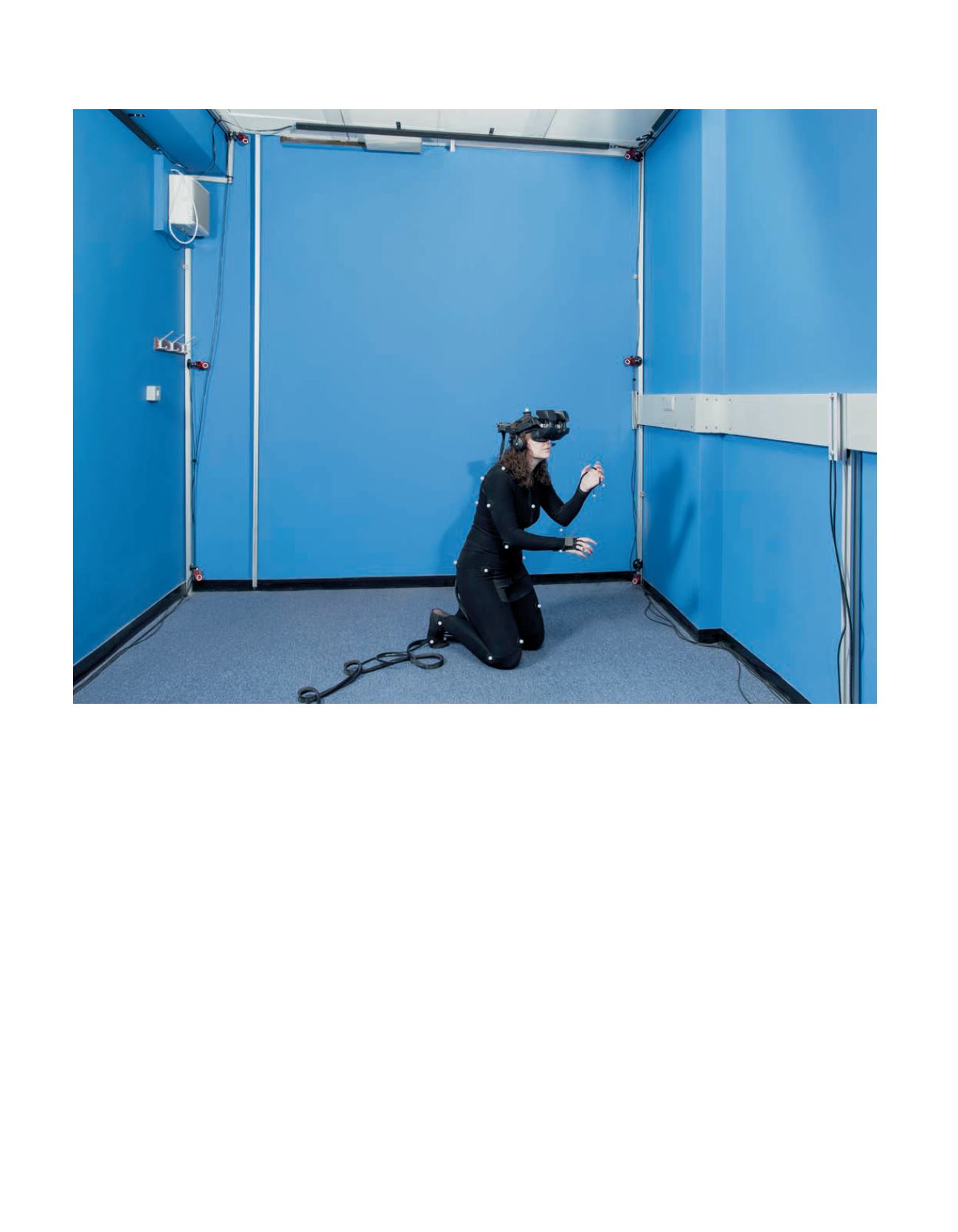
“WE’REONLYBEGINNING tounderstandwhat embodimentmeans to the
brain,” saysDrCarolineFalconer, a research fellowwithMindTech and
theUniversityofNottinghamwho researches theuseof virtual reality (VR)
avatars inmental healthcare. “Some studieshave shown that if you’rewhite
and youembody ablackavatar then this could reduce your racial bias.When
youembody achild, it changes your cognition tobemorechildlike.”Her
latest study looks at thepotential effect this effect hason levelsof self-
compassion,which are linked todepression. “Wehadparticipants embody
an adult avatar... trying tocomfort acryingchild. They thenbecome thechild
they just tried tocomfort, so they get toexperience their compassionate
response from thechild’sperspective.”Her initial results showed adecrease
indepressive symptoms inmost participants,with theeffects lasting for
amonthormore. Shehopes further testingwill proveVR tobe auseful
therapeutic tool. “It’s a great platform to really look at the self in a safe and
controlledway,” she says. “How the self interactswith technology canhelp
us understandhow the self is represented in thebrain.”
“We’reonlybeginning tounderstandwhatembodimentmeans to
thebrain.Whenyouembodyanavatar, itchangesyourcognition”
DrCarolineFalconer
042\
n


